Baby Sleep While Traveling – Realistic Tips + Gear That Helps
We’ve had the 1am “it’s morning!” wakeup in Seoul.
The overtired stroller nap refusal baby.
The hotel hallway FOMO baby who heard one door close and decided sleep was canceled.
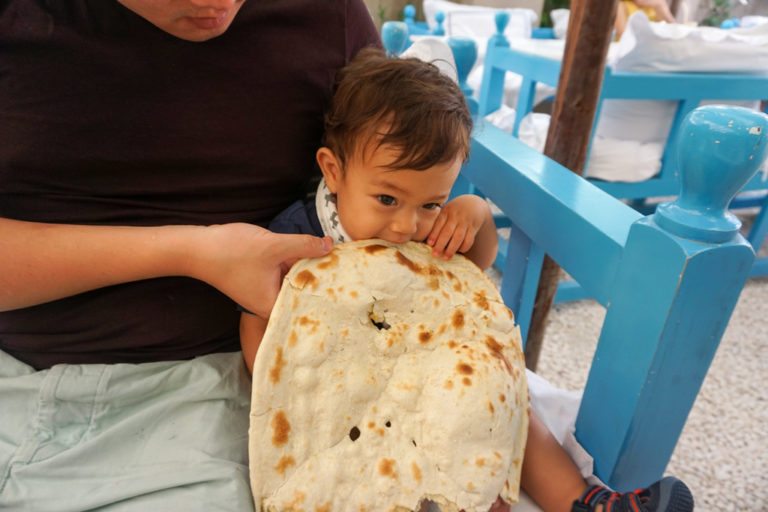
And yes, the baby who fell asleep mid-dinner in Oman.
When sleep goes well, the whole day feels lighter.
The goal isn’t perfect sleep. Let’s be realistic. It’s enough sleep and the right setup.
This guide covers babies from newborn to about 18 months. I’m sharing the practical strategies we use, when we flex the schedule, and the gear that genuinely makes baby travel smoother.
You shouldn’t have to choose between protecting sleep and enjoying your trip.
Jump to: Why it’s hard, Tips to help, While baby sleeps (for parents), Baby travel sleep essentials, Travel crib, Blackout, White noise, Light, Carrier, Stroller, Own vs borrow, Co-sleeping, FAQs
Affiliate Disclosure: Familee Travel contains affiliate links and is a member of the Amazon Associates Program, we may earn commissions from qualifying purchases at no additional cost to you.
In a rush? Pin this or email it to yourself to read later! (Psst! Use the buttons at the very top or bottom of this post for ease.)
Why Sleep Feels Harder on the Road
If your baby sleeps beautifully at home but struggles on vacation, you’re not imagining it.
Travel changes everything.
Everything is stimulating
New smells. New sounds. A different room layout.
Even the hum of an unfamiliar air conditioner or voices in a hallway can feel exciting. We’ve had the classic hallway FOMO baby who hears one door close and assumes something fun is happening.
Busy brains don’t wind down easily.
Light shifts the rhythm
Thin curtains. Early sunrises. Time zone changes.
In Tokyo, we dealt with 5am wakeups simply because the room filled with light. In Seoul, we had an earlier problem. A middle-of-the-night wakeup that felt like morning. Helping children combat jet lag can be challenging, but it’s doable.
Babies are sensitive to light. Small changes can reset their internal clock.
Routine loses predictability
Dinner runs late. You’re walking more. The day stretches just a little (too) far.
We’ve had the overtired dinner meltdown and the baby who literally fell asleep while eating.
At home, sleep is predictable. Travel removes that predictability.
That doesn’t mean it can’t work. It just means you need a plan.
How to Help A Baby Sleep While Traveling
You don’t need to recreate home perfectly.
You just need to protect the right things.
Recreate the environment first
Environment matters more than location.
Start with the basics:
- Darkness
- White noise
- A familiar sleep sack
- Your own crib sheet
Even if we’re using a hotel crib, I always bring our fitted sheet. It’s small. It smells familiar. It adds consistency in an unfamiliar space.
Darkness matters more than you think. Light signals wake-up.
White noise smooths out the unpredictable sounds that come with hotels and rentals.
Get the environment right first. It solves more than you expect.
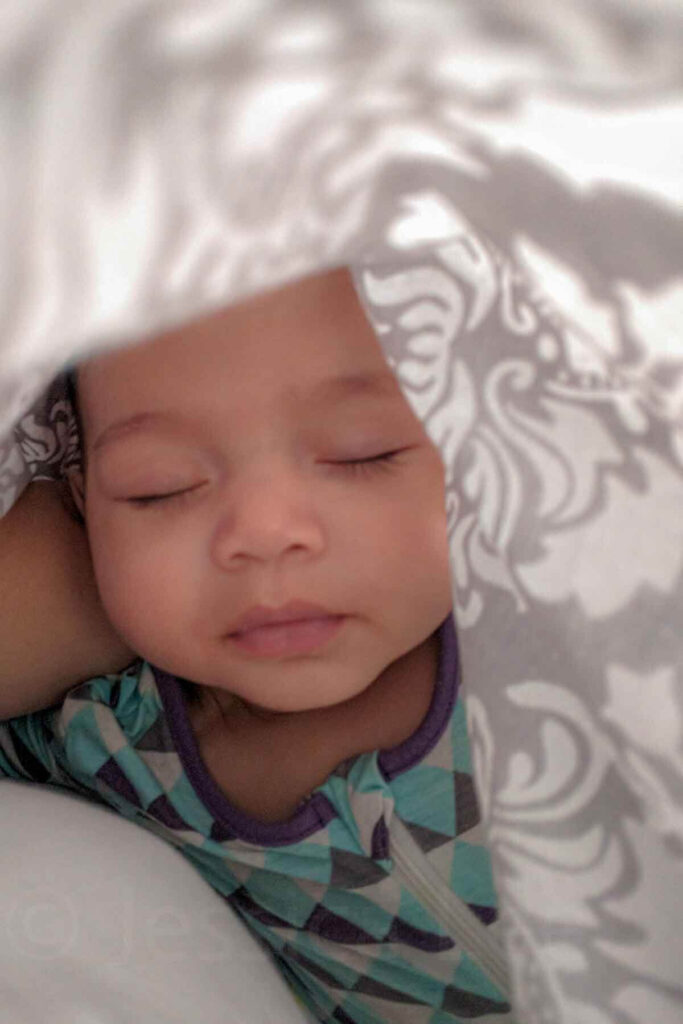
Protect the routine, not the clock
On vacation, bedtime might shift.
The sequence shouldn’t.
Feed. Pajamas. Sleep sack. White noise. Into crib.
Even if bedtime moves by an hour, the pattern stays the same.
Babies understand rhythm more than numbers on a clock.
Lean into naps on the go
This is where we lean flexible.
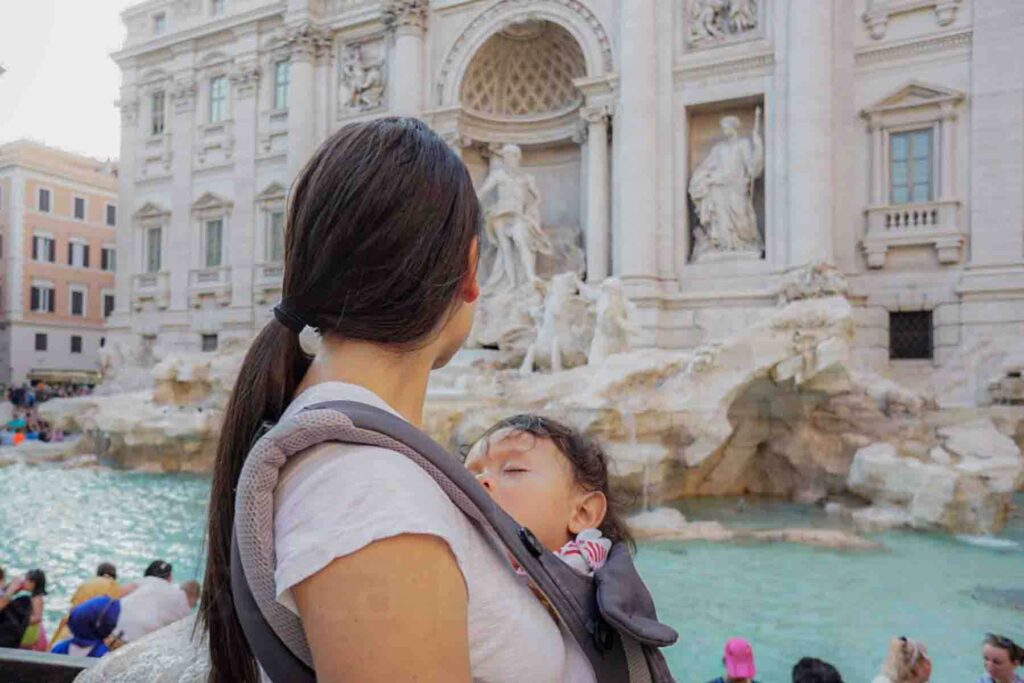
We rely heavily on stroller naps and carrier naps while traveling. It allows us to keep exploring instead of structuring the entire day around getting back to the room.
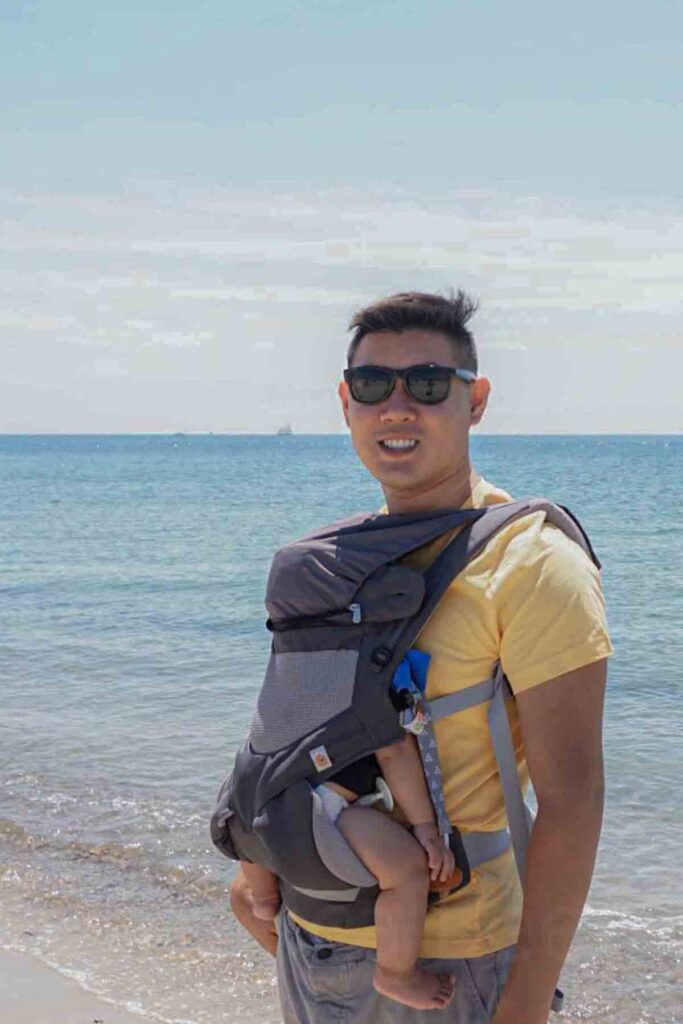
Sometimes we continue sightseeing. Other times, we slow down. We’ve spent nap times sitting in a shaded park, lingering at a café, or walking a waterfront while our baby slept in the stroller.
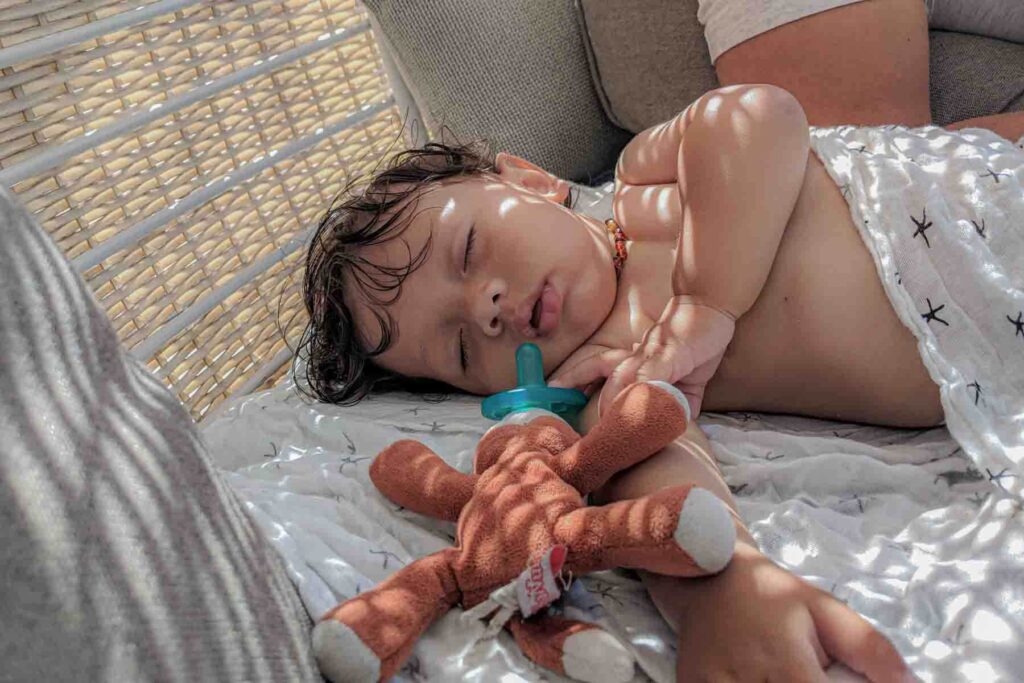
At beach destinations, poolside and beachside naps are extra dreamy. You’re still outside. Still in the experience. Just soaking up the environment.
There was a short phase when one child needed crib naps to function well. We adjusted during that season.
But most of the time, flexibility works beautifully.
Plan longer transit around nap time
One strategy that worked extremely well for us was planning longer transit during nap windows.
If we needed to drive an hour or more, take a train, board a longer boat ride, or do a scenic transfer, we tried to time it with a nap.
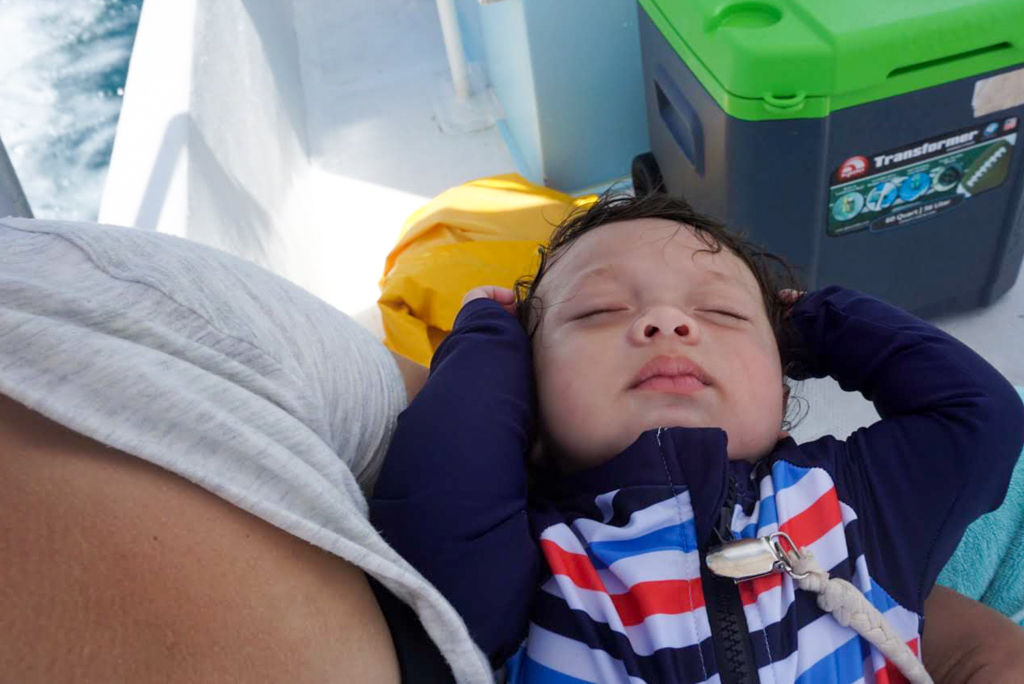
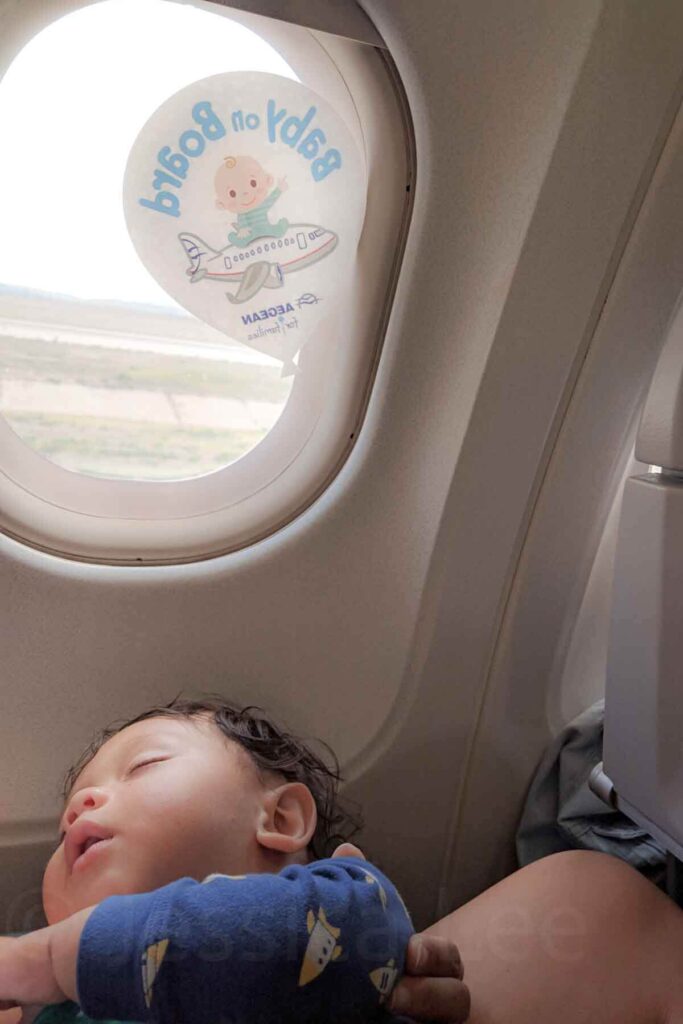
Car naps. Train naps. Ferry naps. These often worked well.
This approach also made the day feel smoother. We’d explore in the morning, time a longer transfer for nap, and arrive refreshed instead of overtired.
You don’t have to build your entire trip around sleep. But aligning longer transitions with nap time is a small adjustment that can make a big difference.
Expect a few strange nights
Travel sleep is rarely perfect.
You may get:
- A random 2am wakeup
- A 5am start
- An early crash after a long day
Short-term disruption is normal.
The goal isn’t zero wakeups. It’s enough rest that the trip still feels good.
What Do Parents Do Once Baby Is Asleep?
This is the question that rarely gets addressed.
Baby is asleep at 7pm. Now what?
You don’t want to blast the TV.
You don’t want to wake them.
You don’t necessarily want to go to bed immediately.
It can feel like you’re trapped in a dark hotel room.
Flex the clock when it makes sense
Some families are strict about bedtime. If that works for you, great.
But travel can be an opportunity to loosen the clock a little.
In Spain, dinner often starts at 9 or 10pm. In Taiwan, night markets are packed with families and children out later than you’d typically see in the US. Different cultures operate on different rhythms.
When we travel, we often shift bedtime later as a whole family. We still protect the routine. We just adjust the timing.
And sometimes, after a full day of exploring, we’re all happy to sleep at the same time.
Maintain the routine. Flex the timing.
Create separation if you can
If you’re sharing one room, a little strategy helps:
- A blackout sleep tent to create a separate sleep space
- Placing the crib in a corner or small adjoining area if practical
- White noise to allow quiet conversation
If your budget allows, a suite makes evenings much easier. Even a small sitting area creates adult space.
A balcony is another underrated option. Baby sleeps inside. You sit outside with a drink and talk like normal humans.
Quiet adult time still counts
If you’re in a single room without separation, you can still create space:
- Bring a laptop and use headphones instead of the TV
- Read side by side
- Sit in the bathroom with the door cracked and talk quietly
- Plan the next day together
It may not look like pre-kid travel evenings.
But it doesn’t have to mean lights out at 7pm either.
Baby Travel Sleep Essentials Actually Worth It
Once you’ve protected the environment and adjusted your expectations, the right gear can make things easier.
You don’t need specialty versions of everything.
But a few well-chosen items make a big difference in how well your baby sleeps while traveling, and how well you do too.
Travel Crib – Guava Family Lotus
If we’re bringing a crib, it’s the Lotus Travel Crib.
It’s lightweight, folds compactly, and can be worn as a backpack. Setup is simple once you arrive.
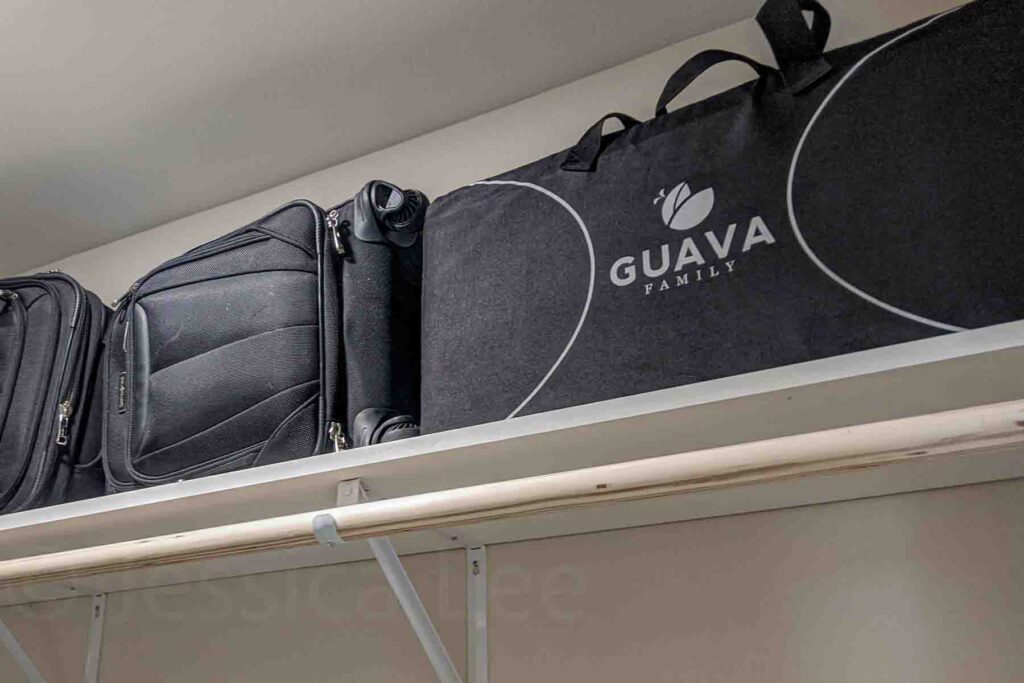
We don’t always bring it. Hotels often provide cribs, and lighter travel is usually easier.
But we almost always bring it for Airbnbs or rental homes. It removes uncertainty. I know the setup. I know the safety. That consistency can make bedtime smoother.

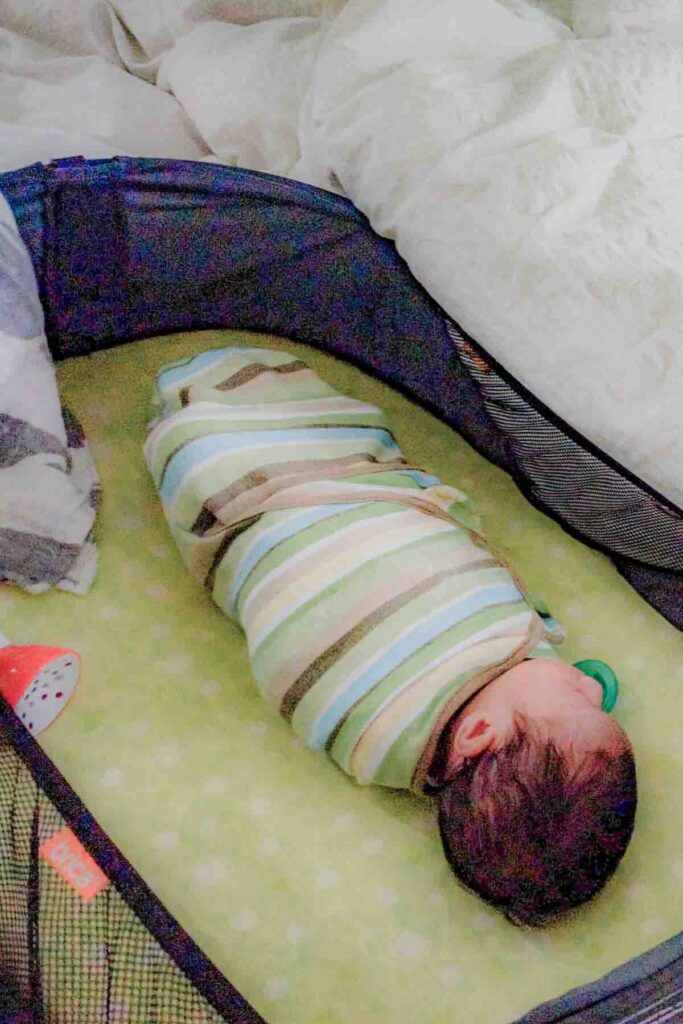
Travel Bassinet for Younger Babies – BRICA Travel Pod
For very young babies, a compact travel bassinet can be helpful.
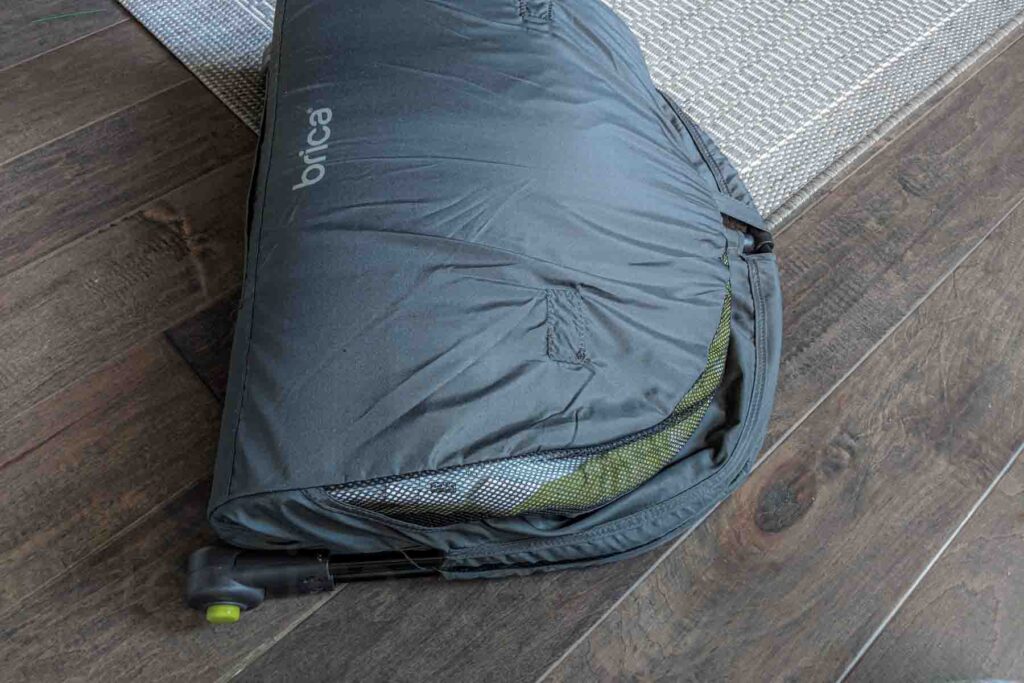
It’s lightweight and folds flat, making it easy to pack. Best for newborns and babies who aren’t rolling yet.
Once babies become more mobile, we transition to a full travel crib.
Blackout Solutions
Light is one of the biggest disruptors on the road.
CoziGo – for naps on the go
We’ve used CoziGo from Italy to Sydney to Fiji.
It attaches to strollers and airplane bassinets, creating a dark, distraction-free space for your baby while you’re out. Esecially helpful if you’re flying long-haul with a baby and plan to use a plane bassinet.
This is not a full-room solution. It’s for younger babies and on-the-go naps. If your baby is easily stimulated, this can make stroller naps easier.
SlumberPod – for accommodations
SlumberPod creates a fully enclosed sleep space over a crib. Think of it as a room within a room.
We haven’t personally used it, but it’s widely recommended.
I’ve done the DIY version. Moving furniture to block my baby’s view, bathroom setups, closets, and draping blankets. It works sometimes…sort of. But a dedicated blackout solution is more reliable for easily distracted babies.
Portable White Noise
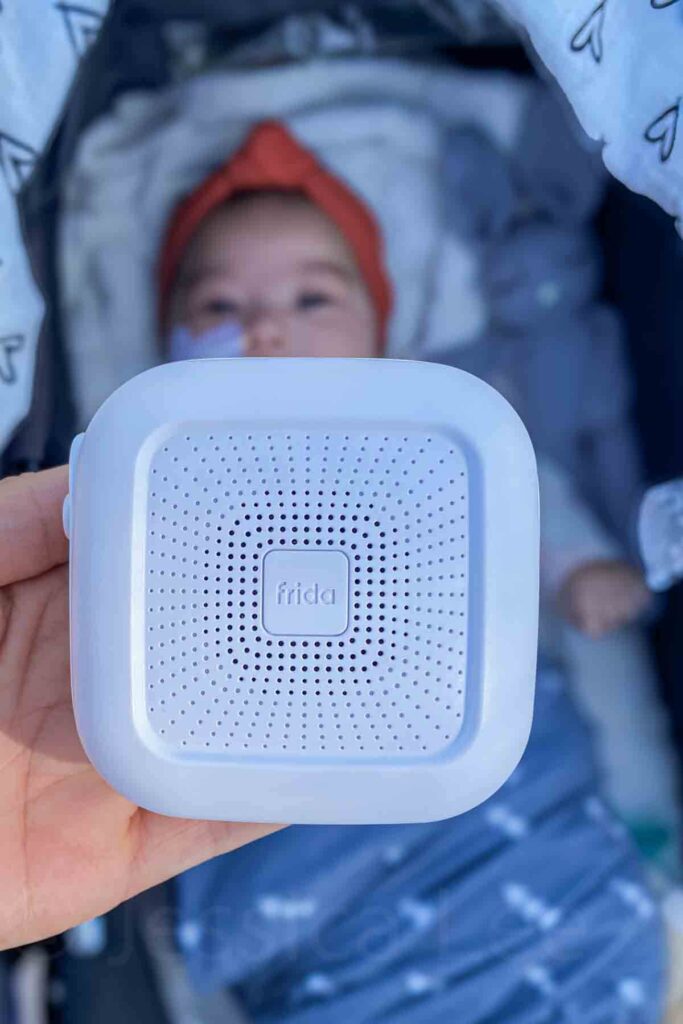
White noise is non-negotiable for us.
Hotel hallways are loud. Elevators ding. Doors slam. Street noise carries.
You can use a sound machine app on your phone, which we’ve done in a pinch. But I prefer and always pack a compact sound machine.
I even keep one in our stroller for naps on-the-go.
This creates consistency in unfamiliar spaces.
Amber Nightlight
What you don’t want is flipping on a bright overhead light in the middle-of-the-night and fully waking everyone up.
An amber nightlight gives enough visibility for feeds and diaper changes without disrupting sleep further.
It’s a small thing. But at 2 am, little things like this matter.
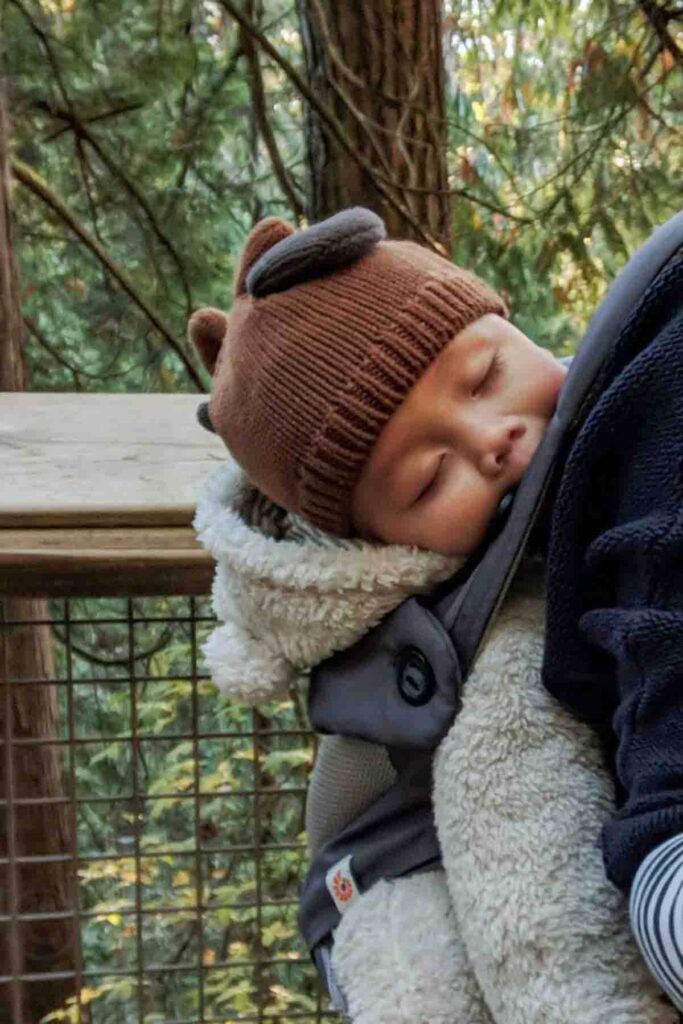
Baby Carrier – Ergobaby Mesh
If I had to choose one tool for flexibility, it’s a good carrier.
We use and highly recommend the Ergobaby.
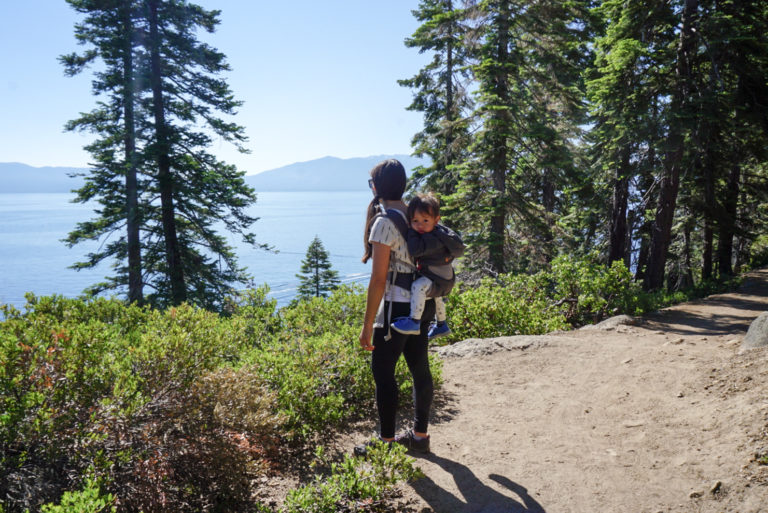
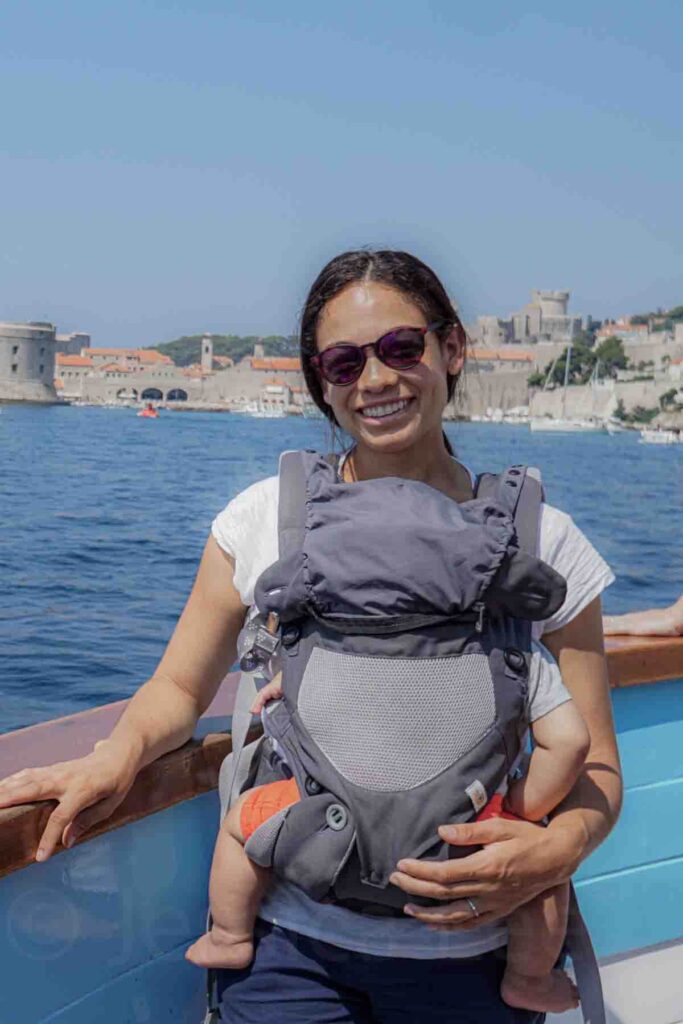
Carrier naps allow you to keep moving. Airports. Walking tours. Long sightseeing days.
They often last longer than stroller naps for younger babies and help regulate overstimulation.
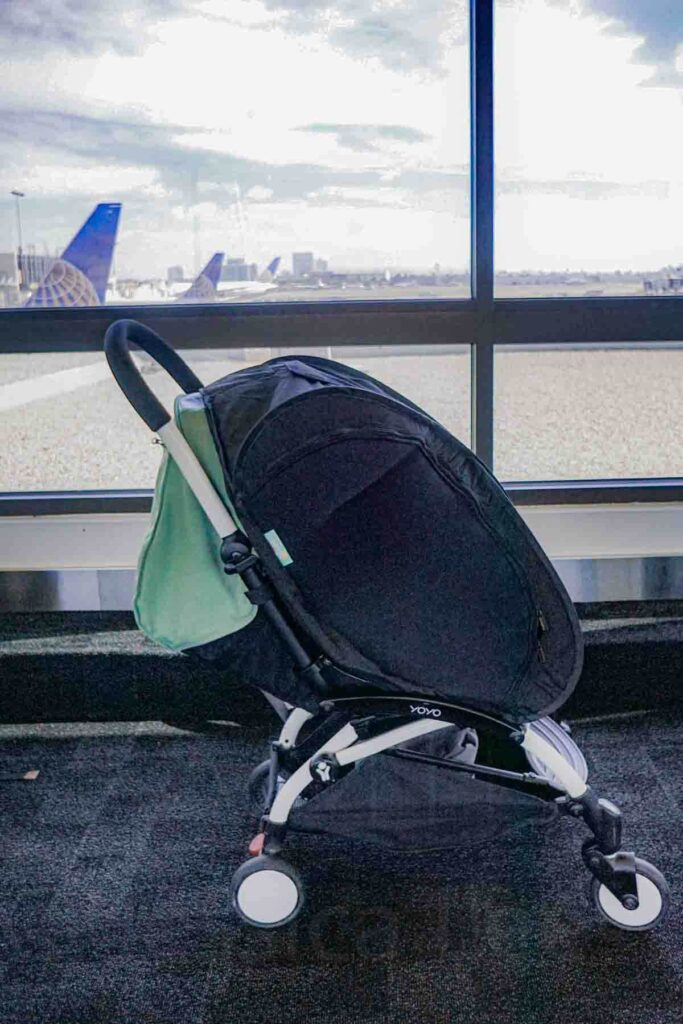
Travel Stroller – Babyzen YOYO
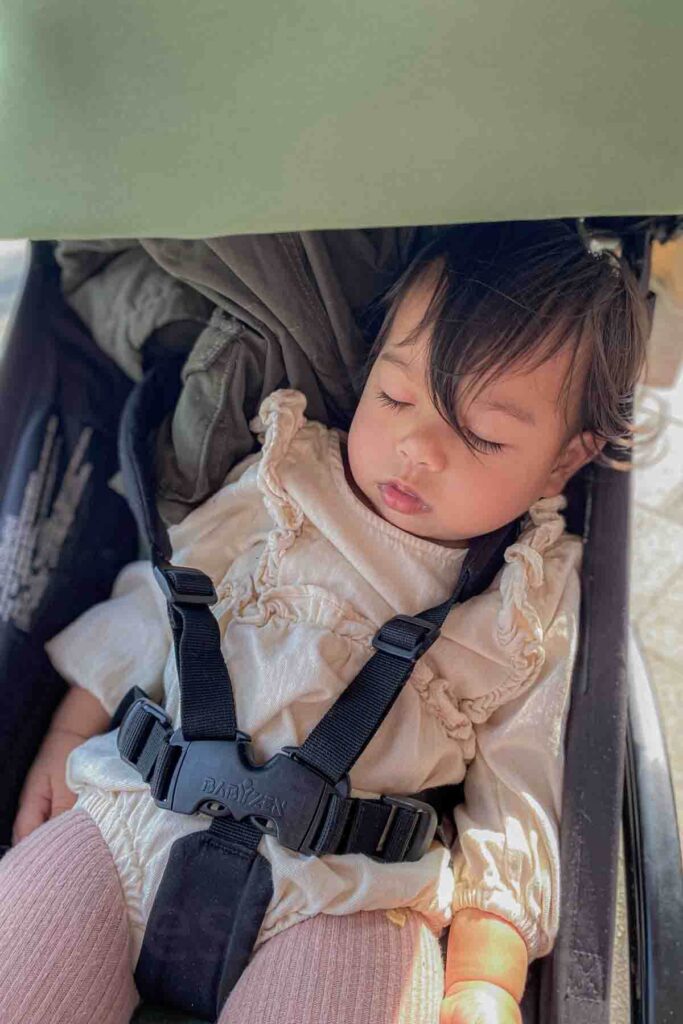
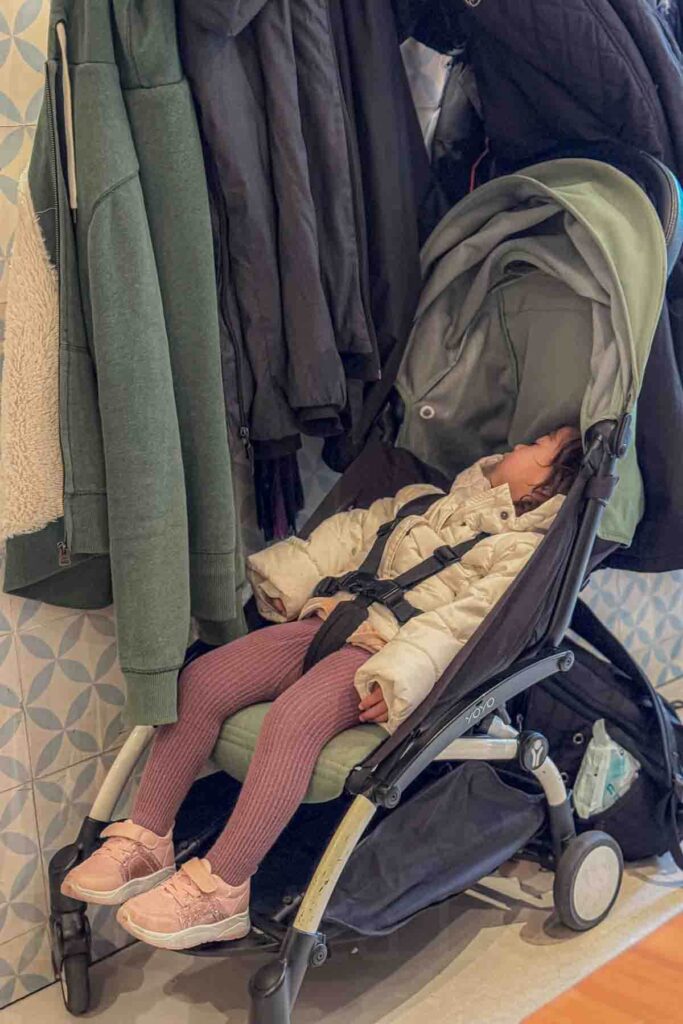
A lightweight travel stroller that reclines properly makes a big difference.
We use the Babyzen YOYO, and it’s been around the world with us.
What matters most:
- Good recline
- Solid sunshade
- Easy maneuverability
We’ve had entire sightseeing days powered by stroller naps. Museums, city walks, coastal promenades. Baby sleeps, we explore.
Should You Bring a Travel Crib or Use the Hotel’s?
It depends.
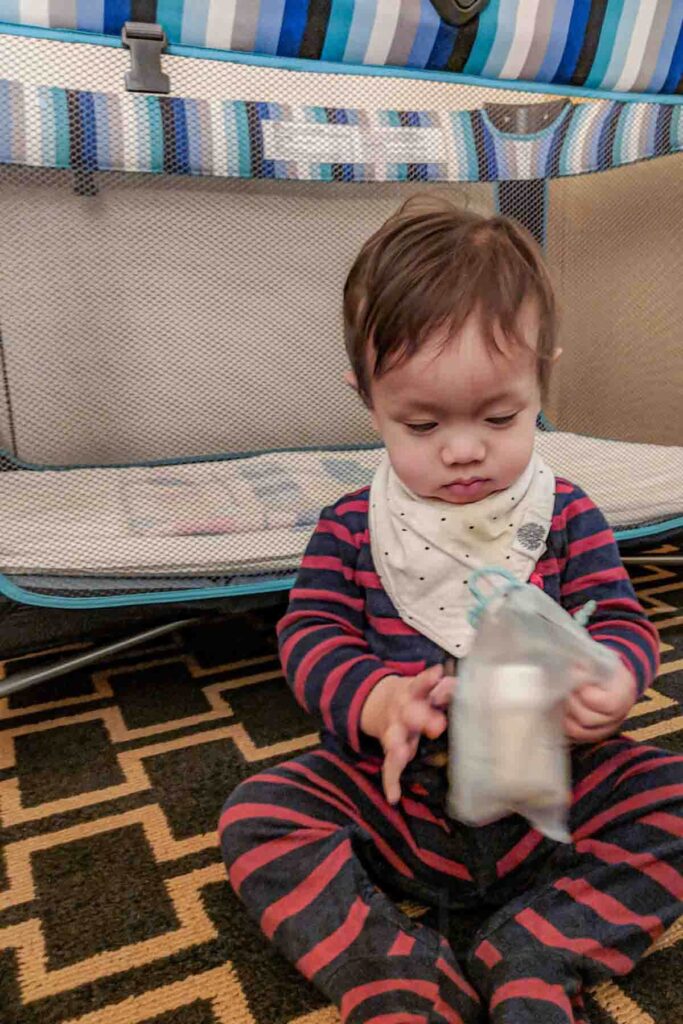
Most hotels provide cribs, and many are perfectly fine. Always request in advance.
We’ve had mostly good experiences, but occasionally one looked outdated or less clean than I preferred.
That’s why I always pack our own fitted sheet.
For rentals or Airbnbs, we usually bring our own crib to remove uncertainty.
There’s no single right answer.
If packing light reduces your stress, use the hotel crib, or rent a crib.
If predictability reduces your stress, bring your own.
Making sure your baby sleeps while traveling is hard enough. Choose the option that gives you the most peace of mind.
A Middle Ground – Renting Gear
If you don’t want to fly with a crib but also don’t love the unknown of a hotel one, renting can be a strong compromise.
We’ve rented through BabyQuip before and had a great experience. What gives me peace of mind is their safety and cleanliness standards.
Their Quality Providers go through background checks and safety training. Gear is inspected and deep-cleaned after every rental using parent-approved cleaning practices. Recalled items are removed from circulation. Rentals are also covered by liability insurance.
For longer trips where consistency matters, renting can remove the hassle of packing bulky gear while still providing a vetted, sanitized, and safe sleep setup.
What About Co-Sleeping?
There were seasons when co-sleeping simply made travel easier.
New environment. Jet lag. Everyone in one room.
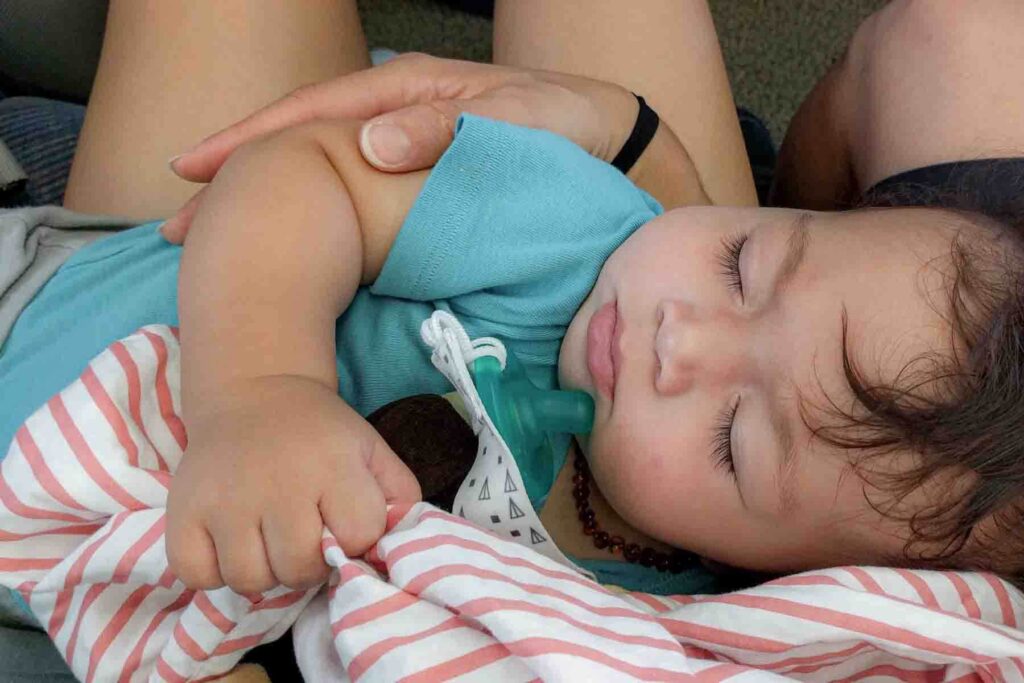
Sometimes bringing a baby into bed meant everyone got more rest.
This is personal and depends on your comfort level, culture, and safety precautions.
If you already co-sleep at home, it’s easier to continue while traveling. Just keep in mind different bed setups and safety.
For us, it was occasionally a short-term solution during certain stages. Sometimes we needed the flexibility.
Planning travel with a baby?
I have a dedicated group for baby and toddler parents sharing the best baby-specific travel strategies, packing lists, and honest lessons learned the hard way.
Join here.
FAQs About Baby Sleep While Traveling
How do you keep a baby on a sleep schedule while traveling?
Focus on the routine, not the exact time.
Keep the same wind-down cues. Feed, pajamas, sleep sack, white noise, even if bedtime shifts slightly. Most babies adjust within a few days when the environment feels familiar and predictable.
Do babies sleep well on vacation?
Some do. Some don’t.
Sleep can be affected by stimulation, light exposure, time zone changes, and how sensitive your baby is to new environments. The goal isn’t perfect nights. It’s enough rest for everyone to function and enjoy the trip.
What do babies sleep in on vacation?
Most families choose one of three setups:
- A travel crib
- A hotel-provided crib
- Occasionally co-sleeping, depending on comfort and safety preferences
For babies under 18 months, a contained sleep space is usually the simplest and most consistent option.
Is it better to bring a travel crib or use the hotel’s?
It depends on what reduces your stress.
Bringing your own travel crib offers consistency and familiarity. Using the hotel crib keeps luggage lighter and is often perfectly fine. Always request it in advance and inspect it upon arrival.
Do you need blackout curtains when traveling with a baby?
Darkness makes a noticeable difference.
Early sunrises and thin hotel curtains can trigger very early wakeups. If the room isn’t naturally dark, a stroller cover for naps or an enclosed sleep tent for nighttime can help significantly.
Is SlumberPod worth it?
For babies who are easily distracted or for families sharing one room, many parents say yes.
SlumberPod creates a fully dark sleep space within the room, which can make evenings smoother for everyone. Whether it’s worth it depends on how sensitive your baby is to light and movement.
How do you handle jet lag with a baby?
Expect a few odd nights.
Prioritize daylight exposure during the day, keep nighttime dark and calm, and allow for earlier bedtimes if needed. Flexibility tends to work better than rigid scheduling during time zone transitions. Jet lag in kids can be tough, but it is possible to help them adjust faster.
Should naps happen in the crib while traveling?
Not necessarily.
Stroller and carrier naps often make sightseeing days smoother. There may be phases when crib naps are helpful, but many families find daytime flexibility works well on trips.
Protect the Trip, Not Perfect Sleep
Sleep will look different on the road.
There may be early mornings. Random wakeups. The occasional dinner faceplant.
That doesn’t mean the trip is failing.
The goal isn’t perfection. It’s enough rest to enjoy the day.
We try to control what matters most. Darkness, white noise, familiar cues, and staying flexible everywhere else.
Sleep matters. Adventure matters too.
You don’t have to choose.
Keep Reading
- Why I use packing cubes for my family’s suitcases
- Mastering a long-haul flight with your baby
- Preparing for your baby’s first flight
- Helping children with jet lag
- Traveling to Japan with a baby – why it works
Planning your own trip with kids?
I share one email a month with real-world family travel strategies, packing tips, and destination breakdowns that make planning easier.
Join below.