Best Age to Travel With a Baby — Don’t Wait Until One
I see it all the time. Parents waiting until their baby turns one to take their first big trip.
It makes sense. One feels monumental. You survived the newborn stage. You’re more confident. It feels like the “right” time.
But here’s what I’ve learned after traveling with all three of my babies, from a road trip to Austin with a 5-week old to flying to Chicago with a 3-month-old. And flying with a 6-month-old to Italy, to a long international flight to Japan with a 7-month old.
Waiting until one is usually the hardest time to start.
I remember feeling like I couldn’t get our first trip wrong. Travel was part of who I was. If it went badly, would we just… stop traveling?
After doing this at 2.5 months, 3 months, 4.5 months, 5 months, 6 months, 7 months, 8 months, 9 months, 10 months, 13 months, 15 months, and deep in the toddler years, here’s my honest take:
If you’re hoping for baby travel on easy mode, go before your baby turns 10 months old. Once they’re a toddler, it’s the hardest time to go.
The true sweet spot?
Six to eight months.
And if you don’t want to travel with a baby at all? Skip the chaos years and start at three.
Let me show you why.
Affiliate Disclosure: Familee Travel contains affiliate links and is a member of the Amazon Associates Program, we may earn commissions from qualifying purchases at no additional cost to you.
Jump to: Why not one, Hardest age, Best age, If anti baby travel, Best how to tips, Health considerations, FAQs
In a rush? Pin this or email it to yourself to read later! (Psst! Use the buttons at the very top or bottom of this post for ease.)
What is the Best Age to Travel with a Baby?
If you want the straightforward answer:
Six to eight months old is the sweet spot.
If you’re trying to stack the odds in your favor for a smooth first trip, this window gives you the best balance of flexibility, predictability, and manageability.
Could you travel younger? Absolutely.
Can you travel older? Of course.
But if we’re talking about the best age to travel with a baby, this is it.
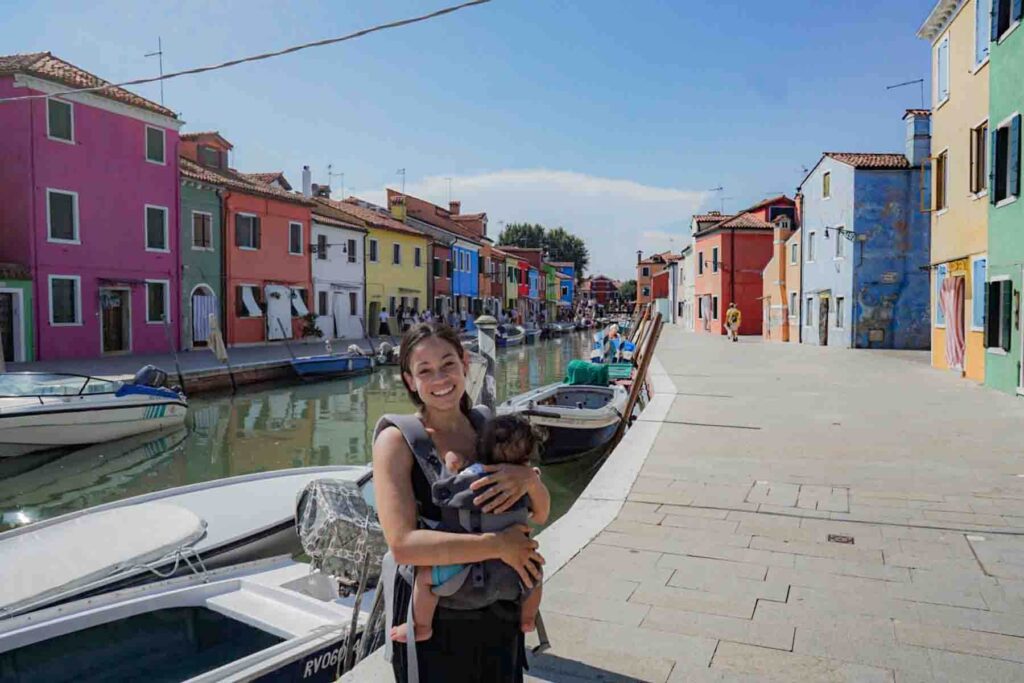
Why 6–8 months works so well
They’re not fully mobile yet.
They might be rolling or starting to crawl, but they’re not sprinting in opposite directions. You’re not chasing a tiny human through an airport or preventing them from standing on an airplane tray table.
Sleep is still relatively flexible.
Many babies at this age can nap in a stroller or carrier without everything falling apart. They’re not as rigidly attached to one exact sleep setup.
Food is simple.
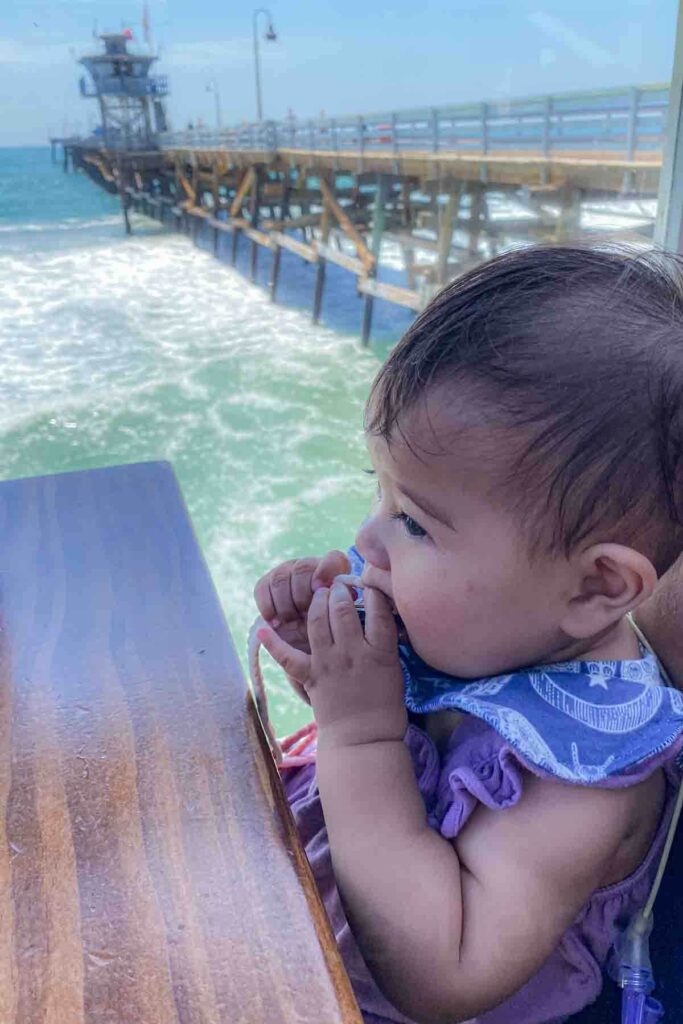
If they’ve started solids, they’re usually still in the curious stage. Basic foods work. Nursing or bottles are still the primary nutrition source, which simplifies things dramatically compared to feeding a picky 2-year-old in a restaurant.
They’re still very wearable.
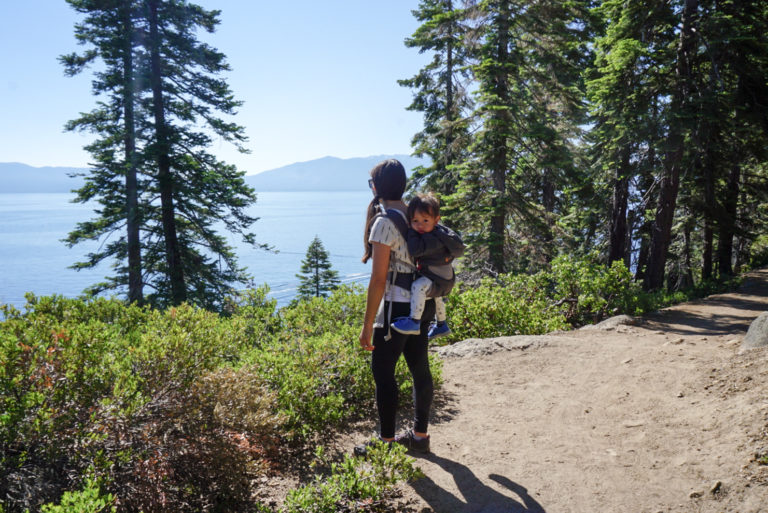
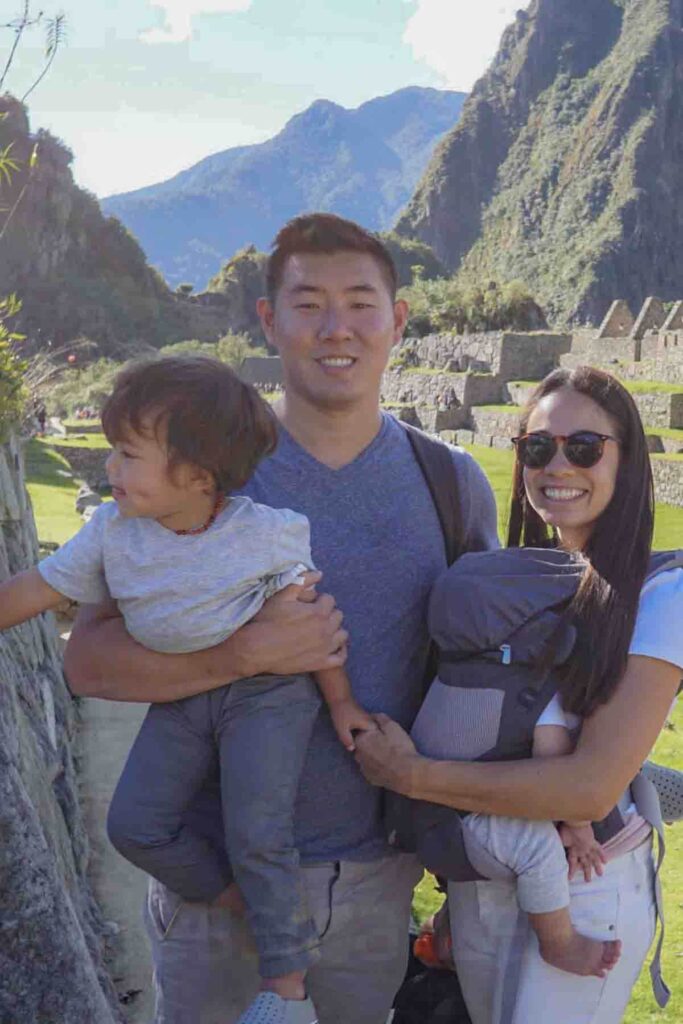
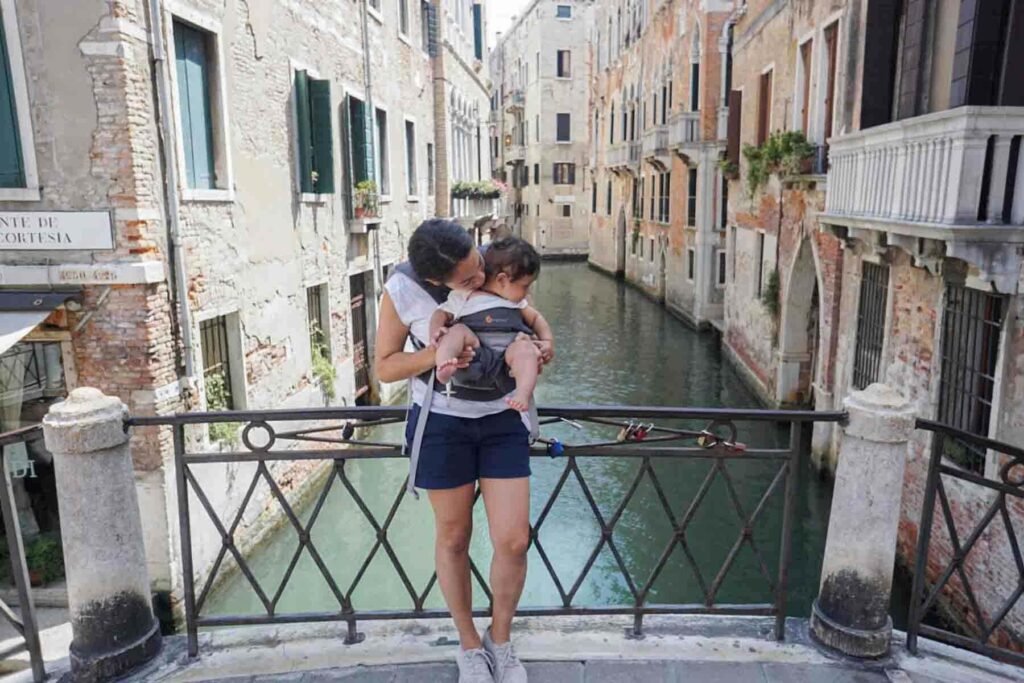
At 6–8 months, most babies are happy in a carrier for long stretches. I hiked in Montenegro with a 7-month-old strapped to me. We toured Japan with a 7-month-old. We navigated Machu Picchu at 6 months. Baby in the carrier, content. It worked.
They’re easily entertained by the world.
New sights. New sounds. Bright lights in an airport. They’re fascinated by everything. You don’t need elaborate entertainment strategies yet.
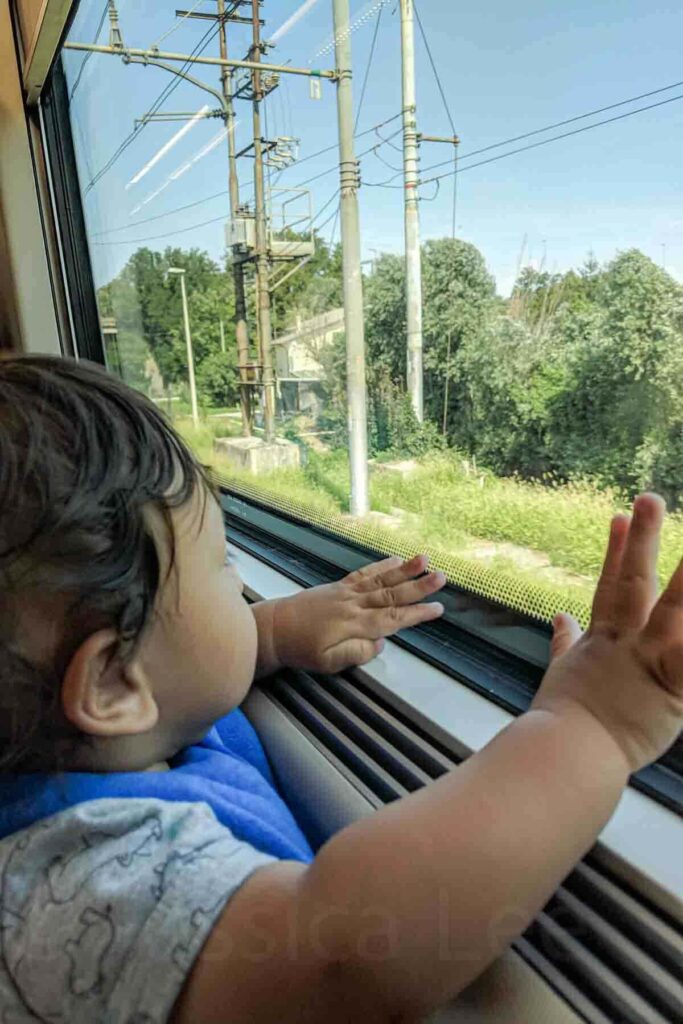
And perhaps most importantly:
They generally don’t have strong, immovable opinions yet.
That phase is coming. But it usually hasn’t fully arrived.
If you’re planning something far. To Europe, Asia, or another long-haul flight, I still recommend easing in first if you can. Take a shorter trip. A weekend road trip. A quick domestic flight. Learn your flow before layering on jet lag and 10-hour flights.
But if you’re asking, “What is the best age to travel with a baby?”
Six to eight months gives you the highest chance of success.
Flying Long-Haul With a Baby?
If your baby is under one and you’re preparing for an international flight, start here.
Download the Calm Long-Haul Baby Guide — a practical carry-on checklist and sleep strategy framework built for the 0–12 month stage.
Plus, I’ll send one calm, useful email per month with real-world travel guidance.
You don’t have to figure this out alone.
Why I Don’t Recommend Waiting Until One
I understand why parents wait.
One feels safer.
One feels sturdier.
One feels like you’ve officially “made it” through babyhood.
You’re sleeping more. You’re more confident. You finally feel like you know what you’re doing.
So naturally, it seems like the perfect time for a big first trip.
But developmentally, something important happens right around 9 to 10 months.
Mobility explodes.
Curiosity explodes.
Impulse control? Still nonexistent.
And communication is limited.
That combination is what makes the 10-month-to-toddler stretch the hardest entry point for your very first trip.
If you’re hoping for baby travel on easy mode, go before your baby turns 10 months old. Otherwise, once they’re in toddler territory, it’s the hardest time to go.
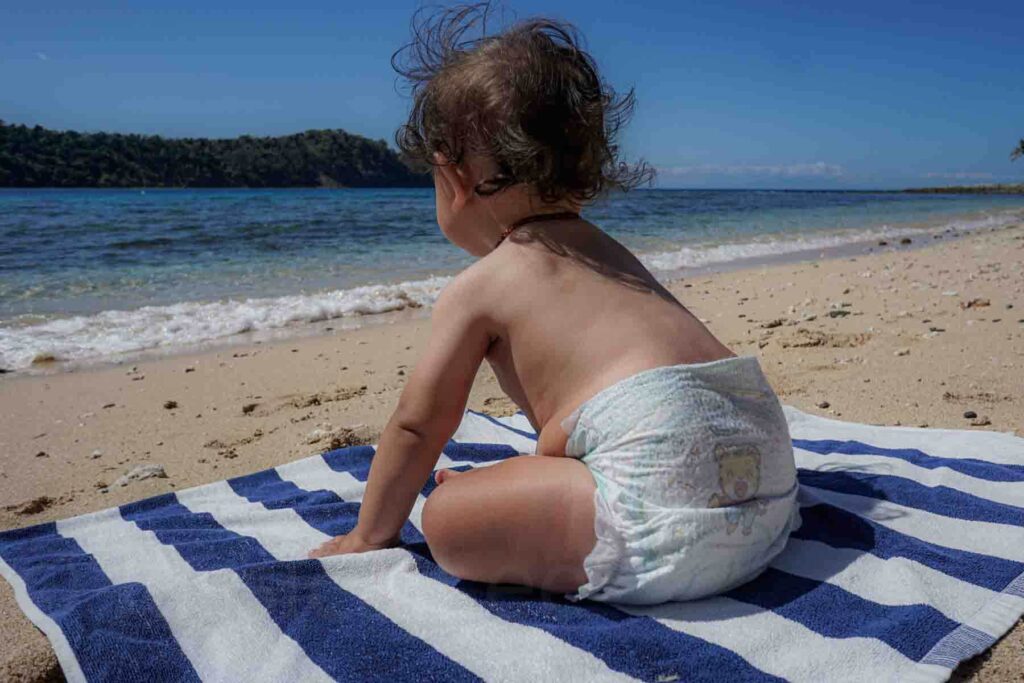
What changes around 10–12 months
They want to move constantly.
Not just crawl. Climb. Stand. Cruise. Grab. Touch everything.
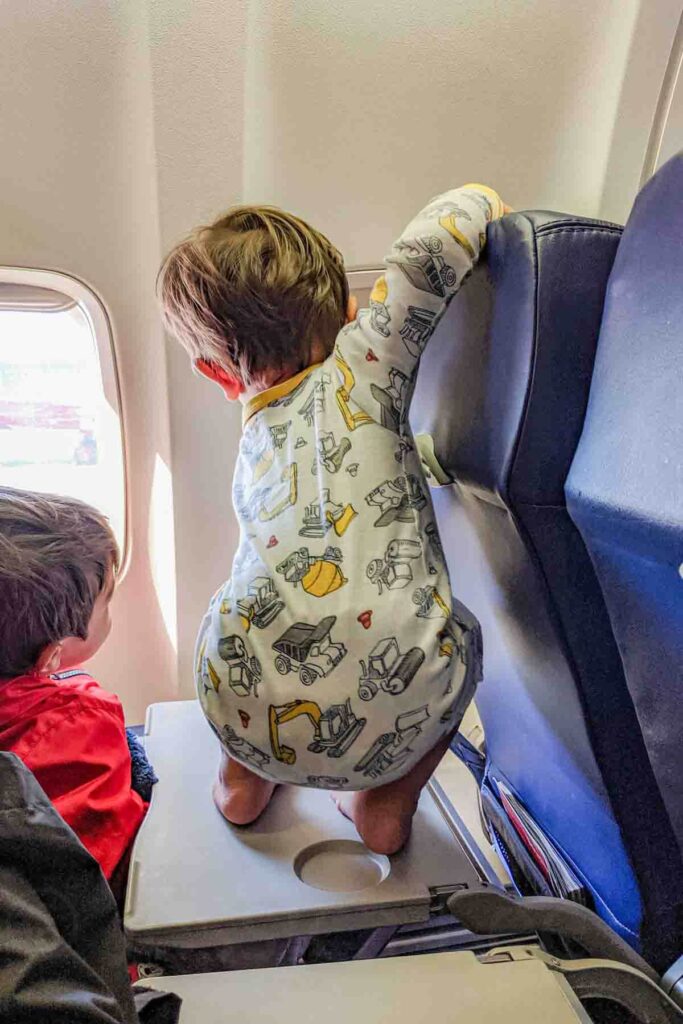
I once had an 18-month-old on a relatively short flight who could not sit still for anything. He wanted to stand on the tray table, climb the armrests, press every button, twist the air vent, and peek between seats. It wasn’t even a long haul, and it felt longer than many 10+ hour flights we’ve done.
They know what they want, but can’t clearly tell you.
This is a huge one. So much toddler frustration comes from being misunderstood. On the road, when everything is new, that frustration can bubble over fast.
Sitting expectations become developmentally unrealistic.
A one-year-old can’t sit still for an hour-long dinner. A two-year-old isn’t wired to quietly tour a museum. That doesn’t mean you never go, but if it’s your first-ever trip with a child, layering these expectations onto brand-new travel logistics can feel overwhelming.
And when your first trip feels overwhelming, it can impact how you feel about traveling with kids altogether.
That’s the part I want parents to avoid.
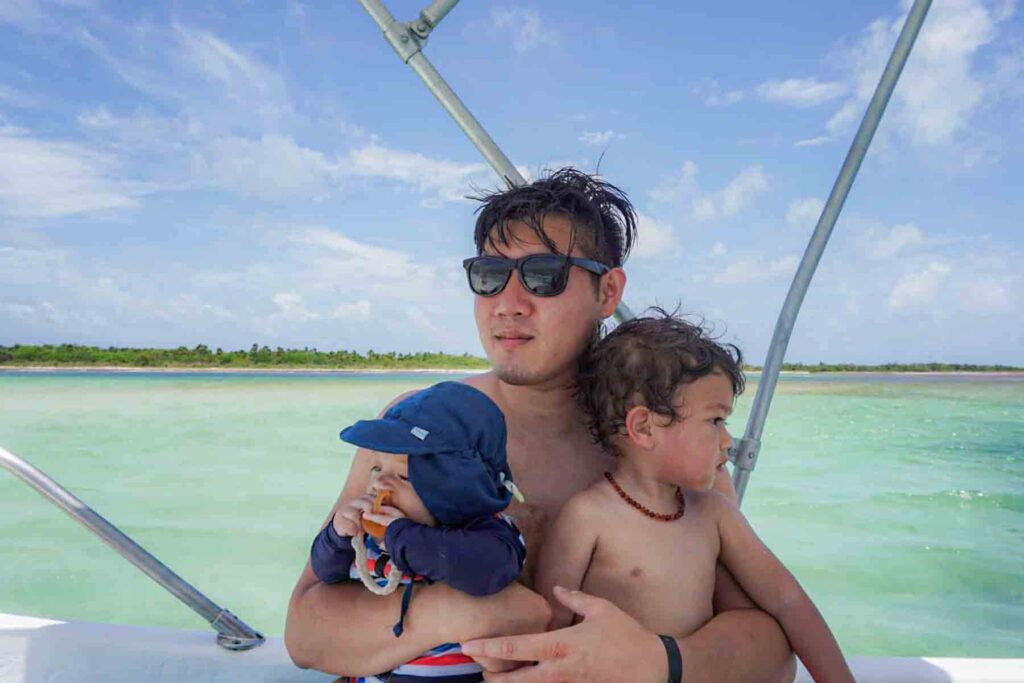
The Hardest Age to Travel With Kids (10 Months to 2.5 Years)
Let me be very clear:
This does not mean you shouldn’t travel during this stage.
I have. Many times. It can still be worth it.
But if we’re talking about the hardest age to start traveling?
Roughly 10 months to 2.5 years is the most intense window.
Here’s why.
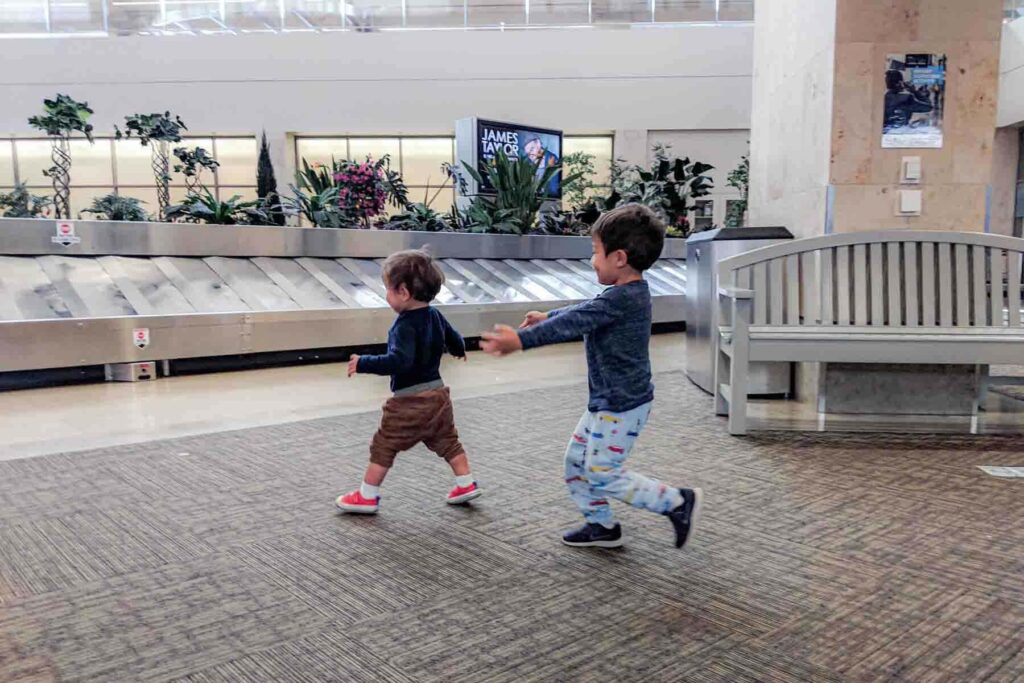
1. Movement without limits
Around this age, your child is wired to move.
They’re walking. Climbing. Testing gravity. Exploring every single surface within reach.
But they have:
- No real sense of danger
- No impulse control
- No understanding of “not right now”
On an airplane, that becomes obvious fast.
That 18-month-old short flight I mentioned? He didn’t want snacks. He didn’t want toys. He wanted to stand on the tray table. He wanted to climb over the armrest. He wanted to press the call button. It wasn’t defiance, it was development.
When toddlers are mobile but not regulated, trying to contain them becomes exhausting.
And exhaustion is what makes parents think, “maybe we just won’t travel again for a while.”
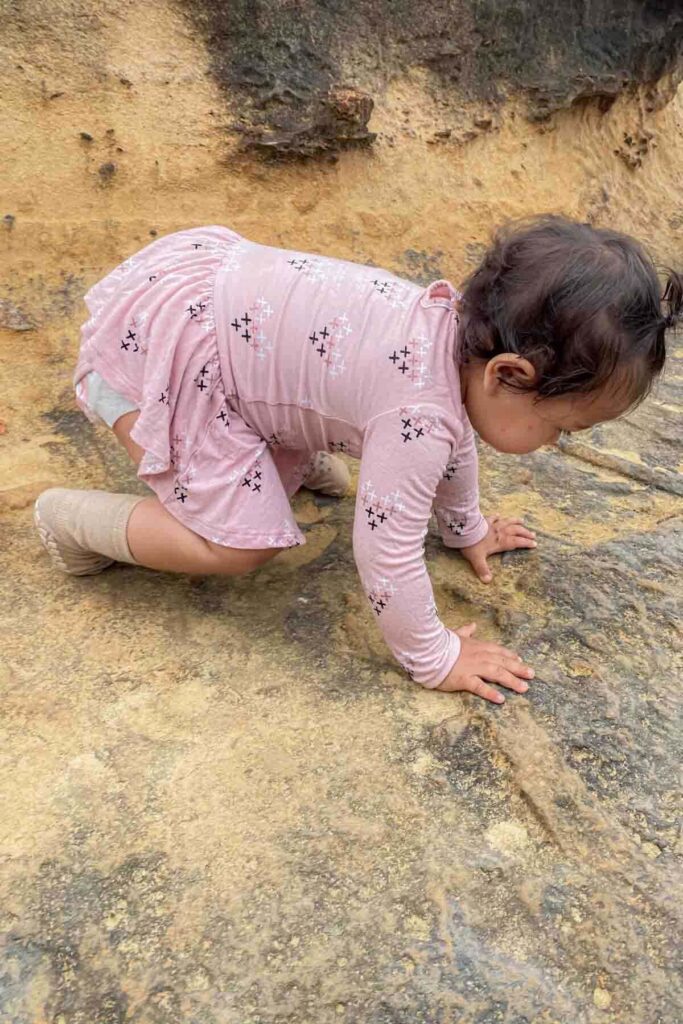
2. Communication gaps = big emotions
This might be the biggest factor of all.
During this stage, toddlers know what they want.
But they often don’t have the language to clearly express it.
That gap, between desire and communication, creates frustration. And frustration turns into meltdowns.
At home, you can control the environment. You know their rhythms. You have safe spaces. Familiar routines.
On the road? Everything is new. Overstimulating. Less predictable.
That gap feels bigger.
3. Developmental reality vs travel expectations
This is where a lot of parents accidentally set themselves up for frustration.
At 1 and 2-years-old, kids:
- Aren’t built to sit at a restaurant for 90 minutes.
- Aren’t built to quietly tour museums.
- Aren’t built to sit in a stroller for hours.
- Aren’t built to sit on a plane without movement.
It’s not bad behavior. It’s normal development.
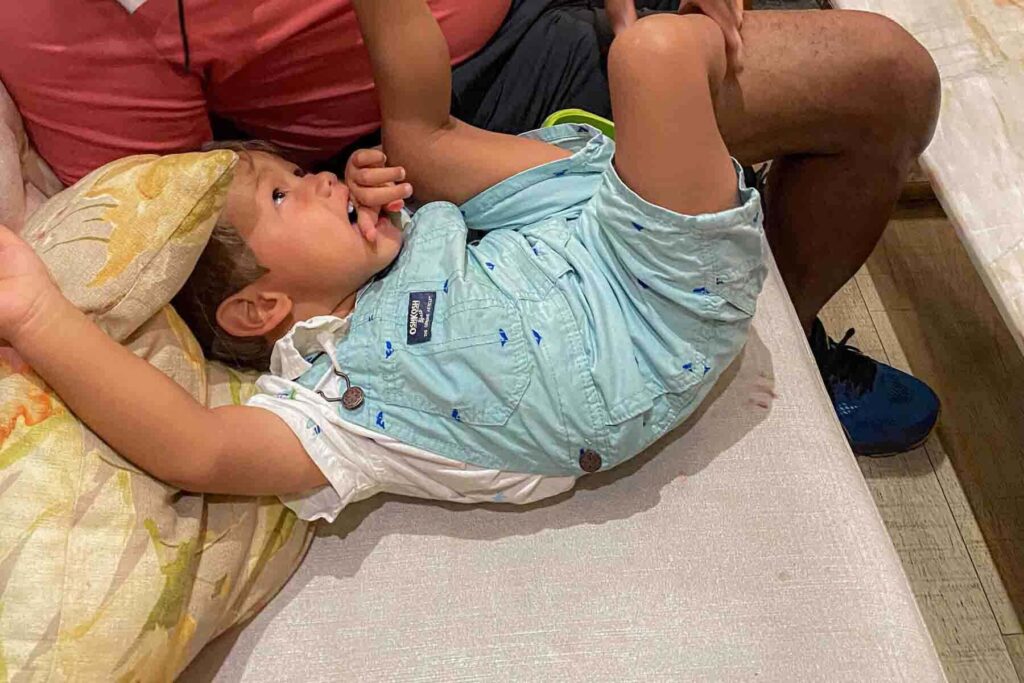
But when your first trip involves:
- A long-haul flight
- Train transfers
- Long walking days
- Restaurant dinners
You’re stacking a lot of “sit still” on a child who biologically needs to move.
And if you haven’t already worked out the logistics of traveling with a baby before this stage, it becomes a double challenge.
4. A real-life contrast
On our Machu Picchu trip, we had both.
A 6-month-old baby in the carrier who was content, nursing on the go, happily observing the world.
And a 2.5-year-old who wanted to be held, then put down, then held again. Who kicked his shoes off constantly. Who was busy, busy, busy.
Both were normal. Both were age-appropriate.
But the experience was objectively easier with the baby.
That’s the difference.
The toddler stage isn’t impossible. It just requires more adjustment, more flexibility, and lower expectations.
Which is exactly why I don’t recommend making it your very first trip with a child.
Best Age to Travel With a Baby on a Plane
When parents ask me this, they usually mean:
- Is it better to fly before one?
- Is international harder than domestic?
- What’s the easiest age for a long flight?
Here’s the clarification that matters:
It’s not domestic vs international.
It’s short haul vs long haul.
A “domestic” flight in the U.S. can be five hours.
An “international” flight to Mexico might be three.
Distance and duration matter more than borders.

Best age for long-haul flights
If you’re planning a 8–12+ hour flight with a baby, the easiest window is typically 5 to 8 months old.
Why?
- They’re not fully mobile.
- They’re often content being held or worn.
- They can sleep on you.
- They’re less driven to explore the cabin.
- Feeding is still simple.
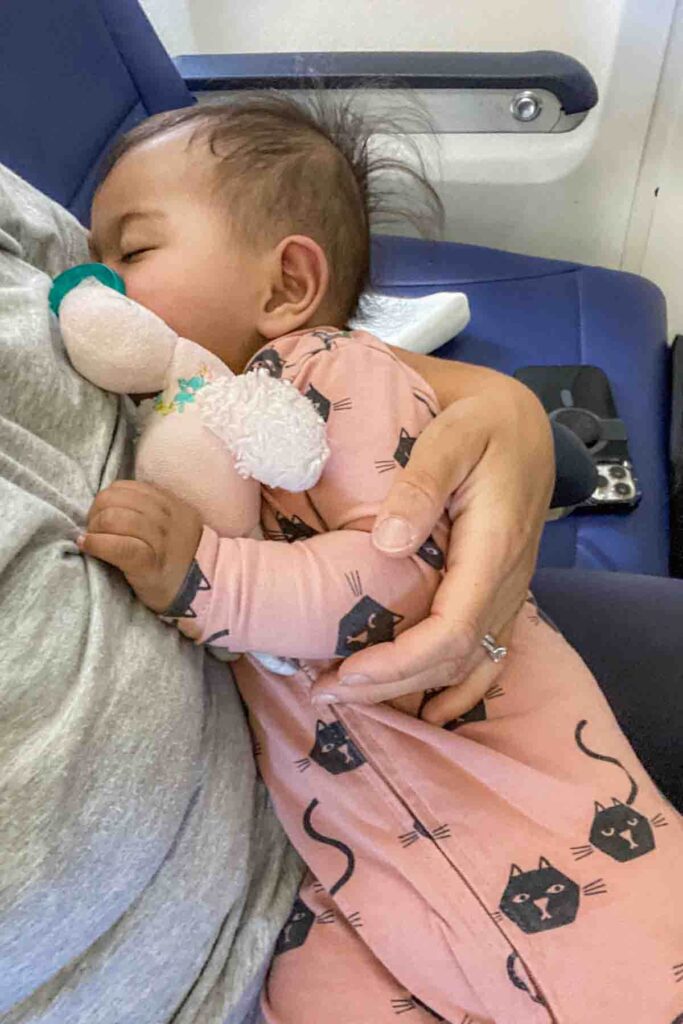
We flew internationally with a 7-month-old to Japan. We’ve done long travel days at 6 months. Those flights were calmer than many short flights during toddlerhood.
A 7-month-old is usually happy to nurse, nap, and observe.
An 18-month-old wants to crawl down the aisle.
That difference matters.
If you’re hoping to tackle a big international trip as your baby’s first flight, I would strongly consider doing it before 10 months.

Best age for short-haul flights
Short flights are much more forgiving.
We flew:
- 2.5 months Houston → Orlando
- 3 months Houston → Chicago
- 4 months Houston → New York
- 5 months Seattle → Cancun
- 6 months Los Angeles → Boston
All very manageable.
At this age:
- Babies sleep easily on you.
- Feeding is straightforward.
- Expectations are low.
- Containment is simple.
Even younger can work well too as long as you feel physically and mentally ready.
The toddler flight reality
Once you’re in that 12–24 month window, flights become more physical.
They want to:
- Stand.
- Climb.
- Explore.
- Push boundaries.
They aren’t wrong for wanting that. It’s developmentally appropriate.
But airplanes are not developmentally appropriate environments for toddlers.
That mismatch is what makes flights in this window feel so intense. It becomes even more intense when you have a 14-hour flight with a toddler.
If your dream trip involves a long-haul flight, and you’re debating timing, I would plan it in that 6–8 month sweet spot if possible.
If that timing doesn’t work for your family, consider easing in first with shorter flights before committing to something farther.
If You’re Skipping Baby Travel Entirely
Maybe you’re reading this thinking:
Nope. Not doing it.
I’m not traveling with a baby.
That’s completely valid.
Traveling with a baby is not a requirement for being a good parent. It’s not a badge of honor. It’s not something you have to push through.
If you’re firmly in the “we’ll wait” camp, here’s my honest advice:
Skip the chaos years and start at three.
If you’re refusing baby travel entirely, don’t make your child’s first trip at one or two.
Why three is a much better entry point
Around three years old, several important things shift:
Communication improves dramatically.
They can tell you what they need. They can answer simple questions. They can understand basic explanations.
Impulse control begins to develop.
Not perfectly. Not magically. But enough that redirection works better.
They can reason.
You can explain, “We’re sitting for takeoff.”
You can say, “After dinner, we’ll go to the playground.”
And they can process that.
Stamina improves.
They can walk farther. They can handle longer outings. They don’t need to be carried every five minutes.
Travel is still work at three.
But it’s a different kind of work.
Instead of constant physical containment and emotional guesswork, you’re working with a child who can participate a little more in the experience.
So your options look like this:
- If travel is important to you and you want the easiest first experience, go before 10 months, ideally 6–8.
- If you’re not traveling with a baby at all, wait until three.
- Just don’t make one or two your starting line and expect it to feel easy.
That’s where expectations and development collide.
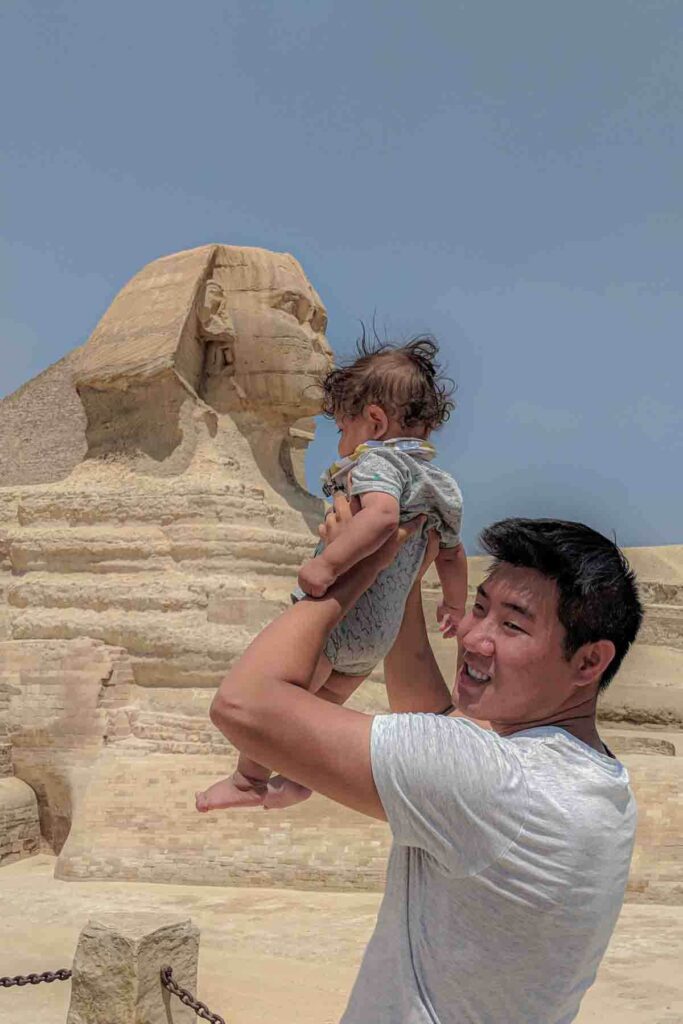
How to Take Your First Baby Trip Without Blowing It Up
One of the biggest mistakes I see isn’t just when parents travel.
It’s how.
If you’ve never packed for a baby.
Never navigated an airport with a stroller and car seat.
Never fed or changed a baby on the go.
Never had your baby sleep anywhere except their crib at home.
And then your very first trip is a 10-hour flight to Europe for their first birthday?
That’s a lot of pressure.
You’re not just managing a new developmental stage.
You’re managing brand-new travel logistics at the same time.
That’s a double challenge, and you’re not setting yourself up well for success.
Ease in if you can
With our first baby, we didn’t jump straight into international travel.
At 5 weeks old, we did a one-night road trip to Austin from Houston.
At 3 months, we flew to Orlando.
Not huge trips. Not high stakes. Just enough to learn.
We figured out:
- What we actually needed to pack (and what was unnecessary).
- How airport security works with baby gear.
- How to feed on the go.
- How naps worked in a stroller.
- What was clunky and what flowed.
We overpacked at first. We refined. We adjusted.
Those smaller trips made our bigger trips feel manageable instead of overwhelming.
If you have the time and flexibility, take several smaller trips before your baby’s first big one.
A weekend road trip.
A short flight.
Staying at a relative’s house.
Lower stakes. Lower pressure. Real practice.
Especially if you’re planning something far
If your dream is Paris, Rome, Kyoto, or Dubai, do a practice run first if possible.
Work out:
- Your packing rhythm.
- Your airport flow.
- Your travel sleep strategy.
- Your feeding strategy.
That way, when you add in jet lag and long travel days, you’re not figuring everything out at once.
Traveling with a baby is never effortless.
But it doesn’t have to feel like a gamble either.
A Quick Note on Medical Clearance and Vaccines
Everything I’ve shared here is about developmental ease, not medical readiness.
Those are two separate conversations.
If your baby is medically complex, premature, or has ongoing health considerations, timing may look different. Our third baby had a very different start to life, including major surgery and a hospital stay in her first month. That alone shifted how we approached early travel with her specifically.
Medical clearance always comes first.
Vaccine timing can also influence your comfort level, especially for international trips. Some parents prefer to wait until certain routine vaccines are completed. Others are comfortable traveling earlier with appropriate precautions.
Every family’s risk tolerance is different.
If you’re wondering:
- What’s the youngest age you can safely travel?
- Is it okay to fly with a newborn?
- Should I wait until after specific vaccines?
I go deeper into those questions in my post on how early is too early to travel with a baby.
This article is about what’s easiest.
Those decisions are about what’s safest and most comfortable for your specific situation.
Both matter.

Frequently Asked Questions
What is the best age to travel with a baby?
In my experience, 6 to 8 months old is the sweet spot. Babies at this age are typically not fully mobile, still relatively flexible with sleep, easy to babywear, and generally happy to observe the world around them.
If you’re hoping for the smoothest first trip possible, try to travel before 10 months old.
Is 1 year old a good age for a baby’s first trip?
It can work, but it’s often harder than parents expect.
Around 10–12 months, mobility increases dramatically while impulse control and communication are still very limited. That combination can make travel feel intense, especially on planes and at restaurants.
If you’re choosing between under 10 months or just after one, earlier is usually easier.
What is the hardest age to travel with a child?
For many families, the hardest window is roughly 10 months to 2.5 years old.
Toddlers in this stage:
- Need constant movement
- Have big emotions
- Struggle to communicate clearly
- Have very little impulse control
Travel is still possible, it just requires more flexibility and lower expectations.

What is the best age to fly internationally with a baby?
For long-haul flights, many parents find 5 to 8 months old to be the most manageable window.
At this age, babies are typically:
- Content being held or worn
- Able to sleep on a parent
- Not yet determined to explore the entire airplane
The biggest factor isn’t domestic vs international, it’s flight duration.
At what age can you travel with a baby?
Medically, many babies can travel very early with pediatric clearance.
But from a developmental standpoint, if you’re asking when it feels easiest, most families find it more manageable before 10 months old or after age three.
For deeper guidance on medical readiness and vaccine timing, see my post on how early is too early to travel with a baby.
The Bottom Line
Traveling with kids is never effortless.
There will always be logistics. There will always be unexpected moments. There will always be at least one meltdown…theirs or yours.
But some ages are objectively easier than others.
If travel is important to you. If it’s part of your identity, part of how you want to raise your family, don’t accidentally sabotage your first experience by choosing the hardest entry point.
Here’s the simple framework:
- The younger they are, the easier it is.
- 6–8 months old is the sweet spot.
- Before 10 months gives you the best chance at smoother travels.
- 10 months to 2.5 years is the hardest time to start.
- If you’re skipping baby travel entirely, wait until three.
- Don’t ignore your instincts about what is best for your baby.
This doesn’t mean you can’t travel outside these windows. I have. Many times. It can still be worth it.
But if you’re hoping for baby travel on easy mode?
Go earlier than you think.
And if you can, ease in first. Take a shorter trip. Work out your flow. Let the learning curve happen when the stakes are lower.
Traveling with a baby doesn’t have to feel like a gamble.
With the right timing, and preparations, it can actually feel surprisingly doable.