Eating in Japan with Kids: How to Make It Easy for Your Family
Traveling to Japan with kids sounds incredible, right? Then you start thinking about food. Will your kids eat it? Are restaurants too formal? What happens when they refuse dinner in a place where you don’t even recognize the menu?
Here’s the reality. Eating in Japan with kids is a lot easier than you might imagine. You’re not stuck with long, formal meals every time you need to feed your family. There are quick, casual options everywhere, and plenty of simple foods kids will actually eat.
We’ve traveled through Tokyo, Osaka, Ishigaki, and beyond with our kids and ended up doing a mix of everything. Some meals were sit-down, some were ramen shops, some were train station bentos, and some were just grabbing food from FamilyMart on the way back to our hotel. That flexibility made a big difference.
I’ll walk you through how eating in Japan actually works with kids, what food establishments work well for families, what foods tend to be the easiest wins, and how to keep mealtimes low-stress while you’re traveling.
If you’re still planning your trip, start with my full Japan with Kids guide for the bigger picture, then come back here for the food side of things.
Jump to: What to know, Dining options for families eating in Japan, Understanding Japanese restaurants, Kid-friendly foods in Japan, Family-friendly restaurant options, Picky eaters, Quick guide: best options by situation, Need to know, Allergies and dietary needs, FAQ
Affiliate Disclosure: Familee Travel contains affiliate links and is a member of the Amazon Associates Program, we may earn commissions from qualifying purchases at no additional cost to you.
In a rush? Pin this or email it to yourself to read later! (Psst! Use the buttons at the very top or bottom of this post for ease.)
”, “JAPAN | ASIA”, “EATING IN JAPAN WITH KIDS”, and “A HELPFUL GUIDE FOR FAMILY TRIPS TO JAPAN”, introducing a family travel guide about eating in Japan with kids.](https://www.famileetravel.com/wp-content/uploads/2026/03/Pinterest-pin-Eating-in-Japan-with-kids-guide-family-trip-wood-restaurant.webp)
What to Know About Eating in Japan with Kids
Before our first trip, I had a very specific picture in my head of what meals in Japan would look like. Sitting down, ordering full dishes, waiting quietly, and hoping the kids would go along with it.
That’s not how it played out.
What surprised me most was how flexible eating in Japan actually is. Food is everywhere, so you’re not locked into one type of meal or one way of feeding your kids. You can sit down for udon, grab snacks from a convenience store, pick up a bento at the train station, or piece together something simple throughout the day.
And honestly, that worked better for our kids than trying to force a “normal” sit-down meal every time. They could eat what they liked, skip what they didn’t, and we always had a backup plan within a few minutes. You don’t need to figure it all out ahead of time.
Once I let go of the idea that every meal needed to look a certain way, eating in Japan started to feel easy instead of stressful.
How Eating in Japan Actually Works for Families
In Japan, there isn’t just one way to eat. That’s what makes it work so well with kids.
You’re not relying on one type of restaurant or one kind of meal. Instead, you have a mix of options you can lean on depending on your day, your kids’ moods, and how much energy you have left. Some meals are sit-down, some are quick, and some are just grabbing what you need as you go.
Once you realize that, feeding your kids in Japan starts to feel a lot more manageable. You don’t need every meal to be perfect. You just need a few options that work, and Japan gives you plenty of them.

Convenience stores (the shining star)
FamilyMart, 7-Eleven, and Lawson are everywhere in Japan, and they’re not what most people think of when they hear “convenience store.” In Japanese, they’re known as konbini.
These are clean, well-stocked, and full of real, high-quality food. Not just snacks, but actual meals you can rely on.

This ended up being one of our easiest go-to options, especially for breakfast, quick hangry moments in between activities, or when we needed something simple after a long day.
If you’re traveling with a baby, this kind of flexibility becomes even more important. I break that down more in my guide on feeding a baby while traveling.
Things our kids actually ate and liked:
- onigiri (rice balls)
- egg sandwiches and bakery items
- fried chicken
- fruit and yogurt drinks
- ramen bowls and simple noodles
- snacks, sweets, and drinks like Pocari Sweat
If you’re staying in an apartment-style hotel, this becomes even more useful. You can grab a mix of things, bring it back, and let everyone eat what works for them.

Food halls and department store basements
Food halls are another easy win for families.
You’ll find them in shopping malls, department stores, and larger areas like train stations. Some are more like food courts with shared seating, while others are rows of counters where you pick up food to go.
These work especially well when:
- everyone wants something different
- you’re not sure what your kids will eat
- you want a low-pressure meal
You can mix and match a few things, keep it casual, and avoid the stress of committing to one full restaurant.

Train stations and bento meals
Major train stations in Japan often have large food areas built right in.
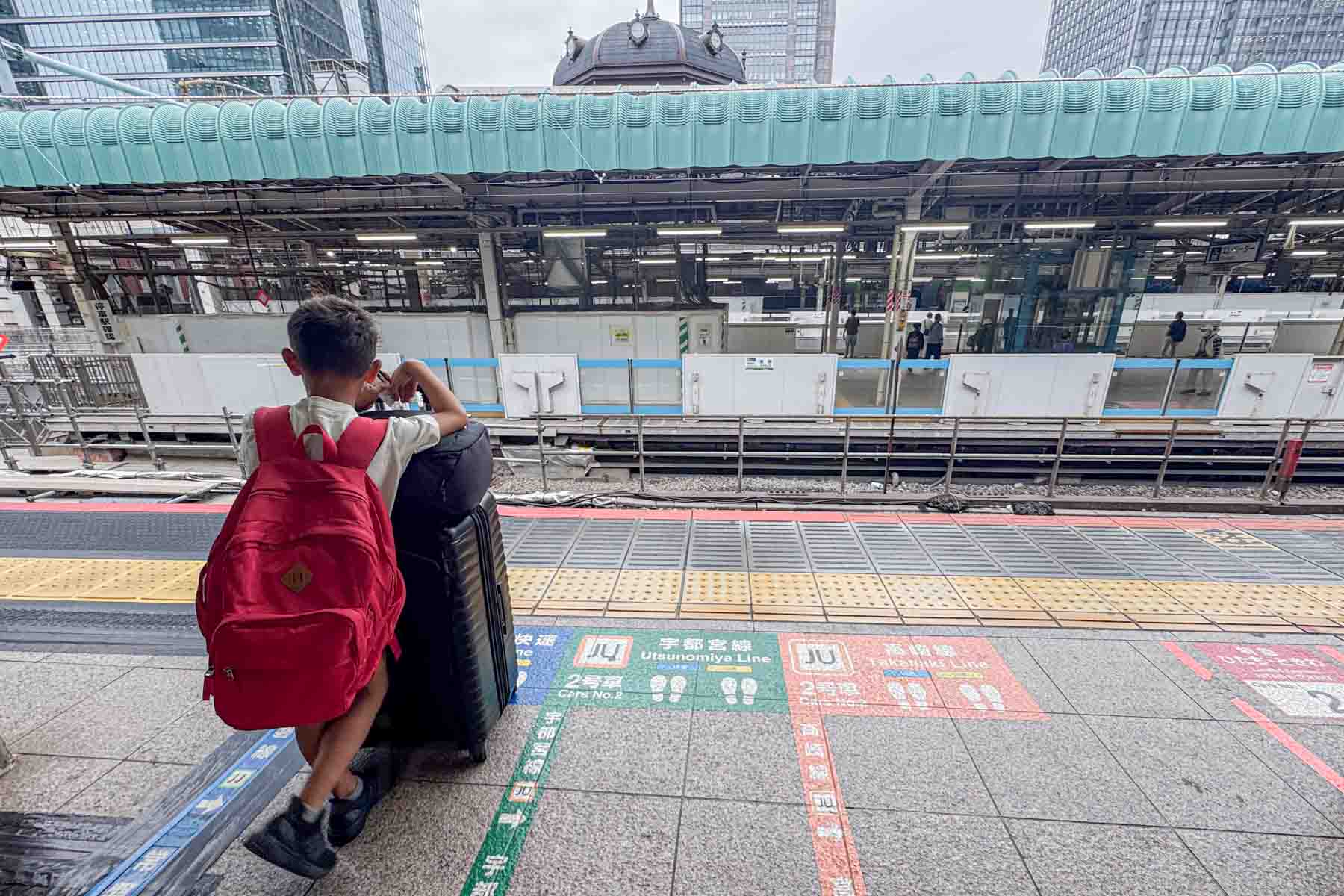
Places like Tokyo Station have entire sections dedicated to food, from quick bites and full meals to areas like “ramen street” and rows of beautifully packaged bento boxes you can take on the train.
This ends up being one of the easiest ways to handle meals on travel days. You can grab a few things, find what your kids will actually eat, and bring it with you instead of scrambling later.
If you’re planning to use trains throughout your trip, my guide on getting around Japan with kids walks through how it all works with a family.

Street food and grab-and-go
In places like Osaka, especially, you’ll find a lot of casual food you can grab and eat as you walk.
Things like skewers, fried snacks, and small bites make it easy to keep kids fed without sitting down for a full meal.
This works really well for kids who don’t want to sit still for long or just need something quick in between activities.


Sit-down restaurants (more variety than you expect)
Yes, there are traditional sit-down restaurants in Japan, but there’s a wide range.
Some are more formal. But many are quick and casual. Most are focused on one type of food, like ramen, udon, or grilled meats. These are often faster and more relaxed than you might expect.
You’ll also come across more traditional-style setups, like low tables with floor seating or sunken seating (horigotatsu). Some restaurants have tatami rooms or semi-private spaces like this, and our kids especially loved these. It felt a little different and more fun than a typical table, and gave them a bit more space to settle in.

We never felt like we were constantly in long, drawn-out meals. It was easy to find places that worked with kids. Most of the sit-down restaurants we found were quick, casual, and easy to manage with kids.
There are also more formal dining options in Japan, but that’s not usually what we’re looking for when traveling with our three kids. Japan is known for its incredible food scene, including Michelin-starred restaurants and omakase experiences. If those are on your list, it’s worth knowing that many of them aren’t designed with kids in mind. Some parents plan ahead with local babysitting services or take turns with another adult so they can still enjoy a special meal.

Izakaya (casual, flexible, and often family-friendly)
Another option you’ll come across is izakaya, which are casual Japanese restaurants that serve a variety of small dishes.
Unlike more specialized spots, izakaya menus usually include a mix of items like grilled skewers, rice dishes, noodles, fried foods, and small plates. That variety can make them a good option when everyone in your family wants something a little different.
They’re often more relaxed and a bit louder than smaller noodle shops, which can take some pressure off when you’re dining with kids. Some feel more like casual restaurants, while others lean more toward a bar atmosphere.
If you’re going with kids, it’s usually best to go earlier in the evening when things are calmer and more family-friendly.


Delivery and takeout for low-key nights
There will be nights when everyone is done.
That’s where delivery comes in. Services like Uber Eats work in Japan, especially in bigger cities.
We used this when plans fell through, or we just didn’t want to go back out. It’s a simple fallback that can help end your day more easily.
Apartment hotels and simple in-room meals
If you’re staying somewhere with a kitchenette, it gives you a lot more flexibility.
You can bring food back from a convenience store, reheat simple meals, or just keep snacks on hand for when kids get hungry at random times.
This can be especially helpful with picky eaters, allergies, younger kids, or those moments when no one feels like going back out for another meal.
If Tokyo is part of your trip and you’re still figuring out where to stay, my guide on where to stay in Tokyo with kids walks through the best areas and options for families.


Understanding Japanese Restaurants (Why They Feel Different)
One thing that can feel a little different at first is how restaurants are set up in Japan.
Instead of one place offering a wide mix of dishes, restaurants in Japan usually focus on one type of food. You’ll see places that are just ramen shops, just udon shops, just sushi restaurants, or just yakitori grills. The menus are more focused and built around that one specialty.
That can make things feel simpler. It’s often quicker to order, easier to understand what you’re getting, and more straightforward if you already know what your kids like.
At the same time, it can take a little more thought if everyone wants something different. You may not always find one restaurant that covers all preferences, which is where some of the other options in Japan, like food halls, convenience stores, or grabbing a few different things, can be really helpful.

Kid-Friendly Foods to Look for in Japan
You don’t need to overthink this. There are plenty of simple, familiar, and flexible foods in Japan that work really well for kids.
Some will feel new, some will feel familiar, and many can be adjusted to be as plain or simple as your kids need.
Noodle soups (udon and ramen)
These are some of the easiest wins.
Udon noodles are thick, soft, and usually served in a mild broth. Ramen has more variation, but you can often find simpler options or just focus on the noodles and broth. You will also find soba and other simple noodle soups throughout Japan.
Both are:
- warm and comforting
- easy to eat
- simple to adjust


Rice and onigiri (simple and reliable)
Plain white rice is easy to find and works well for kids who want something familiar.
Onigiri are rice balls, often shaped into triangles, and sold everywhere from convenience stores to train stations. You can find them plain or with simple fillings like salmon.

Fried favorites (karaage and tempura)
Karaage is Japanese fried chicken and tends to be a big hit with kids. It’s usually boneless and easy to share.
Tempura is lightly battered and fried, often with shrimp or vegetables. It’s simple, crispy, and widely available.
Japanese curry (mild and kid-friendly)
Japanese curry is very different from other types of curry. It’s thicker, slightly sweet, and not typically spicy.
It’s often served with rice and can include simple ingredients like chicken or beef, making it an easy option for kids.

Gyoza (dumplings kids usually love)
Gyoza are pan-fried dumplings with a crispy bottom and soft top.
They’re small, easy to eat, and often a good appetizer dish to share.

Yakitori and simple grilled foods
Yakitori are grilled skewers, often chicken, but you can also find beef, pork, and vegetables.
They’re easy to share, easy to try, and work well if your kids prefer simple, straightforward flavors.

Convenience store and bakery foods
This is where things get extra easy.
You’ll find:
- sandwiches (especially egg and cutlet sandwiches)
- pastries and breads
- simple snacks and sides
Because you can see what you’re getting, these are great for kids who are unsure about new foods.
Sushi (with options for non-sushi kids)
If your kids like sushi, Japan is an easy place to enjoy it.
If they don’t, many sushi restaurants still offer:
- rice
- noodles
- soups
- fried items
It doesn’t have to be all or nothing.

Fruit and simple snacks (what to know)
Fruit is available, but it can be more expensive and sometimes feels less accessible than in other places.
You can usually find some at:
- convenience stores
- grocery stores
- markets
It just may take a little more effort to track down.
Easy, Family-Friendly Restaurant Options in Japan
You don’t need to rely on these for every meal, but it helps to know they’re there.
If you ever need something simple, predictable, or just an easier win with your kids, there are plenty of restaurants in Japan that make that possible. Some are interactive and fun, some are quick and reliable, and some just give you a little more space to relax.
Conveyor belt sushi (fun and flexible)
Kura Sushi and Sushiro are two of the most popular options.
Plates come around on a conveyor belt, and you can also order from a screen. Often, there’s a robot delivering drinks or extra items, as well. It’s easy to pick and choose what you want, and kids usually enjoy the experience.
There are also options beyond raw fish, like:
- vegetable rolls
- rice dishes
- noodles
- fried items


Reliable chains that work well with kids
There are a handful of well-known chains that are consistent, easy to navigate, and found in multiple cities.
- Ichiran or Ippudo for ramen
- Marugame Udon for udon
- CoCo Ichibanya for curry
These are helpful when you want something straightforward and know what to expect.


Casual, lively spots that can feel easier with kids
Gaburi Chicken is one example of a more casual, energetic environment.
Places like this tend to be louder and more relaxed, which can take some pressure off if your kids are not sitting perfectly still.
Some izakaya-style spots can feel similar, especially earlier in the evening. Chains like Torikizoku are a good example, with simple grilled skewers and a casual, approachable setup.
If you go earlier in the evening, these types of places can work well for families before they shift into a more adult-focused atmosphere later at night.

Family restaurants and private room options
Japan has a category of “family restaurants” that are designed to be easy, accessible, and low-stress for groups.
These are typically casual spots with:
- a wider range of menu options
- more space and booth seating
- a relaxed, kid-friendly atmosphere
You’ll often see them labeled as “family restaurants” on Google Maps, which can be a helpful shortcut if you’re looking for something simple and straightforward.
Separately, some restaurants, across different types of cuisine, offer private rooms. These can be a great option if you want more space, a quieter setup, or don’t want to worry as much about noise.
Both can be helpful depending on what you need in the moment. But you don’t have to limit yourself to these. Many ramen shops, sushi spots, and other casual restaurants are also very manageable with kids.
Interactive dining (grill-it-yourself meals)
Places that let you cook your own food at the table, like yakiniku or gyukatsu-style restaurants, can be a fun experience for kids.
You order different cuts of meat and cook them yourself, which turns the meal into something a bit more engaging.
There are also more experience-based options, like restaurants where you can catch your own fish and have it prepared for your meal. These can be especially memorable for kids and turn dinner into an activity, not just a sit-down meal.


Eating in Japan with Picky Eaters (A Real-Life Approach)
If you’re worried about picky eaters, you’re not alone. That was one of my biggest questions going into our first trip, too.
Our kids tend to prefer simple, plain foods. And honestly, I was the same way growing up (and still am, to a degree). So I get the concern of not knowing what they’ll eat in a completely different food environment.
What helped the most was letting go of the idea that every meal needed to look a certain way. It didn’t need to be one perfect, balanced plate where everyone eats the same thing.
Instead, we let meals be flexible.
Sometimes that looked like:
- noodles and broth at a ramen shop
- followed by fruit or yogurt from a convenience store
- or grabbing a few different things so everyone could eat what worked for them
Japan makes this easier because food is everywhere. This is something we experienced across multiple trips, including when traveling to Japan with a baby.
If something doesn’t work, you’re usually just a few minutes away from another option.
Once we started thinking about meals that way, it took a lot of the pressure off. Our kids ate what they needed, tried new things here and there, and we didn’t feel stuck trying to force something that wasn’t working.
Planning your own trip with kids?
I share one email a month with real-world family travel strategies, packing tips, and destination breakdowns that make planning easier.
Join below.

Best Food Options by Situation (Quick Guide)
Sometimes it’s less about what to eat and more about what works in the moment.
If you’re tired, short on time, or just trying to keep everyone happy, here are some easy go-to options based on different situations.
Best for picky eaters
- udon or simple ramen
- plain rice or onigiri
- convenience store foods (sandwiches, snacks, fruit)
- bakery items
These give you simple, familiar options without a lot of guesswork.
Best for quick meals
- ramen shops
- train station food areas
- convenience stores
These are fast, easy, and everywhere.

Best when everyone wants something different
- food halls
- department store basements
You can mix and match instead of trying to agree on one place.
Best low-effort nights
- delivery through Uber Eats
- convenience store meals
Perfect when everyone is done for the day.
Best for a fun experience
- conveyor belt sushi like Kura Sushi or Sushiro
- grill-it-yourself restaurants
These turn the meal into part of the experience.

Best when you need space or a calmer setup
- family restaurants
- places with private rooms
Helpful if your kids need a little more room or flexibility.
A Few Things to Know Before Eating Out in Japan
Most of the time, eating in Japan feels easy once you experience it. But there are a few small things that can catch you off guard if you’re not expecting them.
Some restaurants are small
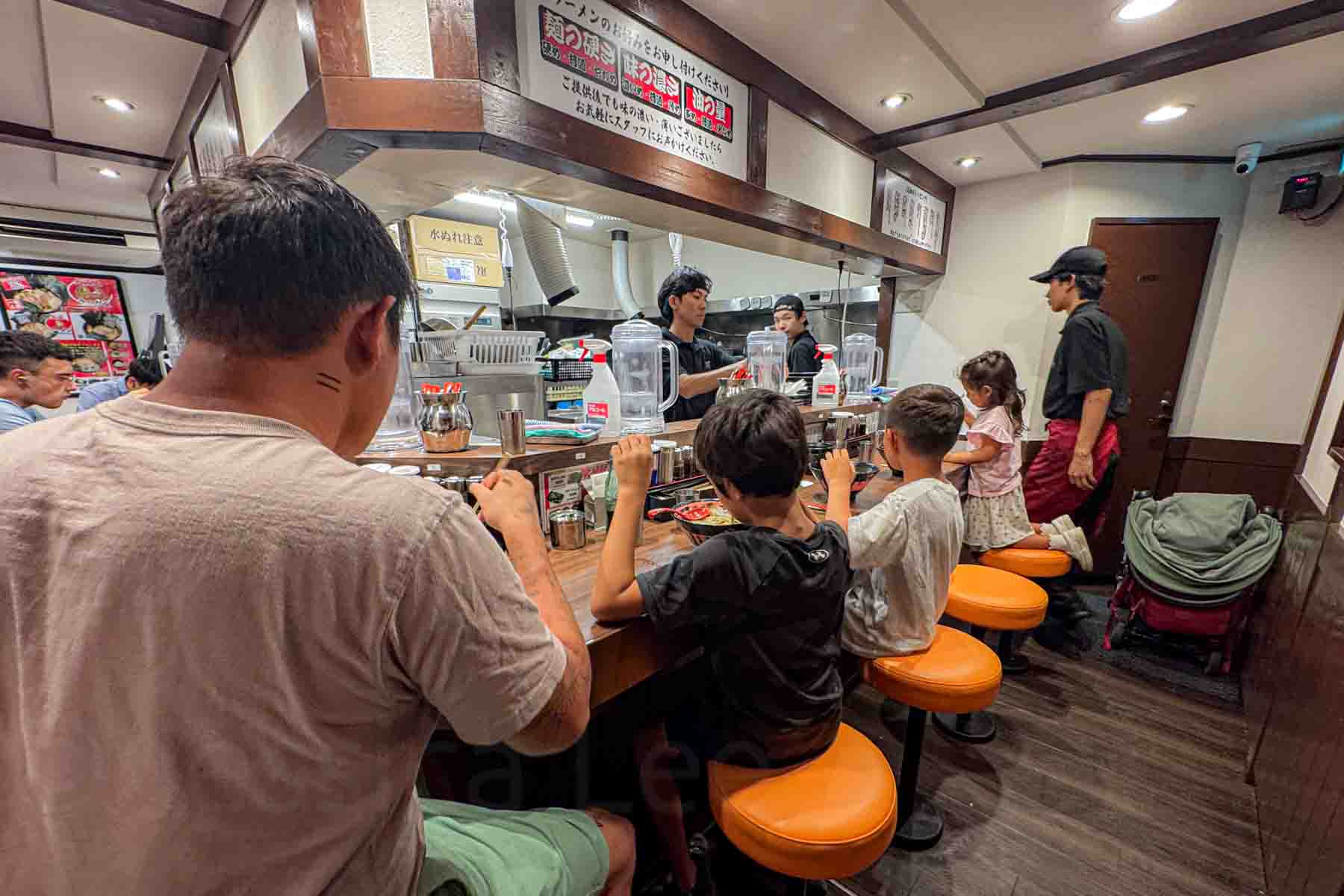
Many places, especially sushi, ramen, or udon shops, have limited seating. It’s not unusual for there to be just a few seats or a small counter. Our family of five took up half a restaurant more than once.
This usually isn’t a problem, but it can mean:
- splitting up into smaller groups
- waiting a bit for a table
- or choosing a different spot if it feels too tight
If you’re using a stroller, this is something to keep in mind. Some restaurants won’t have space for it inside, so you may need to leave it outside or fold it up and tuck it under the table.
This is where a compact travel stroller can make a big difference.

Ordering can look different
Some restaurants use ordering machines or tablets instead of traditional menus.
There isn’t always a full English translation, but you can usually:
- use photos on the screen
- rely on simple menu descriptions
- use Google Translate if needed
Restaurants can be easy to miss
Some places don’t have big storefronts or obvious signage. They might be tucked into buildings, down small streets, behind noren curtains, or on upper floors.
If you’re looking for a specific spot, it can take a minute to find. But there are usually plenty of other options nearby if you decide to pivot.

Hours don’t always run all day
Some restaurants open for lunch, close in the afternoon, and then reopen for dinner.
If you hit that in-between window, it can feel like everything is closed. This is where convenience stores, food halls, and quick options really help.
Reservations can help for certain places
For more popular or specific restaurants, reservations are sometimes needed.
You don’t need them for most casual meals, but if you have something specific in mind, or a set schedule, it’s worth planning ahead.

Food Allergies + Dietary Needs in Japan (Quick Notes)
If you’re traveling with food allergies or specific dietary needs, Japan can be manageable, but it does take a bit more planning.
Menus aren’t always fully detailed, and ingredients can be less obvious, especially with sauces or broths. That said, there are still ways to make it work.
A few things that help:
- using a translated allergy card to show restaurants
- choosing simpler dishes like plain rice, noodles, or grilled items
- leaning on convenience stores or grocery stores for more control
- opting for larger chains, which sometimes have clearer ingredient information
It’s doable, just something to be a little more mindful about as you plan your meals.
FAQ: Eating in Japan with Kids
Is Japan good for picky eaters?
Yes, more than you might expect.
There are plenty of simple foods like noodles, rice, fried chicken, and bread-based options. And because food is so easy to find everywhere, you can always adjust if something doesn’t work.
Are restaurants in Japan kid-friendly?
Many are, especially casual spots like ramen shops, sushi trains, and family-style restaurants.
Some places are smaller or quieter, so it helps to choose more relaxed environments or go earlier in the day.
What if my child won’t eat Japanese food?
You’ll still have options.
You can find:
- convenience store meals
- bakeries and sandwiches
- simple dishes like rice or noodles
In larger cities, you can also find other cuisines like pizza or pasta if needed.
Do kids need to order their own meal?
It depends on the restaurant, but in many casual places, it’s fine to share or order less.
If needed, you can always add something small or grab extra food afterward from a nearby shop.
What’s the easiest way to handle meals while traveling?
Stay flexible.
Mix sit-down meals with quick options, use convenience stores when needed, and don’t worry about making every meal perfect. That approach tends to work best for families.

Making Meals Work for Your Family in Japan
Eating in Japan with kids doesn’t have to feel complicated. Once you understand how it works and all the options, it actually gives you a lot of flexibility.
You don’t need to find the perfect restaurant every time or get every meal exactly right. Some meals will be sit-down, some will be quick, and some will just be whatever works in the moment. And that’s completely fine.
Japan makes it easy to adjust as you go. There’s always another option nearby, whether that’s a ramen shop, a food hall, or a quick stop at 7-Eleven on the way back to your hotel.
If you’re still planning your trip, you can head back to my full Japan with Kids guide for help with where to stay, how to get around, and what to prioritize with kids.