Long Haul Flight With Multiple Kids: What Changes After One Child
Flying long haul with one child feels like a big step.
Flying long haul with multiple kids feels like a completely different category.
If you’re staring down a long international flight with two or three kids and wondering whether it’s actually doable, your concern is valid. Managing multiple kids is a lot even in everyday life. Doing it inside a metal tube for 10 or 12 hours can feel daunting.
But it’s also absolutely possible.
Most of my long haul flights with kids have actually been with multiple kids. I only did a few when we had one baby. After that, almost every long haul our family took involved two or three kids.
Over the past decade, our family has taken dozens of long haul flights with kids across Asia, Europe, the Middle East, and the Pacific.
Over the years we’ve flown routes like:
- Panama City to Istanbul
- Cairo to Singapore
- Singapore to Sydney
- Sydney to Fiji
- Los Angeles to Athens
- Los Angeles to Taipei
- Los Angeles to Seoul
- Europe back to California
with combinations like a baby and toddler, a toddler and a preschooler, and later a toddler with two elementary-aged kids.
That range of experience is what shaped the strategies in this guide.
Every flight is different, but certain patterns start to appear once you’ve done it enough times.
And the biggest pattern is this:
The jump from one kid to multiple kids doesn’t just make travel harder.
It changes the system you use to travel.
Over time, those experiences taught us something important about flying long haul with multiple kids.
Jump to: It’s hard, One vs multiple, Picking seats, Packing, Sleep, At the airport, Baby and toddler, Two young kids, Preschooler and elementary kids, Positives, FAQs
Affiliate Disclosure: Familee Travel contains affiliate links and is a member of the Amazon Associates Program, we may earn commissions from qualifying purchases at no additional cost to you.
In a rush? Pin this or email it to yourself to read later! (Psst! Use the buttons at the very top or bottom of this post for ease.)
The Hard Truth About Long Haul Flights with Multiple Kids
Let’s say this part out loud first.
Flying long haul with multiple kids is not relaxing.
It can be exhausting. Someone is usually tired. Someone will inevitably spill something. At some point, everyone may be awake when they should be sleeping.
And when you move from one child to two or three, you lose a little bit of the control you used to have.
With one kid, one parent can rest while the other handles things.
With multiple kids, both parents are often on duty at the same time.
It’s a real shift.
But here’s the other truth that doesn’t get talked about enough.
Once you start doing it, you learn how your family travels. You develop systems. Your kids get more experienced. The chaos becomes more predictable.
And that’s when long haul flights start to feel much more manageable.
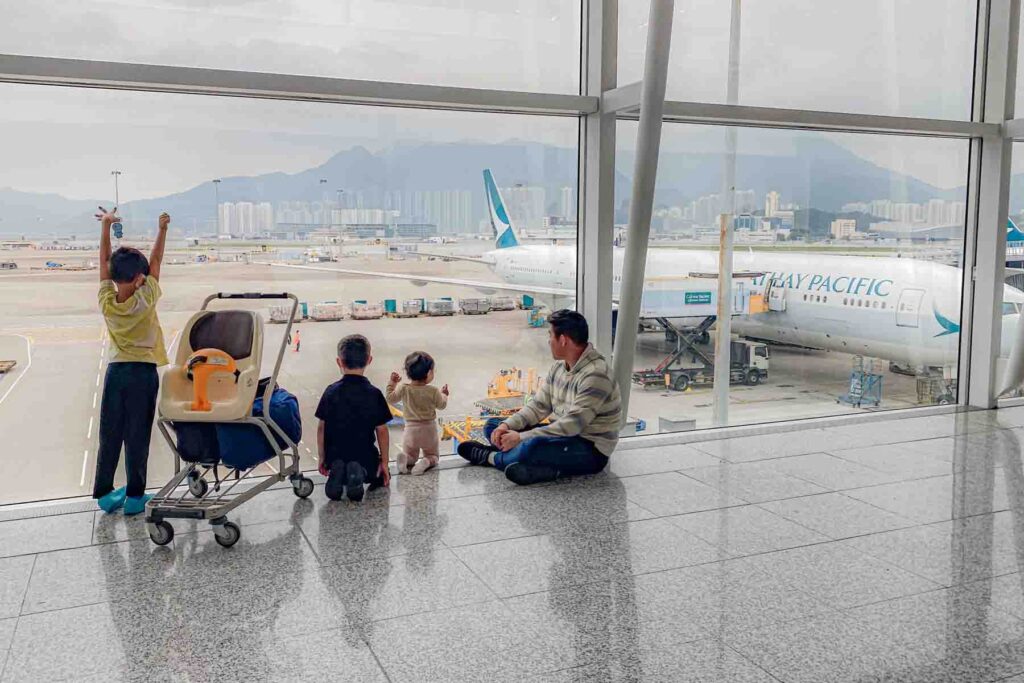
Quick Reality Check: Flying Long Haul with Multiple Kids
Flying long haul with multiple kids is very doable, but it requires a different approach than flying with one child.
Instead of managing one child’s needs at a time, parents usually need systems that help the entire family function during the flight.
Those systems often include:
- dividing responsibilities between adults
- coordinating sleep windows instead of optimizing one child’s schedule
- simplifying packing and shared gear
- planning seat arrangements intentionally
Once these systems are in place, long flights with two or three kids often become far more manageable than parents expect.
One flight in particular perfectly captured what long haul travel with multiple kids can feel like in real life.
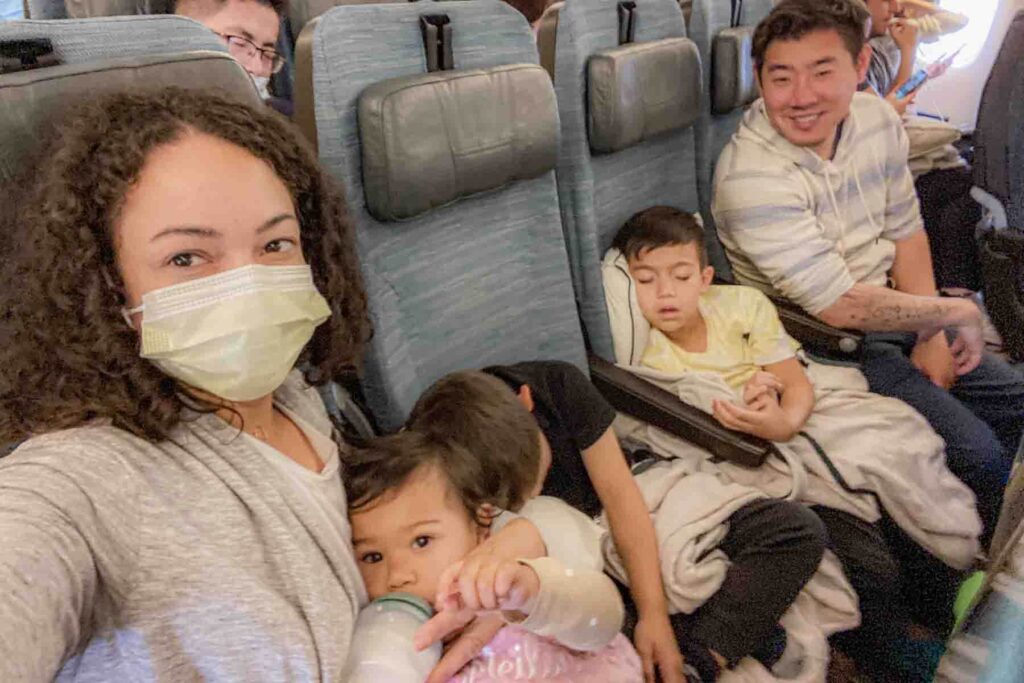
One Flight That Taught Me Everything
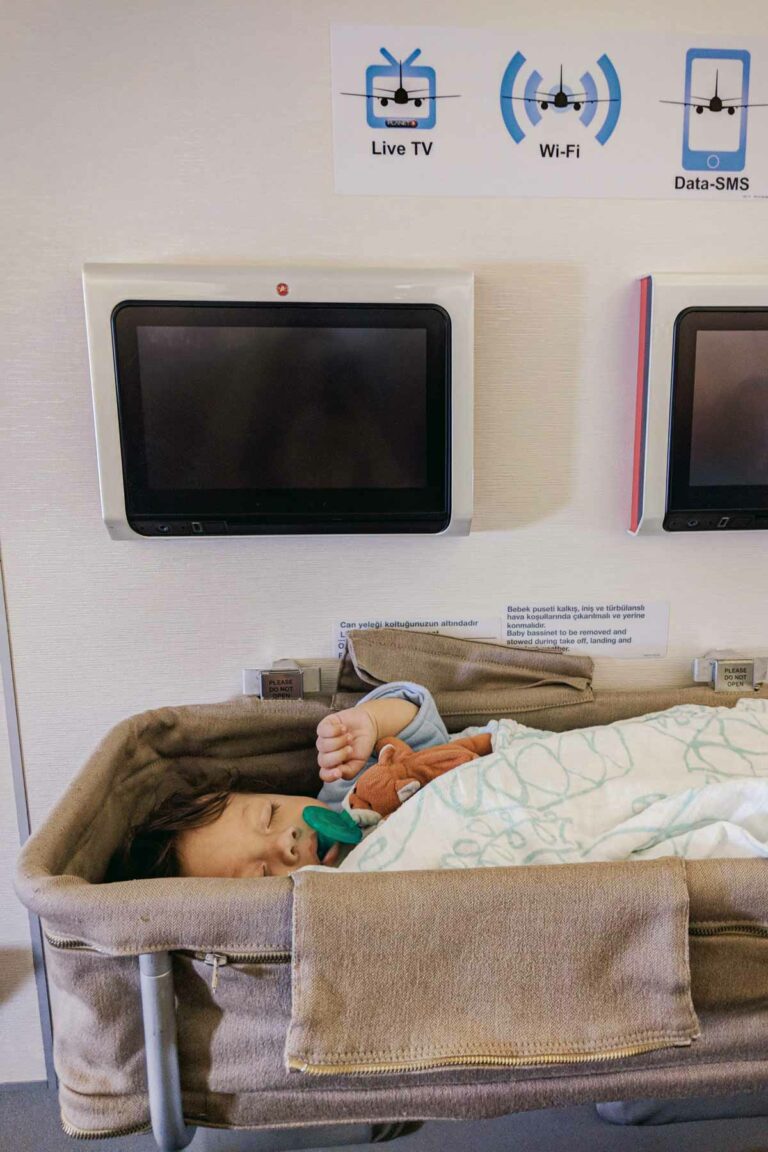
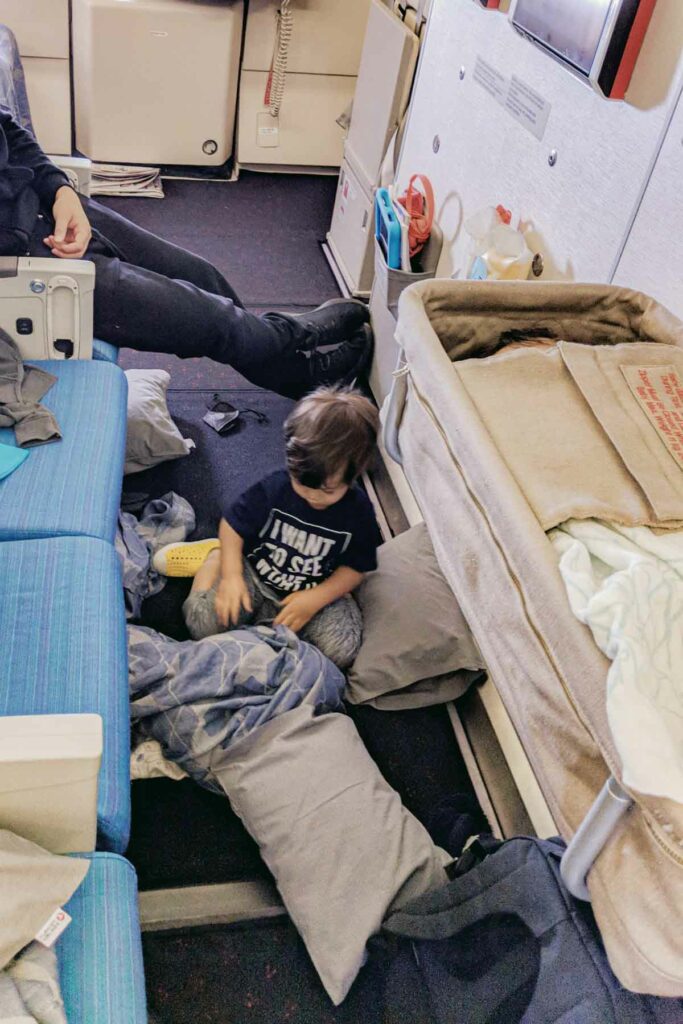
We were flying from Panama City to Istanbul on a Turkish Airlines A330 plane, seated in a bulkhead row with a bassinet.
We had three seats booked for two adults and a toddler, with our baby in the bassinet. By pure luck, the fourth seat in the row was empty, so we were able to use it.
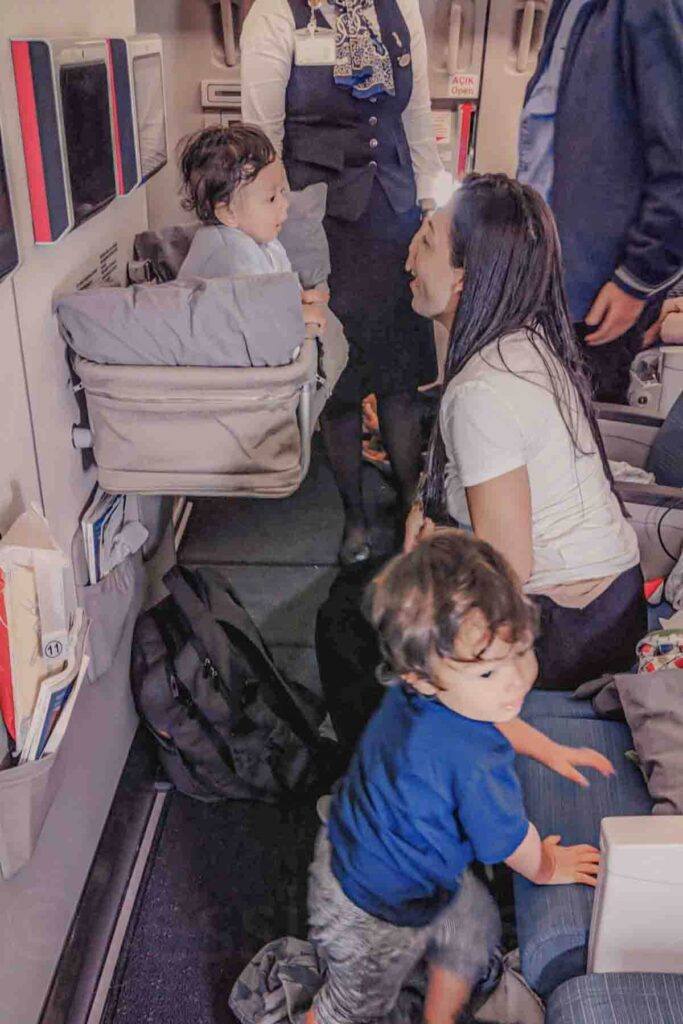
The two middle seats had an armrest that lifted, which helped create a couch-like space. But the outer seats had fixed armrests and were tight.
Our toddler was climbing up and down. The baby had just fallen asleep in the bassinet.
Then meal service arrived.
Bulkhead tray tables fold out from the armrests instead of the seatbacks, which makes them smaller and a little less stable. Suddenly, we had trays, drinks, utensils, and a toddler who wasn’t particularly interested in eating.
My husband and I were trying to balance everything at once. Keep drinks from tipping. Convince the toddler to sit and eat. Make sure the baby stayed asleep.
At some point, we just looked at each other and silently agreed:
We need to get these trays off this plane as fast as possible.
It was chaotic. We barely ate.
But that moment taught us something important.
Flying long haul with multiple kids isn’t just about bringing the right gear or snacks. It’s about learning how to manage the moving parts when everything happens at once.
Over time, you start building systems that make those moments much easier.
The Biggest Difference: You Move From Tactics to Systems
With one child, travel is mostly about tactics and strategy.
You focus on that one child’s sleep schedule, snacks, and entertainment.
With multiple kids, that approach stops working.
Instead of managing individual needs one at a time, you start building systems.
Who sits where.
Who handles which child.
How meals happen.
How sleep happens.
You stop trying to optimize every moment and instead create a structure that keeps the whole flight moving forward.
Once you make that shift, long haul travel with multiple kids starts to feel much more manageable.
Your Attention is Now a Shared Resource
Another major shift is how your attention gets divided.
With one child, you can usually respond right away when they need something.
With two or three kids, that’s no longer possible.
You quickly realize you can’t be everything for everyone at the same time.
Sometimes two kids need help simultaneously. Sometimes everyone is tired at once. Sometimes siblings feed off each other, and emotions escalate.
When that happens, one of the most effective strategies is simple: divide and conquer.
If two kids start melting down at the same time, separating them can help reset the situation quickly.
One parent might take a toddler to the back of the plane for a quick reset in the bathroom and to pick up a snack, while the other parent settles a baby or older child at the seat.
Just changing the environment can lower the intensity.
The goal isn’t perfect calm.
It’s restoring balance.
Seat Strategy Matters More With Multiple Kids
Where everyone sits becomes more important once you’re traveling with multiple kids.
Depending on the plane layout and number of seats, you’ll often need to split across rows anyway.
For example, one adult might sit with the toddler while the other adult sits with the older kids.
You can always rotate seats mid-flight if needed.
Lately, I’ve also started choosing rows that are in front of or behind each other instead of directly across the aisle.
It’s much easier to pass things, answer questions, or help a child when they’re right in front of you rather than across the plane.
The ideal seat layout for a family of five
As a family of five, my absolute favorite long haul seat configuration is when the plane has three seats in the middle section and only two seats on each side of the plane.
In that setup, we take the three middle seats together, and the other two seats on one of the outer rows.
It works perfectly.
No coordinating with strangers. No asking someone to get up if a child needs the bathroom. No worrying about disturbing someone who is sleeping during the middle of a long flight.
It gives the family a little contained zone, which makes everything easier.
Unfortunately, this layout isn’t very common.
Most long-haul aircraft use a 3–4–3 configuration, with three seats on each side and four in the middle.
But it’s still worth checking the seat map carefully when you’re choosing seats.
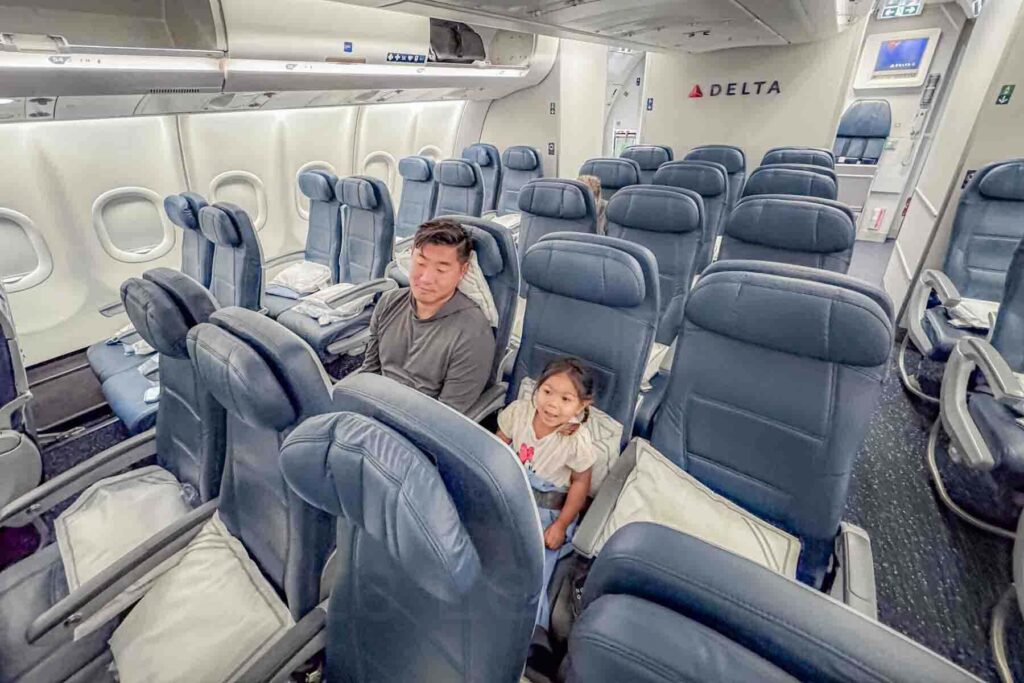
Sometimes there are small variations in certain rows. Toward the back of the plane you may find rows where the middle section drops from four seats to three. On some aircraft the side rows shift from three seats to two in certain sections.
Those small layout differences can make a big difference for families.
It’s one of the reasons I always look closely at the seat map before selecting seats.
If you’re traveling as a family of five, this 3-seat middle plus 2-seat side configuration is often the easiest airplane seating setup because it allows the entire family to sit together without involving other passengers.
Paying for seats on long haul flights
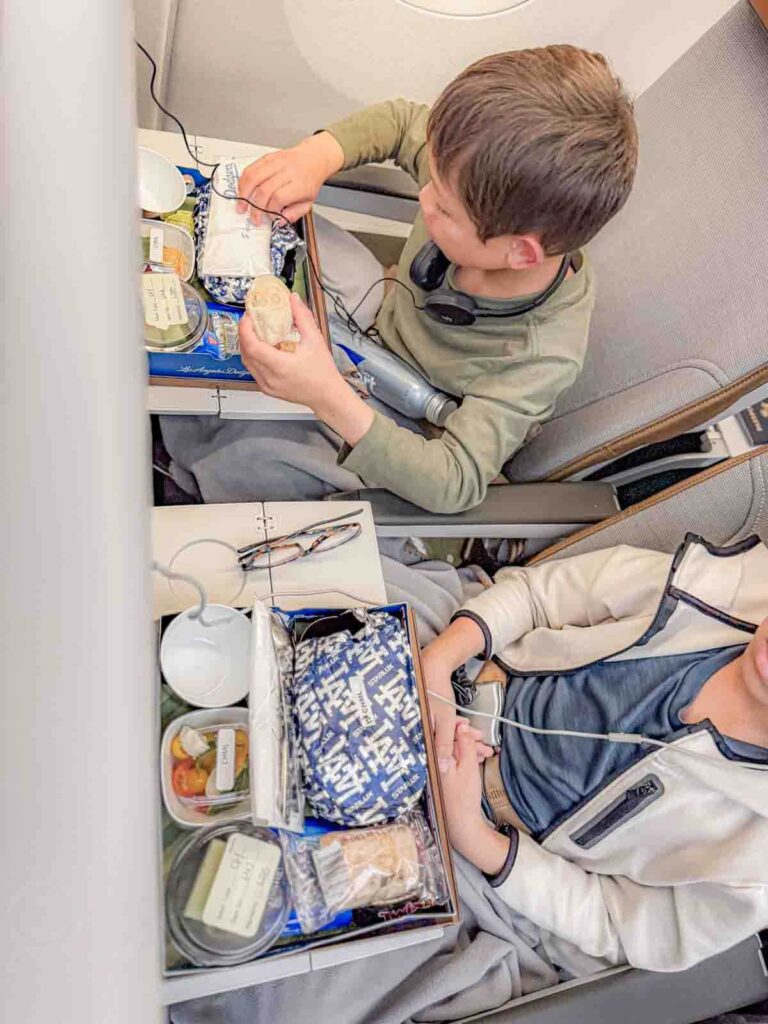
Paying for seat selection is a hot topic for families.
Personally, I dislike paying for seats and usually try to avoid it on shorter flights.
But for long haul flights, I’m much more willing to do it.
For a 10- or 12-hour flight, the seating setup can significantly impact how smooth the experience is for everyone.
Most airlines have policies that require young children to sit with at least one adult. But if you don’t select seats in advance, you can still end up scrambling at the gate or hoping the airline can rearrange things.
That last-minute uncertainty is stressful enough on a short flight.
On a long haul, it’s just not worth it.
If paying for seats ensures that your family can sit together and have a workable layout, I usually consider it part of setting the trip up for success.
Packing Strategy Changes Too
One of the biggest mistakes parents make when flying long haul with multiple kids is multiplying packing lists.
If a packing list worked for one child, it’s tempting to repeat it for every kid.
That quickly turns into too much stuff.
Instead, think about what can be shared.
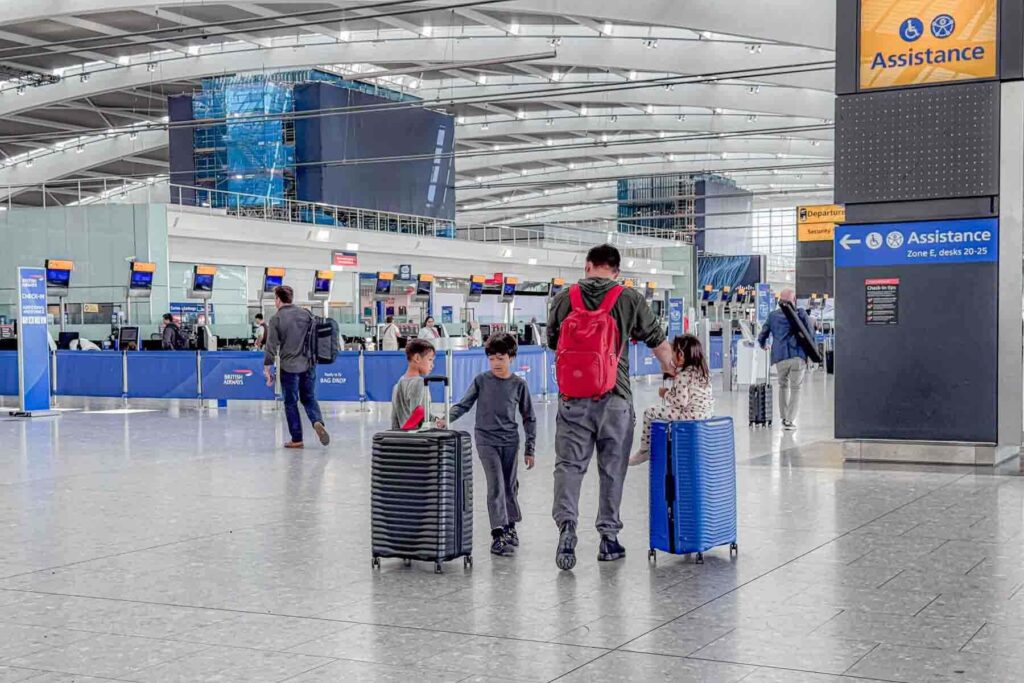
When our kids were younger, we usually carried two backpacks onto the plane:
- one for the adults
- one for both kids
Things like wipes, snacks, and toys were shared.
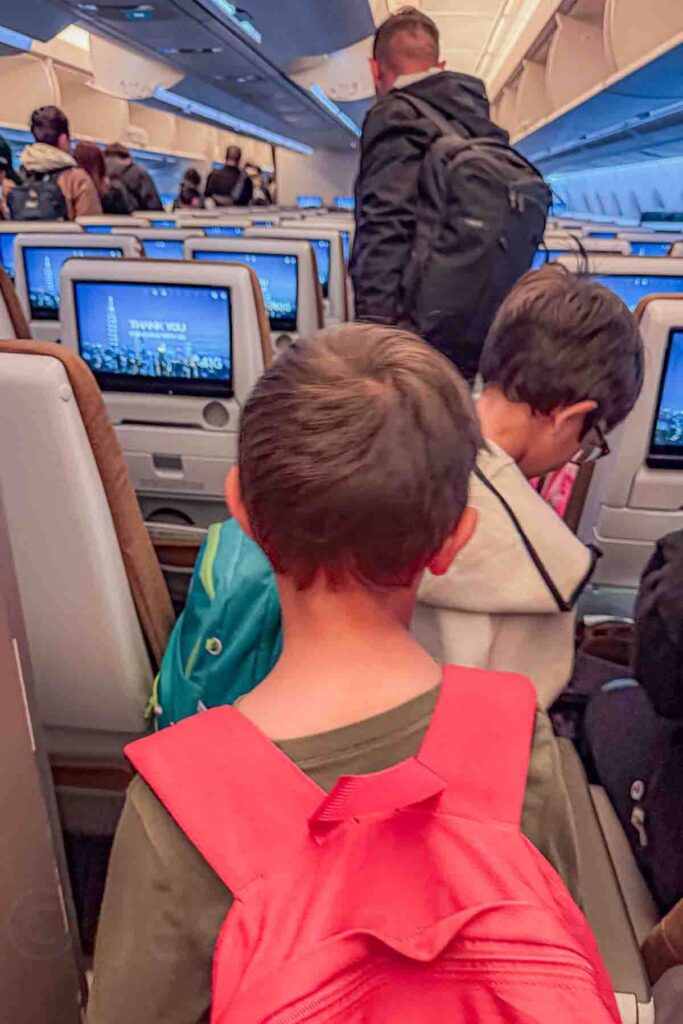
As the kids got older, they started carrying their own backpacks. Now each of them is responsible for their own bag, which actually makes travel easier.
Another thing that helps keep everything organized is using packing cubes for family trips. I’ve found they make it much easier to separate each person’s clothing, group together toys, and contain medications, especially when we’re packing for multiple kids in shared bags.
If you’re looking for activity ideas, I also put together a guide to things to keep big kids busy on an airplane: elementary edition.
No matter the age, though, a few items remain essential:
- wipes
- snacks
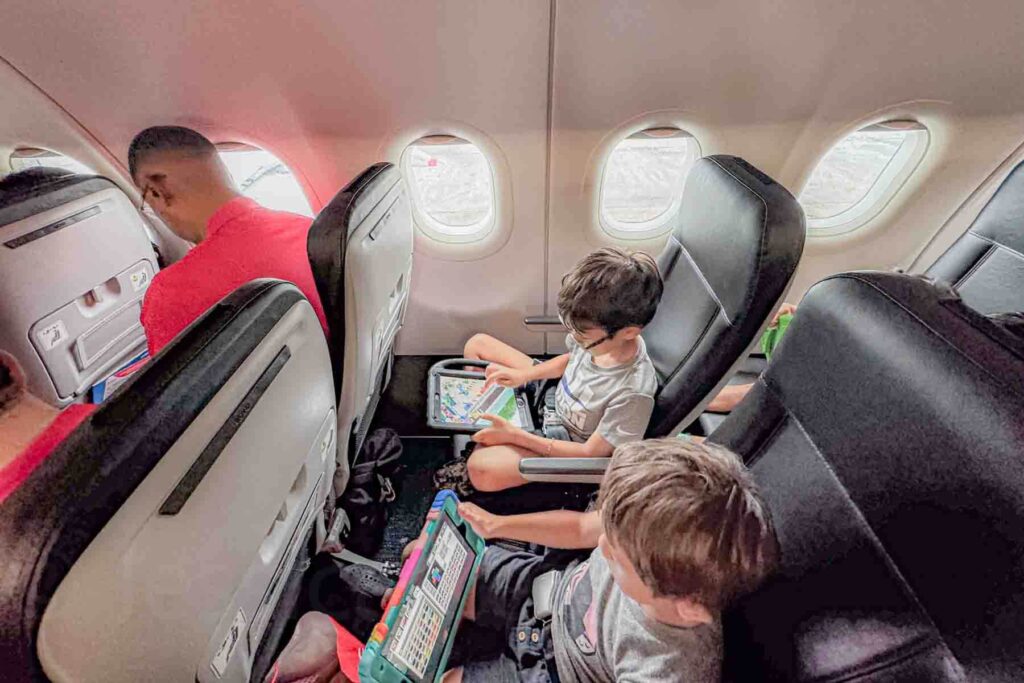
- age-appropriate entertainment
Airplane food can be unpredictable, and snacks solve a lot of problems.
Airport and Boarding Strategies for Long Flights With Kids
Long haul travel with multiple kids doesn’t start when the plane takes off.
It starts at the airport.
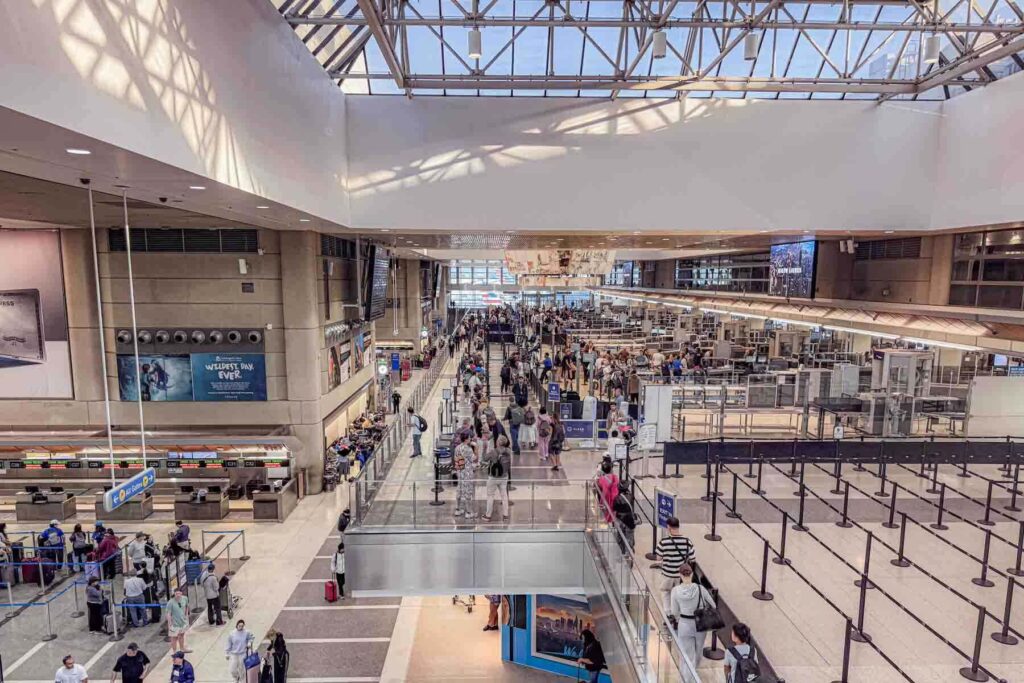
Boarding strategy with multiple kids
With multiple kids, I usually prefer to board as early as possible.
Extra time on the plane makes a big difference.
It gives us time to:
- organize the seat area
- pull frequently used items out of backpacks
- place essentials in the seatback pockets
- get everyone settled before the cabin fills up
When we only had one child, we sometimes waited to board later so they could move around longer.
With multiple kids, the extra setup time is usually more valuable.
That said, if you’re traveling with another adult, a split boarding strategy can work well.
One parent boards early and gets everything organized. The other parent stays at the gate with the kids so they can burn off a little more energy before boarding.
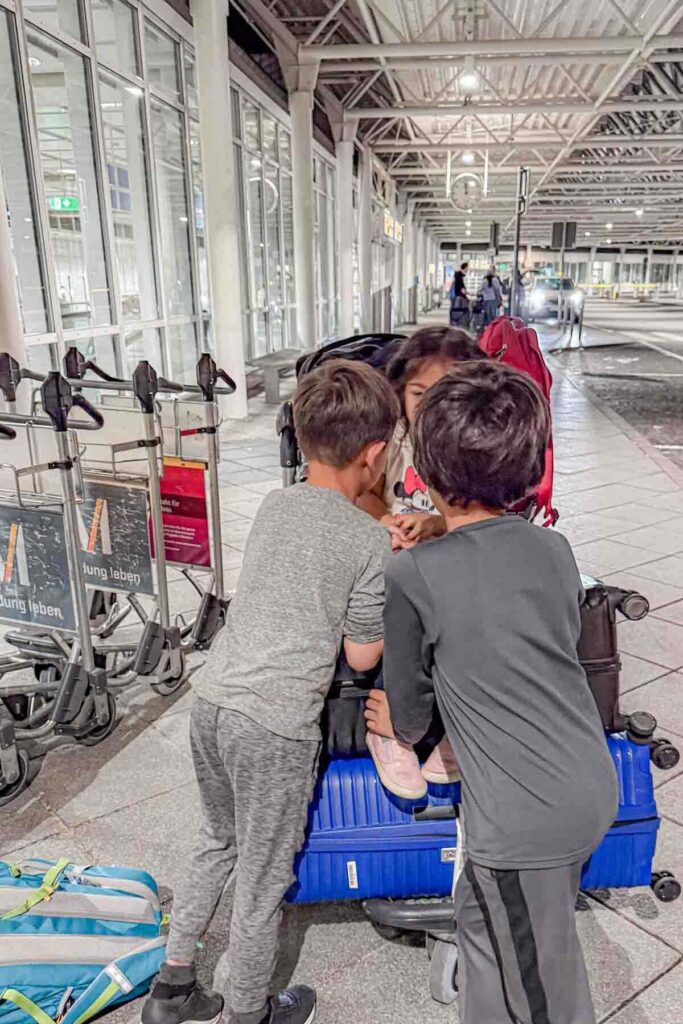
Let kids move at the airport
Travel days are exciting for kids.
And when you add siblings into the mix, they tend to feed off each other’s energy.
My kids often become extra silly, loud, and full of movement on travel days.
After sitting for long stretches on the plane, that energy usually explodes again once we land.
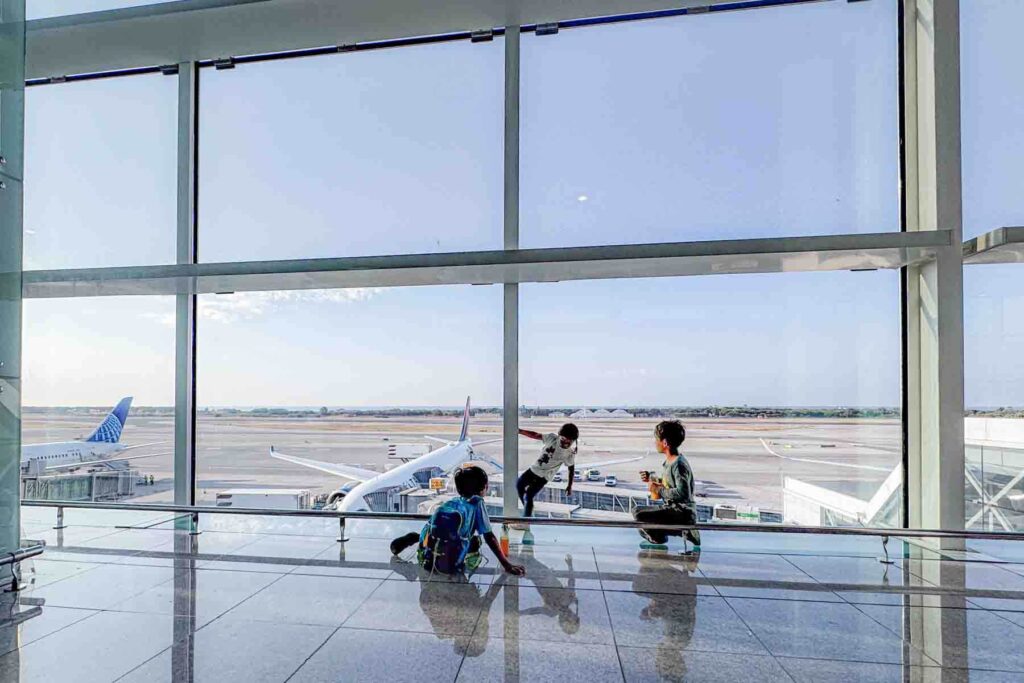
Because of that, I try to plan for movement ahead of time.
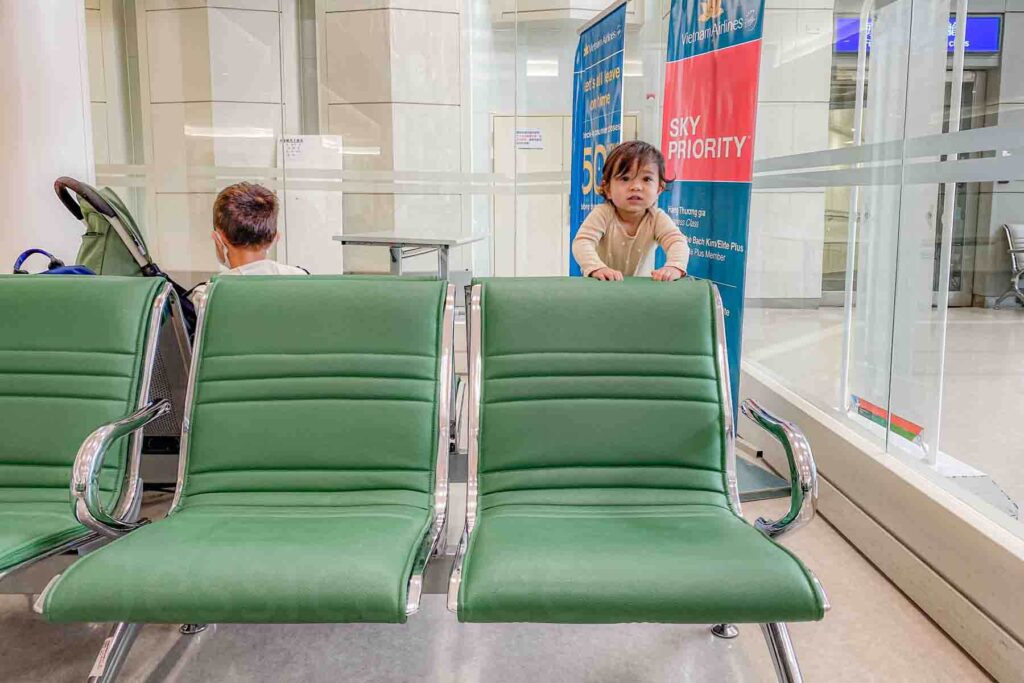
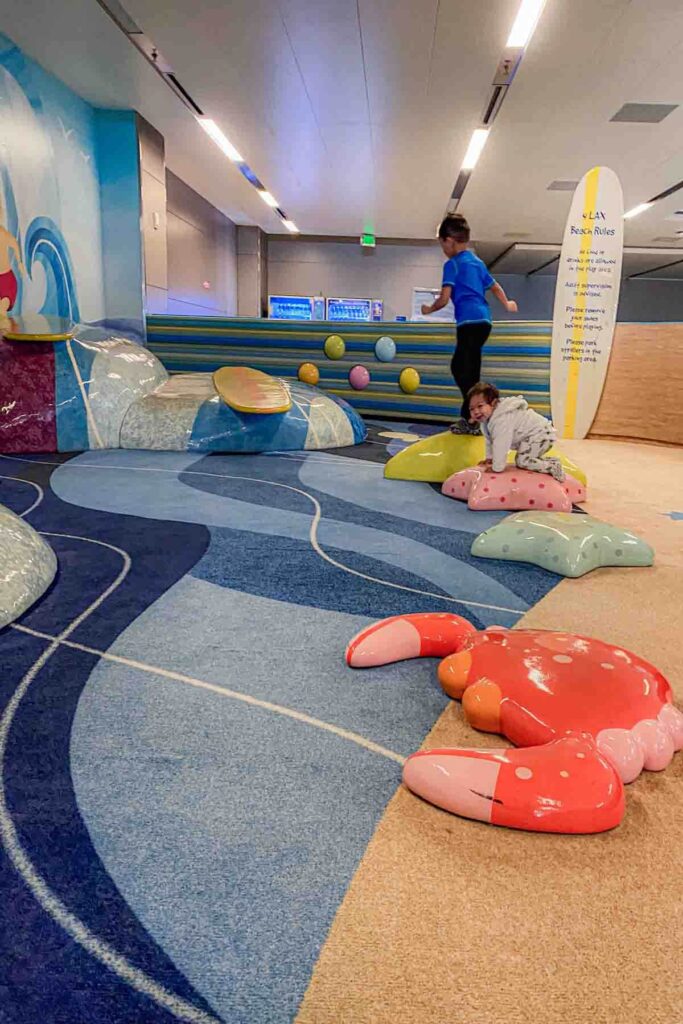
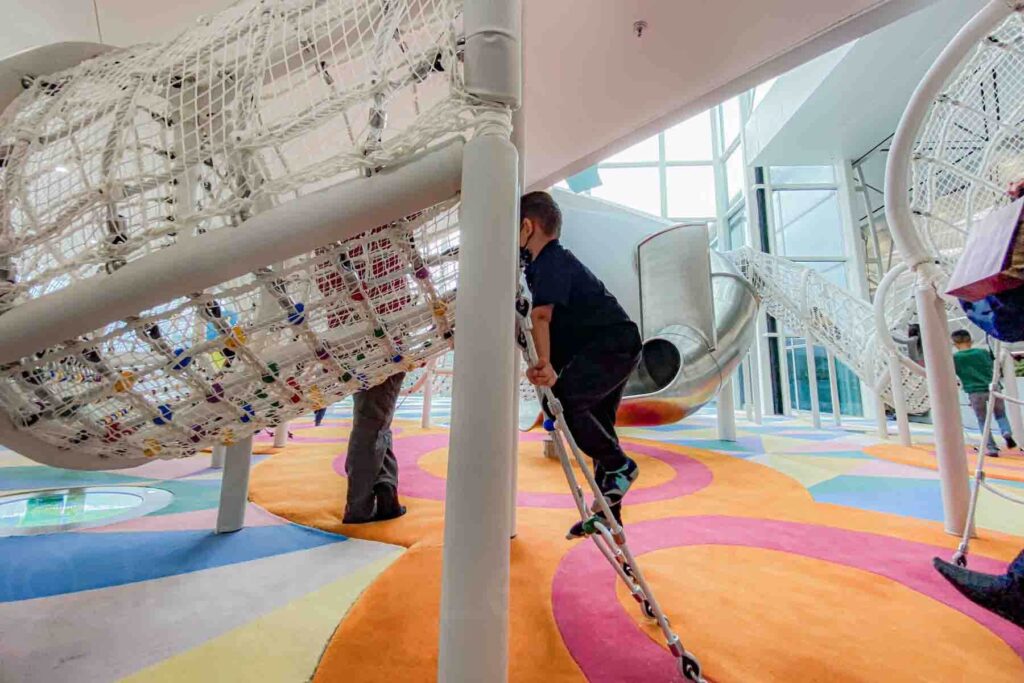
Many large international airports have children’s play areas, which are perfect before a long flight.
Our usual airport routine looks something like this:
- check in and drop bags
- go through security
- grab food
- head to the kids’ play area or open space
If there’s no play area, even an empty gate area or a wide corridor works.
The goal is simply to let kids move.
Use layovers to your advantage
Layovers are another opportunity to reset.
After a long flight, adults often just want to sit down and rest.
But kids usually need the opposite.
Try to avoid long sit-down meals during long haul layovers.
Instead, grab quick food and head somewhere with room to move.
Walk around the terminal. Browse airport shops. Let kids stretch their legs.
It makes the next flight much easier for everyone.
Sleep Strategy Changes From “Optimize” to “Coordinate”
Sleep becomes a group strategy when you’re flying long haul with multiple kids.
I still try to encourage everyone to sleep within roughly the same window because I’m always thinking about time zones and jet lag.
But kids rarely fall asleep at the exact same moment.
Instead, it usually happens in waves.
We focus on getting everyone settled, and then parents rotate in and out so each adult can get at least some rest.
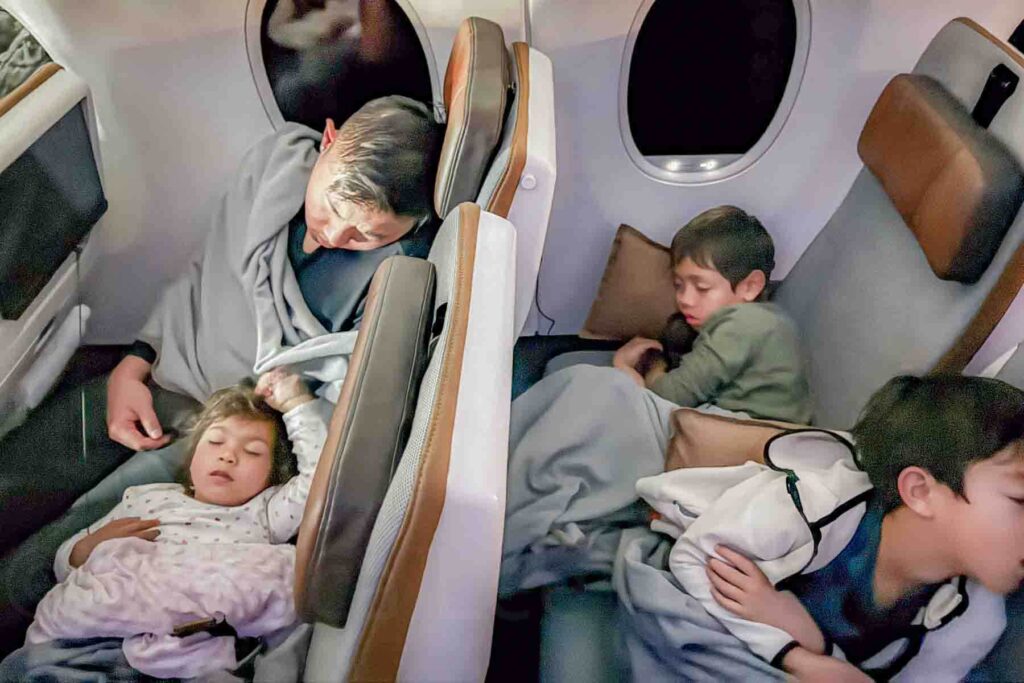
Depending on the kids’ ages and your seat setup, sleep logistics can take a little creativity.
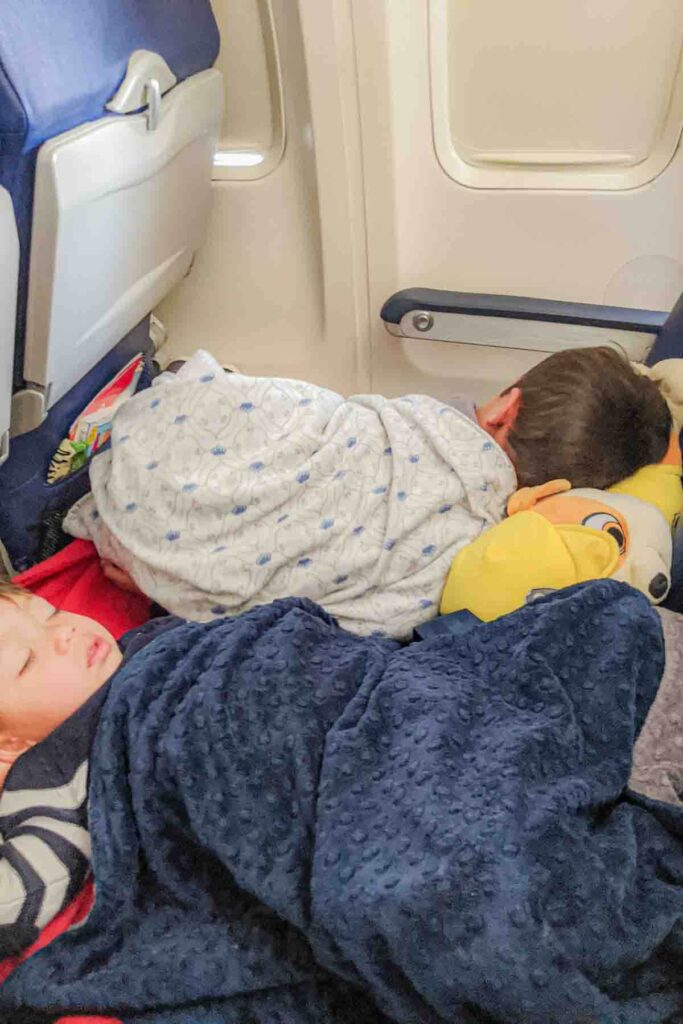
When our kids were toddlers or preschoolers, inflatable footrests were incredibly helpful. Filling the gap between seats creates a flatter surface so kids can stretch out.
Sometimes we placed two inflatable footrests side by side in the window and middle seats and layered blankets across them to create a makeshift bed.
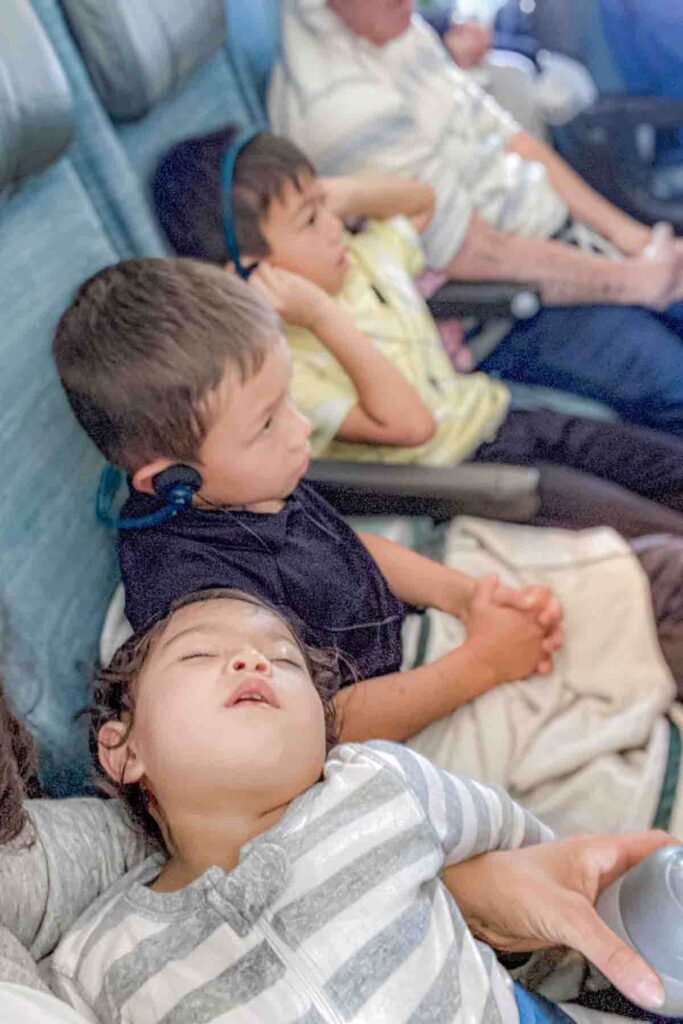
If a toddler was next to an adult, the window seat helped because they could lean against the wall. If they kept sliding down, we’d prop them up with blankets and pillows or let their legs drape across our lap.
It’s not perfect.
But it’s workable.
Sleep timing becomes even more important on long flights, especially when you’re also managing jet lag with kids after arrival.
Age Combinations: What Feels Different Over Time
The experience of flying long haul with multiple kids changes dramatically depending on their ages.
Baby and toddler
This stage is the most physically demanding.
Someone always needs to be held. The toddler wants freedom. The baby needs containment.
If you’re debating when to start traveling with a baby, I also share my perspective on the best age to travel with a baby, because waiting for the “perfect” age often means delaying trips that families are more capable of taking than they realize.
If you’re currently planning a long haul flight with a baby and toddler, this stage often feels the most intense for parents.
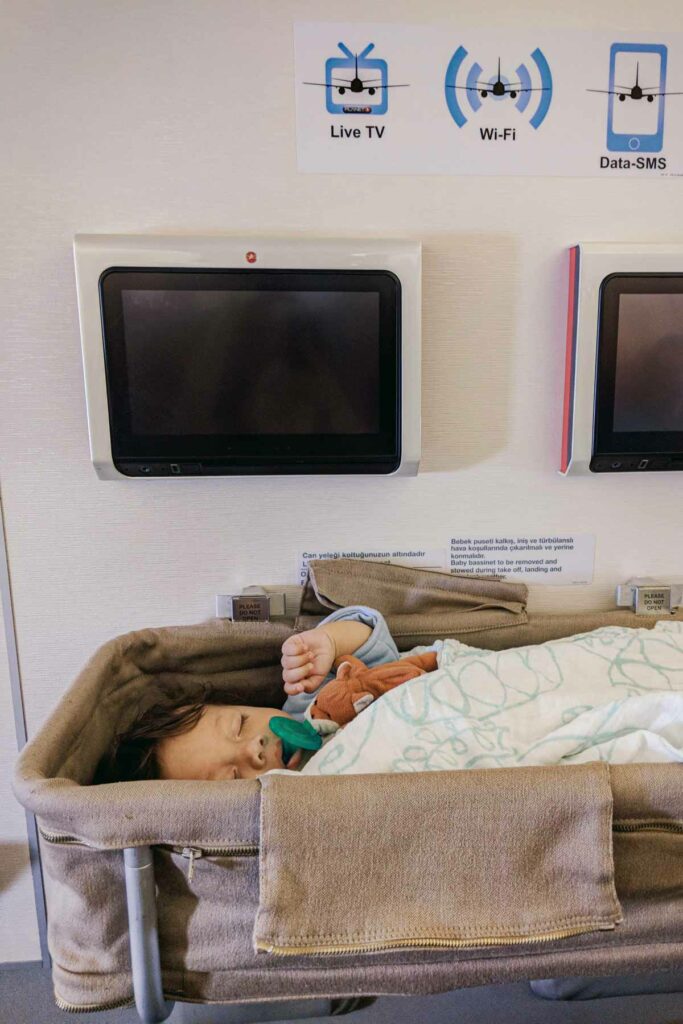
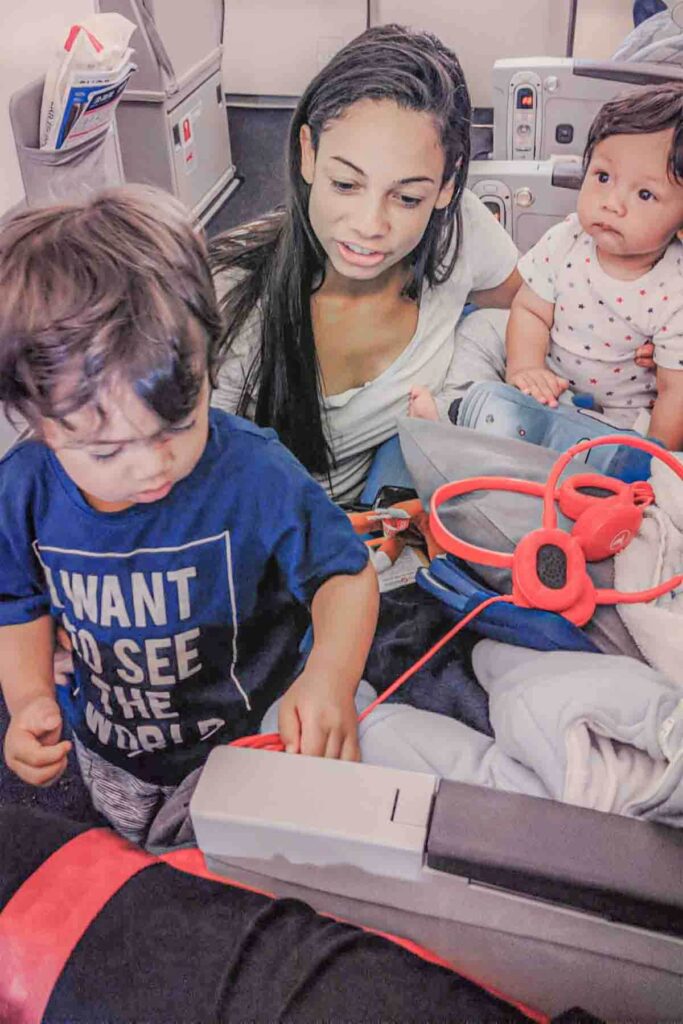
We flew many long haul routes during this phase while traveling around the world when our baby was between six and eight months old, and our toddler was around two and a half.
It was intense.
But once you’ve survived a long haul with a toddler, doing it with a baby and toddler suddenly feels more doable.
If you’re flying with an infant, my guide on how to master a long haul flight with a baby goes deeper into bassinets, feeding, and sleep expectations.
If you’re traveling with a toddler, you may also want to read long haul flight with a toddler: sleep, snacks, and survival strategies, where I break down toddler-specific tactics.
Two young kids
A toddler and a preschooler or very young kids can be emotionally exhausting.
Both want attention. Both have big feelings. Neither is particularly patient.
At this stage, we did one escape from Los Angeles to Santorini to Boston and back.
But looking back, we actually didn’t do many long hauls during this stage because we moved to California and then the pandemic paused travel for a while.
In hindsight, that may have been a blessing.
Toddler or preschooler with elementary kids
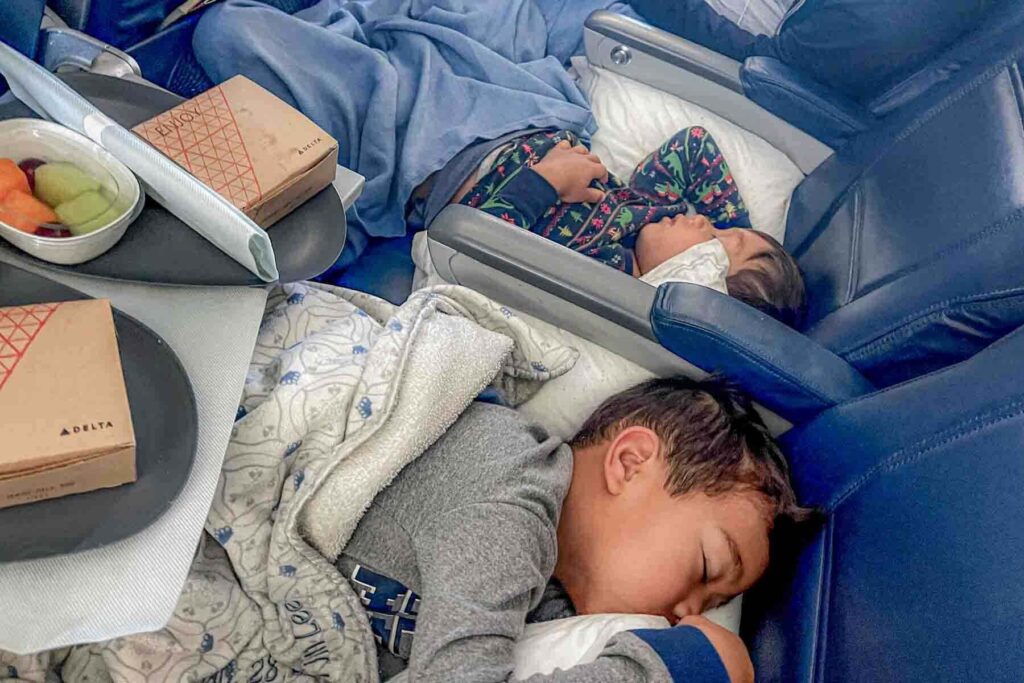
This stage starts to feel much easier.
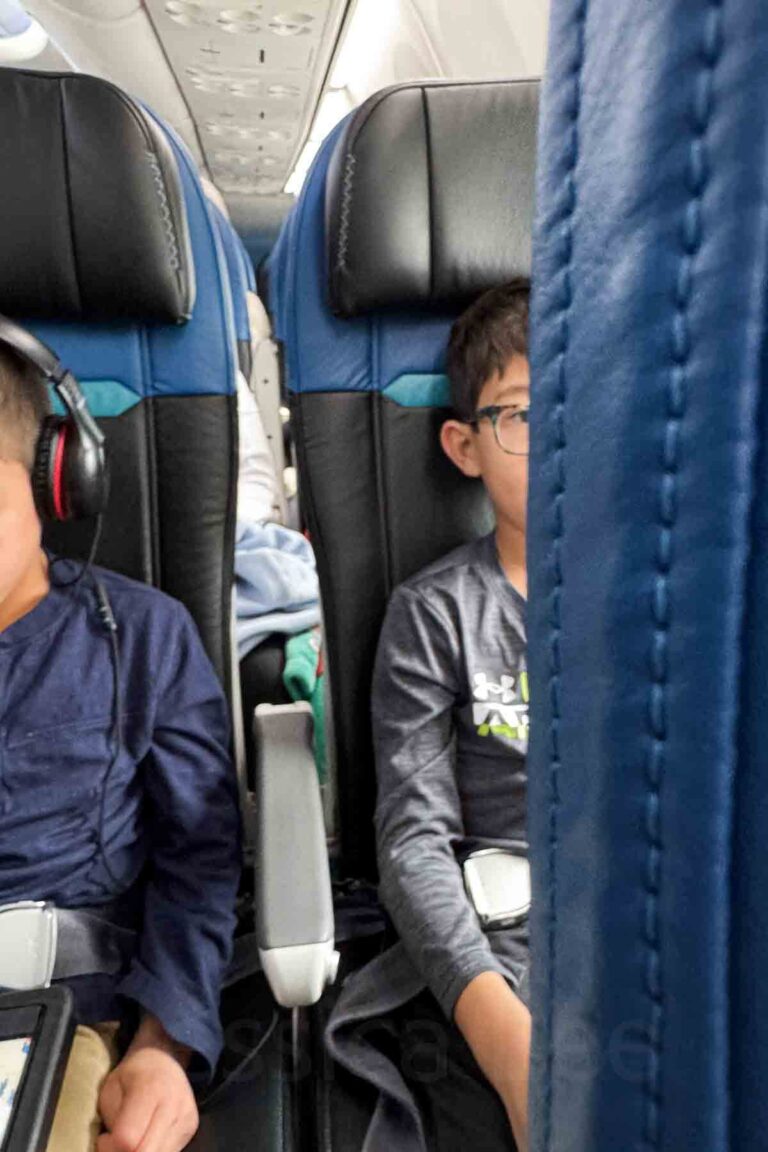
Older kids understand the rhythm of the flight. They know when meals happen, how the entertainment screens work, and when it’s time to stay seated.
They can buckle their seatbelt, ask for a drink, and manage their own entertainment.
The toddler is the wildcard, but the older kids provide stability.
Planning your own trip with kids?
I share one email a month with real-world family travel strategies, packing tips, and destination breakdowns that make planning easier.
Join below.
Survive Till Five
My husband and I have a phrase we repeat to each other sometimes:
survive till five.
Many parents wonder whether flying long haul with multiple young kids is worth it. I still think it is, though every family will have a different comfort level.
In our experience, the most challenging travel stage tends to fall between about 10 months and two and a half years old.
Kids at that age are mobile, curious, and not particularly patient.
If you’re wondering when to start traveling with a baby, I share more thoughts on that in my guide to the best age to travel with a baby, because waiting until the “perfect” age often means missing great opportunities to travel.
Around two and a half, things begin to shift. By three, travel usually feels a little easier again.
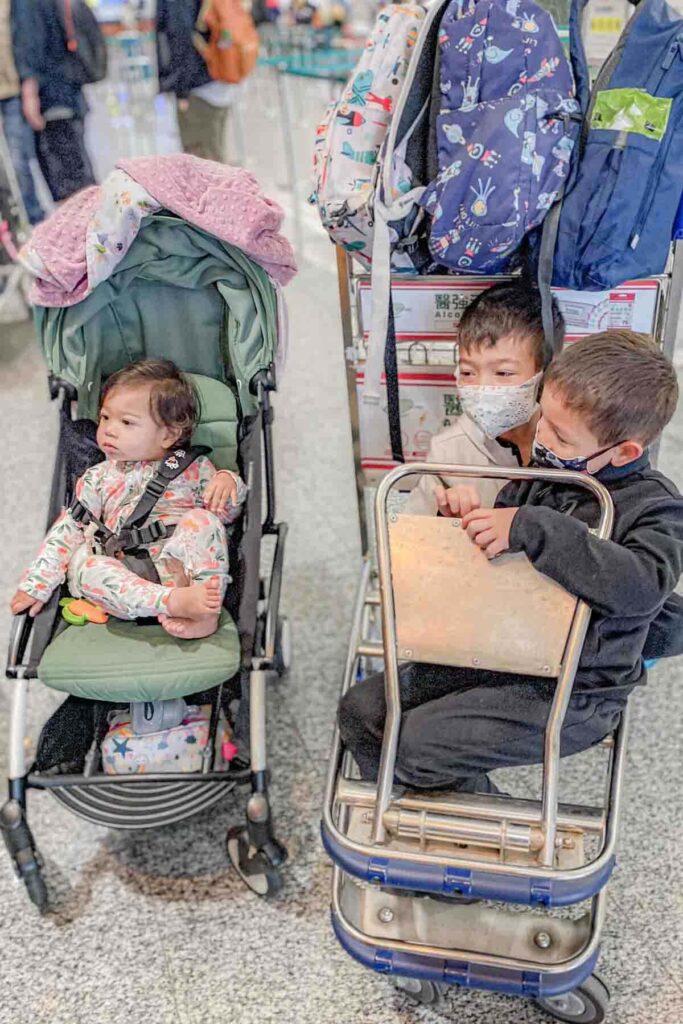
But by five, the difference is dramatic.
Kids can follow directions, manage their own seatbelt, and handle bathroom breaks more independently. They can stay engaged in activities for longer stretches and understand the rhythm of a flight.
Almost everything about travel becomes easier.
And once kids reach that stage of independence, long haul flights often start to feel less like survival and more like a shared adventure.

The Unexpected Upside of Multiple Kids on a Flight
There are also moments that make long flights with multiple kids surprisingly enjoyable.
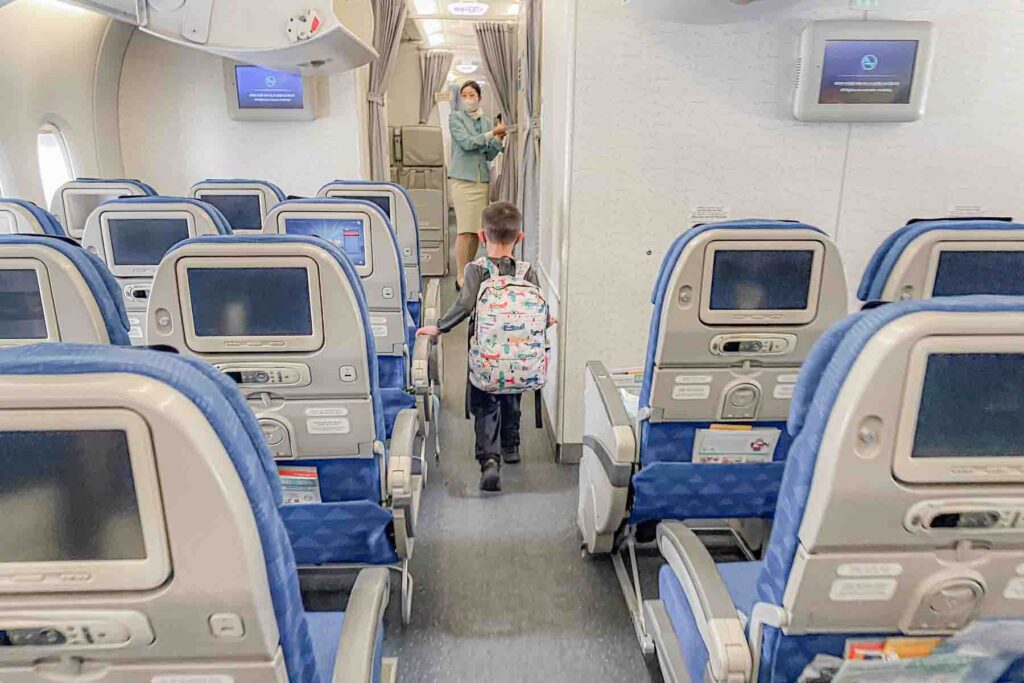
I remember the first time my preschooler and elementary-aged child watched the same movie together on the seatback screens and laughed at the same scenes.
Another time my older kids were cracking up over a joke book they brought on the plane. And another fun moment was when they happily slurped cup noodles on a flight to Asia.
Once they started helping their younger sibling buckle their seatbelt or use the entertainment screen, I realized something had shifted.
They weren’t just passengers anymore.
They were part of the system.
What Doesn’t Change
Even though the dynamics shift, some parts of long haul flights stay the same.
Jet lag is still real.
Cabins still get dry and restless overnight.
And there will always be moments when everyone is tired at once.
Preparation helps.
Calm leadership helps.
Realistic expectations help.
Those things matter whether you’re traveling with one child or three.
FAQs About Long Haul Flights With Multiple Kids
Is flying long haul with multiple kids worth it?
Yes. It requires more planning and patience, but families successfully travel long haul with multiple kids all the time. The key shift is moving from managing one child’s needs to creating systems that help the entire family function during the flight.
What is the hardest age to fly long haul with kids?
In my experience, the toughest stretch tends to fall between about 10 months and two and a half years old. Toddlers are mobile, curious, and often impatient during long flights. Travel usually becomes noticeably easier once kids are three years old, and remarkably easier around age five.
How do parents divide responsibilities on long flights with multiple kids?
Most families use a divide-and-conquer approach. One parent may sit with a toddler while the other sits with older kids. Parents can rotate mid-flight so each adult gets short breaks.
How many carry-ons should a family bring on a long haul flight?
Rather than multiplying packing lists for each child, it’s usually easier to consolidate. Many families bring one shared kids’ backpack with snacks and entertainment, while parents carry another bag with essentials.
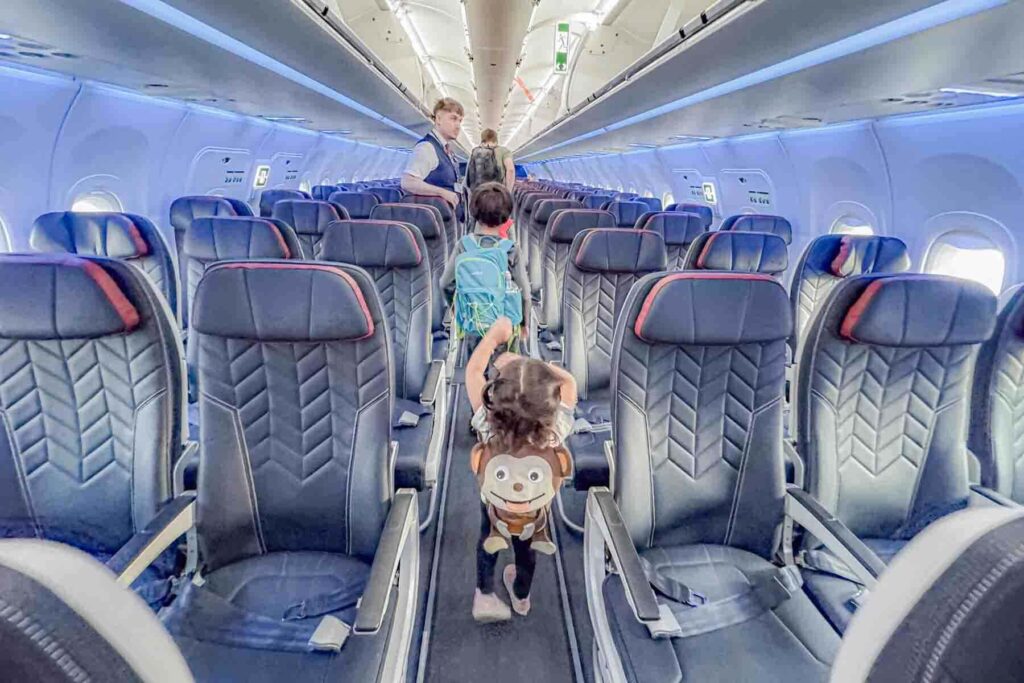
What Flying Long Haul With Multiple Kids Really Comes Down To
Flying long haul with multiple kids is not just a bigger version of flying with one child.
It requires a different approach.
Over time, you stop trying to manage every moment and instead build systems that help the whole family travel smoothly.
And once those systems are in place, a long haul flight with multiple kids often becomes far easier than you expect.