Getting Around Tokyo with Kids: Trains, Walking, Taxis + Tips
Tokyo runs efficienctly and smartly. But the first time you try to navigate it with kids, it can feel like a lot to figure out.
We’ve done Tokyo with a baby. We’ve done Tokyo with three kids. We’ve done Tokyo with strollers, luggage, and jet lag.
Tokyo is very doable, but it’s not always intuitive at first.
The trains are fast, clean, and reliable. At the same time, stations like Shinjuku and Shibuya are massive, transfers can stack up quickly, and what looks simple on a map doesn’t always feel simple in real life.
This guide is here to make it easier. Not just how to get around Tokyo, but how to make better decisions while you’re doing it so you can avoid unnecessary stress, long transfers, and overtired kids.
Spend a little time figuring out how it works. Then, getting around Tokyo with kids will feel much more manageable.
Still planning the rest of your trip? My complete Tokyo with Kids guide covers where to stay, what to do, eating, transportation, and what families should expect across the city.
Jump to: Different Lines, Choosing the Best Route, Taking Trains, Going the Wrong Way, IC Cards, Walking, Eating, Strollers, Rush Hour, From the Airport, Taxis & Uber, Train Stations, Luggage, Buses, Best Tips
Affiliate Disclosure: Familee Travel contains affiliate links and is a member of the Amazon Associates Program, we may earn commissions from qualifying purchases at no additional cost to you.
In a rush? Pin this or email it to yourself to read later! (Psst! Use the buttons at the very top or bottom of this post for ease.)

Is Tokyo Easy to Get Around with Kids?
Yes and not always in the way you expect.
Tokyo is incredibly safe, clean, and reliable. Trains run on time, stations are well organized, and you don’t need to worry about car seats or driving in a new country. From a big-picture standpoint, it’s one of the easiest major cities in the world to navigate with kids.
Where it gets harder is in the details.
Stations can be massive. Routes that look simple can involve long walks and multiple transfers. And places like Shinjuku and Shibuya move fast, with crowds that can feel intense, especially at first.
The learning curve is real, but it’s short.
Once you understand how the system works and start choosing routes that prioritize simplicity over speed, getting around Tokyo becomes much more manageable, even with multiple kids in tow.

Why Getting Around Tokyo Feels Both Easy and Overwhelming
What makes it easy
Like many things in Japan, Tokyo’s transportation system is built smartly. And it shows.
- Extensive coverage – you can get almost anywhere by train
- On-time and reliable – trains run exactly when they say they will (if something’s off schedule, they will let you know clearly)
- Clean and safe – even with kids, it feels comfortable and predictable
- No car needed – no driving, no car seats, no parking logistics
- Affordable – especially compared to taxis in other major cities
Once you’re in it, the system does a lot of the work for you.
What makes it overwhelming at first
At the same time, there’s a reason Tokyo can feel intimidating on day one.
- The scale is massive – this is a huge city with a dense network
- Multiple train systems – JR lines, Tokyo Metro, Toei Subway, plus private lines
- Some stations are enormous – some feel like entire underground cities
- Transfers can be long – not just platform to platform, but full walks and blocks between lines
- Layouts are unfamiliar – signage is good, but the flow takes getting used to
The key thing to understand: it’s not hard because it’s broken, it’s hard because there’s so much of it.
Once you understand this, learn the basics and adjust how you choose routes. Then it starts to click quickly.
How Transportation in Tokyo Works (Simple Overview)
JR lines vs Tokyo Metro vs Toei Subway
Tokyo’s train system is made up of a few different networks that all work together.
- JR lines are run by Japan Rail and include major routes like the Yamanote Line, which loops around central Tokyo and connects many of the main neighborhoods
- Tokyo Metro and Toei Subway are subway systems that fill in the gaps and often get you closer to your final destination
You don’t need to overthink the differences. With an IC card, you can move between all of them seamlessly.
The main thing to know is that you may switch between systems during a single route, even if it feels like one continuous trip. You may need to leave one system, tap out, transfer within the same station but a different area, and tap back in to the new system to continue your journey.
Private railway lines (like Odakyu and others)
In addition to JR and the subway systems, there are also private railway companies like Odakyu, Keio, and Tokyu.
These lines often connect Tokyo to surrounding areas or specific neighborhoods. You might use them without even realizing it since they show up right in Google Maps alongside everything else.
From a practical standpoint, they function the same way. Tap in, tap out, and follow your route.
You don’t need to worry too much about which train company you’re using. JR lines, Tokyo Metro, Toei Subway, and private railways all work together and feel very similar day to day. There are no major differences in cost, speed, or quality that should change your decision. The bigger factor is the route itself. Fewer transfers and simpler stations will make a much bigger impact than the specific line you take.

Local trains vs regional trains vs Shinkansen
Not all trains serve the same purpose, even if they look similar at first.
- Local and rapid trains stay within Tokyo and are what you’ll use most of the time
- Regional trains connect Tokyo to nearby cities and suburbs
- Shinkansen are high-speed bullet trains used for longer distances across Japan
For getting around Tokyo itself, you’ll almost always be on local or rapid trains. You may jump on a regional train for a day trip from Tokyo. And the Shinkansen is a separate experience and comes into play when you’re traveling between further cities.
Getting between cities works a bit differently, which we break down in our guide to getting around Japan with kids.
How to Choose the Best Route with Kids (Not Just the Fastest One)
This is where Tokyo can either feel easy or exhausting.
Google Maps will usually give you the fastest route. That does not mean it is the best route when you are traveling with kids.
A few small decisions here can make a huge difference in how your day feels.
Why Google Maps isn’t always enough
Google Maps is great for directions, but it optimizes for speed.
That can mean:
- more transfers
- tighter connections
- longer walks inside stations
With kids, that tradeoff is not always worth it. A route that is a few minutes slower can feel dramatically easier.
Prioritize fewer transfers whenever possible
If you take one thing from this guide, make it this.
Every transfer adds:
- more walking
- more chances to get mixed up
- more opportunities for kids to melt down
A direct train or a route with one transfer is almost always the better choice, even if it takes a little longer.
Pay attention to where you’re transferring
Not all stations are equal.
Transferring at a smaller station can be quick and simple. Transferring at a major hub like Shinjuku Station can involve long walks, multiple levels, and a lot of crowds.
If you have the option, choosing a route with an easier transfer point can make it feel smoother.
Sometimes walking farther saves you stress
It sounds counterintuitive, but walking a bit more above ground can simplify everything.
Instead of:
- train → transfer → train
You might do:
- train → walk
Fewer steps, less confusion, and often a calmer experience overall.
Where you stay in Tokyo has a big impact on how easy it is to get around day to day. If you’re still deciding, see our guide on where to stay in Tokyo with kids for a breakdown of the best neighborhoods and transit access.
It can be worth waiting for a better route
Trains in Tokyo come frequently.
If the next option gives you:
- fewer transfers
- a direct line
- an easier platform
It is often worth waiting a few extra minutes instead of rushing into a more complicated route.
Small decisions like this add up quickly over the course of a day.

Taking the Trains in Tokyo with Kids
This is what you’ll be doing most of the time.
Once you’re on the train, it’s usually smooth and predictable. The part that takes a little getting used to is everything around it.
What it’s like navigating platforms and trains
Platforms can serve multiple trains going in different directions.
You might see:
- several trains arriving on the same platform
- different destinations listed for each train
Make sure to double check the line name and final destination, not just the platform number.
Signs are clear and often in English, but it helps to pause for a second and confirm before boarding.
Express vs local trains (and why it matters)
Not all trains stop at every station.
- Local trains stop at every station on their route
- Rapid or express trains skip certain stations
If you get on the wrong type, you might pass your stop without realizing it.
Google Maps usually tells you which one to take, but it’s still worth checking the train signage before you get on.
What to expect inside the trains
Once you’re on board, things tend to feel calm and orderly.
- Trains are generally quiet and respectful
- People keep to themselves
- Seats fill quickly, especially during busy times
With kids, it’s manageable. You’ll see families, strollers, and kids of all ages using the trains.
If there are no seats, just have your kids hold a pole as the train starts and stops.
What Happens If You Take the Wrong Train?
It will happen at some point.
Even when you’re paying attention, it’s easy to get on the wrong train, miss a stop, or realize you’re going the opposite direction.
It happens to almost everyone
Between multiple lines, express trains, and busy platforms, mistakes are part of the process.
We’ve done it. More than once.
Don’t get too worked up about it. It’s just part of learning the system.
How to recover quickly
Fixing it is simple.
First, if you want, check to see if you can stay on your current train but go a different route than originally planned.
If not, then,
- Get off at the next stop
- Check your route again
- Cross the platform or switch directions
In most cases, you’re back on track within a few minutes.
Why it’s not a big deal in Tokyo
Trains run constantly.
You’re rarely waiting long, and routes are flexible enough that there’s almost always another way to get where you’re going.
Once you realize that, the pressure drops. You don’t need to get it perfect every time.
IC Cards in Tokyo with Kids (Suica, Pasmo + What to Know)
IC cards make getting around Tokyo significantly easier.
Instead of buying tickets for each ride, you simply tap in and out as you move through stations. It removes a lot of friction, especially when you’re managing kids.
Do kids need their own IC card?
Yes, if they are paying a fare.
- Ages 6 to 11 need their own child IC card (discounted fare)
- Ages 12 and up use an adult IC card
- Under 6 typically ride free when accompanied by an adult
Child cards are discounted and need to be set up in person so the age is registered correctly.
Physical cards vs phone cards
Adults can use IC cards on their iPhones through Apple Wallet.
Android support is very limited for most travelers. Mobile IC cards typically only work on Japan-issued Android devices. So if you’re visiting from abroad with an Android phone, you should plan on using a physical card.
Kids will need a physical IC card.
This is a small logistical detail that’s helpful to plan for ahead of time.
How kids use IC cards in practice
Using them is simple.
- Tap when entering the station
- Tap when exiting
That’s it.
Kids pick it up quickly and often enjoy having their own card and independence.
Tips for not losing your cards
A few things that helped us:
- use a lanyard or clip for kids
- keep cards in the same spot every time
- build a quick routine before entering and exiting stations
It keeps things moving and avoids unnecessary stress at the gates.

Walking in Tokyo with Kids
You will walk a lot.
Even when you’re taking trains, a big part of getting around Tokyo happens on foot.
You will walk more than you expect
Stations are large, exits can be far apart, and transfers often involve long corridors.
What looks like a short trip on the map can still mean a decent amount of walking before and after the train ride.
Distances can add up quickly
Tokyo is spread out, and blocks can be bigger than they seem.
It’s easy to stack:
- a 10 minute walk to the station
- a long transfer
- another 10 to 15 minute walk to your destination
That adds up, especially for younger kids.
When it makes sense to walk vs take the train
Sometimes the simplest option is to skip the train entirely.
If your route looks like:
- multiple transfers
- short distances between stops
It may be easier to just walk, even if it takes a little longer.
Less complexity often means less stress.
Building in breaks and downtime
Walking is where little legs get tired fast.
Plan for:
- snack breaks
- convenience store stops
- short resets when kids start slowing down
A quick pause can make the rest of the day feel much smoother.
You’ll also notice quickly that food and snacking work a little differently in Tokyo.
Planning your own trip with kids?
I share one email a month with real-world family travel strategies, packing tips, and destination breakdowns that make planning easier.
Join below.
Eating While Getting Around Tokyo With Kids
Food is everywhere in Tokyo, which makes this easier than you might expect.
You’ll find convenience stores, vending machines, bakeries, and quick takeaway spots all over, including inside major stations like Tokyo Station.
Where you can and can’t eat
- Eating on local trains and subways is generally not done
- Eating while walking is also not common
People usually pause to eat rather than snack on the move.
With kids, small snacks and drinks are typically fine, but anything messy is best avoided on trains.
Eating is allowed on long-distance trains like the Shinkansen, but for getting around Tokyo, plan to stop and take a quick break when needed.
What we recommend with kids
If your kids need a snack, the easiest approach is to:
- stop in the station before entering the gates
- step off and take a quick break
- eat just outside on a bench or designated area
It keeps things simple and low stress.
For more on what to expect with food and dining, see our guide to eating in Japan with kids.
Strollers in Tokyo (What Actually Works)
Strollers are absolutely doable in Tokyo, but the type of stroller you bring matters.
This is where the right setup can either simplify your day or make it harder than it needs to be.
Compact travel strollers make a big difference
A lightweight, compact stroller is ideal.
We’ve used the Babyzen YOYO through Tokyo, and it works well because it:
- folds quickly
- fits into tight spaces
- is easy to carry when needed
Bulkier strollers can still work, but they’re harder to manage in crowded stations and narrow walkways.
Elevators exist, but are not always convenient
Most stations have elevators, but they are not always right where you need them.
You may find yourself:
- walking past your route to find one
- waiting in line during busy times
It’s still doable, but it can slow you down.
When we chose to carry the stroller instead
Many times, it was simply faster to carry the stroller.
For example:
- short staircases
- quick transfers
- crowded elevator areas
With a lightweight stroller, this is manageable and can be easier in the moment.

Navigating crowds and tight spaces
Tokyo can get crowded, especially in major stations and popular areas.
With a stroller:
- stay aware of your surroundings
- keep a steady pace
- be prepared to adjust quickly
It’s very doable, just a little more active than strolling through a quieter city.
Rush Hour in Tokyo with Kids
Rush hour in Tokyo is intense.
If you’ve seen videos, it’s not an exaggeration. Trains can get extremely crowded, and movement through stations speeds up in a way that can feel overwhelming with kids.
What rush hour actually feels like
During peak times, you can expect:
- packed platforms
- full trains with limited to no space
- fast-moving crowds
It’s efficient, but it’s not relaxed.
How kids typically react
Reactions vary, but it can be a lot to take in.
Some kids are curious and take it in stride. Others may feel:
- overstimulated
- uncomfortable with the crowding
- unsure about the pace and noise
It’s not unsafe, but it can feel like a lot, especially the first time.

When to avoid it (and when you might not be able to)
If you can, try to avoid:
- weekday mornings, roughly 7:30 to 9:30 am
- weekday evenings, roughly 5:00 to 7:00 pm
That said, you won’t always be able to avoid it completely.
If you do hit rush hour:
- stick together closely
- keep movements simple
- choose routes with fewer transfers
- avoid the largest stations if possible
Sometimes it’s easier to wait it out or adjust your timing slightly if your schedule allows.

Getting From the Airport to Tokyo with Kids
After a long flight, this particular transfer can feel the most daunting.
If you’re planning a larger itinerary beyond Tokyo, see our Japan with kids guide for how to structure your trip and what to expect across different destinations.
The good news is you have several solid options, and all of them are well set up for travelers with kids. The best choice depends on your arrival airport, how much luggage you have, and how much energy everyone has left.
Best train options (like the Skyliner)
Trains are often the fastest way into the city.
From Narita, the Keisei Skyliner is a popular option. It’s fast, comfortable, and straightforward.
From Haneda, you’ll typically use local train lines that connect directly to the city.
If everyone still has some energy after the flight and you’re traveling relatively light, this is usually the most efficient choice.

Airport limousine bus
The airport limousine bus is an underrated option for families.
It offers:
- direct routes to major hotels and neighborhoods
- space for luggage stored underneath
- no transfers
You simply sit down and ride.
It can take longer than the train depending on traffic, but after a long flight, the simplicity can be worth it.
Taxis and private transfers
This is the easiest option, especially with multiple kids and luggage.
- door-to-door service
- no navigating stations
- no transfers
The tradeoff is cost, which can be significantly higher than trains or buses.
For late arrivals, tired kids, or complicated routes, it can be the right call.
If you prefer to book ahead, private airport transfers can be a simple option, especially after a long flight.
Narita vs Haneda differences
Where you land makes a difference.
- Narita International Airport is farther from the city and usually requires more time to reach central Tokyo
- Haneda Airport is much closer and often faster and easier overall
If you have the choice, Haneda is generally the more convenient option with kids.
That being said, we’ve flown into Narita more than once with kids, and getting into Central Tokyo has never been an issue.

Using Taxis and Ride Apps in Tokyo with Kids
Trains will be your main mode of transportation, but taxis have their place.
Sometimes a simple, direct ride makes everything easier, especially with tired kids or a long day behind you.
When taxis are worth it
Taxis are a great option when:
- it’s late and everyone is exhausted
- you’re dealing with multiple transfers
- you want a direct route back to your hotel
- you’re traveling short distances where trains feel like overkill
Sometimes the convenience is worth it.
Uber vs local apps
Uber works in Tokyo, but it usually just calls a regular taxi.
GO Taxi is the most popular local taxi app and is widely used by residents.
You’ll also see other local apps, but for most travelers, Uber is the easiest to use since it’s familiar and you may already use it elsewhere.
Car seats are not required by law in taxis in Japan, and you typically won’t find them available. This is standard practice, but it’s something to be aware of depending on your comfort level.
Either way, the experience is similar. You’re getting a licensed taxi, not a private rideshare driver.
Cost vs convenience compared to trains
Taxis are significantly more expensive than trains.
But they offer door-to-door service, no transfers, and less walking.
For quick, strategic rides, they can be a great tool to balance out the more complex parts of getting around Tokyo.

Tokyo Stations with Kids (What to Expect + How to Use Them to Your Advantage)
Tokyo’s stations are a big part of getting around.
They’re not just places you pass through. Some are massive transit hubs, some are smaller, simple stations, and others feel like full destinations with food, shopping, and things to explore. Knowing the difference helps you plan better and avoid unnecessary stress.
This is also why choosing the right neighborhood matters. Being near a well-connected station can simplify your entire trip.
Major stations can feel overwhelming at first
This is usually the biggest adjustment.
You’ll notice:
- multiple levels
- long corridors
- dozens of exits
- constant movement
It can feel like a lot on day one. Give yourself extra time and expect a bit of trial and error at first.
Shinjuku Station (the largest and busiest in the world)
Shinjuku Station is a major transit hub and one of the busiest stations in the world.
What to expect:
- constant foot traffic
- fast-moving crowds
- complex layouts and long transfers
Most families will pass through it at some point, but it’s not somewhere you’ll likely linger. Think of Shinjuku Station as a place to move through efficiently, not a destination.

Shibuya Station (major hub + high energy area)
Shibuya Station is another key hub, especially if you’re exploring central Tokyo.
Compared to Shinjuku:
- still busy, but slightly easier to navigate
- close to major attractions and shopping
- frequent transfers across lines
You’ll likely use it often, even if you’re not spending much time inside the station itself.
Tokyo Station (a transit hub you can actually enjoy with kids)
Tokyo Station is different.
It’s still a major transit hub, but it’s also a destination in its own right.
Inside and around the station, you’ll find:
- “Tokyo Character Street” with character shops like Pokémon, Totoro, and Hello Kitty
- food halls, food markets, and restaurants
- shopping areas that are easy to browse with kids
It’s a great place to build in a break, grab food, or let kids explore a bit instead of just rushing through.

Helpful amenities you’ll find in most stations
Most stations are well equipped.
You can nearly always find:
- bathrooms
- vending machines
- quick food options
These small conveniences make a big difference when you’re traveling with kids.
Luggage storage lockers in stations
Station lockers are incredibly useful.
You can:
- store bags for a few hours
- explore without carrying everything
- make travel days more flexible
They’re especially helpful if you arrive early or have time to explore before checking into your hotel.

Luggage Transfer Services
This is one of the easiest ways to make getting around Tokyo feel simpler.
Instead of carrying all your bags through stations, onto trains, and across multiple transfers, you can send them ahead and travel light.
What luggage delivery services are
Luggage transfer services move your bags from one place to another for you.
Typically:
- hotel to hotel
- airport to hotel
- hotel to airport
- city to city
You drop your bags off, and they show up at your next destination.
Why it makes Tokyo travel easier with kids
This is where it really pays off.
Instead of:
- juggling suitcases and kids
- navigating crowded stations with bags
- dealing with elevators and tight spaces
You’re free to move through the city with just what you need for the day.
It changes the entire experience.
When to use it
It’s especially helpful for:
- trying to move multiple kids and suitcases through the city
- airport arrival or departure days
- moving between hotels
- any day where you’d otherwise be carrying luggage through multiple trains
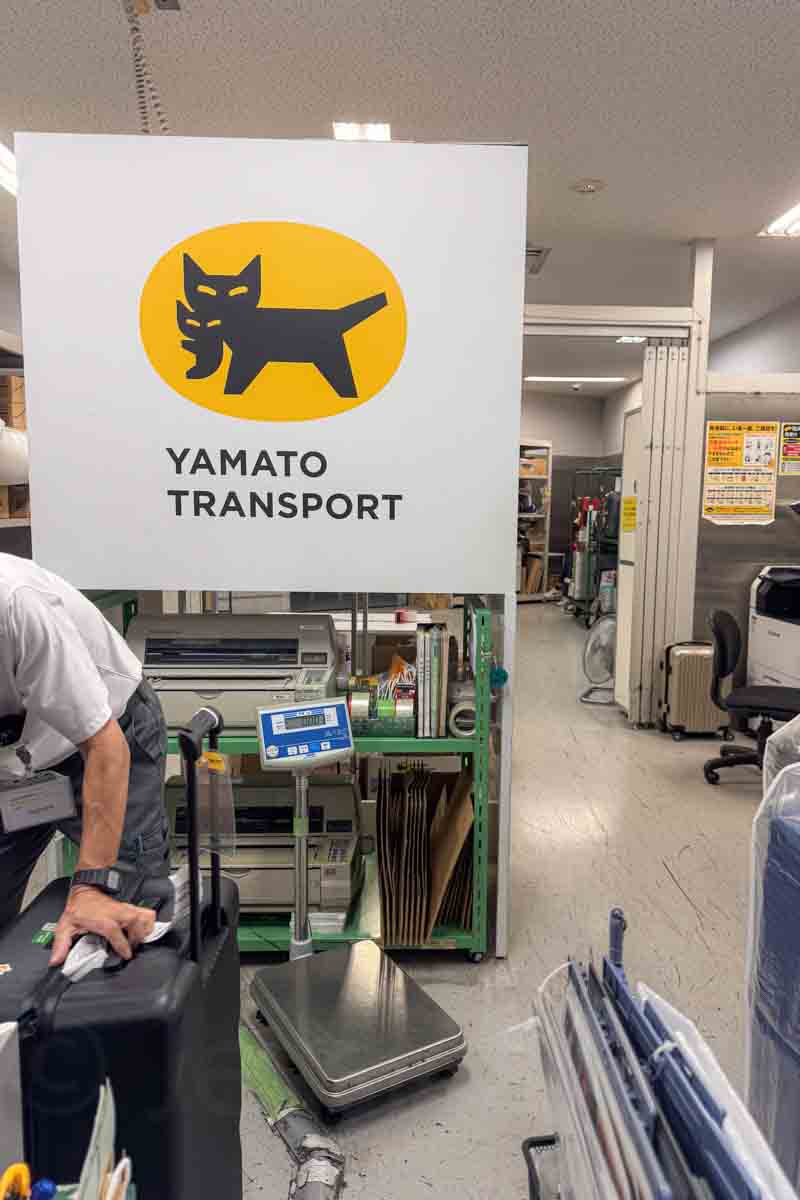
We used Yamato Transport luggage forwarding, and it made a noticeable difference in how easy everything felt.
Buses in Tokyo
You can use buses in Tokyo, but most families won’t rely on them much.
The train system is usually faster, simpler, and more predictable.
When buses might make sense
Buses can be useful in a few situations:
- areas without easy train access
- short, direct routes where a bus is more convenient
- when you want to avoid a complex train transfer
They can also be helpful if a stop is closer to your exact destination.
Why most families rely on trains instead
For most trips, trains are the easier choice.
They are:
- more frequent
- easier to navigate with Google Maps
- less dependent on traffic
Once you get comfortable with the train system, you’ll likely default to it for most of your time in Tokyo.

Our Best Tips for Getting Around Tokyo with Kids
A few small adjustments can make a big difference in how your days feel.
Minimize transfers whenever possible
This is the single biggest lever you have.
Fewer transfers means:
- less walking
- less confusion
- fewer chances for things to go sideways
If two routes look similar, choose the one with fewer steps.
Give yourself extra time and flexibility
Everything takes a little longer with kids.
Build in buffer time so you’re not rushing through stations or stressing about making the next train.
A slower pace makes the experience much more manageable.
Don’t blindly follow the fastest route
The fastest route is not always the easiest one.
Look at:
- number of transfers
- station size
- total walking distance
A slightly slower route can feel much smoother.
Expect a few mistakes and plan for them
You will take a wrong train or miss a stop at some point.
That’s normal.
Knowing it’s part of the process helps you stay calm and adjust quickly when it happens.

Keep essentials easily accessible
Make sure you can grab what you need quickly.
- IC cards
- snacks
- water
It keeps things moving and avoids unnecessary stops or stress at station gates.
Getting Around Tokyo with Kids Gets Easier Fast
Getting around Tokyo with kids is not effortless, but it is very doable.
There is a learning curve at the beginning. Stations feel big, routes feel complicated, and everything moves quickly. But it improves fast. After a day or two, you start to recognize patterns, understand how lines connect, and make better route choices without overthinking it.
Focus on keeping things simple. Fewer transfers, extra time, and realistic expectations go a long way.
And for kids, the trains, stations, and rhythm of the city often become part of what they remember most.