Best Travel Websites for Planning a Family Trip
Planning a family trip can feel like opening 37 browser tabs and somehow still not having the answer you need.
Flights. Hotels. Apartment rentals. Trains. Airport transfers. Activities. Restaurant reviews. Figuring out whether a destination will really work with kids.
It’s understandable how many families default to all-inclusive resorts and cruises. Logistically, these are so much easier to navigate. Nothing wrong with these options, we chose them sometimes too. But if you’re looking for something else, something that requires separate stays, multiple modes of transportation, and several tickets…planning is not the same.
It can seem like a lot to figure out, but planning an independent family trip is doable.
After years of traveling internationally with our 3 kids, these are the travel websites and tools we keep coming back to over and over again when planning our trips. Some help us find cheap flights. Some help us narrow down where to stay. Others help us organize the chaos and actually turn ideas into a real itinerary.
And yes, ChatGPT officially made the list too.
Affiliate Disclosure: Familee Travel contains affiliate links and is a member of the Amazon Associates Program, we may earn commissions from qualifying purchases at no additional cost to you.
In a rush? Pin this or email it to yourself to read later! (Psst! Use the buttons at the very top or bottom of this post for ease.)

Our family trip planning workflow
Every family plans trips a little differently, but this is usually how our planning process unfolds.
We typically start with flights first and see what destinations can get us the best value and route options for our family. From there, we move on to accommodations, transportation logistics, activities, and slowly piece together an itinerary.
Instagram is usually part of the process as well. I’m always saving reels, restaurants, hotels, viewpoints, and random spots I stumble across from other travelers. Then I transfer many of those saves to Google Maps so I can visualize where things are and whether they realistically fit into our trip.
Here’s the rough order we usually use when planning trips:
- Search flights on Google Flights
- Use ChatGPT to brainstorm and compare options
- Book flights directly through the airline website
- Look for accommodations on Booking.com
- Save inspiration from Instagram
- Organize places with Google Maps pins
- Use Rome2Rio to figure out transportation logistics
- Compare tours and tickets on Klook, Viator, and GetYourGuide
- Have ChatGPT arrange everything in a simple schedule
Not every trip follows this exact order, but these are the websites and tools we use repeatedly when planning family travel.
Google Flights
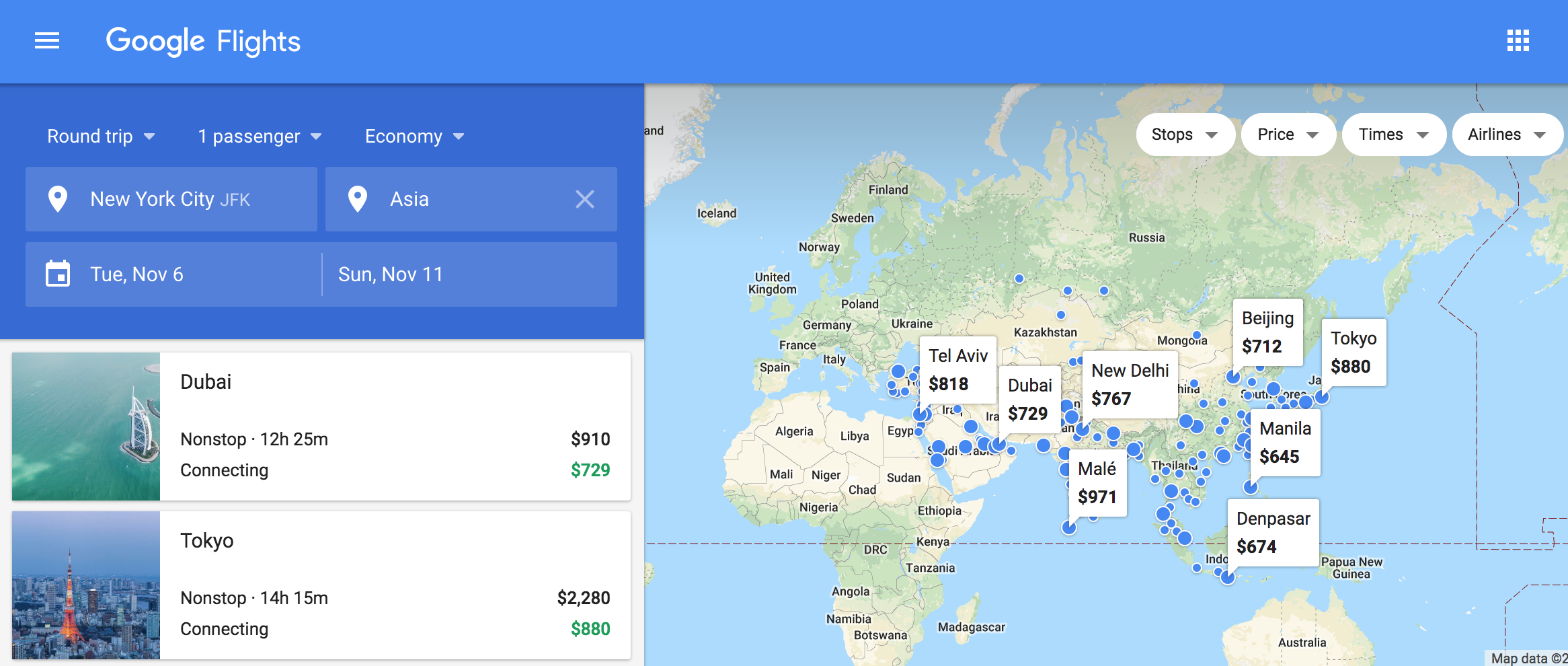
Google Flights is almost always the first place we start when planning a trip.
With five plane tickets to buy, airfare can wipe out a family trip budget before you even begin. Instead of deciding on a destination first, we often start by looking for the best flight deals, easiest routes, and most reasonable flight times for our kids.
The flexible date calendar and map search tools are incredibly helpful for this. You can quickly compare destinations, nearby airports, and travel dates without opening a dozen separate tabs.
We also use it to:
- Track flight prices
- Compare layovers and total travel times
- Search flexible destinations
- Figure out whether a route is realistically worth it with kids
- Consider whether a stopover makes sense
Even though we almost always book directly through the airline, Google Flights is where we start the planning process.
If you’re trying to decide whether a stopover is possible to add to your itinerary, check out our article: Planning a strategic stopover with kids.
Booking.com
Booking.com has become our go-to website for booking accommodations lately, especially for international family travel.
For years, we faithfully used Hotels.com, and we still occasionally do. But more and more, I find myself gravitating toward Booking.com because the filters and accommodation options work really well for families.
When you’re traveling with kids, especially as a family of five, finding the right place to stay is not always easy. We’re often searching for:
- Apartment hotels
- Family suites
- Kitchenettes or full kitchens
- Multiple bathrooms
- Laundry access
- Three plus beds
- Walkable locations
- Free cancellation
Booking.com makes it easier to filter for these features quickly.
I also love being able to view properties directly on the map while planning. It helps me understand whether we’re actually staying near the places we want to explore, restaurants we’ve saved, or public transportation.
It has become such a helpful tool in our family travel planning process.

Airbnb and Vrbo
Sometimes a standard hotel room just doesn’t work well for family travel.
When we’re staying somewhere longer, working remotely on a trip, traveling with extended family, or simply want more space to spread out, we start looking at Airbnb, Vrbo, and private rental properties on Booking.com.
Having access to things like:
- A kitchen
- Laundry
- Multiple bedrooms
- A living room
- Outdoor space
…can make a huge difference when traveling with kids.
Airbnb tends to be useful for city apartments, unique stays, and more local neighborhood-style experiences. Vrbo often shines more for full vacation homes, beach destinations, mountain towns, and larger family group trips. Though options can vary quite a bit depending on your destination, and it can be worth checking out both sites.
We’ve used both for everything from beachfront cottages to city apartments to big multi-family trips.
That said, we’ve also learned over time that not every rental is as family-friendly as the listing photos make it seem. Reviews matter a lot here, especially when considering stairs, noise, air conditioning, crib availability, safety for toddlers, parking, and walkability.
The extra space can be incredibly worth it, though, especially on longer trips with kids.
Airbnb Experiences
One thing we’ve actually used more than Airbnb accommodations lately is Airbnb Experiences.
We’ve had some really great experiences using it to connect with locals for smaller, more personal tours and activities that feel different from larger group excursions.
These can be especially fun for:
- Food tours
- Cooking classes
- Photography walks
- Neighborhood tours
- Cultural experiences
- Outdoor activities
I also tend to find that many Airbnb Experiences feel a little more casual and personal compared to traditional tour operators, which can work really well for families.
As always, reviews still matter a lot. But it can be a great way to find unique local experiences you may not have discovered otherwise.
Instagram has honestly become one of our biggest travel planning tools.
Not in the sometimes unrealistic influencer sense, but because it helps me quickly get a visual feel for a destination, hotel, restaurant, or activity.
I’m constantly saving reels and posts from other travelers, especially for:
- Family-friendly hotels
- Restaurants
- Parks and playgrounds
- Hidden spots
- Viewpoints
- Cafes
- Beaches
- Easy day trips
Seeing places from a family’s real POV often tells me way more than a polished hotel website does. And seeing how families navigate and review different spots gives me more insight into what to expect and how to plan.
I also regularly move saved Instagram spots into Google Maps so I can visualize where everything is. A place can look amazing on social media, but once you realize it’s 45 minutes away from everything else you want to do with kids, it may not be worth the trek.
Of course, Instagram is curated. Not everything looks like real life. But it has become a useful piece in planning our family trips.
Google Maps
Google Maps is probably the travel planning tool I use most throughout the entire process.
Not just during the trip itself, but while deciding where to stay, what to do, and how realistic our plans actually are with kids.
I use it constantly to:
- Save pins and organize places
- Check walking distances
- Figure out local public transportation
- Estimate transit times
- Find restaurants nearby
- Read reviews
- Scope out playgrounds and parks
- Figure out whether an itinerary actually makes sense geographically
This becomes especially important when traveling with young kids. Something may look close or easy, but once you factor in strollers, tired kids, hills, train transfers, or bathroom breaks, the reality can feel very different.
One of my favorite things to do is create saved lists for each trip and slowly build out a map over time. It helps me visualize neighborhoods, cluster activities together, and avoid wasting huge chunks of the day bouncing all over a city.
Street View can also be helpful. I’ll sometimes use it to check:
- Sidewalk situations
- Steep hills
- Busy roads
- Beach access
- Walkability around hotels
- What an area actually feels like
It’s one of the least glamorous travel planning tools on this list, but truly, one of the most useful.

Claude, ChatGPT, and AI
Claude and ChatGPT have officially become part of our family travel planning process, too.
No, I don’t blindly let AI plan entire trips for us. We tested this once, and we arrived, but hit multiple snags, closed businesses, and issues.
But it can be incredibly helpful for brainstorming, organizing ideas, and narrowing down options when you’re overwhelmed.
We use it for things like:
- Comparing neighborhoods
- Brainstorming itinerary ideas
- Filtering out and making sense of activities
- Creating rainy day backup plans
- Figuring out realistic pacing with kids
- Comparing destinations
- Summarizing transportation options
- Organizing scattered research into something usable

Sometimes it’s simply helpful to have a tool that can quickly pull together information you’re already trying to sort through. It’s like having a super speedy personal planning assistant.
For example, I might ask AI:
- Which Tokyo neighborhoods are best for families?
- Which Greek island is easiest with young kids?
- How many days should we stay in each city?
- What’s a realistic day trip with a toddler?
- What should we prioritize near our hotel?
It’s not a replacement for firsthand research, reviews, or good judgment. I still very much value reading real parents’ stories and reviews about destinations and experiences. But it can absolutely speed up the planning process and help you think through options more efficiently.
If you want to try using AI for your own trips, check out my article on Family Travel Hacks: 5 ChatGPT Prompts for Travel Planning.
Rome2Rio
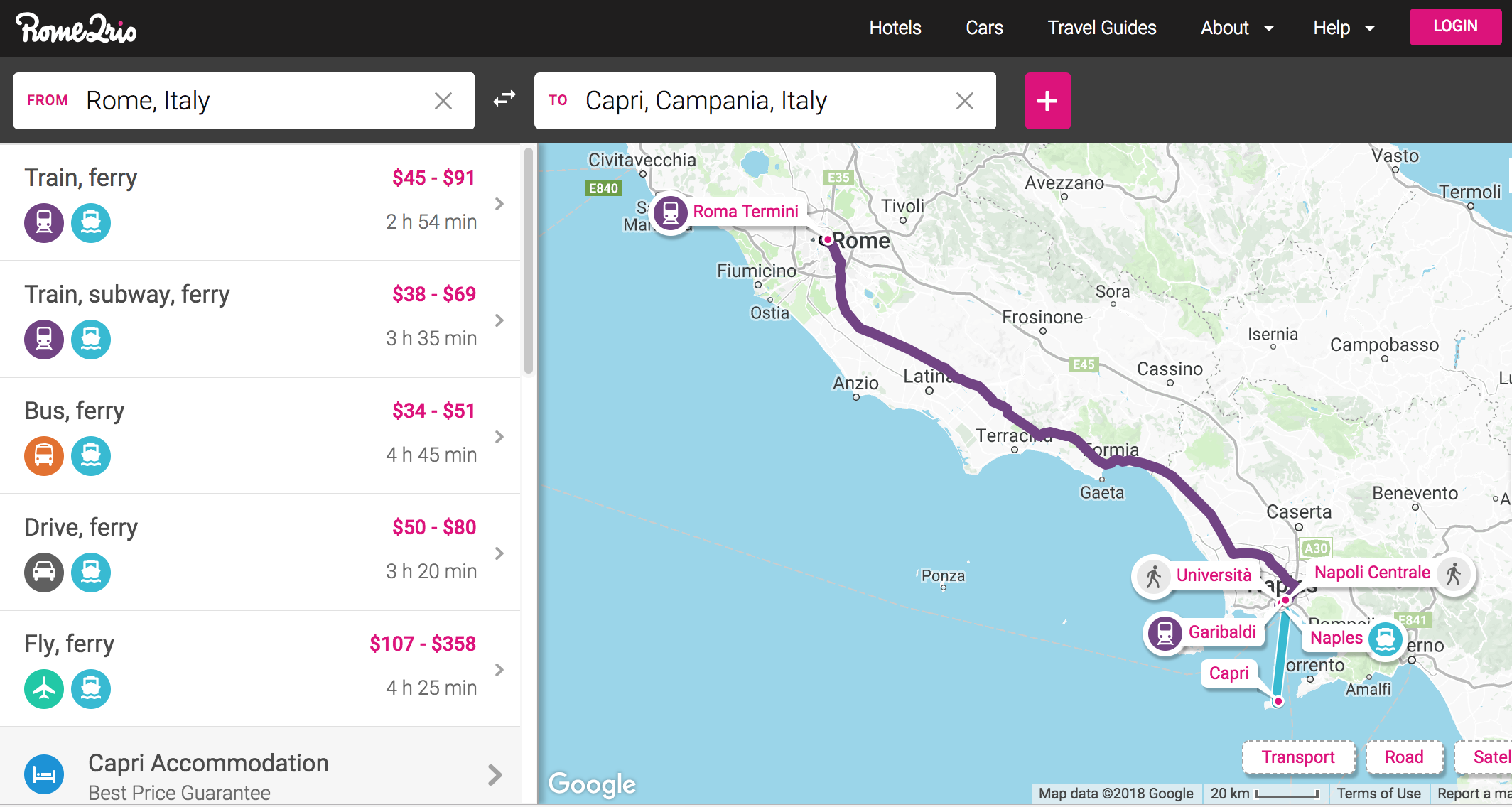
Rome2Rio is one of the most underrated travel planning websites out there, especially for international family travel.
When you’re trying to figure out how to get from one city or island to another with kids, it can save time and confusion. I don’t use it for local transport. But it’s helpful for the bigger picture routes when planning multi-city itineraries, like a 3-city tour through Europe. Is it best to fly or train or…?
We use it for things like:
- Train routes
- Ferries
- Public transportation
- Multi-city travel logistics
It’s especially helpful during the early planning stages when I’m trying to figure out whether a route is actually realistic for our family before we commit to accommodations or flights.
For example:
- Is there a direct train? A high-speed train?
- How long is the transfer really?
- Would we need a taxi after?
- Is this a stressful route with luggage and kids?
- Is flying actually easier?
It’s not always perfectly accurate with pricing or schedules, so I still verify details directly with train operators or transportation companies afterward. But as a starting point for understanding how places connect, it’s incredibly useful.
Klook, Viator, and GetYourGuide
When it comes to booking tours, attraction tickets, airport transfers, and activities, I usually compare options across Klook, Viator, and GetYourGuide.
A lot of the same activities overlap between platforms, but pricing, availability, cancellation policies, and reviews can vary quite a bit.
We’ve used these websites for things like:
- Skip-the-line attraction tickets
- Airport transportation
- Theme park tickets
- Guided small-group tours
- Private drivers
- Ferry tickets
- Train passes
- Family-friendly activities
- Day trips
Klook is probably my personal favorite overall, especially for travel in Asia. We’ve used it heavily in places like Japan, Taiwan, and Vietnam for transportation passes, attraction tickets, and airport transfers.
Viator and GetYourGuide tend to become more useful for Europe and larger group tour options.
We bought several skip-the-line tickets for our Paris activities, which made a big difference in how much we got to see.
Even if I don’t ultimately book through these platforms, I still use them heavily during research because the reviews, itineraries, and photos can help me figure out whether something is realistically worth doing with kids.
They’re also helpful for understanding what actually needs advance reservations versus what can be booked more casually once you arrive.

TripAdvisor
TripAdvisor used to be one of my main travel planning websites years ago. Now, I use it much more selectively.
I still occasionally check it for:
- Hotel rankings
- Traveler photos
- Restaurant reviews
- Recent feedback from other travelers
But I definitely don’t rely on it the same way I once did.
These days, I tend to cross-reference reviews across multiple places instead, including:
- Google Maps
- Blogs
- YouTube videos
- Booking platforms
Honestly, reviews anywhere online should be read with a grain of salt. Ratings can be inflated, experiences are subjective, and what works well for one traveler may be completely different for a family traveling with young kids.
Still, TripAdvisor can be useful as one piece of the puzzle, especially when trying to spot consistent complaints or issues that keep popping up across reviews.
Secret Flying
Secret Flying is a unique website I still like checking occasionally for travel inspiration and ridiculously good flight deals.
It highlights things like:
- Mistake fares
- Flash sales
- Cheap international airfare
- Unusual flight deals
If you have flexibility with your destination or travel dates, you can sometimes find incredible opportunities.
That said, family travel usually comes with less flexibility. School schedules, multiple plane tickets, and limited vacation windows make it harder to jump on random last-minute deals compared to solo travelers or couples.
Still, I think it’s worth keeping an eye on, especially if:
- Your travel dates are somewhat flexible
- You homeschool
- You travel off-season
- You’re open to building a trip around a good flight deal
Some of our favorite trips have started because we stumbled across a great airfare opportunity first.
Tools make trip planning doable
You do not need to use every travel website on this list.
Over time, you naturally develop your own trip-planning workflow and favorite tools based on how your family likes to travel, where you go, and what matters most to you.
For us, these are the websites and tools we repeatedly come back to after years of traveling internationally with our kids. Some help us save money. Some help us stay organized. Some help us avoid logistical disasters. And some simply help make the planning process feel less overwhelming.
Family travel planning can still feel chaotic at times, but having a handful of reliable tools makes a huge difference. We’ve found that the best travel websites for planning a trip are the ones that actually simplify the process for your family.
Planning your own trip with kids?
I share one email a month with real-world family travel strategies, packing tips, and destination breakdowns that make planning easier.
Join below.