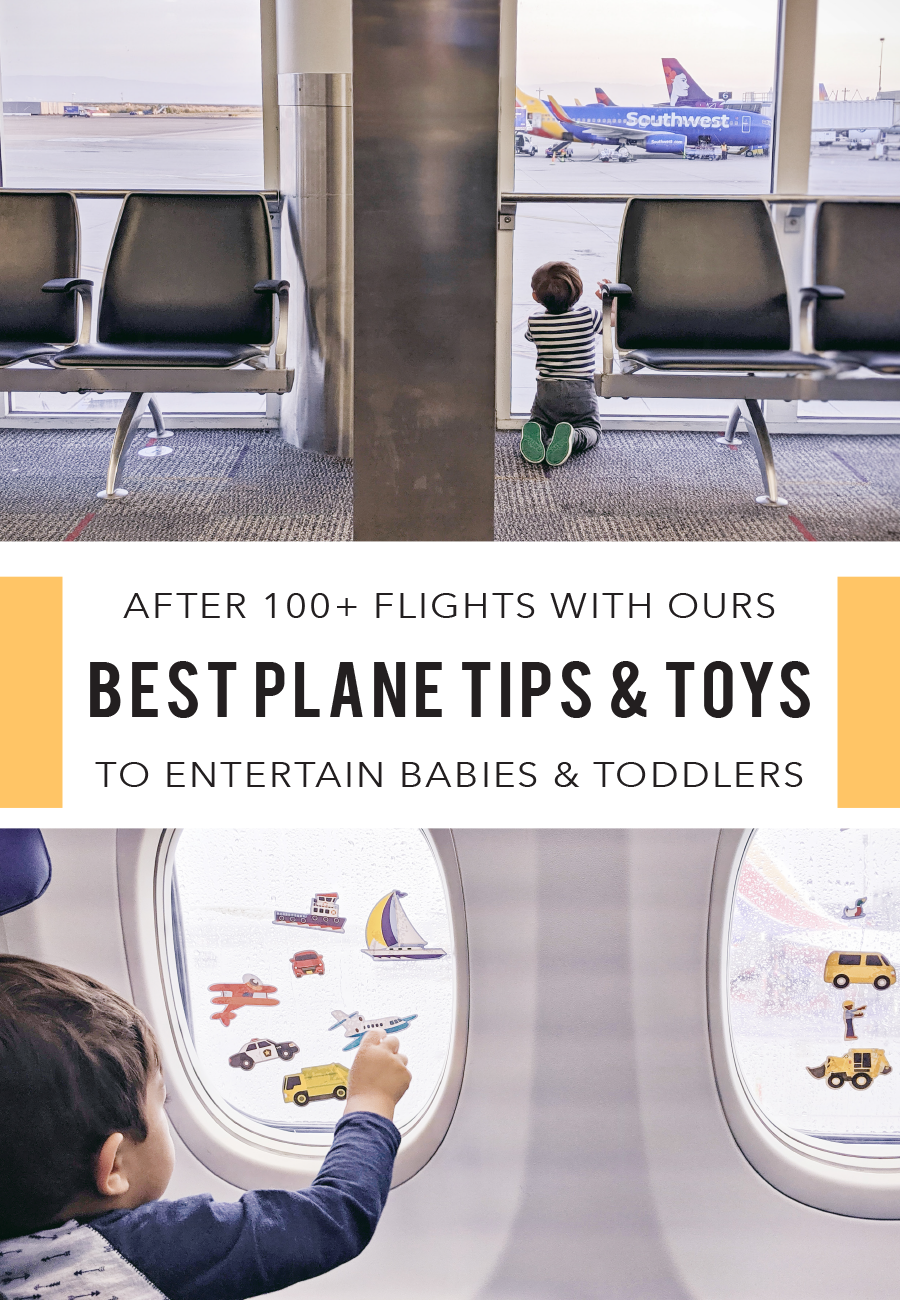
Best Airplane Toys for Toddlers (1–3 Years Old That Actually Work for Flights)
Flights with toddlers can go either way.
Sometimes they’re completely absorbed in the plane itself, and you barely touch the toys you packed. Other times, you run through everything in your bag in the first 30 minutes and still have hours to go.
After 300+ flights with our kids, now three of them. We’ve trialed, we’ve failed, we’ve tested, we’ve succeeded, and we’ve learned. Not all toys are equal when it comes to playing on a plane.
We’re discussing the best toddler airplane toys for littles from about ages 1 to 3. This is the stage where they need constant interaction and novelty, and are not quite ready for involved independent play.
If you’re flying with a younger baby, we cover that separately in our guide to airplane toys for babies (0–12 months).
If you’re planning a longer travel day, you can also read a long-haul flight with kids for the bigger picture.
Jump to: Suction toys, Fine motor toys, Creative toys, Non-toy entertainment, Books, Snacks, More options, Tablets, How many, What didn’t work, Tips, Babies, FAQs
Affiliate Disclosure: Familee Travel contains affiliate links and is a member of the Amazon Associates Program, we may earn commissions from qualifying purchases at no additional cost to you.
In a rush? Pin this or email it to yourself to read later! (Psst! Use the buttons at the very top or bottom of this post for ease.)

What actually keeps a toddler entertained on a plane?
If you’re looking for toys for a 1 year old on a plane or wondering what will actually hold a 2 year old’s attention, here’s how it goes.
Toddlers are not built to sit still. At this age, they are wired for:
- movement
- interaction
- cause-and-effect
They want to press, pull, open, close, drop, and repeat.
Their attention span is short. Even the best toy might only last 10 to 15 minutes before you need to switch it up. That is normal.
The plane helps. It is a new environment with interesting sounds and moving parts. But it is rarely enough to carry you through the entire flight.
That is where the right toys come in.
And just as important as what you bring is how you use it. Rotate toys. Pair them with snacks. Let them explore what is around them.
If you want a broader strategy beyond toys, to manage a much longer travel day, read Long Haul Flight With a Toddler: Sleep, Snacks, and Survival Strategies.

The best airplane toys for toddlers (1–3 years)
These are the toys we actually bring on flights. They are lightweight, easy to pack, and have held attention across multiple ages.
Suction toys
If you only bring one category of toy, make it this one.
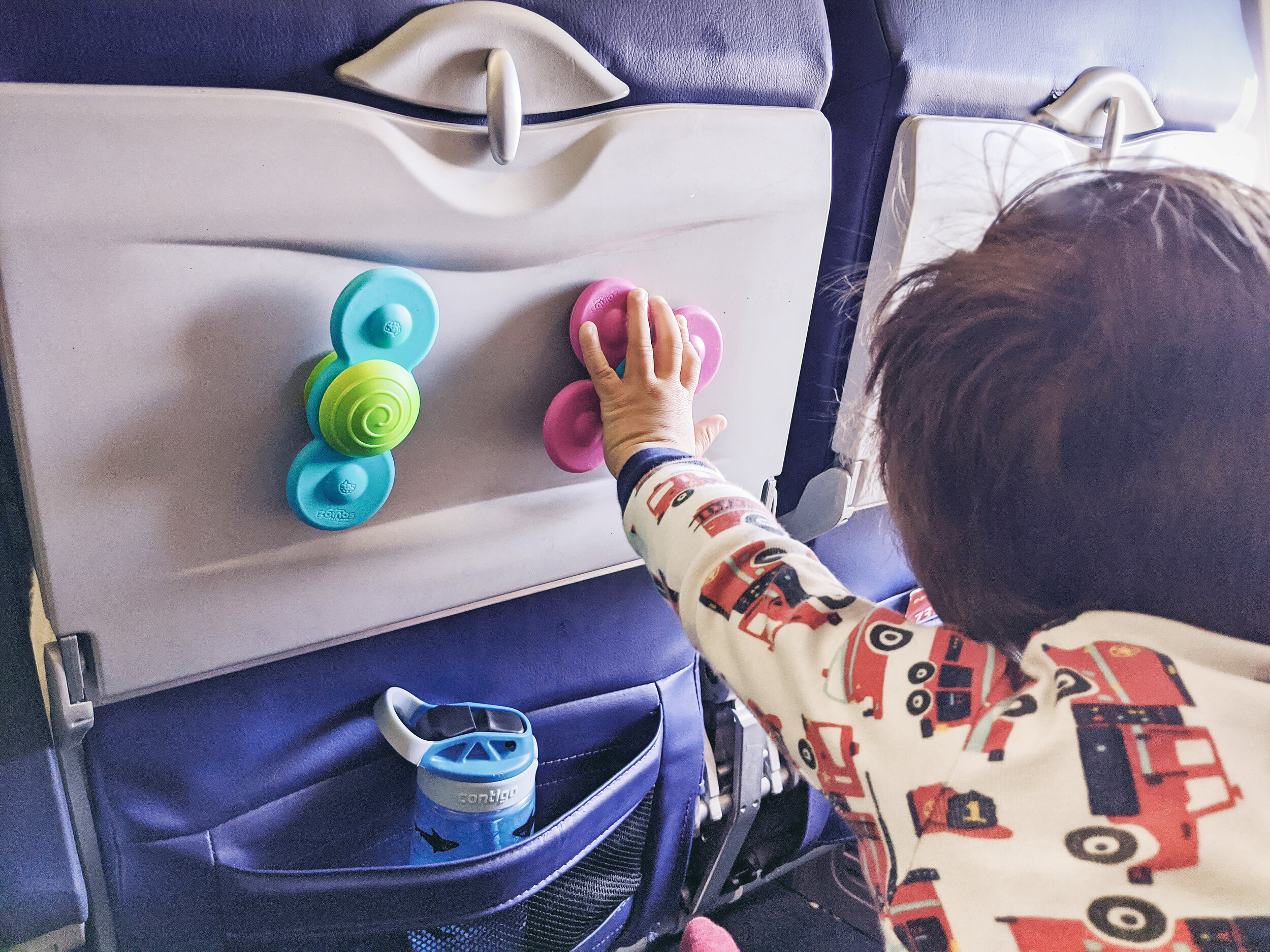
Suction toys are one of the few things that consistently work on planes because they turn the space around your toddler into part of the activity.
We’ve had the most success with:
- Whirly Squigz. These have been one of our biggest wins across all three kids. They stick to the airplane window, or even the tray table, and all your toddler has to do is spin them.
- Squigz. These are a little more open-ended. Toddlers can stick them together, pull them apart, and build simple shapes, which works especially well as they get closer to age 2 and beyond.
Toddlers love the repetition. Stick, spin, pull off, repeat.
They’re also great because they:
- stay contained in one area
- are easy to clean up
- don’t roll away like other toys
These are some of the few toys that can hold attention for longer stretches, whether you’re flying with a 1 year old or a 2 year old.
Fine motor and “busy hands” toys
This is where you tap into that need to do something with their hands.
A few of our go-to favorites:
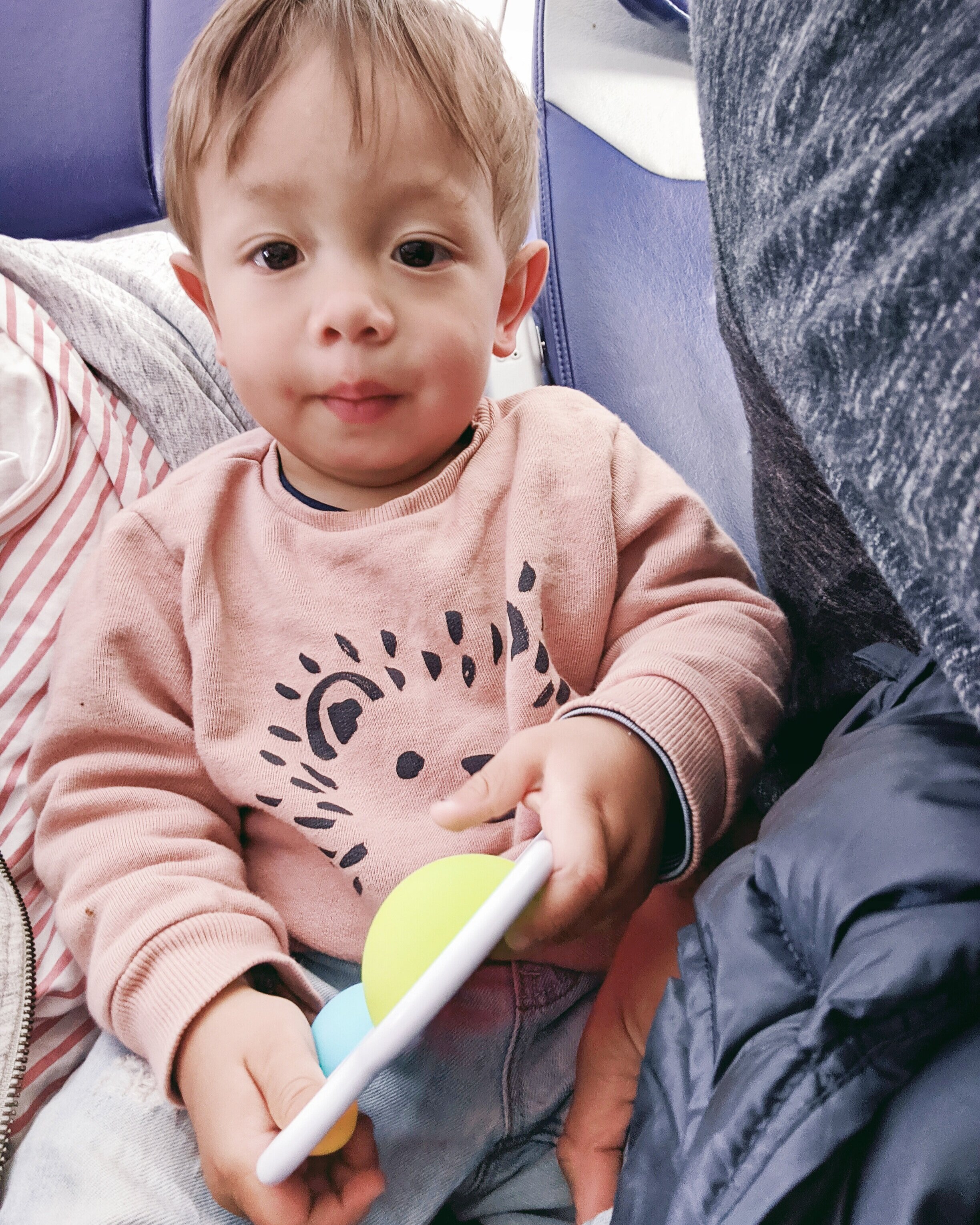
- Dimpl Pops. Small, lightweight, and surprisingly engaging. It is basically endless button popping.
- Buckle toy. If your toddler is in a buckle phase, this can hold their attention for a long time.
- Wooden lacing toy. Better for older toddlers closer to age 2 or 3 who can manipulate the string.
These work especially well for:
- 18 month olds refining fine motor skills
- 2 year olds who want more independence
They are repetitive in the best way, which is exactly what toddlers love.
Mess-free creative toys
When space is tight and you don’t want to deal with a mess, these are some of the easiest wins.
- Color On-the-Go sets. Completely mess-free and easy to pack.
- Water Wow books. Toddlers love “painting” with water and watching the colors appear.
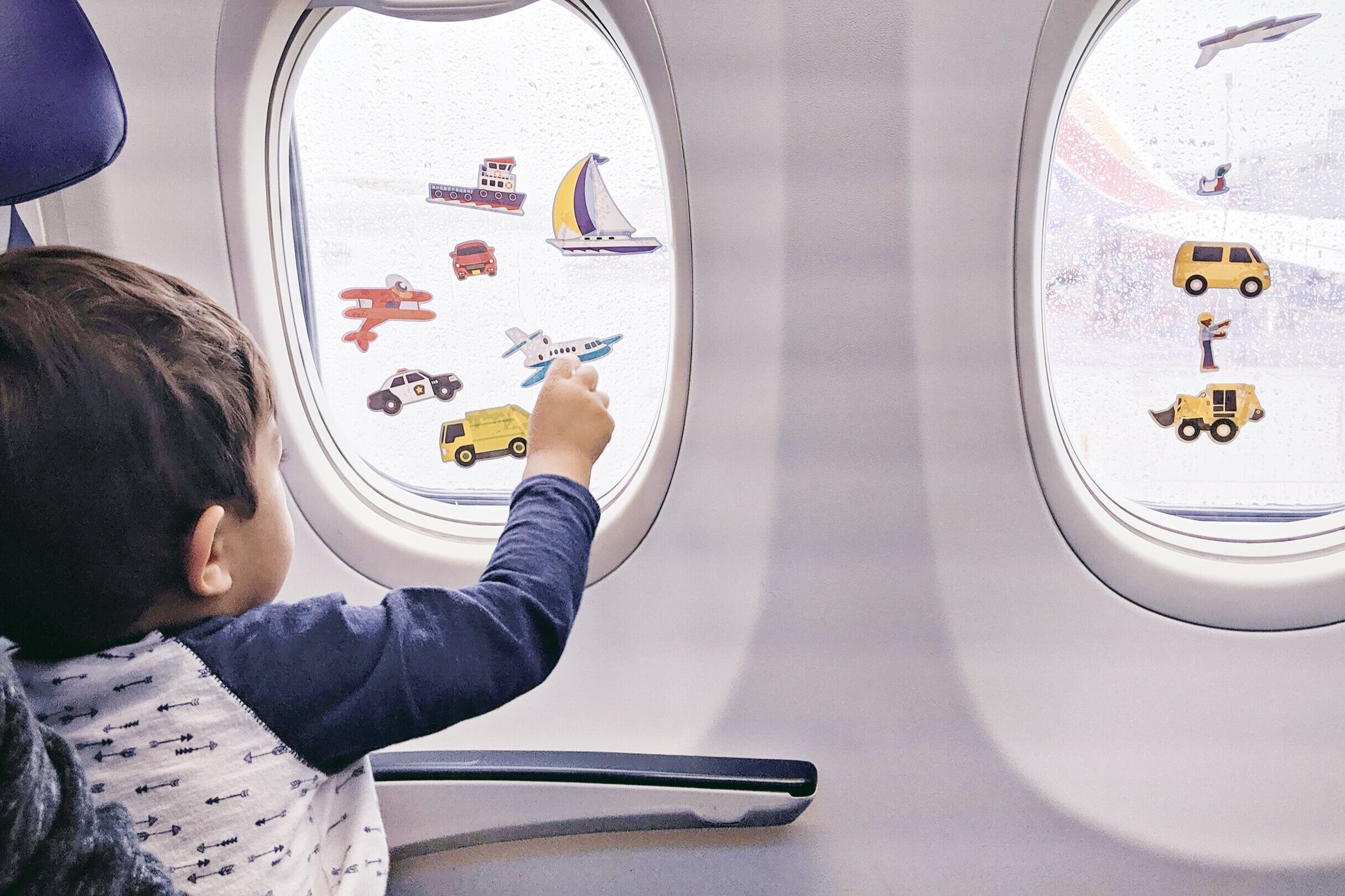
- Reusable stickers. One of our all-time favorites. Look for larger jelly or puffy stickers so toddler fingers can manipulate them.
Sometimes, I pull out a bunch of stickers and keep them in a small bag rather than bring the full book or pad if it feels too large for a certain trip.
One of our best flights, we had a window seat with two windows, and my toddler spent a long stretch sticking and re-sticking them across both windows. If you bring this, try to grab a window seat.
“Not really toys” that work surprisingly well
Some of the best airplane toys for toddlers are not toys at all.
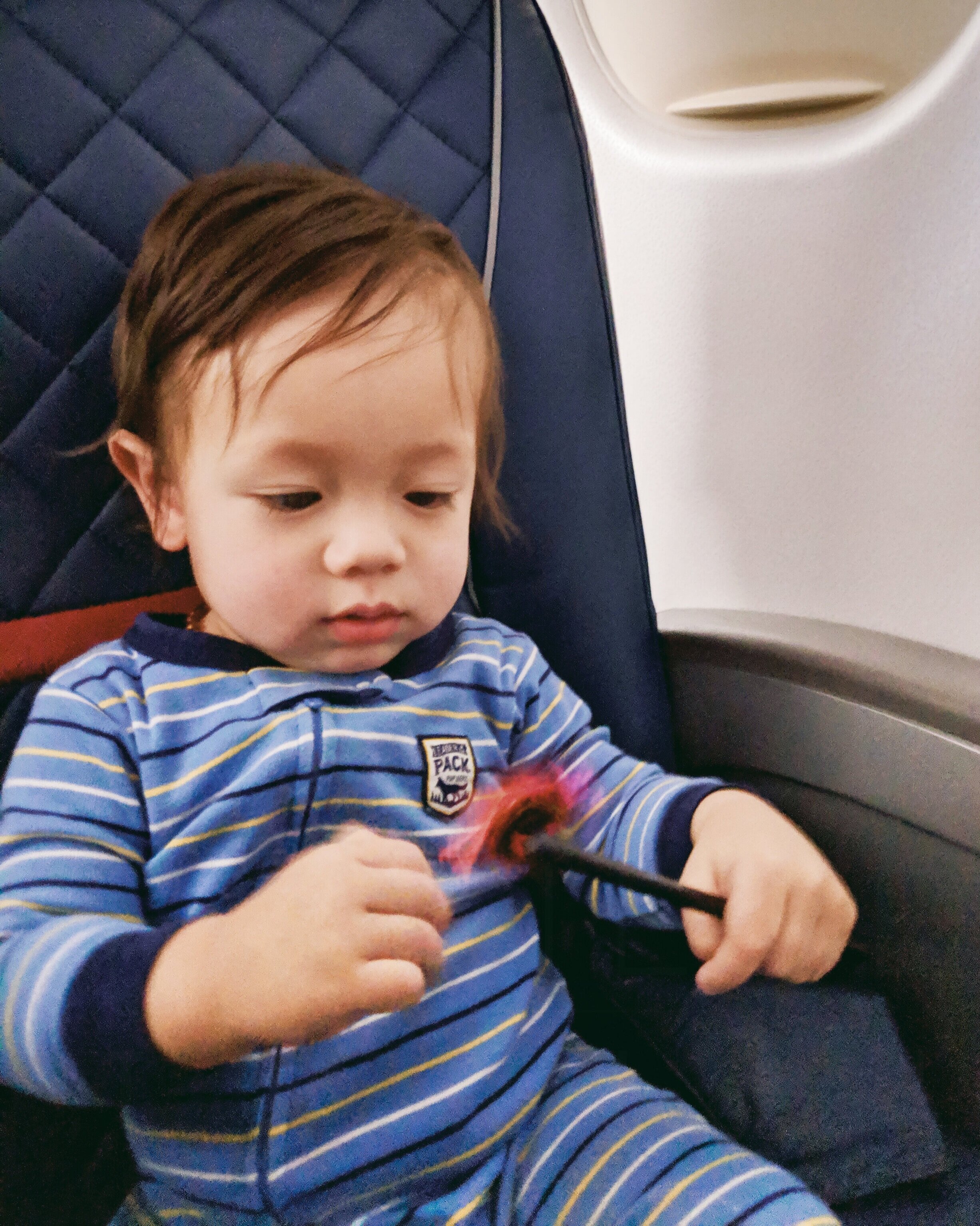
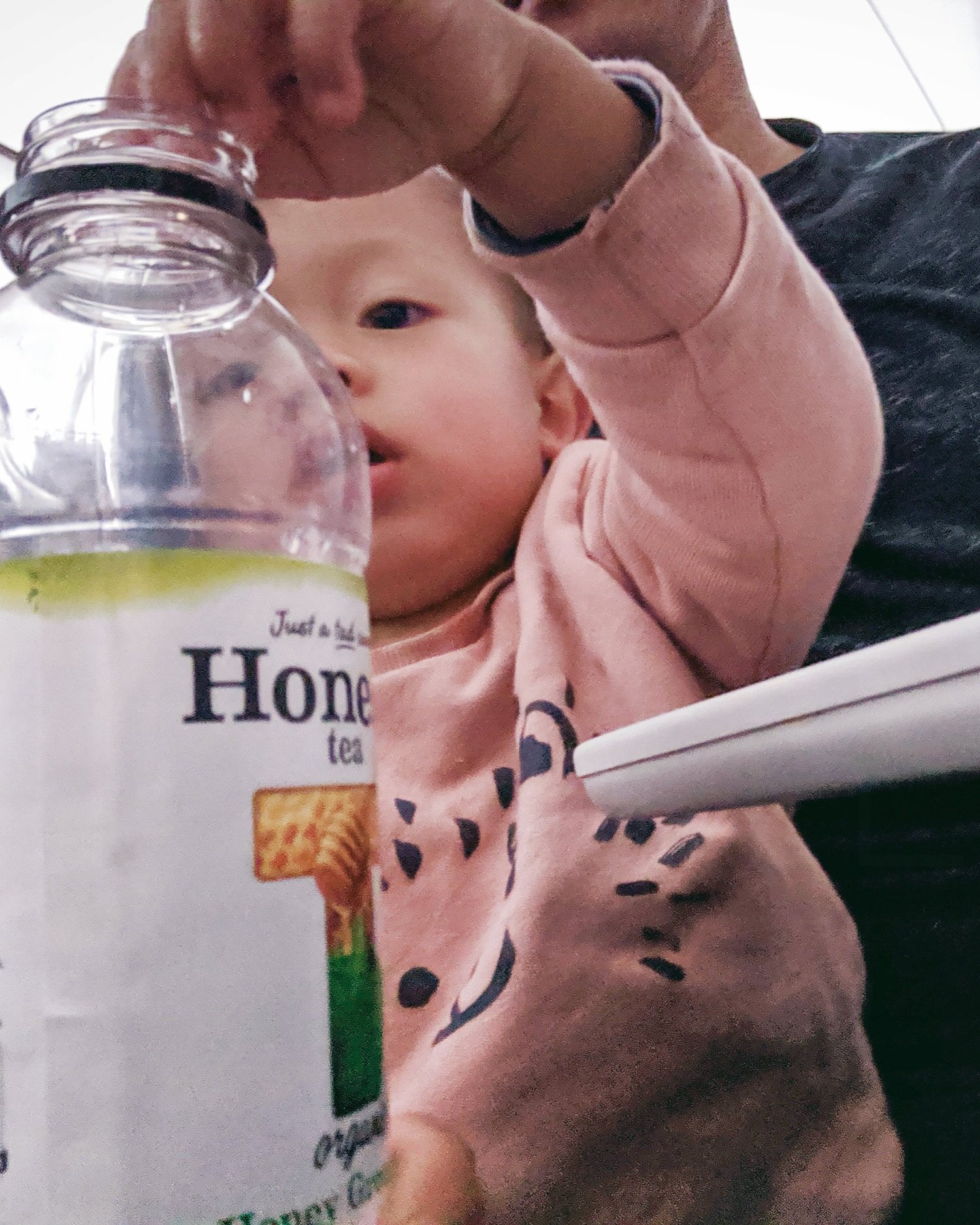
I often ask the flight attendants for empty cups. Toddlers can be amused by the simplest items. Think outside the box of a typical toy and use what’s around you.
A few things that have worked really well for us:
- Cups on their own
- Cups paired with snacks like puffs or small items they can drop in and take out
- A cup of ice and an empty bottle
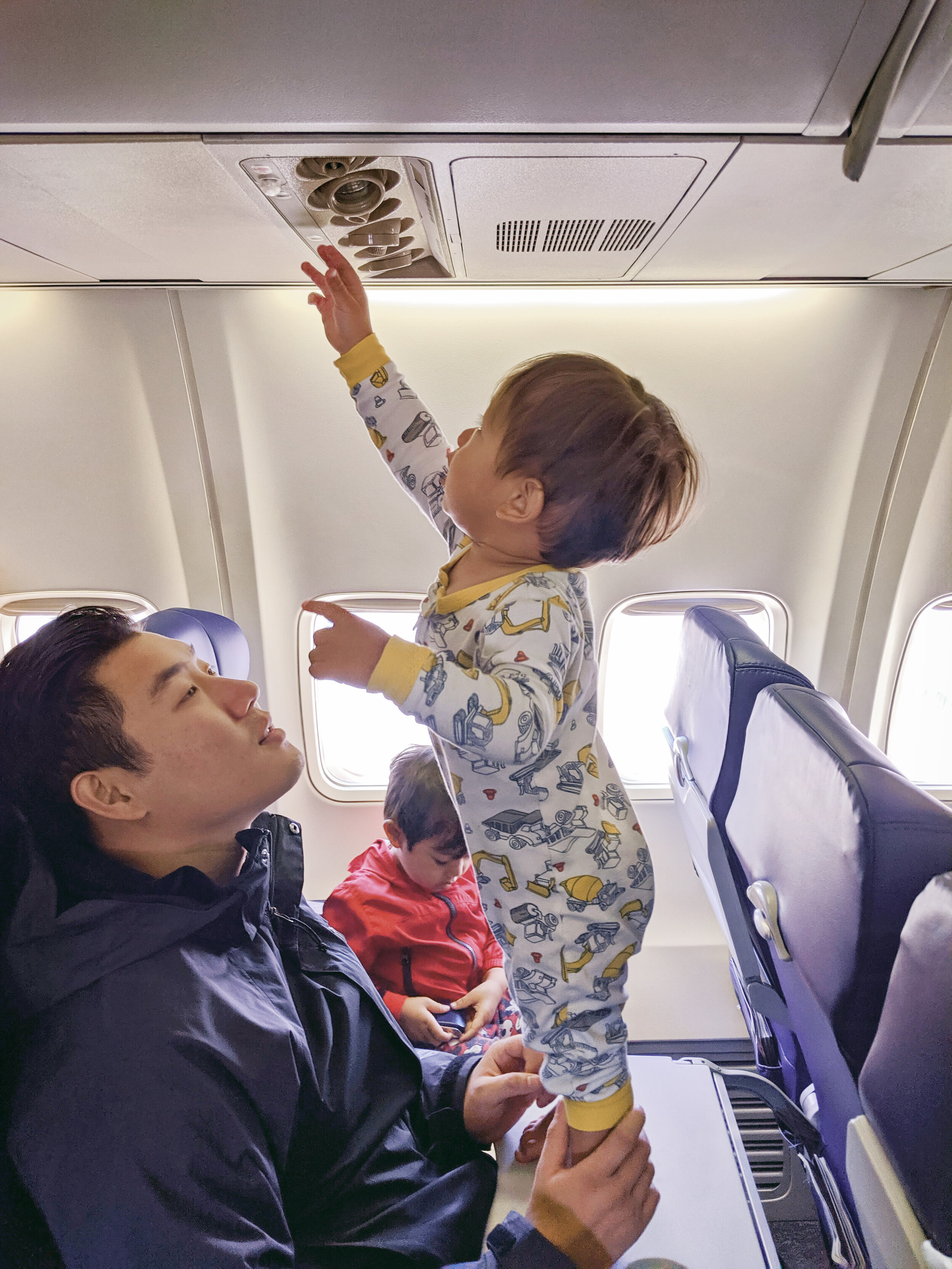
- Airplane features like the tray table, armrest, air vent, and seatbelt
At this age, toddlers are learning how everything works around them and can be fascinated by how these move up and down and open and close.
Some of the best toys for a 1 year old on a plane aren’t toys at all.
Books that hold attention
Books can work really well on flights, but not all books hold attention at this age.
We’ve had the most success with:
- First 100 books like First 100 Words, First 100 Animals, and First 100 Trucks. These are great for pointing, identifying, and keeping toddlers engaged.
- Chunky lift-the-flap books that are durable and interactive. Toddlers love opening and closing the flaps over and over.
- Character board books if your toddler has a favorite. Whether it’s Bluey or Paw Patrol, leaning into something familiar can go a long way.
A couple of specific favorites from our own flights:
- Playtown Airport book. My kids wore this one out with how much they used it. It kept their attention surprisingly well, especially since it ties into the airport and flying experience.
- Going on an Airplane. This one is especially helpful before your trip. It walks through what to expect, which can make the actual flight feel more familiar and less overwhelming.
At this stage, toddlers are rapidly expanding their vocabulary, even if they are not saying all the words yet. Books that let them interact, point, and engage tend to work best.

Snacks as entertainment (underrated but effective)
Snacks are not just for eating. They are one of the easiest ways to buy time.
Snacks like puffs or other age-appropriate options can amuse and distract them for a while. It turns into pincer grasp practice and keeps their hands busy.
A few ways to stretch this out:
- Use snacks they can pick up one at a time (Cheerio!)
- Pair snacks with cups or containers
- Bring a mix of familiar favorites and a few special treats
If you’re planning what to bring, what holds attention, and how to make snacks last longer, this pairs well with feeding your baby while traveling. A lot of those same strategies still apply to younger toddlers.
If you’re also navigating airport security, understand what to expect when flying with milk for a toddler.
A few more easy wins to round out your toy bag
If you want a broader mix of options, these are all solid additions:
- Small musical toys with buttons and lights. The lights and buttons amused them, and you could hear a little bit of music above the plane noise without disturbing other passengers.
- Toy phone or remote. Toddlers are naturally drawn to real-life objects.
- Sensory board switch toy. A little bulkier than I prefer for travel, but we found it worth it for a certain stage of toddler travel.
- Stacking or nesting cups. Lightweight and versatile.
- A small backpack just for toys and toddler gear, so everything stays contained
Tablet talk
Tablets can be helpful on flights, but they are not a guarantee.
Some toddlers love them. Some barely pay attention.
In our experience, our kids were not that interested until closer to age 2 or even 2.5. The plane environment was more interesting than the screen.
If your toddler does watch shows, a tablet can make flying easier. We treat it as a travel-only tool, which helps keep it novel.
A few things to keep in mind:
- Download everything ahead of time
- Do not rely on it as your only entertainment plan
- Treat travel days differently from normal days
The toys that didn’t work (and what to do instead)
Not every toy is a good plane toy.
Anything with small, loose pieces can quickly become stressful.
Polly Pocket sets were a clear example for us. My daughter loved them, but all the tiny pieces were a challenge to manage on a plane.
Small toy cars were similar. My boys loved them, so we brought them often. They held attention, but they also rolled everywhere.
What worked better for us:
- Bring toys you are okay losing
- Avoid anything with lots of tiny pieces
- Do not bring anything you would be upset to lose
We still brought cars, but never their favorites.
A helpful workaround is using a tray table cover with raised edges. It creates a contained space so toys and snacks are less likely to roll off.

Planning your own trip with kids?
I share one email a month with real-world family travel strategies, packing tips, and destination breakdowns that make planning easier.
Join below.
How many toys should you bring on a flight with a toddler?
It is easy to overpack.
I used to spend time putting together the perfect toy bag, only to realize we didn’t use half of it.
Now I keep it simple.
- Bring a small, curated set
- Focus on variety instead of quantity
- Rotate toys often
- Mix in snacks and non-toy options
You do not need a huge bag. You need a few things that work well.
Using small pouches or even small packing cubes makes it easier to keep everything organized and accessible.
Tips for keeping track of toys on the plane
We have donated more than a few toys to airplanes over the years.
There are endless places for things to disappear.
Here is what has helped:
- Avoid bringing your toddler’s absolute favorite toy
- Avoid anything super tiny
- Put toys with smaller pieces in little bags
- Take out one toy at a time
- Use a dedicated toy bag
Beyond toys — what else helps keep toddlers happy on flights?
Toys are only one part of it.
Toddlers need movement and interaction.
- Walk the aisle when you can
- Let them explore safe parts of the plane
- Talk, point things out, and keep them engaged
If you’re traveling with older kids, too, you can also pull ideas from things to keep kids busy on an airplane (elementary edition).
Quick note on babies vs toddlers
Babies and toddlers are very different on flights.
Babies are often more interested in people and simple objects, while toddlers need more variety and interaction to stay engaged.
If you’re traveling with a younger baby, see our guide to airplane toys for babies (0–12 months). The strategies and toy choices are completely different at that stage.
- Best Age to Travel With a Baby — Don’t Wait Until One
- Baby’s First Flight: How to Prepare
- Traveling with Baby Bottles
- Baby Sleep While Traveling
Flying Long-Haul With a Baby?
If your baby is under one and you’re preparing for an international flight, start here.
Download the Calm Long-Haul Baby Guide — a practical carry-on checklist and sleep strategy framework built for the 0–12 month stage.
Plus, I’ll send one calm, useful email per month with real-world travel guidance.
You don’t have to figure this out alone.
FAQs
What toys are best for an 18-month-old on a plane?
Toys with simple cause-and-effect work best, like suction toys, bubble pop-style fidgit toys, and cups paired with snacks.
What toys work best for a 2-year-old on a flight?
Mess-free drawing sets, stickers, buckle toys, and interactive books tend to work well when rotated.
How do you keep a toddler entertained on a plane without screens?
Rotate toys, use snacks strategically, and let them engage with the environment around them.
Are airplane toys really necessary for toddlers?
Not always, but having a few reliable options can make a big difference.
A final note before your flight
You do not need to bring everything.
A small, thoughtful set of toys goes much further than overpacking.
Focus on what works for your child, stay flexible, and adjust as you go.