Traveling to Japan With a Baby – Why It’s a Perfect First International Trip
Traveling before kids felt adventurous and spontaneous. Jump on a flight to the Philippines with nothing planned and have a random tuk-tuk driver suggest accommodations. Sure. Stay at a hostel in Marrakech for the weekend. Why not?
Then comes a baby in the baby carriage. And your perspective shifts. The thought of traveling with a squishy human you’re now fully responsible for can feel daunting. Even if you’ve been all over the world, taking a baby along is a totally different game and can suddenly feel overwhelming.
When we were deciding where to take our first baby on his first big international trip, we debated endlessly. We wanted somewhere exciting and culturally rich, something to fill up our empty travel cups. But with a baby, it also needed to be safe, clean, and manageable. After months of researching, combing forums, and overthinking, I chose Japan.
Despite very little sleep, hello 15-hour time change, it ended up being one of my favorite trips ever. If you’re considering traveling to Japan with a baby, here’s exactly why it works so well for families.
Jump to: Welcoming, Omotenashi, Safety, Cleanliness, Baby Facilities, Getting Around, Luggage Delivery, Stroller or Carrier, Food, Breastfeeding and Bottles, Convenience, Experiences, Where We Went, FAQs
Affiliate Disclosure: Familee Travel contains affiliate links and is a member of the Amazon Associates Program, we may earn commissions from qualifying purchases at no additional cost to you.
In a rush? Pin this or email it to yourself to read later! (Psst! Use the buttons at the very top or bottom of this post for ease.)
Japan is genuinely welcoming to babies
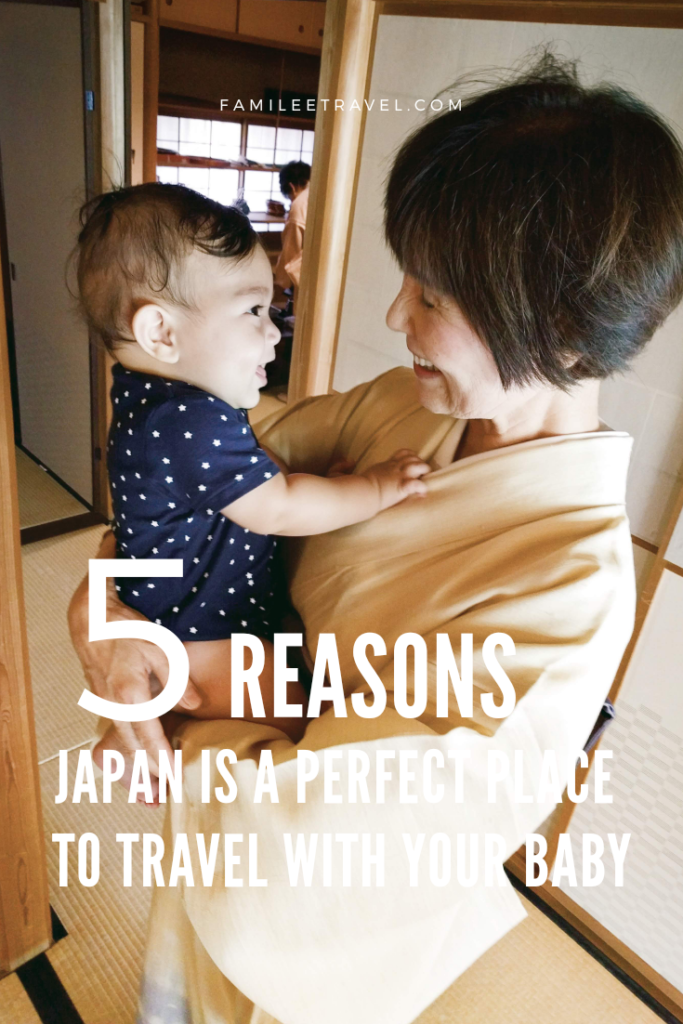
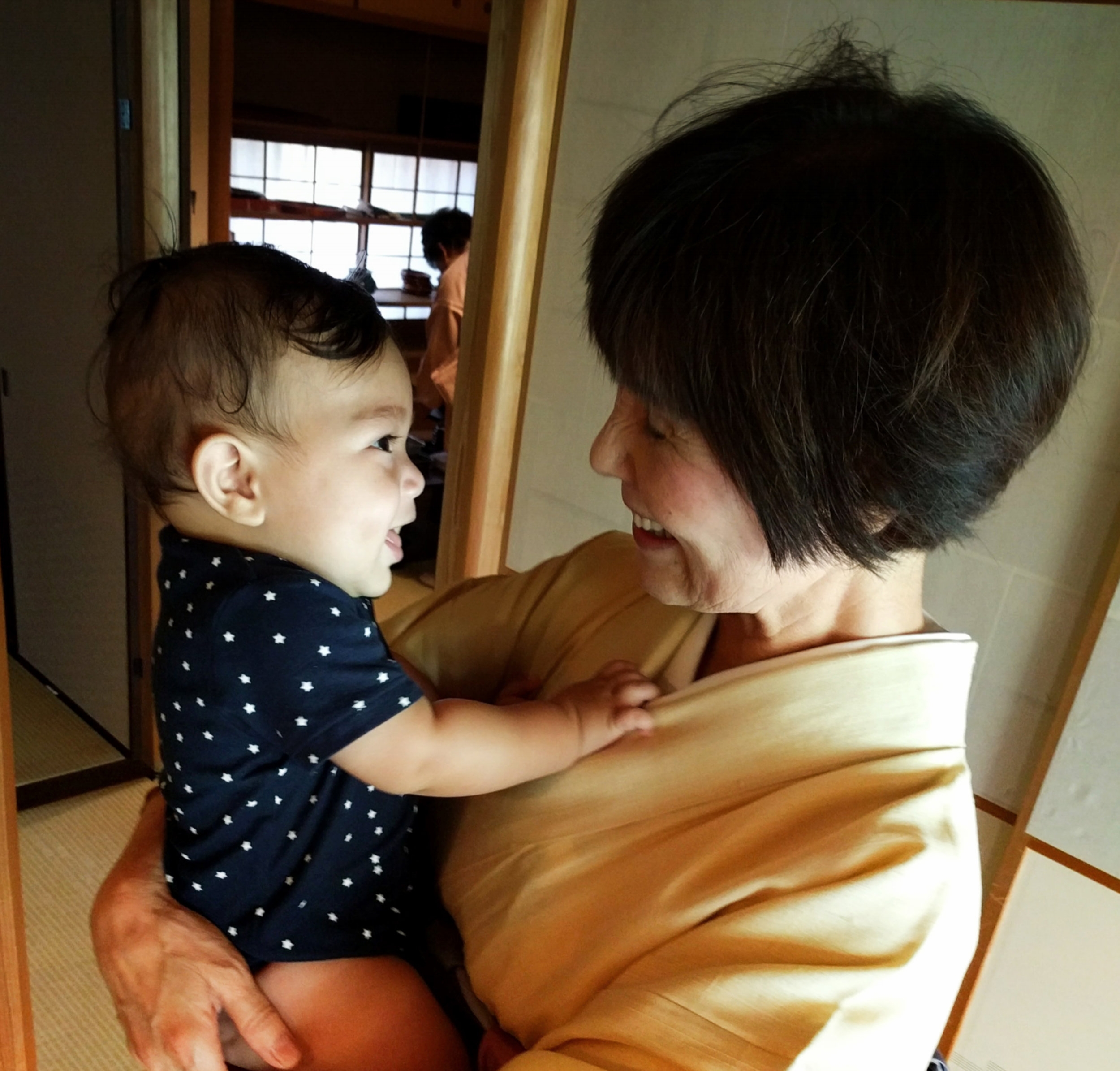
One of my favorite parts of traveling to Japan with our 7-month-old was how warmly people responded to him.
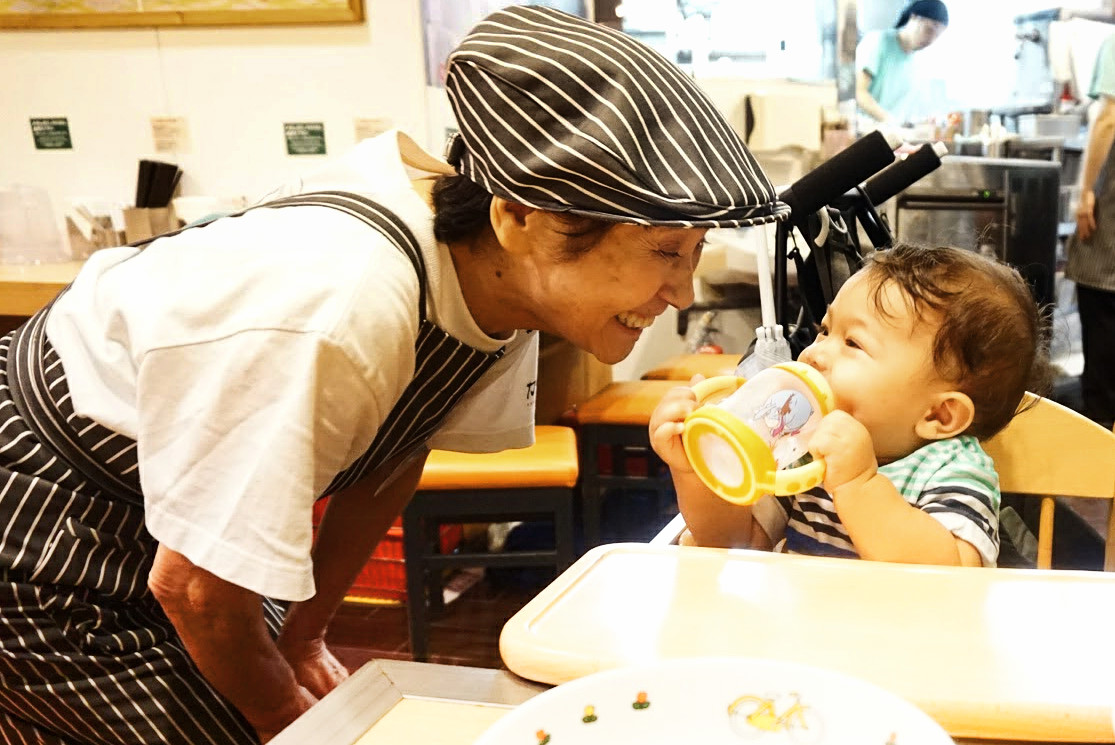
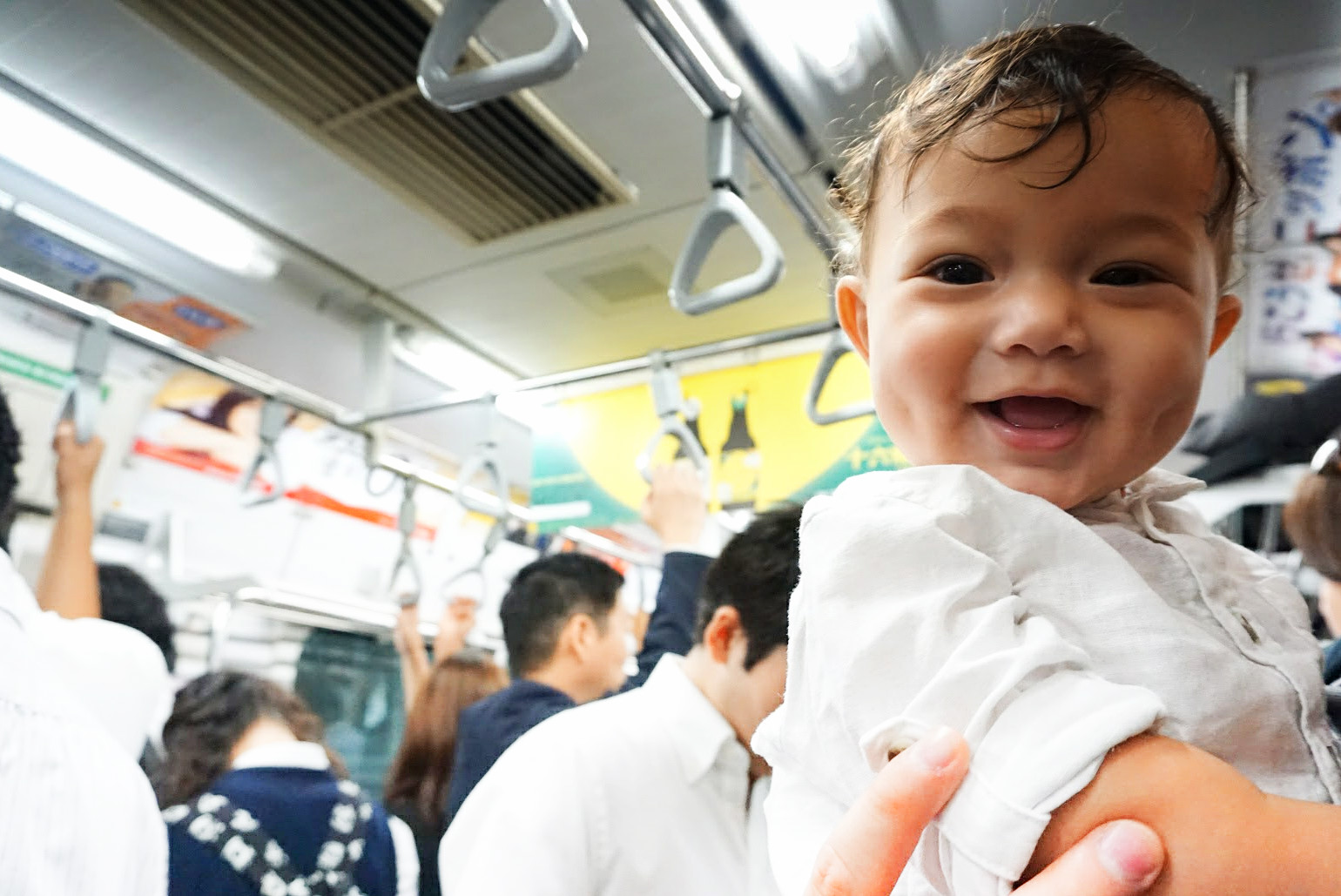
Strangers would smile, wave, and say “kawaii, kawaii” as we passed. Kawaii stuck as his nickname for a while. Elderly couples played peek-a-boo on the metro. Shopkeepers made faces to get him to giggle. It never felt weird or uncomfortable. It felt joyful and connecting.
Japan has one of the lowest birth rates in the world and an aging population. You don’t see babies everywhere the way you might in other countries. So when older locals see one, especially a happy one, they often light up.
As a new parent, that matters more than you realize. It gives you a boost.
There’s already enough pressure when you’re traveling with a baby. You don’t need to also worry that your child is bothering everyone around you. In Japan, we never felt like a nuisance. We felt welcomed.
That being said, Japan also values rules and boundaries. Some spaces are clearly adult-oriented, and it’s important to respect that. But in everyday life on trains, walking through neighborhoods, and visiting major attractions, babies are very much accepted.
That acceptance makes Japan one of the most comforting baby friendly travel destinations I can think of.
Omotenashi – Why Japan feels supportive as a parent
There is a Japanese concept called omotenashi.
It is often translated as hospitality or customer service, but it goes deeper than that. Omotenashi is the idea of anticipating someone’s needs before they have to ask and offering care without drawing attention to it.
You see it everywhere.
A shopkeeper gently moves something out of stroller range before your baby can grab it. A train attendant pauses so you can fold your stroller without pressure. A restaurant brings a small bowl and spoon for your baby without you asking.
It is subtle. It is thoughtful. And it makes an impact.
When you are traveling with a baby, you are already managing a lot. You are hyper-aware of whether your child is disrupting others. In a culture shaped by omotenashi, you often feel accommodated rather than tolerated.
That does not mean every situation is perfect. In our most recent trip at the most popular tourist spots, we felt some fatigue toward tourists. Still, there is a cultural baseline of consideration that benefits parents.
And when it’s your first big trip with a baby, feeling supported instead of judged changes everything.
Japan is one of the safest places to travel with a baby
Safety was a factor in why I chose Japan for our first international trip with a baby.
Tokyo is one of the largest cities in the world. The train stations are massive. The crowds can be intense. Which totally sounds like a lot and maybe overwhelming with a 7-month-old.
Yet, it felt incredibly safe and worked out just fine.
Japan consistently ranks among the safest places to travel with a baby. Crime rates are low. Public transportation is orderly and predictable. Even late at night, walking through side streets or navigating stations never felt threatening.
When you’re traveling with a baby, that baseline sense of safety lets you relax.
You’re already tired. You’re managing naps, feedings, diapers, and your own overstimulation. Not having to constantly scan your surroundings allows you to actually enjoy where you are.
We took trains all over, between cities and within them, without ever feeling uneasy. We walked through busy areas like Shinjuku and quieter neighborhoods alike. The order and respect in public spaces made Japan with a baby feel less stressful than I expected.
Of course, you still use common sense. Keep sight of your bags. Pay attention. But compared to many other major destinations, Japan offers a level of peace of mind that’s hard to overstate.
Cleanliness makes traveling with a baby easier
One thing that immediately stood out to me in Japan was how clean everything feels.
Japanese culture places a strong emphasis on personal and community responsibility. People are taught from a young age to respect shared spaces, clean up after themselves, and take their trash with them. You see that value in practice everywhere.
When you’re traveling with a baby who touches everything and puts their hands straight into their mouth, cleanliness matters.
Sidewalks feel tidy. Train stations feel orderly. Public spaces feel cared for. I’m not saying there is zero dirt anywhere, but compared to many large cities, the difference is noticeable.
There is one trade-off, though. Trash cans are hard to find.
It is normal in Japan to carry your trash with you until you get back to your hotel or find a designated disposal area. It can feel inconvenient at first. With a baby, it’s actually more manageable than you’d think.
Bring small diaper disposal bags. Use them for diapers and any messy items, tie them tightly, and store them under your stroller or in a small wet bag until you can dispose of them.
Having a stroller makes this easier because you have somewhere to stash things temporarily. If you are baby-wearing only, you will want to plan ahead a little more.
Overall, the cleanliness culture removes a layer of stress and makes traveling to Japan with a baby feel far more comfortable than many parents expect.
Baby facilities in Japan are thoughtful and practical
Before traveling to Japan with a baby, I assumed we would be improvising most diaper changes and feedings.
That was not the case.
Japan has dedicated baby care rooms in many train stations, department stores, shopping centers, and large public buildings. These are not just a plastic Koala Kare fold-down changing table in a restroom. They are separate, intentionally designed spaces for parents.
Most include padded changing tables, diaper disposal bins, and sinks for washing hands or rinsing bottles. Many have hot water dispensers for formula. Some have private curtained nursing rooms. Others include child-sized toilets and sinks for toddlers.
One feature I had never seen before was a wall-mounted baby seat inside restroom stalls. If you are baby-wearing and need to use the toilet yourself, you can secure your baby safely for a moment instead of trying to juggle everything in your arms.
When you are traveling with a baby, these moments add up. Not having to search frantically for a clean place to change a diaper reduces stress immediately. You feel supported rather than inconvenienced.
These facilities are especially common in major cities like Tokyo and Osaka, but we found them beyond the biggest hubs, too.
Getting around Japan with a baby is easy
One of the main reasons I chose Japan was the transportation system. For our first long trip, we did not want to bring a car seat.
Car seats are bulky. They complicate transfers, taxis, and multi-city trips. When you’re traveling to Japan with a baby, simplifying logistics makes a big difference.
The rail system is extensive, reliable, and efficient. Between metro lines, regional trains, and high-speed trains, you can reach almost anywhere without needing a car.
During our two-week trip, we stayed in Tokyo, then traveled to Kyoto and Osaka before returning to Tokyo. We took day trips along the way and switched cities entirely by train.
No rental car. No car seat. No stress about installing and uninstalling anything.
Children under six are legally required to use car seats in private vehicles in Japan, but taxis are exempt. In practice, most visitors rely on trains, which removes the issue altogether.
The trains themselves are clean and punctual. Platforms are clearly marked. Announcements are consistent. When you’re jet-lagged and juggling baby needs, that predictability helps.
Japan’s luggage delivery services make multi-city travel feel easy
If you plan to visit multiple cities in Japan, there is one service that makes traveling with a baby dramatically easier.
Luggage forwarding.
Japan has an efficient luggage delivery system. You can ship your suitcases from one hotel to the next and travel between cities with just a small overnight bag.
On our first trip, one suitcase wheel broke. Dragging a broken suitcase plus baby gear in a new place was not fun.
On our recent Tokyo to Osaka trip, we sent our luggage ahead and traveled light. The bags arrived at our next hotel the following day. It felt magical.
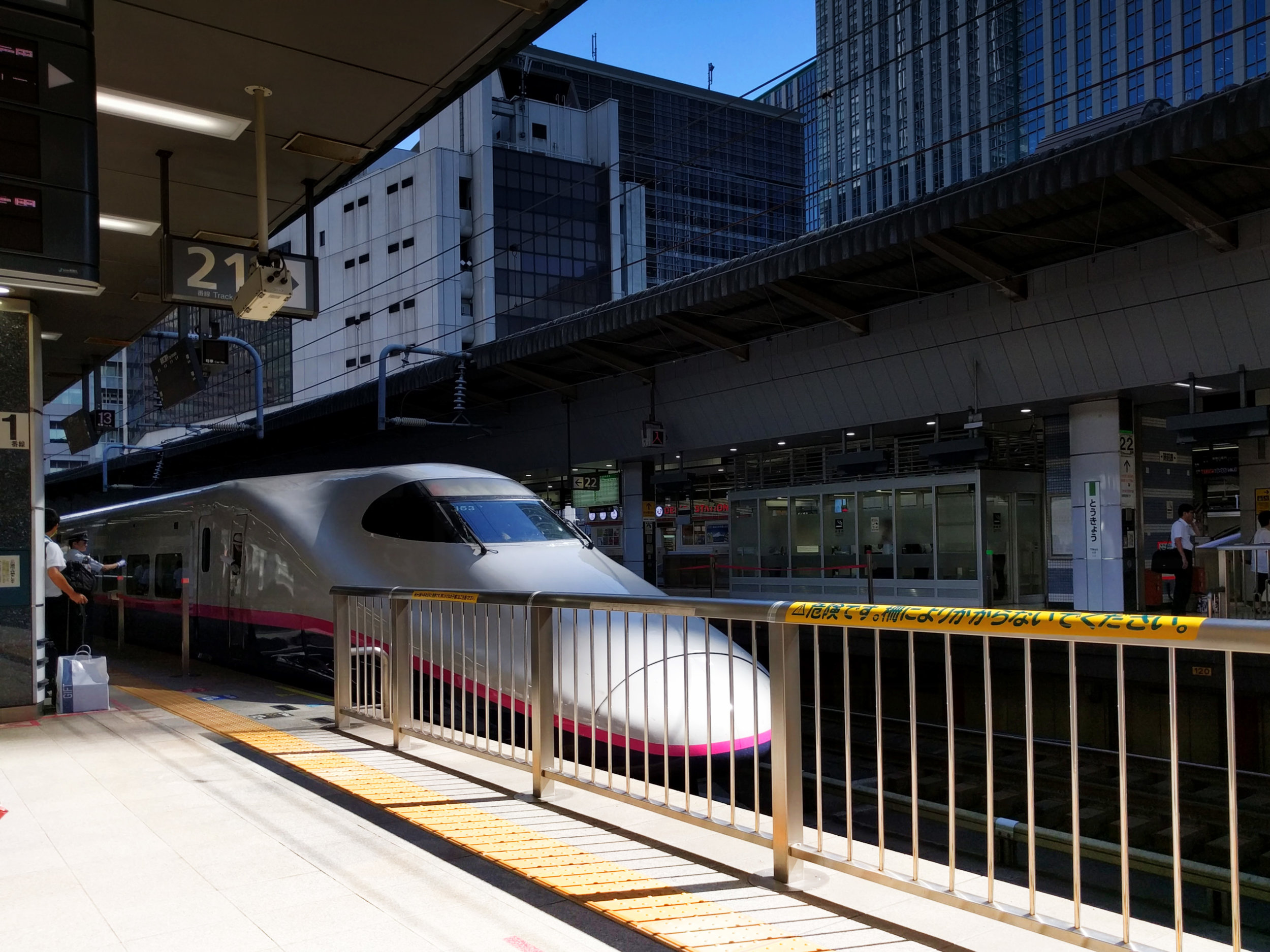
This is especially helpful when you are navigating stairs in train stations or boarding a Shinkansen with kids. Fewer bags mean fewer things to manage.
I have a full guide on Japan luggage delivery services that I’ll link here.
Stroller or baby carrier in Japan – what actually works
If you are traveling to Japan with a baby, this is one of the biggest practical questions.
Should you bring a stroller? Baby-wear the whole time? Do you need both?
Japan favors baby-wearing culturally, but both can work. We used both.
You will see many Japanese parents wearing their babies. It makes navigating train stations and busy sidewalks feel more nimble. Elevators exist, but in massive stations they can be far out of the way.
There are also a lot of stairs.
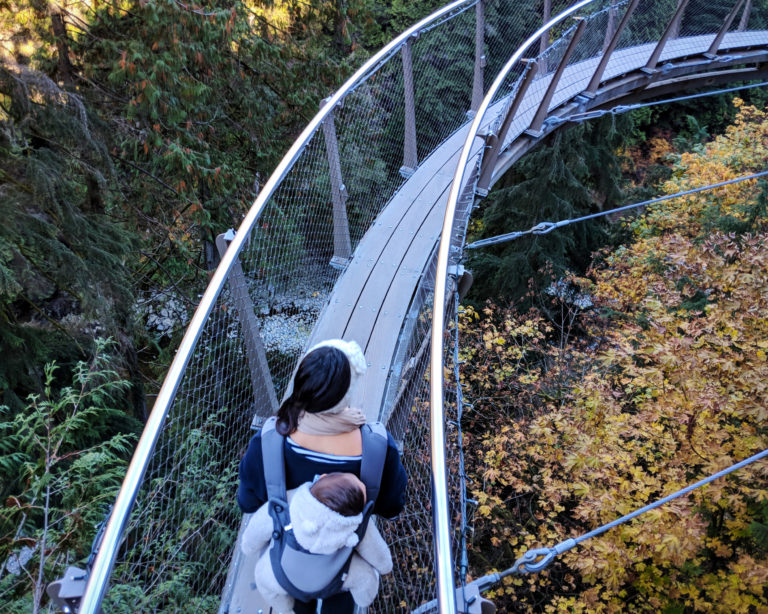
In Tokyo and especially in temple-heavy areas of Kyoto, you will encounter steps, narrow pathways, and gravel ground. A carrier makes these moments much easier.
That said, I would not skip the stroller.
We’ve been traveling with the Babyzen YOYO stroller for the past 8 years. It’s the longest-lasting piece of baby gear we have ever owned, and it has traveled the world with us.
On our first trip to Japan with a baby, we used the GB Pockit stroller. It is extremely compact and lightweight, which can be helpful in Japan. It also has downsides, and we eventually replaced it. If you’re choosing between the two, I’ll link my Babyzen YOYO stroller review here.
Japan is stroller-friendly on flat city sidewalks, inside train stations, and in airports. When we needed a break from wearing a 20-pound baby in summer heat, the stroller was relief. Even when our baby was not in it, we used it to carry our day bag.
The key is having a lightweight travel stroller that folds quickly.
We avoided rush hour trains when possible, but sometimes you end up in a packed car anyway. Being able to fold the stroller immediately makes a huge difference. In Nikko and Kyoto, we pushed the stroller on flatter paths, then folded it and carried it when stairs appeared.
For us, stroller plus carrier was the ideal combo. It gave us flexibility, and flexibility is everything when you’re traveling with a baby.
Food in Japan with a baby is easier than you expect
Food is one of the biggest unknowns for parents traveling internationally with a baby.
Will there be anything they can eat? What if they refuse everything?
In Japan, it ended up being far easier than I expected.
Japanese food culture prioritizes freshness and quality. There is plenty of simple food that works well for babies, especially if you are doing baby-led weaning. Rice, noodles, soft vegetables, tofu, grilled meats, soups, and eggs are easy to find almost everywhere.
Many restaurants offered small bowls, spoons, and even children’s utensils without us asking. No one seemed annoyed that we were feeding a baby at the table.
Some restaurant environments feel less fitting for families. Don’t let that deter you. Japan has such a high concentration of restaurants that you can usually find something casual and easy nearby.
Breastfeeding and bottle feeding in Japan
If your baby is not yet eating solids, feeding in Japan is still very manageable.
Breastfeeding is legal and accepted in Japan, but culturally there is a preference for privacy. You will rarely see someone nursing openly in the middle of a public space. Instead, many train stations, department stores, and shopping centers have dedicated baby care rooms with private nursing booths or curtained areas.
If you are formula feeding, hot water is usually easy to find. Many baby care rooms provide hot water dispensers for preparing bottles. Convenience stores and cafés can often provide hot water if you ask.
Whether you are breastfeeding or bottle feeding, you are unlikely to feel stuck without options.
Everyday convenience makes Japan easy with a baby
Convenience stores in Japan are another quiet win for families.
Chains like 7-Eleven, FamilyMart, and Lawson are everywhere, especially in Tokyo and Osaka. You can grab hard-boiled eggs, yogurt, fruit, rice balls, and other simple foods quickly and easily. When you are traveling with young kids and snack time cannot wait, that accessibility matters.
The same convenience applies to supplies.
You do not need to bring two weeks’ worth of diapers in your suitcase. Diapers, wipes, formula, and other baby basics are readily available in pharmacies, grocery stores, and larger convenience stores.
Traveling lighter makes a big difference when you are navigating trains between cities or climbing stairs in metro stations.
In major metropolitan areas, everything you might need is usually within a few blocks. If you forget something or run out of something, you can find it quickly.
For a first international trip with a baby, that kind of accessibility removes an entire layer of anxiety.
Babies don’t limit what you can experience in Japan
When people ask whether Japan is baby friendly, what they often mean is this.
Will I have to give up everything I want to see?
With a baby, the answer is usually no.
Babies under one do not need elaborate entertainment. They are content observing the world. New sights, new sounds, different lights, different faces. Travel itself becomes the stimulation.
In Japan, that works in your favor.
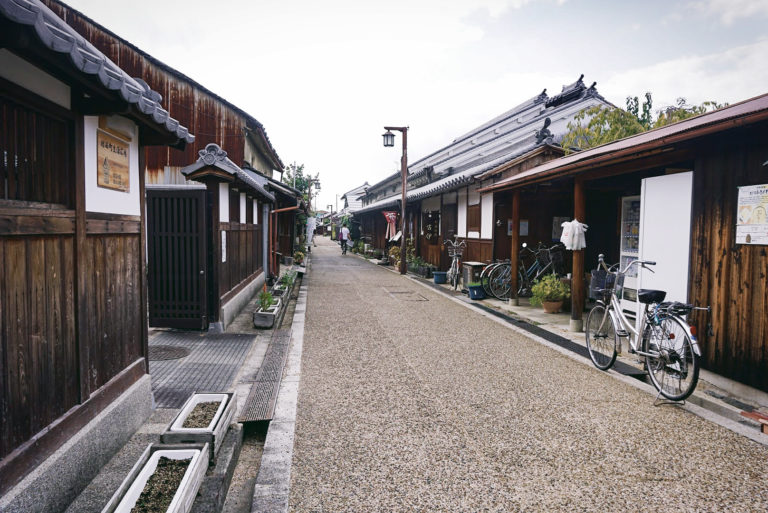
You can wander historic streets in Kyoto, explore neon-lit neighborhoods in Tokyo, take trains to temples and shrines, and your baby will likely be just fine along for the ride.
At seven months old, our baby was happy in the carrier, happy in the stroller, and fascinated by everything. We didn’t have to build our days around child-specific attractions. We adjusted our pace and followed his cues.
Even with a baby, we sat for a tea ceremony in Himeji, cheered at a sumo tournament in Tokyo, explored the fish market in Tsukiji, and had a Kobe beef teppanyaki experience in Kobe.
In many ways, Japan with a baby felt easier than Japan with older kids. Japan still works well for kids of all ages, there are so many things to do in Tokyo for families, and in Osaka and beyond. But with a baby, you probably have even more flexibility and leeway with what you choose to do.
Where we traveled in Japan with a baby
For our two-week trip, we based ourselves in three cities and used them as hubs.
Tokyo
Tokyo was our entry and exit point, and it is an excellent base for Tokyo with a baby. Public transportation is extensive, baby facilities are plentiful, and there is a wide range of neighborhoods to explore at your own pace. Large parks, walkable areas, and endless food options mean you can keep it simple and still have an amazing day.
If you are planning to spend most of your time in Tokyo, build in a mix of busy neighborhoods and calmer green spaces.
Kyoto
Kyoto offers a slower, more traditional atmosphere. It is known for temples, shrines, and historic streets. Some areas have more stairs and uneven paths, which makes a carrier especially helpful.
It is a beautiful place to wander with a baby and soak in the atmosphere. Kyoto felt like the Japan experience I fantasized about.
Osaka
Osaka felt lively, approachable, and foodie-focused. It is also a great base for day trips. From Osaka, you can explore nearby destinations by train without changing hotels, which reduces packing and unpacking with a baby.
I have a separate guide on the best day trips from Osaka that pairs well with a family Japan itinerary, and I’ll link those here.
We traveled between all three cities entirely by train, without renting a car and without bringing a car seat.
FAQs About Traveling to Japan With a Baby
Is Japan baby friendly?
Yes. Japan is one of the most baby-friendly international destinations we have experienced. Public spaces are clean, transportation is reliable, and many train stations and department stores have baby care rooms. Locals are generally warm and welcoming toward babies, and restaurants are accommodating.
Is Tokyo safe with a baby?
Yes. Tokyo is consistently ranked as one of the safest major cities in the world. Crime rates are low, public transportation is orderly, and neighborhoods feel secure even in the evening.
Do you need a car seat in Japan?
If you plan to rely on trains, you do not need to bring a car seat. Japan’s rail system makes it easy to travel between cities and within them without ever getting into a car. If you plan to travel in a private car in Japan, car seats are required for children under six years old.
Can you use a stroller in Japan?
Yes, but flexibility helps. Major cities are generally stroller-friendly, but you will encounter stairs and crowded trains. A lightweight stroller that folds quickly works best.
Is Japan overwhelming for babies?
It depends on your baby, but most adapt well. Cities like Tokyo are busy and full of sensory input, which can keep babies engaged. Build in rest time and stay flexible.
Why Japan is such a strong first international trip with a baby
Your first big international trip with a baby will never feel completely easy. There will be jet lag. There will be disrupted naps. You will be tired.
You are tired at home, too.
The difference in Japan is that so many factors work in your favor. The country is safe. Public transportation is reliable. Baby facilities are thoughtfully designed. Food is fresh. Supplies are easy to find. Babies are welcomed in everyday life.
You do not have to plan your entire trip around child-specific attractions. You can experience temples, neighborhoods, food markets, parks, and city life while your baby observes the world from a stroller or carrier.
Looking back, traveling to Japan with a baby at seven months old was not just manageable. It was empowering. It showed us that we did not have to stop traveling. Travel might change, but it is still possible with a baby.
If you are debating whether to wait until your baby is older, I would gently suggest this. There is no perfect age. But Japan makes a compelling case for starting sooner than you think.
More on Japan
- Bringing a baby to Tokyo’s fish market
- Fun Things for Families to do in Tokyo
- Day trips to take from Osaka with kids
- Family-friendly apartment hotel review in Osaka
- Apartment hotel for families in Tokyo review
More on baby travel
- Managing a long-haul flight with a baby
- How to entertain your baby on a plane
- How early is too early to travel with your baby?
- Surprising baby-friendly travel destinations