Japan with Kids: The Complete Family Travel Guide
Traveling to Japan with kids can feel both exciting and intimidating.
Japan is one of the most fascinating countries in the world to visit. I love Japan, and I know the sentiment is shared by many. But planning a family trip there can feel overwhelming at first.
The cities are huge, the train networks are complex, and there are so many incredible places to see. It’s easy to feel like you need to do everything, yet the math rarely works for how many days you actually have to explore.
Our family has now spent about five weeks traveling around Japan with kids, including trips with a seven-month-old baby, a toddler, and elementary school–age kids.
After those trips, I’ve learned one thing.
Yes, Japan is absolutely worth visiting with kids, but it’s a trip you’ll enjoy much more if you go in with a plan.
In this guide, I’ll walk through what families should know before visiting Japan with kids, including how to plan your trip, where to go, and how to balance Japan’s exciting cities with the quieter moments that make the trip better for everyone.
Jump to: Quick Start Guide, What to know before you go, How to plan, Where to go, Itinerary ideas, Where to stay, Getting around, Things to do, FAQs
Affiliate Disclosure: Familee Travel contains affiliate links and is a member of the Amazon Associates Program, we may earn commissions from qualifying purchases at no additional cost to you.
In a rush? Pin this or email it to yourself to read later! (Psst! Use the buttons at the very top or bottom of this post for ease.)

How to Plan a Trip to Japan with Kids (Quick Start Guide)
Planning a family trip to Japan can feel complex to navigate at first. There are so many cities, attractions, and logistics to figure out that it’s easy to get stuck in research mode.
Instead of trying to plan everything at once, it helps to think about your trip in a few simple steps.
The quick guide below walks through the main decisions most families make when planning a trip to Japan with kids.
| Step | Planning Decision | Start Here |
|---|---|---|
| 1 | Decide if Japan is a good fit for your family | Jump to: What Families Should Know Before Planning a Trip |
| 2 | Decide how long to stay | Jump to: How Families Often Structure a Japan Itinerary |
| 3 | Choose which cities to visit | Jump to: Where to Go in Japan with Kids |
| 4 | Figure out transportation | Read: Getting Around Japan with Kids |
| 5 | Choose family-friendly accommodations | Read: Where to Stay in Tokyo with Kids |
| 6 | Plan activities and attractions | Read: 60+ Fun Things To Do in Tokyo with Kids |
| 7 | Prepare for the long flight | Read: Long Haul Flights with Kids |
| 8 | Traveling with a baby or toddler | Read: Traveling to Japan with a Baby |
Every family will structure their trip a little differently, but thinking through these steps early can make the rest of the planning process much easier.
Below, we’ll walk through the most important things families should know before visiting Japan with kids.
Japan with Kids: What Families Should Know Before Planning a Trip
Japan is one of the most exciting and rewarding destinations in the world to visit with kids. At the same time, it can feel very different from traveling in many other countries.
Cities are large, train stations can be complex, and the sensory energy of places like Tokyo can feel intense at first. For many families, especially on a first visit to Asia, there’s a learning curve while figuring out how everything works.

But once you settle into the rhythm of the country, most families discover that Japan becomes easy to travel with kids. Public transportation is reliable, cities are remarkably safe, and there are endless opportunities for kids to explore and discover new things.
The key is understanding how travel in Japan works and planning your days with a little balance between busy sightseeing and quieter moments.

Before diving into itinerary ideas or specific destinations, here are a few things that help families understand what to expect when traveling in Japan with kids.
Is Japan good for kids?
Yes, Japan is one of the most family-friendly countries in the world to visit.
Cities are clean and safe, public transportation is efficient, and there are endless things for kids to discover, from arcades and themed cafés to temples, parks, and interactive museums.
In many ways, Japan is built for the kind of everyday convenience that families appreciate when traveling. Convenience stores are everywhere, trains run on schedule, and even large cities offer plenty of parks, gardens, and quieter neighborhoods to explore.

Why Japan works so well for families
One of the things that shocked me about traveling in Japan with kids is how easy many parts of it actually feel once you’re there.
Japan has a strong culture of respect for shared public spaces, and that shows up in everyday ways that make travel smoother for families.
Public transportation is incredibly reliable. Cities are remarkably clean. And the overall feeling of safety allows families to move around with a level of ease that can be harder to find in many large cities.
It’s also common to see children navigating their daily routines independently in Japan. Young kids commute to school on trains, walk through neighborhoods on their own, and run errands for their families.
Of course, traveling with your own kids in a new country still requires awareness and common sense. But the baseline level of safety and organization in Japan makes a huge difference when you’re exploring with children.
And for many kids, Japan itself becomes part of the adventure.
There are arcades everywhere, vending machines on nearly every corner, convenience stores packed with snacks, and entire stores dedicated to Pokémon, Nintendo, or Hello Kitty.
On one of our trips, people on the subway kept noticing our baby and smiling, pointing, and saying “kawaii!” as we rode through the city. Moments like that make it clear how warmly children are often welcomed.
If you’re traveling with a baby, read my guide to Traveling to Japan With a Baby.

Why Japan can feel overwhelming for families
At the same time, Japan can absolutely feel overwhelming, especially during your first visit.
Cities like Tokyo and Osaka are massive, and some of the busiest train stations in the world are located there. Places like Shinjuku Station handle millions of passengers a day, and navigating those spaces with kids can feel chaotic at first.

We even unintentionally boarded a rush-hour train once and found ourselves packed shoulder-to-shoulder with commuters, unable to move an inch. Our kids just looked up at us wide-eyed, wondering what on earth was happening.
Japan’s most famous neighborhoods can also be intense sensory environments. Bright lights, crowds, music, screens, and constant motion create an energy that can be thrilling, but also exhausting after a few days.
One mistake many travel guides make is focusing only on the flashy, photo-worthy highlights without talking about the importance of balance.

Unless your entire family thrives on constant stimulation, most trips to Japan feel better when you mix high-energy experiences with quieter moments.
Temples, gardens, neighborhood walks, beaches, and simple downtime at your hotel can make the entire trip feel more enjoyable and sustainable.
Once you find that balance, Japan becomes a perfect place to explore with kids.
Are kids expected to be quiet in Japan?
This is a concern many parents have before visiting Japan.
If you’ve seen videos or photos of Japan, you may have noticed that children often appear much quieter in public spaces than what many American families are used to. On trains, in restaurants, and in shared public places, the atmosphere is usually calmer.
That can make some parents worry their kids will stand out if they’re too loud.
In reality, children are absolutely welcome in Japan. You’ll see families everywhere. On trains, in restaurants, at shrines, in parks, and exploring cities together.
Even traveling with a baby and later with three young kids, we never once felt unwelcome in Japan.
The main difference is simply cultural expectations around shared spaces.
On trains, buses, and in museums, people generally keep their voices lower and try to avoid extra noise. Restaurants also tend to be calmer environments.

That doesn’t mean kids have to be perfectly silent or behave like tiny adults. It just means being mindful of the environment and helping kids adjust when needed.
It’s also easy to feel anxious about situations you haven’t experienced yet. But once you’re there, you’ll quickly realize that children are still children everywhere in the world.
If your toddler has a meltdown or your baby starts crying during a meal, you can handle it the same way you probably would at home. Step outside for a moment, take a break, and reset.
One thing that helps a lot is building balance into your itinerary.
Japan’s cities can be exciting but also highly stimulating. Kids usually do much better when those high-energy moments are balanced with places where they can move freely. Seek out parks, temple grounds, beaches, quieter neighborhoods, or simply downtime at your hotel.

When kids have opportunities to run, explore, and be a little silly during the day, it becomes much easier for them to settle into quieter environments like on trains or in restaurants later.
In many ways, visiting Japan can become a learning experience for kids. They get to see how people live in another culture and observe how children behave in shared public spaces.
A little awareness goes a long way, and most families find that once they settle into the rhythm of Japan, it feels just fine.
How to Plan a Trip to Japan with Kids
Japan is an incredible place to visit with kids, but it’s also a destination that warrants a little preparation.
Some places in the world are easy to visit spontaneously. You can show up, wander around, and figure things out day by day.
Japan can work that way, too, technically. But most families will have a much smoother trip if they plan a few key things ahead of time.
The cities are large, the train systems are complex, and many popular experiences require advance reservations. Without some planning, it’s easy to miss out on things you were excited to see.

At the same time, the goal isn’t to plan every minute of your trip.
The best Japan itineraries leave room for serendipity while still giving your family enough structure to move around the country comfortably.
After spending about five weeks traveling around Japan with our kids, a few planning lessons really stood out.
Plan ahead for popular experiences
Japan has become one of the most popular travel destinations in the world, and many of the country’s most famous attractions require advance reservations.
Places like the Ghibli Museum, DisneySea, Pokemon Cafe, themed attractions, special exhibits, and certain restaurants often release tickets weeks or even months in advance.
If there are specific experiences your family really wants to do, it’s worth checking reservation timelines early so you don’t accidentally miss the opportunity.

At the same time, not every moment of your trip needs to be booked ahead. Some of the best parts of traveling in Japan are simply wandering through intimate neighborhoods, exploring shrines off-hours, or discovering small restaurants along the way.
Don’t try to do too much
One of the biggest mistakes families make when planning a trip to Japan is trying to see too many places.
Because Japan’s train system is so efficient, it can be tempting to pack multiple cities into a short trip.

But even though the Shinkansen makes travel between cities fast, constantly moving hotels and navigating major train stations can be exhausting with kids. I’ve done it before, I know.
More often, families have a better trip to Japan when they choose two or three main bases and explore from there.
This leaves room to actually experience each place instead of constantly being in transit between destinations.
If you want a deeper breakdown of how trains, IC cards, and intercity travel work, I cover it in detail in getting around Japan with kids.
Balance busy days with quieter moments
Japan’s biggest cities are vibrant, exciting, and full of things to see.
But they can also be intense.
Bright lights, crowded streets, packed train stations, and constant sensory input can be thrilling at first and exhausting after several hours.
Kids often handle this much better when busy sightseeing is balanced with calmer moments.

Temple grounds, neighborhood parks, quiet side streets, beaches, gardens, or simply returning to your hotel for a break can help everyone reset.
That balance often makes the difference between a trip that feels overloaded and dysregulating and one that feels enjoyable for the whole family.
Use luggage forwarding services when moving between cities
One of the most useful travel tricks in Japan is luggage forwarding, often called Takkyubin.
Instead of carrying large suitcases through crowded train stations and onto trains, you can send your luggage directly from one hotel to the next.
On our first trip to Japan with a baby, one of the wheels on our suitcase broke shortly after we arrived. Trying to navigate trains, stairs, and stations with a baby and a broken suitcase was a stressful way to start the trip.
Later, we discovered how common and easy luggage forwarding is in Japan.
You can send your bags ahead from your hotel, travel with just a small overnight bag, and have your luggage waiting for you when you arrive at the next destination.
For families changing cities, it can make train travel a lot easier.

Pack lighter than you think you need
One thing many families discover quickly in Japan is that you usually don’t need to pack as much as you think.
Japan makes everyday life easy and efficient. Convenience stores, pharmacies, and shops are everywhere, and most basic items, like toiletries, snacks, umbrellas, and other small essentials, are easy to find and reasonably priced.
Because of that, we usually pack fewer clothes and toiletries than we might for other trips.
Traveling lighter also makes it much easier to move through train stations, navigate sidewalks, and handle luggage when changing cities.
It also leaves room to bring home souvenirs. Something Japan is especially good at.
Another reason packing light works well in Japan is that many family-friendly apartment hotels include laundry machines, either in the room or in a shared laundry area. Some hotels even provide pajamas for the whole family.
Being able to do a quick load of laundry during the trip, or not having to pack one more thing, means you can travel with fewer clothes while still staying comfortable.

Use planning tools to simplify the process
Planning a Japan itinerary can feel difficult to figure out because there are so many incredible places to visit.
Many travelers find it helpful to use tools like Google Maps, Reddit, and other travel forums, or even AI planning tools to start narrowing down ideas and building an initial itinerary.
Those tools won’t create a perfect plan on their own, but they can help you organize information, compare destinations, and save time during the early planning stages.
From there, it becomes much easier to refine your trip around your family’s interests and travel style.
Where to Go in Japan with Kids
Japan offers an incredible variety of destinations for families, from futuristic cities to historic temples and tropical islands.
Most first-time trips focus on a few major regions that are easy to connect by train and offer a wide range of experiences for kids and adults alike.
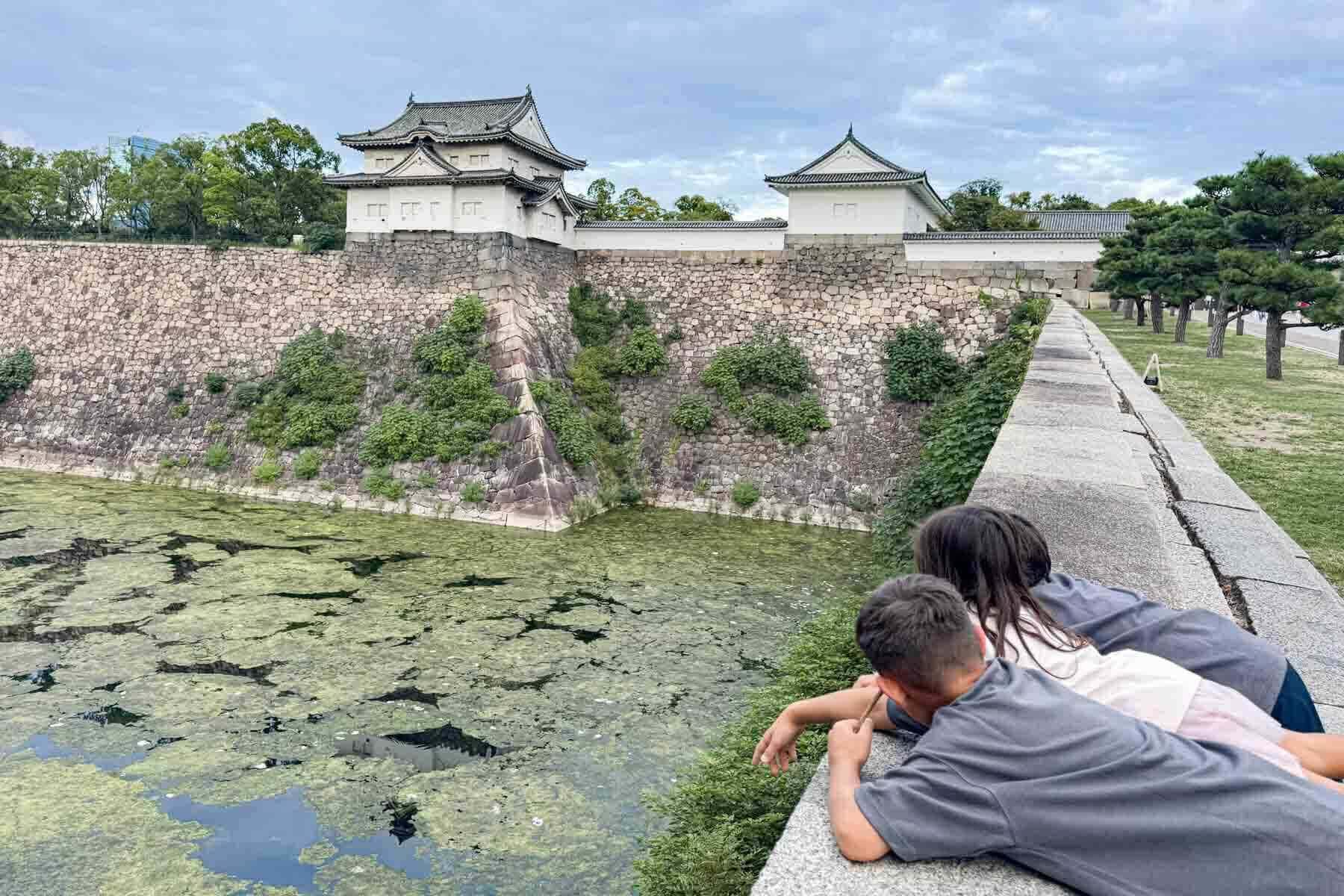
The most popular route is called the “Golden Triangle,” which typically means a trip to Tokyo, Kyoto, and Osaka. This is a great place to start, and it’s important to recognize that there are so many more places you can explore.
Below are the destinations many families include when planning a Japan itinerary.
Major destinations families often start with
| Destination | Best For |
|---|---|
| Tokyo | Big-city attractions and endless variety |
| Osaka | Street food, bright energy, and family fun |
| Kyoto | Temples, culture, and traditional Japan |
| Okinawa | Beaches, nature, and slower travel |
Tokyo
Best for: Big-city energy, variety, and endless family activities
Tokyo is the city where most families begin their Japan trip. The city offers an incredible mix of modern attractions, historic neighborhoods, parks, temples, and themed experiences.
Kids often love exploring arcades, anime stores, Pokémon Centers, and quirky themed cafes, while adults enjoy the food scene, neighborhoods, and cultural sites.
Because Tokyo is so large, choosing the right neighborhood can make a big difference for families.
Read next:
- Where to Stay in Tokyo with Kids
- 60+ Fun Things To Do in Tokyo with Kids
- Getting around with kids in Tokyo
- Eating in Tokyo with kids


Osaka
Best for: Food, street life, and family fun
Osaka is one of the most playful and approachable cities in Japan. The city is famous for its street food culture, bright lights, and lively neighborhoods.

Families often enjoy walking around areas like Dotonbori, trying different snacks, and exploring the many shops and entertainment districts.
Osaka is also home to Universal Studios Japan, which includes the extremely popular Super Nintendo World.
Read next:

Kyoto
Best for: Temples, traditional culture, and scenic neighborhoods
Kyoto offers a very different experience from Japan’s modern cities.
Families visiting Kyoto can explore temple complexes, bamboo forests, historic streets, and beautiful gardens. Sites like Fushimi Inari Taisha and Arashiyama Bamboo Grove are especially memorable.
While Kyoto can be extra busy these days, it also offers many quiet corners where families can slow down and explore.


Okinawa and Ishigaki
Best for: Beaches, island scenery, and relaxing travel days
For families who want to combine city exploration with beach time, Okinawa offers a completely different side of Japan. Many visitors go right to Naha on the main Okinawa Island. However, there are several smaller islands that are worth checking out.
Further south, Ishigaki Island offers beautiful beaches, snorkeling, and small nearby islands accessible by ferry.
On one of our trips, we took the ferry to Taketomi Island, walked across wide tidal sandbars at Kondoi Beach, and spent the afternoon exploring the quiet island before heading back.
Adding a beach destination can be a great way to balance the busy pace of Japan’s cities.

Additional Destinations Families Often Add
Beyond Tokyo, Kyoto, Osaka, and Okinawa, Japan has many incredible destinations families can add to their itinerary.
Some of these work well as overnight stops, while others are popular day trips from the major cities.
Hakone
Best for: Hot springs, mountain scenery, and potential Mt. Fuji views
Hakone is a popular getaway from Tokyo known for its hot springs, lake views, and scenic mountain transportation.
Families often enjoy the Hakone Ropeway, pirate boat cruises across Lake Ashi, and relaxing overnight stays in traditional ryokan inns.
Kamakura
Best for: Easy Tokyo day trip with temples and coastal scenery
Kamakura is a historic coastal town about an hour from Tokyo.
The city is famous for its Great Buddha statue, temple-lined hillsides, and small walking streets filled with shops and snacks.
It’s one of the easiest ways to experience a quieter, more traditional atmosphere outside the capital.
Nara
Best for: Deer park and historic temples
Nara is one of the most popular day trips from Kyoto or Osaka.
The city is famous for Nara Park, where hundreds of deer roam freely. Visitors can feed the deer special crackers sold around the park, which kids often find both hilarious and slightly chaotic.
Nearby Todai-ji Temple houses one of the largest bronze Buddha statues in the world.

Hiroshima
Best for: Important history and reflection
Hiroshima is an important historic city that many visitors include on a Japan itinerary.
The Peace Memorial Park and museum provide powerful insight into the history of the atomic bombing and Japan’s postwar recovery.

Miyajima
Best for: Scenic island atmosphere and the famous floating torii gate
Just off the coast from Hiroshima, Miyajima Island is known for its iconic floating torii gate standing in the water.
Visitors reach the island by ferry and can explore temples, walking trails, coastal views, and small food stalls selling local snacks.
Wild deer also roam freely around the island, which many families enjoy seeing up close.

Nikko
Best for: Mountain scenery and ornate shrines
Nikko is a mountain town north of Tokyo known for its elaborate temple complexes surrounded by forest.
The most famous site is Toshogu Shrine, an intricate UNESCO World Heritage site filled with carvings and ornate details.
The surrounding national park also offers waterfalls, hiking trails, and scenic nature.

Yokohama
Best for: Easy Tokyo day trip with waterfront views
Yokohama sits just south of Tokyo and offers a relaxed waterfront atmosphere.
Families often enjoy the harbor area and parks. And have more fun at the Ramen Museum, sampling ramen from all different regions of Japan, and the Cup Noodles Museum, where visitors can design their own instant ramen cup.

Kobe
Best for: Harbor city atmosphere and famous Kobe beef
Kobe is a stylish port city near Osaka known for its scenic harbor views and international atmosphere.
Many visitors come to experience the famous Kobe beef, often served in teppanyaki restaurants where chefs cook the meal in front of you.


Iga
Best for: Ninja history and interactive museums
Iga is one of the historic regions associated with ninja culture.
Families visiting the Iga Ninja Museum can explore a traditional ninja house with hidden doors and traps and watch demonstrations of ninja weapons and techniques.

Imaicho
Best for: Preserved historic town streets
Imaicho is a beautifully preserved Edo-period historic district in Nara Prefecture.
Walking through its narrow streets offers a glimpse into what merchant towns in Japan looked like centuries ago, with traditional wooden houses and quiet alleyways.

How Families Often Structure a Japan Itinerary
Japan is a large country with an incredible number of places to visit, but most family trips focus on two or three main destinations.
Rather than trying to see everything, many families enjoy their trip more when they choose a few locations and move at a comfortable pace.
Here are a few common ways families structure a first trip to Japan.
7–10 day trip
Many shorter trips focus on Tokyo and Kyoto, with one or two day trips added.
Example structure:
- Tokyo – 4–5 nights
- Kyoto – 3–4 nights
- Optional day trips such as Nara, Hakone, or Kamakura
10–14 day trip
With more time, families often add Osaka and additional nearby destinations.
Example structure:
- Tokyo – 4–5 nights
- Kyoto – 3–4 nights
- Osaka – 2–3 nights
- Day trips such as Nara, Himeji, or Kobe

2–3 week trip
Longer trips allow families to explore multiple regions of Japan.
Example structure:
- Tokyo – 4–5 nights
- Kyoto – 3–4 nights
- Osaka – 2–3 nights
- Hiroshima & Miyajima – 1–2 nights
- A beach destination such as Okinawa or Ishigaki

A quick planning tip
Japan’s cities are exciting but can also be intense for kids. Alternating busy sightseeing days with parks, nature, or quieter neighborhoods often helps the trip feel more balanced.
Planning your own trip with kids?
I share one email a month with real-world family travel strategies, packing tips, and destination breakdowns that make planning easier.
Join below.
Where to Stay in Japan with Kids
Choosing the right place to stay can make a big difference when traveling in Japan with kids.
Hotel rooms in Japan are often smaller than what many families are used to, especially in large cities like Tokyo. Because of this, many families find that apartment-style hotels or larger family rooms make trips much more comfortable.

These types of accommodations often include multiple beds, more floor space, and sometimes helpful amenities like small kitchens or in-room laundry machines.
On one trip to Osaka, our apartment-style hotel even had board games and a traditional Japanese lounge space where the kids could unwind after long sightseeing days.

Another important factor when choosing accommodations in Japan is location.
Cities like Tokyo and Osaka are enormous, and staying near a convenient train station can make it much easier to explore the city each day without long commutes.
Quieter neighborhoods can also be helpful when traveling with kids. After a full day of sightseeing, returning to a calmer area with parks, local restaurants, and less nightlife can make evenings feel much more relaxing.
If you’re planning time in Tokyo, choosing the right neighborhood is especially important. You can read my full guide here: Where to Stay in Tokyo with Kids.
That guide walks through the best areas for families, including neighborhoods that offer good transit access, family-friendly accommodations, and a comfortable atmosphere for traveling with kids.

How to Get Around Japan with Kids
Getting around Japan is one of the biggest concerns for families, but it becomes much easier once you understand how the system works.
For a detailed breakdown, read my full guide to Getting Around Japan With Kids.
Japan’s transportation system is incredibly efficient, clean, and reliable. Trains run on schedule, stations are well organized, signage is clear, and the cars are clean. Public transportation makes it easy to explore both major cities and smaller towns.
And as a bonus, there are clean and well-equipped restrooms in all train stations, even in smaller town ones. This really helps when traveling with kids.
For most families, trains are the main way to move between destinations in Japan, including the famous Shinkansen.
Once you understand the basics, getting around Japan becomes much easier.
Taking trains and subways in Japan
In cities like Tokyo and Osaka, trains, subways, and metros are the main way people move around.
If you’ll be spending time in Tokyo, navigating the city’s train system can feel more complex at first. I break it down step-by-step in Getting Around Tokyo With Kids.
Stations can be very large, and the number of train lines can feel confusing at first. Even experienced travelers sometimes find themselves double-checking signs or navigating multiple platforms.

We’ve definitely had moments where we accidentally boarded the wrong train or realized we were heading the wrong direction and had to jump off and reset.
But once you get familiar with the system and build in extra time, it becomes much easier to navigate.
Most stations have clear signage, English translations, and color-coded train lines that help guide you to the right platform.
Apps like Google Maps are also incredibly helpful for planning routes and identifying the correct train line.
The Shinkansen (bullet train)
One of the highlights of traveling in Japan is riding the Shinkansen, the country’s high-speed bullet train network.
These trains connect major cities across the country and are one of the fastest and most comfortable ways to travel long distances.
For kids, especially train lovers, riding the Shinkansen is part of the adventure.
Our kids were incredibly excited the first time we boarded one, and watching the landscape fly past the window made the journey feel just as fun as the destination.
Because the trains are smooth, spacious, and very punctual, many families find the Shinkansen the preferred option to travel between cities.

Using IC cards (Suica, Pasmo, and others)
One of the easiest ways to navigate public transportation in Japan is by using an IC card, such as Suica or Pasmo.
These rechargeable transit cards allow you to simply tap in and out at train stations instead of buying individual tickets each time.
IC cards can be used across most train systems, buses, and even many vending machines and convenience stores.
Having a card ready to tap makes moving through stations much faster, which can be especially helpful when traveling with kids.

Avoiding rush hour when possible
Japan’s train system is efficient, but major cities can become extremely crowded during rush hour.
Commuter trains during peak morning and evening hours can be packed shoulder to shoulder, smushed right up against others in every direction.
We accidentally boarded a rush-hour train once and found ourselves completely squeezed in with commuters, barely able to move.
Our kids just looked up at us wide-eyed, trying to figure out what was happening.
Whenever possible, it helps to avoid traveling during peak commuting hours. Typically weekday mornings and evenings.
Outside of those times, trains are usually much more comfortable and easier to navigate with kids.

Taxis and rideshare options
Although trains are the primary way people get around Japan, taxis can also be a convenient option in certain situations.
If your family is tired after a long day of sightseeing or you’re traveling short distances within a neighborhood, taxis can sometimes be easier than navigating multiple train transfers.
Uber also operates in parts of Japan, although it often connects you with licensed taxis rather than independent drivers. Go Taxi is the most popular rideshare taxi hailing service in Japan
For shorter rides or late evenings, using a taxi can be a helpful backup option when traveling with kids.
Navigating large train stations with kids
Some of Japan’s biggest stations, like Shibuya Station in Tokyo, are among the busiest transportation hubs in the world.
At first, it can feel really overwhelming.
Stations may have multiple levels, dozens (even hundreds) of exits, and several different train companies operating within the same complex.
Even experienced travelers occasionally find themselves heading toward the wrong exit or taking a few extra minutes to get oriented.
The best approach is simply to build a little extra time into your travel plans, especially when transferring between trains or navigating unfamiliar stations.
Once you get the hang of the system, it becomes much easier to move around confidently.
Things to Do in Japan with Kids
Japan offers an incredible variety of experiences for families.
In a single trip, kids can explore ancient temples, ride bullet trains, wander neon-lit neighborhoods, visit theme parks, and discover museums designed just for hands-on exploration.
Some of the most memorable moments in Japan aren’t even major attractions. They’re the small discoveries like trying new foods, exploring neighborhood streets, or browsing convenience stores filled with unfamiliar snacks.
Below are some of the types of experiences families often enjoy while visiting Japan with kids.

Explore temples and shrines
Japan’s temples and shrines are some of the country’s most iconic places to visit.
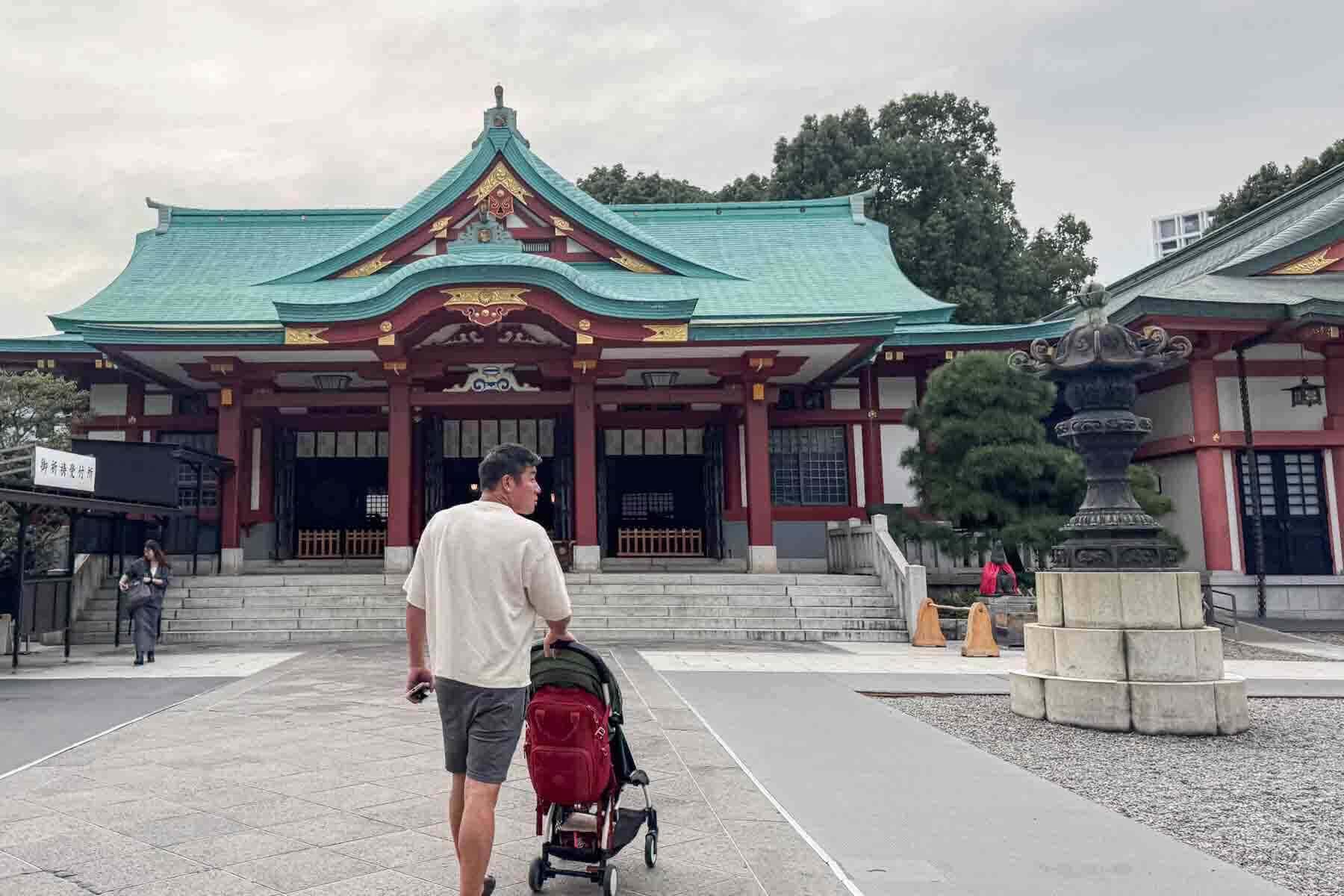
Even for kids, these spaces can be fascinating to explore. Many temple complexes include large grounds, gardens, and walking paths that make them decently family-friendly.
One of the most famous examples is Fushimi Inari Taisha in Kyoto, where thousands of bright red torii gates form tunnels winding through the hillside.

On another trip, we even attended a traditional tea ceremony near Himeji Castle with our baby, which was a cultural highlight of the trip.
In Tokyo, visiting Sensoji Temple in Asakusa late in the evening, after the daytime crowds disappear, can be a magical experience for families.
Temple grounds also provide some of the quietest and most peaceful spaces in Japan’s busy cities.

Visit interactive museums
Japan has some of the most creative and immersive museums in the world.
Many are designed in ways that encourage exploration and hands-on interaction, making them especially engaging for kids.
Popular family favorites include places like teamLab Planets in Tokyo, the Cup Noodles Museum in Yokohama, and themed museums focused on food, science, or pop culture.
These attractions can be a great way to balance outdoor sightseeing with something interactive indoors.


Experience Japan’s theme parks
Japan is home to several world-class theme parks that many families choose to include in their itineraries.
Tokyo DisneySea is widely considered one of the best Disney parks in the world, while Universal Studios Japan in Osaka features the hugely popular Super Nintendo World.
For kids who love theme parks, these parks can easily become highlights of the trip.


Explore Japan’s food culture
Food is one of the highlights of traveling in Japan. For a full breakdown of what to expect, where to eat, and how to navigate restaurants as a family, read my guide on eating in Japan with kids.
If you’re focusing on Tokyo, I also share specific restaurant ideas and family-friendly options in eating in Tokyo with kids.
Many families enjoy how approachable Japanese food can be for kids. Dishes like ramen, udon noodles, tempura, grilled meats, and rice bowls are often easy eats with children.

One of our favorite dining experiences was a yakiniku restaurant on Ishigaki Island, where we sat together in a private room grilling our own meats and vegetables at the table.
Some of our other favorite meals were the simplest ones, like sitting at a tiny yakitori stall in Osaka under hanging lanterns while the skewers grilled right in front of us.

Discover arcades and pop culture
Japan’s arcades, toy stores, and pop culture attractions are often a huge hit with kids.
From claw machines and gaming arcades to Pokémon stores, anime shops, and themed cafés, there are countless places where kids can explore Japan’s playful side.
Neighborhoods like Akihabara in Tokyo and Dotonbori in Osaka are especially known for their vibrant pop culture atmosphere.

Explore nature and outdoor spaces
Even in Japan’s largest cities, it’s surprisingly easy to find peaceful outdoor spaces.
Temple grounds, neighborhood parks, gardens, and coastal areas offer a welcome break from the intensity of busy urban neighborhoods.
Some of our favorite outdoor moments included exploring the forested temple grounds in Nikko, walking across tidal sandbars at Kondoi Beach on Taketomi Island near Ishigaki, and visiting places where wildlife roams freely.
In Nara Park, for example, children can feed and interact with the famous deer that wander through the park and surrounding temple grounds. Similar experiences can also be found on Miyajima Island, where deer roam freely along the waterfront and walking paths.
These quieter outdoor experiences often provide the balance families need after busy sightseeing days.

Activities for babies, toddlers, and younger kids
Parents sometimes worry that a trip to Japan will mostly involve visiting temples, shrines, and historical sites, places where kids are expected to be quiet and respectful.
While those experiences can absolutely be part of your trip, Japan also offers plenty of activities designed specifically for younger children.
Many cities have excellent parks and playgrounds, which are perfect places for kids to run, climb, and burn off energy between sightseeing stops.

Japan also has a wide range of indoor play spaces and interactive attractions where younger kids can explore safely.
Experiences like KidZania, where children role-play different professions in a miniature city, can be especially memorable for elementary-age kids.
Balancing cultural sightseeing with places where kids can move freely often makes the entire trip more enjoyable.

Island and beach experiences
Many travelers are surprised to discover that Japan also offers beautiful islands and beach destinations.
The southern islands of Okinawa have a tropical climate, clear water, and relaxed coastal towns.
On one of our trips, we visited Ishigaki Island, where our days included ferry rides to nearby islands, quiet beaches, and walking across wide sandbars far out into the ocean.
Adding a beach destination to a Japan itinerary can create a wonderful contrast to the country’s busy cities.

Unique experiences you’ll only find in Japan
Part of what makes Japan such a special destination is how many experiences feel completely unique.
Kids might visit a ninja museum in Iga, explore a cat temple filled with lucky cat statues, or ride the Shinkansen between cities.

Even everyday activities, like browsing vending machines, exploring convenience stores, or spotting giant animated displays in busy neighborhoods, can feel exciting and new.
These moments often become some of the favorite parts of the trip.

Every day experiences kids love
Some of the most memorable parts of traveling in Japan are quite simple.
Our kids loved browsing the endless snacks at 7-Eleven and FamilyMart, trying Japanese candy, and discovering new drinks and treats.
They were equally fascinated by vending machines, capsule toy machines, and train station snack shops.
These everyday discoveries may seem small, but they often become some of the most fun moments of the trip.

More ideas for things to do in Tokyo with kids
Tokyo alone offers an enormous number of family-friendly attractions.
If you’re planning time in the city, you can find a much more detailed guide here:
60+ Fun Things To Do in Tokyo With Kids
This guide covers attractions, museums, parks, and activities across many neighborhoods in Tokyo.
You can also explore:
Japan with Kids FAQs
When is the best time to visit Japan with kids?
Japan can be visited year-round, but many families prefer spring and fall.
Spring (March–May) offers mild weather and cherry blossoms, while fall (October–November) brings cooler temperatures and colorful autumn foliage.
Summer can be very hot and humid in many parts of Japan, while winter can be cold but also offers opportunities for snow activities in northern regions.
How long should you spend in Japan with kids?
Many families find that 10 days to two weeks works well for a first trip to Japan.
This allows time to visit major destinations like Tokyo, Kyoto, and Osaka while still including day trips or slower travel days.
Families with more time often add destinations like Hakone, Okinawa, Hiroshima, or smaller historic towns.
Is Japan expensive for families?
Japan can be more affordable than many travelers expect.
Flights and accommodations can be expensive, but many everyday costs, including casual restaurants, public transportation, certain attractions, and convenience store food, are quite reasonable.
Family-friendly apartment hotels can also offer good value by providing more space and amenities like kitchens or laundry.

Do kids need their own train tickets in Japan?
Children under a certain age can often travel free on trains if they sit on a parent’s lap.
Older children typically require child tickets, which are usually discounted compared to adult fares.
Exact policies vary depending on the train system, so it’s worth checking the rules for the specific trains you plan to use.
To understand more about how trains, cards, tickets, and intercity travel work, I discuss it in detail in my guide: Getting Around Japan With Kids.
Is it hard to navigate Japan without speaking Japanese?
Most travelers find that navigating Japan is manageable even without speaking Japanese.
Major train stations usually include English signage, and many restaurants offer English menus or visual ordering systems.
Apps like Google Maps and translation tools make it much easier to navigate and communicate.

What should families pack for a trip to Japan?
Many families find it helpful to pack lighter than expected.
Convenience stores and pharmacies are everywhere in Japan, so basic supplies are easy to find if needed. Many families also end up shopping in Japan, so starting with lighter bags leaves room to bring things home.
Packing lighter initially makes it easier to move through train stations and travel between cities.
Do Japanese restaurants allow kids?
Yes. Families with children are common in Japanese restaurants.
While restaurants overall in Japan often have a quieter atmosphere than in some countries, children are welcome. Certain restaurants are more family-friendly than others, but there is no shortage of dining options for people with kids.
If a baby starts crying or a toddler gets restless, parents can step outside briefly, just like they might do at home.
To understand more about dining in Japan, read my guide: Eating in Japan with Kids.
Are strollers easy to use in Japan?
Strollers can work well in Japan, especially in larger cities where sidewalks and train stations are well-maintained.
However, some train stations include stairs or crowded areas, so many families find that using a lightweight traveller stroller that you can fold or carry easily, or a baby carrier, offers the most flexibility. Some smaller towns and attractions, like temples and shrines with gravel ground, can be challenging with a stroller.
Why Japan is an Incredible Trip with Kids
Traveling to Japan with kids can feel intimidating at first.
The cities are large, the train systems are complex, and there are so many incredible places to see. Just thinking about planning the trip can feel like too much to figure out before you even begin.
But…hang in there, use your resources, and plan slowly. You don’t have to figure it all out. A little planning will go a long way.
And once you arrive, many families discover Japan is often easier and more welcoming than they expected.
Public transportation works beautifully. Everyday conveniences are smart and helpful everywhere, making you scratch your head as to why they don’t exist elsewhere. And there are countless opportunities for kids to explore, discover, and experience something new.
Across our trips to Japan with kids, including traveling with a seven-month-old baby all the way to now with three kids, we’ve found that the key to enjoying the trip is balance.
Mix the busy city moments with quieter experiences.
Leave room for unexpected discoveries, authentic, charming alleyways, and delicious snack stall eats you just stumble across.
Give your family time to slow down and simply enjoy being there.
When you do, Japan becomes a trip that stays with you long after you return home.
For many families, ours included, it’s a place you’ll want to return to again and again.