South Korea with Kids: Complete Family Travel Guide
My first trip to South Korea with kids was eight nights exploring Seoul with my three children, including a 15-month-old. I loved it enough to return in June 2026 for an entire month, spending three weeks in Busan, exploring more of Seoul, and taking a KTX day trip to historic Gyeongju.
From navigating subways with a stroller to finding kid-friendly food and exploring without a rental car, I’ve learned firsthand what makes South Korea such an enjoyable family destination, and where a little planning goes a long way. Here’s where I’d go, how long I’d stay, what surprised me, and what I’d do differently.
Jump to: Family fit check, Places to visit, Things to do, How many days, Itinerary ideas, When to go, Where to stay, Getting around, Dining and food, Babies and Toddlers, Costs, Tips, FAQs
Affiliate Disclosure: Familee Travel contains affiliate links and is a member of the Amazon Associates Program, we may earn commissions from qualifying purchases at no additional cost to you.
In a rush? Pin this or email it to yourself to read later! (Psst! Use the buttons at the very top or bottom of this post for ease.)

How to Plan a Trip to South Korea with Kids: Quick Start Guide
South Korea is a great choice for families, but choosing destinations, accommodations, and transportation can feel tough to figure out at first. Here’s where I’d start.
|
Step |
What to Plan |
Where to Start |
|
1 |
Is South Korea right for your family? |
In this guide: Is South Korea Good for Families? |
|
2 |
Choose your destinations |
In this guide: Best Places to Visit Explore further: Seoul Guide / Busan Guide |
|
3 |
Find family-friendly things to do |
In this guide: Things to Do in South Korea Explore further: Seoul Attractions / Busan Attractions |
|
4 |
Decide when to visit and how long to stay |
In this guide: Best Time to Visit / Trip Length |
|
5 |
Build your family itinerary |
In this guide: South Korea Itinerary Ideas |
|
6 |
Find the right accommodations |
In this guide: Where to Stay Explore further: Seoul Hotels & Areas / Busan Hotels & Areas |
|
7 |
Figure out transportation |
In this guide: Getting Around South Korea Explore further: Seoul Transportation / Busan Transportation |
|
8 |
Plan for food and younger kids |
In this guide: Eating with Kids / Babies & Toddlers |
|
9 |
Prepare for entry and everyday logistics |
In this guide: Practical Travel Tips |
Is South Korea Good for Families?
Absolutely. I found South Korea welcoming, convenient, and full of activities for kids of different ages plus enjoyable for the adults too. We visited palaces, museums, markets, beaches, and historic sites while relying entirely on public transportation and occasional taxis.
Some of the smallest conveniences made the biggest difference. Baby-care rooms were clean and easy to find, subway stations had family facilities, and even some restroom stalls had fold-down toddler seats. I appreciated those details on our first trip with a 15-month-old.
People were especially warm toward my kids in Busan. Restaurant staff cut their food, kept piling meat onto their plates, and fussed over them; strangers occasionally offered them little treats on the metro. Seoul felt somewhat more reserved, but we never felt that our children were unwelcome or bothering anyone.
There is one cultural wrinkle worth knowing about: some Korean restaurants and cafés have “No Kids Zones” that restrict children. Seoul also has a Kids OK Zone program highlighting businesses that welcome families. We traveled around South Korea for over five weeks over different years without knowing about that program or encountering a No Kids Zone. I wouldn’t turn restaurant planning into another research project, but I’d check child policies before booking a particularly quiet, adult-oriented, or upscale experience.
The bigger challenges for us were practical: Seoul and Busan are huge, some historic streets are steep or uneven, restaurant grills and soups can be extremely hot, and not every business has English signage. None of those kept us from enjoying the trip, but planning realistic days makes a difference.

Best Places to Visit in South Korea with Kids
For a first trip, I’d prioritize Seoul and Busan, then add Gyeongju if you have time. Jeju Island is another unique option for a longer itinerary, although I haven’t been there yet.
|
Destination |
Why go |
How long I’d allow |
|---|---|---|
|
Seoul |
Palaces, museums, shopping, food, and big-city experiences |
3–5 nights |
|
Busan |
Beaches, coastal attractions, markets, and family entertainment |
4–6 nights |
|
Gyeongju |
Silla-era history and traditional sights |
A day trip or 1–2 nights |
|
Jeju Island |
Volcanic landscapes, nature, and beaches |
3–5 nights |
Seoul with kids
Seoul is the most natural starting point for a first South Korea family trip. You can explore royal palaces and traditional neighborhoods, then spend the afternoon at an interactive museum, shopping district, or indoor play space.
I’ve stayed in Seoul three times with my kids, including eight nights on our first visit. There’s no shortage of things to do, but the city is expansive. Where you stay and how you group attractions matter much more than trying to check off every sight.
Start with my Seoul with Kids family travel guide for neighborhoods, activities, and realistic planning tips.

Busan with kids
Busan mixes beaches and coastal scenery with the energy of a big city. We spent three weeks living near Haeundae Beach, and I loved having restaurants, shops, walks, and the beach close to our apartment.
Busan also has markets, museums, amusement parks, and plenty of places to explore beyond Haeundae. But it’s spread out, and crossing the city can take an hour or longer. I’d group sightseeing by area rather than crisscrossing it every day.
Read my Busan with Kids guide for help choosing a base and planning family-friendly days.


Gyeongju with kids
Gyeongju offers a cool change of pace from Seoul and Busan. Once the capital of the Silla Kingdom, it’s known for ancient burial mounds, temples, and historical landmarks.
We took the KTX from Busan for an afternoon and evening in Gyeongju, arriving in the afternoon and returning on a late train. The ride took roughly 30 minutes each way, and we took a taxi from Gyeongju Station into the historic center. It made a special addition to our time in Busan, particularly for experiencing more of Korea’s history.
You can make it a day trip, but an overnight stay would give you more time to explore.
Jeju Island and other destinations
Jeju Island is high on my list for a future trip. Its volcanic landscapes, waterfalls, and beaches offer something quite different from the mainland’s major cities. I considered adding Jeju to our 2026 itinerary but chose a slower, longer stay in Busan instead.
I also researched a trip to coastal Pohang, including its Space Walk attraction, but we skipped it because our youngest didn’t meet the height requirement. Both are still places I’d consider on a return trip. Unlike Seoul, Busan, and Gyeongju, these are researched options, not places I’ve visited.
Things to Do in South Korea with Kids
One of my favorite things about traveling to South Korea with kids is the variety of experiences. There’s so much more than sightseeing, with plenty of opportunities to mix cultural attractions, outdoor adventures, and hands-on activities that keep kids entertained.
Some of the best things to do in South Korea with kids include:
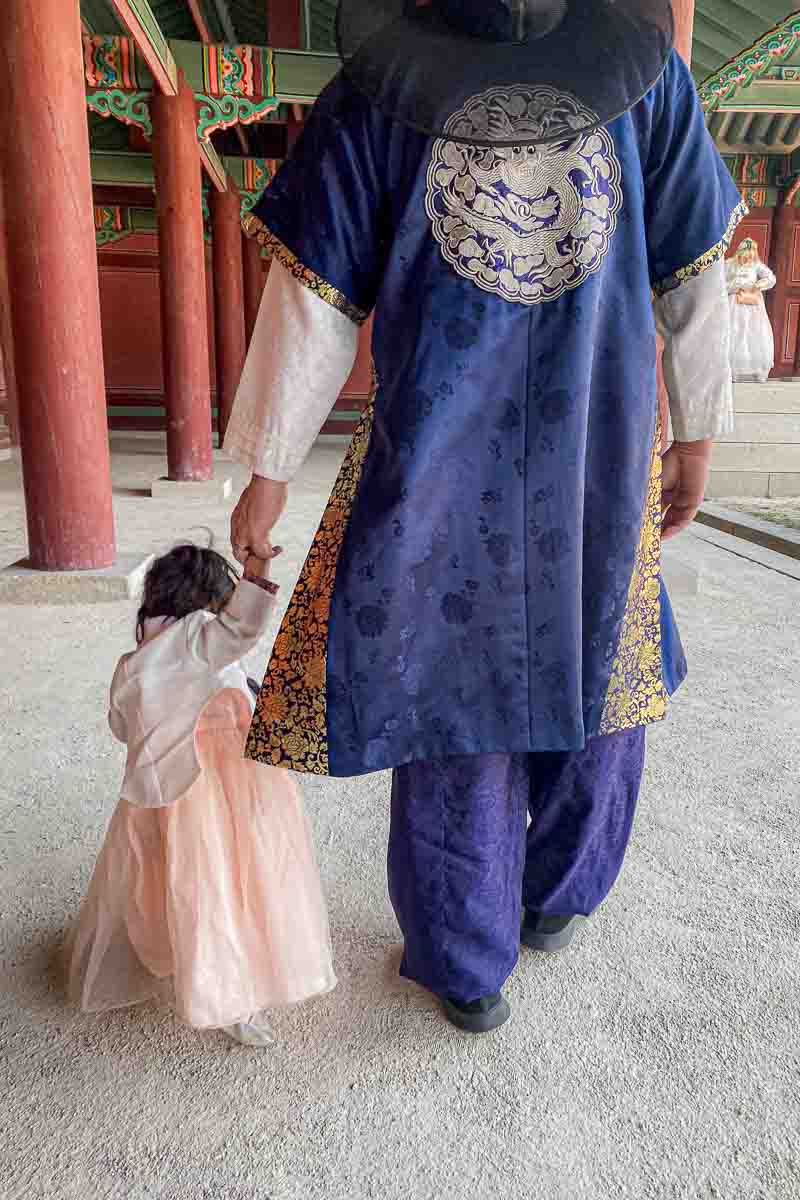
- Explore royal palaces and dress in hanbok. Seoul’s historic palaces are beautiful places to learn about Korean history and culture. My family loved dressing in traditional hanbok while exploring the palace grounds.
- Visit interactive museums and science centers. Seoul and Busan have excellent museums and hands-on attractions for children, making them especially useful on rainy days or during the hot summer months.
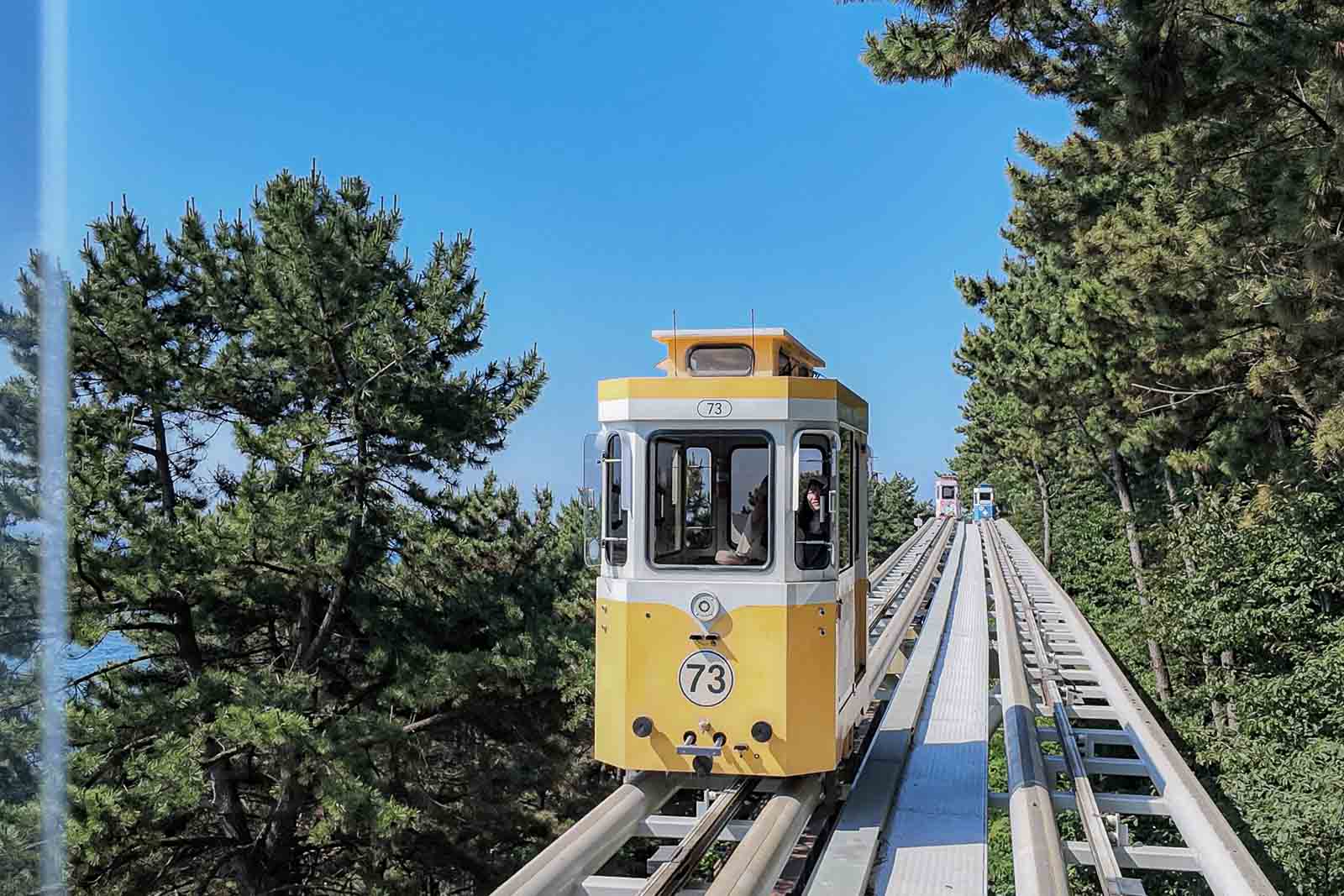
- Enjoy beaches and coastal attractions. Busan is particularly good for this, with Haeundae Beach, scenic coastal walks, and the Haeundae Blue Line Park’s beach trains and Sky Capsules.
- Explore traditional markets and colorful neighborhoods. Wander through bustling food markets, sample Korean street food, and discover distinctive neighborhoods like Busan’s Gamcheon Culture Village.
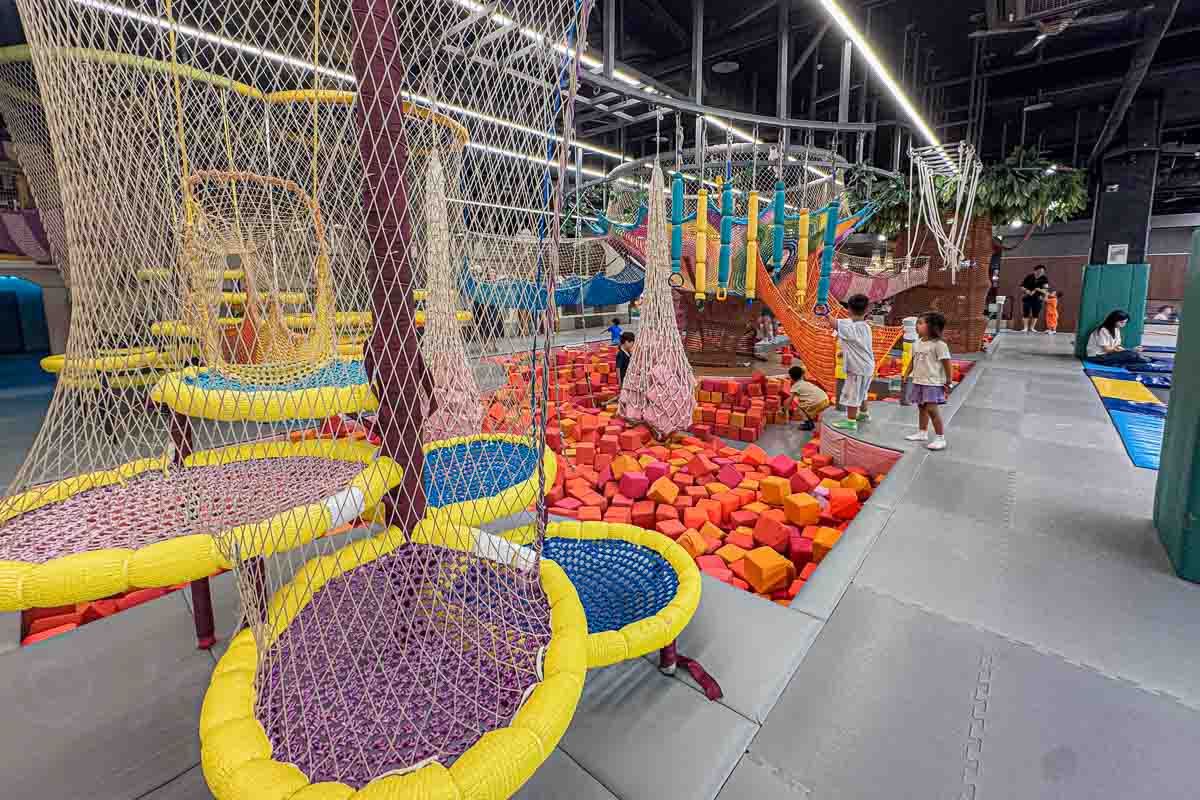
- Spend time in kids’ cafés and indoor play centers. South Korea’s kids’ cafés and indoor play spaces are on another level and easily some of the best I’ve seen anywhere in the world. They’re especially helpful on hot, rainy, or low-energy days, and they can be a fantastic way to balance out more traditional sightseeing.
- Spend a day at an amusement park or aquarium. Attractions like Lotte World Adventure Busan and SEA LIFE Busan Aquarium offer a change of pace from traditional sightseeing.
- Discover Korea’s ancient history. A visit to Gyeongju offers a completely different experience, with ancient royal tombs, historic landmarks, and sites connected to the Silla Kingdom.
I’d recommend balancing cultural sightseeing with more playful activities, especially when traveling with younger children. Some of our favorite days combined exploring a new neighborhood or historical attraction with something specifically chosen for the kids.
For more detailed recommendations, see my Things to Do in Seoul with Kids and Things to Do in Busan with Kids guides.

How Many Days Do You Need in South Korea with Kids?
I’d aim for 10–14 days for a first multi-city South Korea family trip, if you have the time. That gives you room for Seoul, Busan, and a little breathing space without rushing through constant hotel changes.
- 5–7 days: Concentrate on Seoul, or split between Seoul and Busan if you prefer a faster trip.
- 8–10 days: Combine Seoul and Busan, with a possible Gyeongju day trip.
- Two weeks: Explore both cities more comfortably and consider adding Jeju.
- Three weeks or longer: Slow down, settle into a neighborhood, and explore beyond the headline attractions.
Our first trip was eight nights entirely in Seoul. We had a 15-month-old adjusting to jet lag, and it was our first major family vacation after she was cleared to travel by her cardiologist. We intentionally planned slow mornings and plenty of flexibility. Eight nights isn’t necessary to see Seoul’s main sights, but it was exactly right for us then.
South Korea Family Itinerary Ideas
These are starting points, not packed day-by-day schedules. How quickly your family likes to travel, and where your international flights arrive and depart, should determine the final route.
One week in South Korea
I’d spend a week in Seoul, exploring different neighborhoods at a manageable pace and possibly adding a day trip. It’s also possible to split seven days between Seoul and Busan, but you’ll use more of your time changing destinations.
10 days in South Korea
For a trip of 10 days and nine nights, I’d consider:
- 4 nights in Seoul: Major landmarks, museums, neighborhoods, and time to adjust to jet lag.
- 4 nights in Busan: Beaches, coastal attractions, and an optional Gyeongju day trip.
- 1 final night in Seoul: A buffer before an international departure from Incheon.
If you’re flying into one city and home from another, you may be able to simplify this route.
Two weeks in South Korea
For an ambitious 14-night itinerary, my ideal split would be:
- 4 nights in Seoul
- 5 nights in Busan, including a Gyeongju day trip
- 3 nights on Jeju Island
- 2 final nights in Seoul
I’d compare flying from Busan to Jeju and then from Jeju to Gimpo Airport, which is closer to central Seoul than Incheon, against other routes based on total journey time and cost. Remember to account for getting to and from airports, not just flight times.
I haven’t visited Jeju, so this is my proposed route rather than an itinerary I’ve personally completed. If you’d prefer fewer flights and hotel changes, I’d happily spend extra nights in Seoul or Busan instead.
Best Time to Visit South Korea with Kids
Spring and fall are my first choices for family sightseeing, although your preferred season will depend on what you want to do. I’ve visited in spring and early summer, and both trips came with weather surprises.
Spring (March–May)
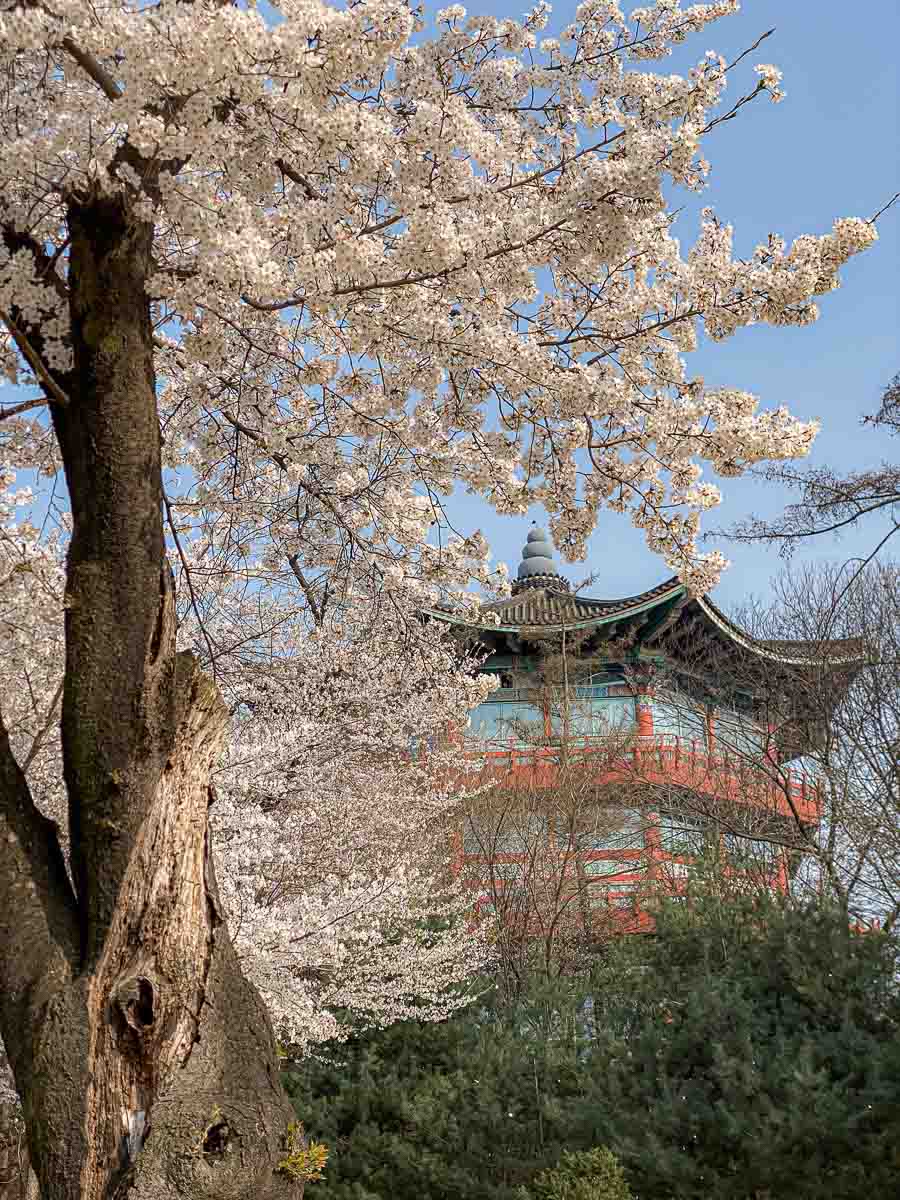
On our late-March-to-early-April trip in 2023, we caught Seoul’s cherry blossoms in full bloom. Some days were chilly enough for lightweight puffer jackets; other days were warm enough that we shed layers. We even ended up sweating in our rented hanbok at a palace!
Pack layers and be ready for changing temperatures. Cherry blossom timing varies from year to year.
Summer (June–August)
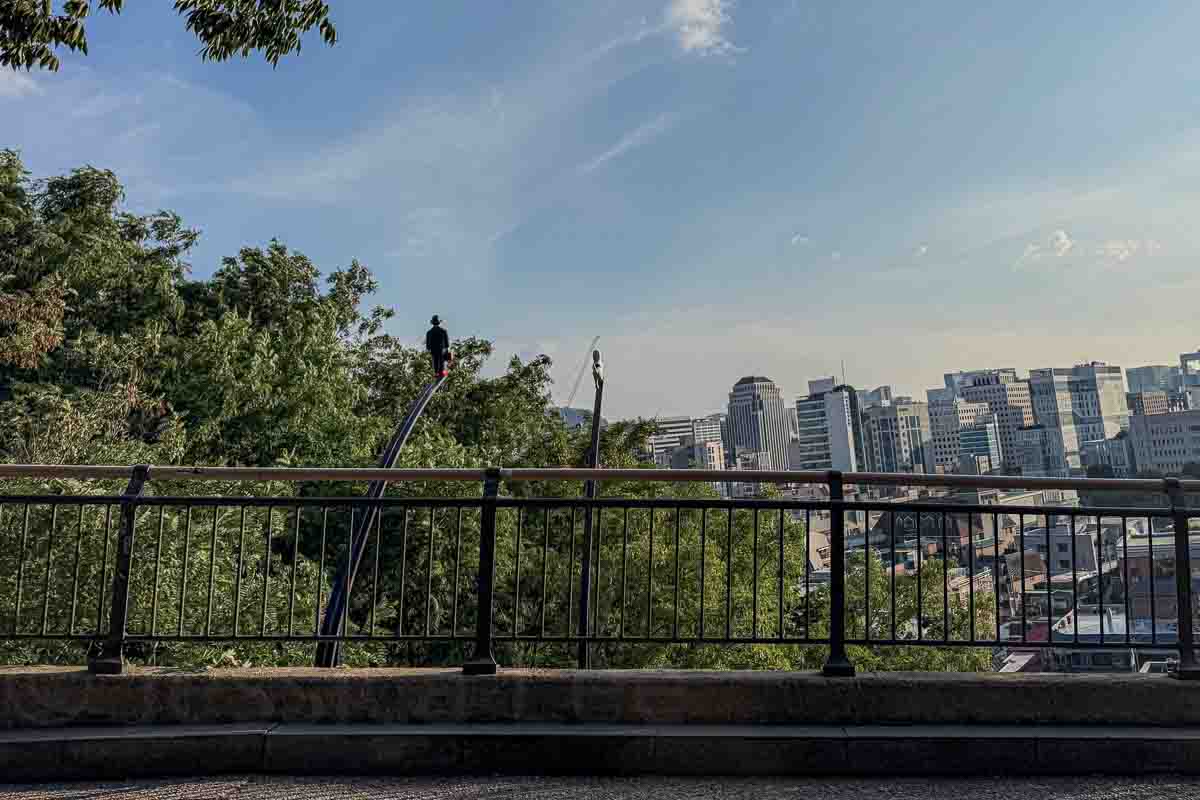
Seoul was hot and humid during our June 2026 visit. We managed by doing outdoor activities earlier, taking indoor breaks, and adjusting our plans when needed.
Busan surprised me. We had beautiful beach weather at first, followed by cloudy, rainy, sometimes very windy days. I ended up buying extra pants and layers at Uniqlo because I’d packed for consistently warmer weather. Summer also overlaps with the rainy season, so I’d leave room to switch outdoor plans around.
Fall and winter (September–February)
Fall brings cooler sightseeing weather and seasonal foliage, making it another appealing option. Winter can be very cold, especially in Seoul, but offers winter sports and seasonal activities.
I haven’t visited during either season, so those recommendations are based on the climate and attractions rather than personal experience.
Where to Stay in South Korea with Kids
Location and layout matter more to me than a long list of hotel amenities. With three kids, I look for practical access to transportation, enough sleeping space, and somewhere to take a break between outings.
Where to stay in Seoul and Busan
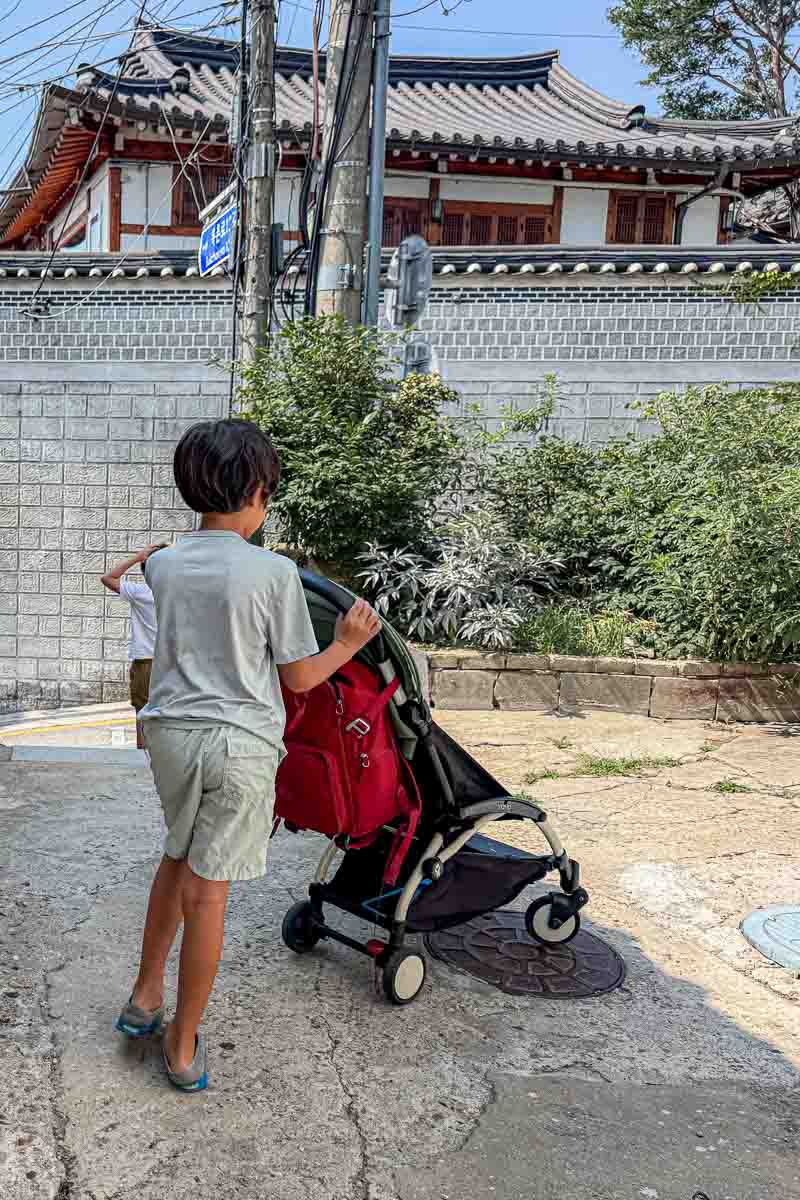
For most first-time visitors to Seoul, I’d start by comparing Myeongdong and Insadong/Jongno. On our three Seoul stays, we’ve tried a residence in Dongdaemun, an apartment-style stay in Myeongdong, and a traditional hanok in Bukchon. The hanok was memorable, but Bukchon’s hills added challenges with our luggage and stroller.
In Busan, my first choice is Haeundae. Our three-bedroom, three-bathroom LCT residence had a kitchen, laundry, and room to spread out, with the beach and everyday amenities close by. Seomyeon, Nampo, and Gwangalli are alternatives depending on what your family plans to do.
For detailed neighborhood tradeoffs and hotel options, see Where to Stay in Seoul with Kids and Where to Stay in Busan with Kids.
Choose the right accommodation setup
For shorter, sightseeing-heavy trips when you’re spending most of your time exploring, a standard hotel room may be all your family needs, and traditional hotels are generally easier to find than apartment-style accommodations.
Apartment-style hotels and serviced residences are worth considering even for smaller families. Separate bedrooms can help with naps and bedtime, while kitchens and laundry make longer stays easier.
On our 2023 trip, a proper sink and a way to wash and prepare bottles mattered because my youngest still took a bottle at night. With five travelers, I also check actual bed configurations and maximum occupancy rather than assuming a room will fit everyone. I share my broader approach in How to Find Hotels for a Family of 5.


Getting Around South Korea with Kids
You can travel around Seoul, Busan, and Gyeongju without renting a car. That’s what we did on both trips, using intercity trains, metro systems, buses, walking, and an occasional taxi when it made the day easier.
Arriving at Incheon and taking the AREX
Both trips began and ended at Incheon International Airport (ICN). I found the airport modern and straightforward to navigate, with clear signs to the trains.
We used the AREX Express to Seoul Station, which has reserved seats and space for luggage. In June 2026, we paid ₩45,000 one way for two adults and two children, while our youngest rode for free but had to share our seat space. From Seoul Station, a roomy Uber Premier Van to our Myeongdong accommodation cost ₩26,300 for all five of us and our luggage.
Depending on your hotel, an airport bus, all-stop train, or prearranged transfer may save you another connection. Always compare the full journey to your accommodation.

Taking the KTX between cities
I booked our KTX tickets directly through KORAIL using an American Express card. Or some travelers prefer the ease of using Klook for tickets. Our Seoul–Busan trips took about 2 hours and 45 minutes, while the KTX between Busan and Gyeongju took around 30 minutes. The trains were comfortable, and traveling with our kids and luggage was manageable.
Book ahead when your dates are fixed and you want seats together. KTX uses separate rail tickets rather than a regular T-money tap.

Subways, buses, and T-money
The metro was our everyday workhorse in Seoul and Busan. Stations generally had clear English signs, although some transfers involved more walking or hunting for an elevator.
We used T-money for local transportation, with child-rate cards registered for our older kids. Our four-year-old traveled free on the Busan Metro with us. Check current age rules before your trip, and keep some cash available for card purchases or reloads.
I strongly recommend Naver Map for routes, station exits, and transit connections. For step-by-step city details, read my guides to Getting Around Seoul with Kids and Getting Around Busan with Kids.

When taxis made sense
Taxis helped with luggage, rainy weather, and some steep hill connections. We used larger Uber vehicles for station transfers and regular taxis for some shorter journeys. For example, our Uber Taxi XL from Busan Station to Haeundae cost ₩23,500, while a short ride toward Gamcheon Culture Village cost ₩4,800.
For a family of five, check vehicle seating and luggage capacity instead of assuming a standard taxi will fit everyone. Families with children who need car seats should also arrange suitable restraints rather than assume a taxi will have them.
A car might be helpful for more rural areas or a future Jeju trip, but I wouldn’t rent one for our Seoul–Busan–Gyeongju route.

Eating in South Korea with Kids
Korean food doesn’t have to be spicy. I can tolerate very little heat, while my husband and oldest son love spicy dishes, and we still found plenty of meals that worked for everyone.
Some favorites and reliable options included Korean BBQ, mild galbitang (beef short rib soup), rice, noodles, Korean fried chicken with non-spicy sauces, and savory pancakes. My youngest loved grilled meat, simple soups, and fruit. We also regularly picked up fruit and watermelon juice at markets.
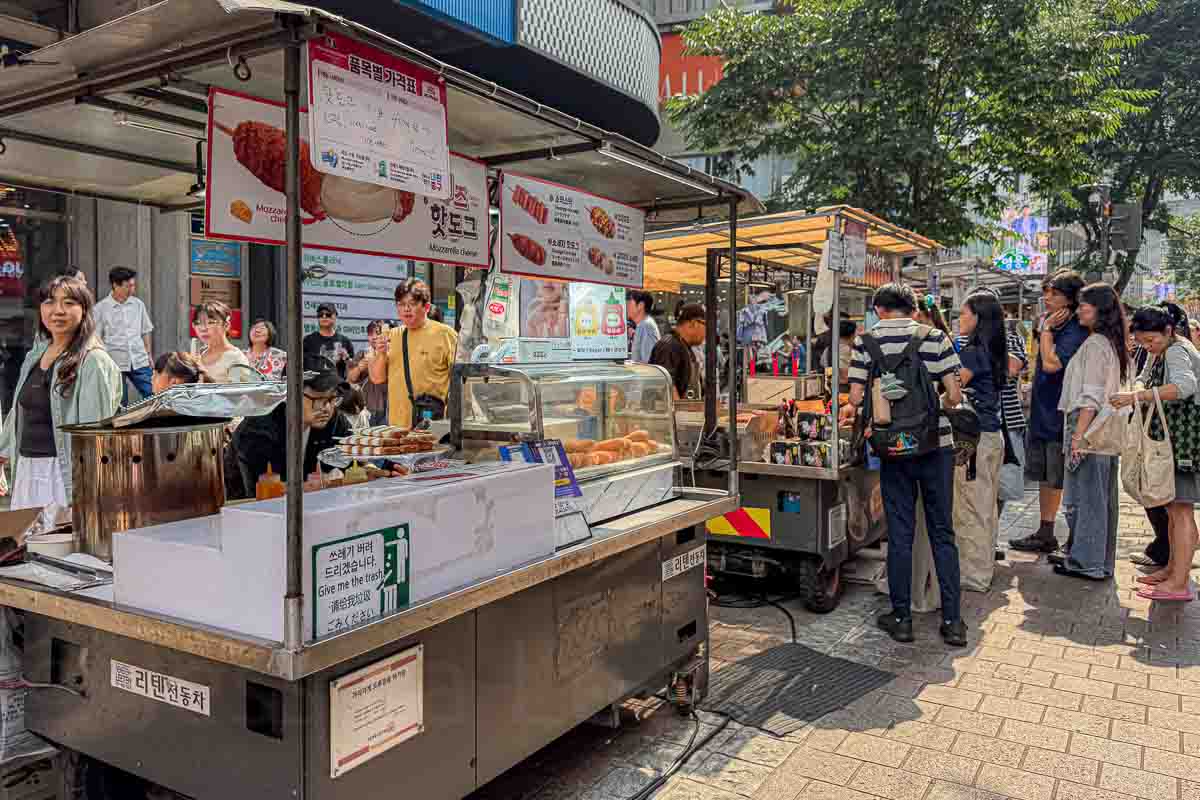
Korean restaurants often specialize in a few dishes rather than offering enormous menus, so choosing a restaurant that suits everyone’s tastes helps. Meals may come with banchan, small side dishes such as vegetables and kimchi; some are spicy, and others aren’t. We also enjoyed sweet hotteok from street-food stalls.
What to know about restaurants with little kids
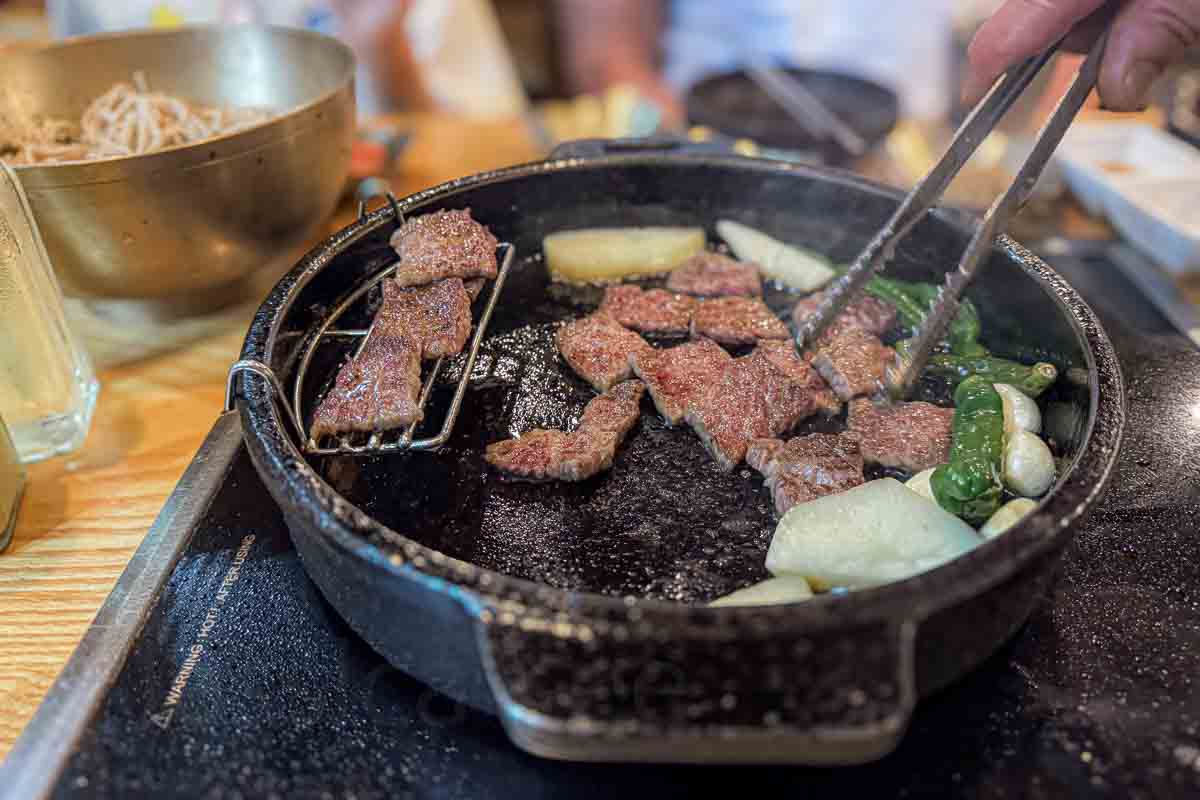
Pay attention to heat. Korean BBQ grills are often built into the table, while soups and stews can arrive bubbling in very hot bowls. We also encountered tables designed for four people, occasionally with built-in ordering tablets that made squeezing in a fifth person awkward.
Chopsticks and spoons were standard, although we found high chairs and children’s utensils in various restaurants. Our trip finally convinced my reluctant, left-handed eight-year-old to master chopsticks!
The best surprise was how warmly many restaurant staff treated my children, particularly in Busan. Eating out became one of my favorite parts of the trip, not something we had to work around.
Traveling to South Korea with a Baby or Toddler
Our first Seoul trip was with a 15-month-old, and I was impressed by the baby-care facilities. We found clean changing rooms and feeding spaces, plus wall-mounted toddler seats in some public restroom stalls so I could safely keep her contained while using the bathroom.
A stroller was useful for long sightseeing days, but historic areas, hills, and some subway exits required extra patience. I liked having a compact travel stroller that I could manage if we encountered stairs; a baby carrier is useful for younger children, too.
Everyday food was manageable, and a kitchenette helped with washing bottles. My biggest advice is to choose a comfortable base and allow flexibility for naps, jet lag, and weather rather than trying to do everything.
For help preparing for the long flight to South Korea, see my guides to long-haul flights with a baby and long-haul flights with a toddler, with practical advice tailored to each stage.
How Much Does South Korea Cost for Families?
I found local transportation and eating out a good value, particularly compared with similar experiences in the U.S. Busan felt somewhat less expensive than Seoul, although your choice of accommodation can have a much bigger effect on the budget than the city alone.
For context, these are actual amounts we paid, not current average prices:
- Busan, June 2026: three-bedroom residence, averaging $340 per night.
- Seoul, June 2026: about $432 per night in Myeongdong and $495 per night in a Bukchon hanok.
- Transportation, June 2026: ₩45,000 for our family’s one-way AREX tickets and ₩23,500 for an Uber Taxi XL from Busan Station to Haeundae.
These were family-sized accommodations, not budget hotels. I’d plan around lodging and intercity transportation first, then adjust meals and activities to suit your family. I wouldn’t assume our extended-stay expenses represent a typical one-week vacation.
Practical South Korea Travel Tips for Families
Passports, visas, K-ETA, and arrival cards
Check the entry requirements for every family member’s passport, including whether you need a visa, K-ETA (Korea Electronic Travel Authorization), and an arrival card. They’re separate steps, and an exemption from K-ETA doesn’t necessarily remove the arrival-card requirement.
We completed K-ETA applications for our spring 2023 trip. In June 2026, we correctly understood that U.S. travelers were temporarily exempt from K-ETA, but missed the separate arrival cards. After reaching immigration, we had to step aside and fill out a paper form for all five of us. Not my favorite welcome after a long flight!
As of October 2026, the U.S. K-ETA exemption runs through December 31, 2026. Requirements may change for later trips. Travelers who need an arrival card can use the free official e-Arrival Card website within three days before arrival; it also supports group submissions. Check the official K-ETA site before departure rather than relying on old advice.
Language and navigation
You don’t need to speak Korean to explore independently. We practiced a little Korean on Duolingo, but we mainly relied on basic phrases, gestures, and Google Translate for menus and signs. I downloaded Korean for offline use before flying.
Major stations and attractions generally had clear English signage. Smaller restaurants and museums varied considerably. Naver Map, ride-hailing apps, kiosks, and restaurant ordering tablets made many interactions easier without knowing Korean.

Credit cards and cash
We used Visa, American Express, Apple Pay, and tap-to-pay widely, although not everywhere. Some street-food stalls, market vendors, ticket machines, and online booking platforms still required cash or presented issues with foreign cards.
I’d bring more than one type of payment card and have a way to withdraw Korean won from an ATM. Check your bank’s fees; don’t assume every ATM or card will work. We mainly used T-money for transit, although participating shops also accept it for purchases.
Internet and mobile data
Wi-Fi was easy to find, and staying connected wasn’t a problem for us. Our mobile provider, Google Fi, covered international service, so we didn’t buy a Korean SIM or eSIM. If your plan doesn’t include usable roaming, arrange an eSIM, SIM, or other data option before arrival so maps, translation, and ride apps work when you need them.
South Korea with Kids FAQs
Is South Korea safe to visit with kids?
I felt comfortable exploring Seoul and Busan with my three kids, including when I was the only adult with them. I used public transportation frequently and never felt unsafe. I still recommend ordinary precautions around traffic, crowds, and personal belongings, and checking current official travel advice before departure.
Is Seoul or Busan better for families?
I’d start with Seoul for a first visit focused on palaces, museums, and big-city sightseeing. I especially loved Busan for its beaches, coastal attractions, and the walkable Haeundae area. They’re different enough that I’d include both if you have the time.
Is South Korea stroller-friendly?
Mostly, in my experience. We used a compact travel stroller extensively, including on subways. The biggest obstacles were hills, older streets, stairs, and subway exits where the nearest elevator wasn’t convenient. I wouldn’t skip a stroller with a toddler, but I’d expect occasional detours.
Is South Korea or Japan better with kids?
I’ve spent about five weeks exploring each with my children, and both are excellent family destinations. They share useful transportation and family amenities, but offer different food, cultural experiences, and places to explore. I’d choose based on which experiences interest your family most rather than assuming one is universally more kid-friendly.
Planning Your South Korea Family Trip
Absolutely. Even after our extended family trips, I left wanting more. We loved the balance of history, modern big-city energy, coastal scenery, delicious food, and practical conveniences, and I’d happily return to Seoul and Busan while finally making time for Jeju and Pohang.
Start with the places that interest your family most, leave some breathing room, and don’t feel you need to see the whole country in one trip.