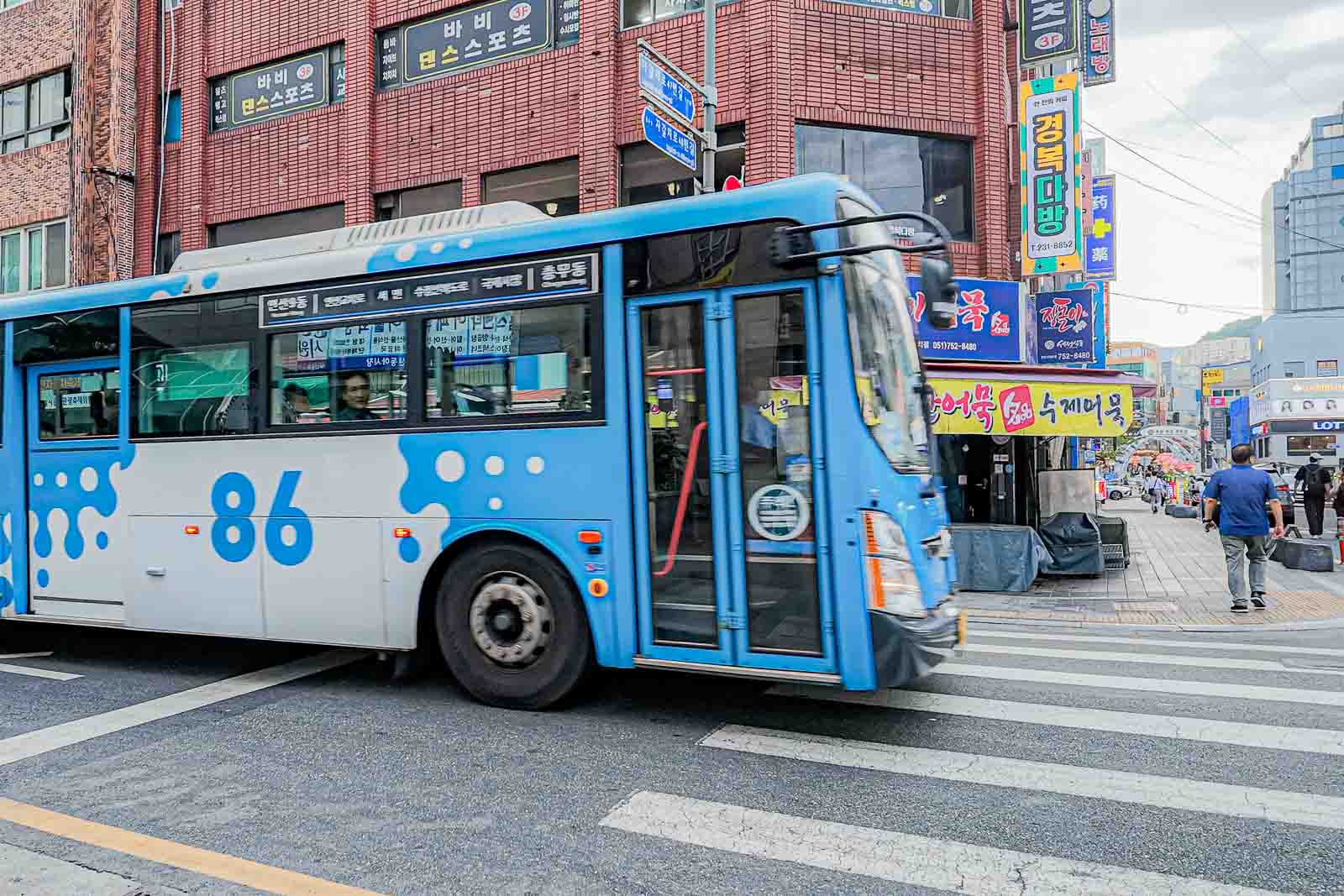
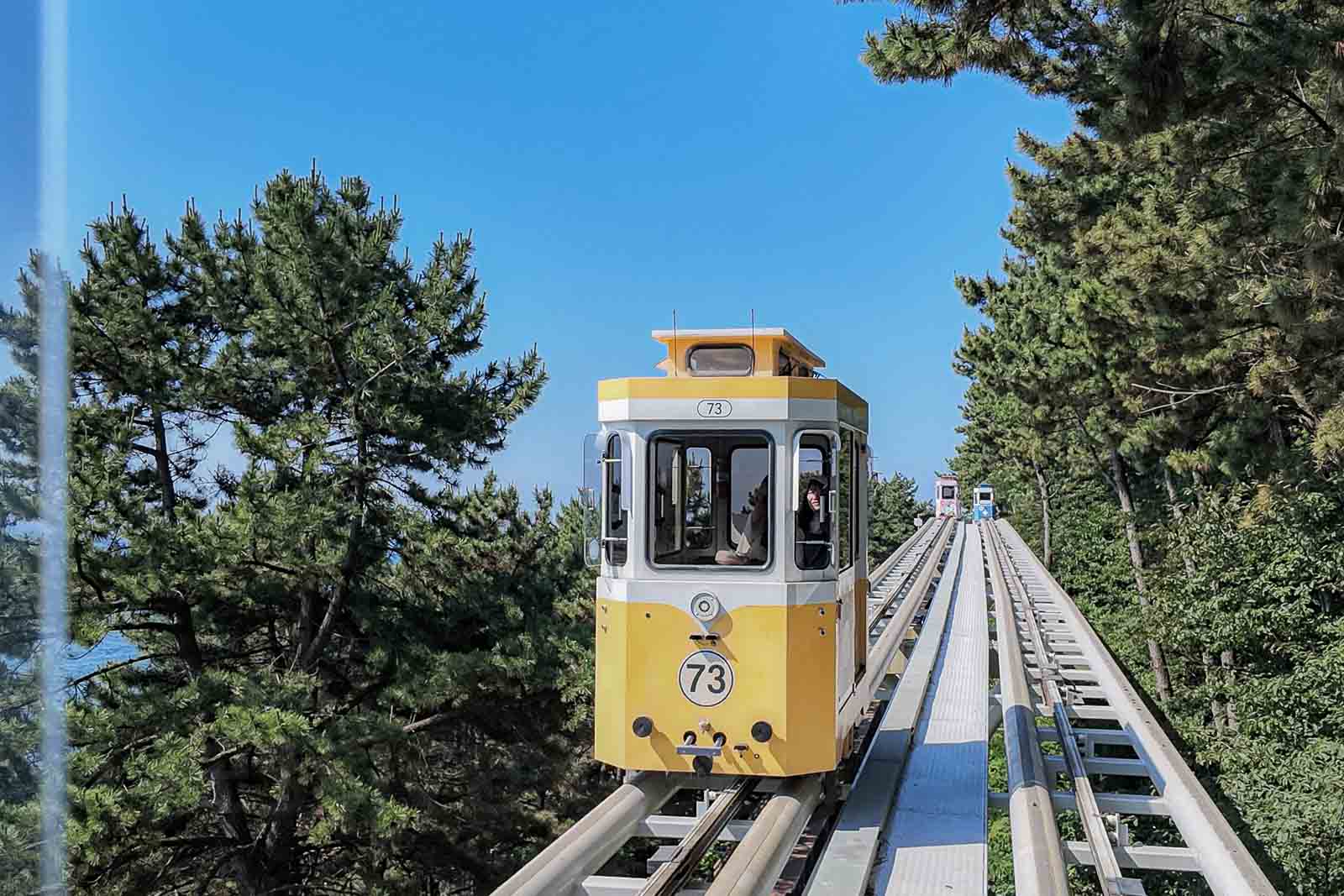
Seoul with Kids: Complete Family Travel Guide
Seoul is an exciting, family-friendly city with incredible food, rich culture, and more things to do with kids than you could fit into one trip.
It is also expansive.
After three trips to Seoul with my three children, I learned that the hardest part is not finding family-friendly attractions. It is figuring out where to stay, how to get around, and how to plan your days to make it enjoyable but not exhausting.
This Seoul with kids guide will help you make those decisions with more confidence, from choosing the right neighborhood and deciding how long to stay to navigating the subway, eating with kids, and building a realistic family itinerary.
Jump to: Seoul at a Glance, Quick Planning Guide, Family-friendly notes, What to know before, How many days, Best time to visit, Where to stay, How to plan an itinerary, Best things to do with kids, Getting around, Strollers in Seoul, Food and eating
Affiliate Disclosure: Familee Travel contains affiliate links and is a member of the Amazon Associates Program, we may earn commissions from qualifying purchases at no additional cost to you.
In a rush? Pin this or email it to yourself to read later! (Psst! Use the buttons at the very top or bottom of this post for ease.)

Seoul with Kids at a Glance
Seoul is an exciting and accessible destination for families, but its size can make planning feel overwhelming. Here are the most important things to know before you start booking your trip.
| Planning Question | Quick Answer |
|---|---|
| Is Seoul family-friendly? | Yes. Seoul is safe, easy to navigate and packed with cultural and kid-friendly experiences. Its enormous size is the biggest planning challenge. |
| How long should families stay? | Five to seven full days works well for most first-time family trips. |
| Where should first-time families stay? | Myeongdong is my top pick for convenience. Insadong or Jongno is another strong choice for families prioritizing historic and cultural Seoul. |
| How should you get around? | Use the subway for most trips, with occasional taxis or rideshares when they save significant time or energy. |
| Do you need a car? | No. Most families visiting Seoul do not need to rent a car. |
| Is Seoul stroller-friendly? | Mostly. A lightweight travel stroller works well, but expect hills, stairs, uneven palace paths and occasional elevator detours. |
| What is the best way to plan each day? | Group activities by neighborhood and choose one main anchor attraction instead of zigzagging across the city. |
| What is the biggest mistake to avoid? | Underestimating travel time and packing too many far-apart attractions into one day. |
Compare Seoul neighborhoods and family hotels in my where to stay in Seoul with kids guide.
How To Plan a Trip to Seoul with Kids: Quick Start Guide
Planning a family trip to Seoul becomes much easier when you make the biggest decisions in the right order. Use this quick-start guide to choose your dates, accommodations, transportation, and activities without overlooking the logistics that can shape your trip.
| Step | Planning Decision | Start Here |
|---|---|---|
| 1 | Decide how many days your family needs in Seoul. | Jump to: How Many Days Do You Need in Seoul with Kids? |
| 2 | Choose travel dates based on weather, crowds and the experiences your family wants. | Jump to: When Is the Best Time To Visit Seoul with Kids? |
| 3 | Select a neighborhood that minimizes travel to your highest-priority attractions. | Read: Where to Stay in Seoul With Kids: Best Neighborhoods + Family Hotels |
| 4 | Identify your family’s must-do cultural, kid-focused and adult-interest experiences. | Read: Things to Do in Seoul With Kids: 50+ Family Sights |
| 5 | Group those activities geographically and build realistic days around one main attraction. | Jump to: How To Plan Your Seoul Itinerary with Kids |
| 6 | Plan your airport transfer and learn how your family will use the subway and rideshares. | Jump to: Getting Around Seoul with Kids |
| 7 | Decide whether your child needs a stroller, carrier or both. | Jump to: Is Seoul Stroller-Friendly? |
| 8 | Plan for meals, snacks, breaks and a daily recovery window. | Jump to: Eating in Seoul with Kids and What To Know Before Planning |
Is Seoul Family-Friendly?
Yes, Seoul is a very family-friendly destination.
The city felt safe and comfortable during our visits, including when I explored alone with all three children. Public transportation is clean and efficient, family facilities are easy to find, and there are indoor and outdoor activities for babies through teens.
But family-friendly does not mean every part of Seoul is perfectly convenient.
Seoul is massive. Attractions are spread out, subway stations can be deep, and some historic areas include hills, gravel, and uneven stone paths. It’s easy to find things everyone will enjoy. However, it takes work to plan it well so that your family still has the energy to enjoy it.
Why Seoul works so well for families
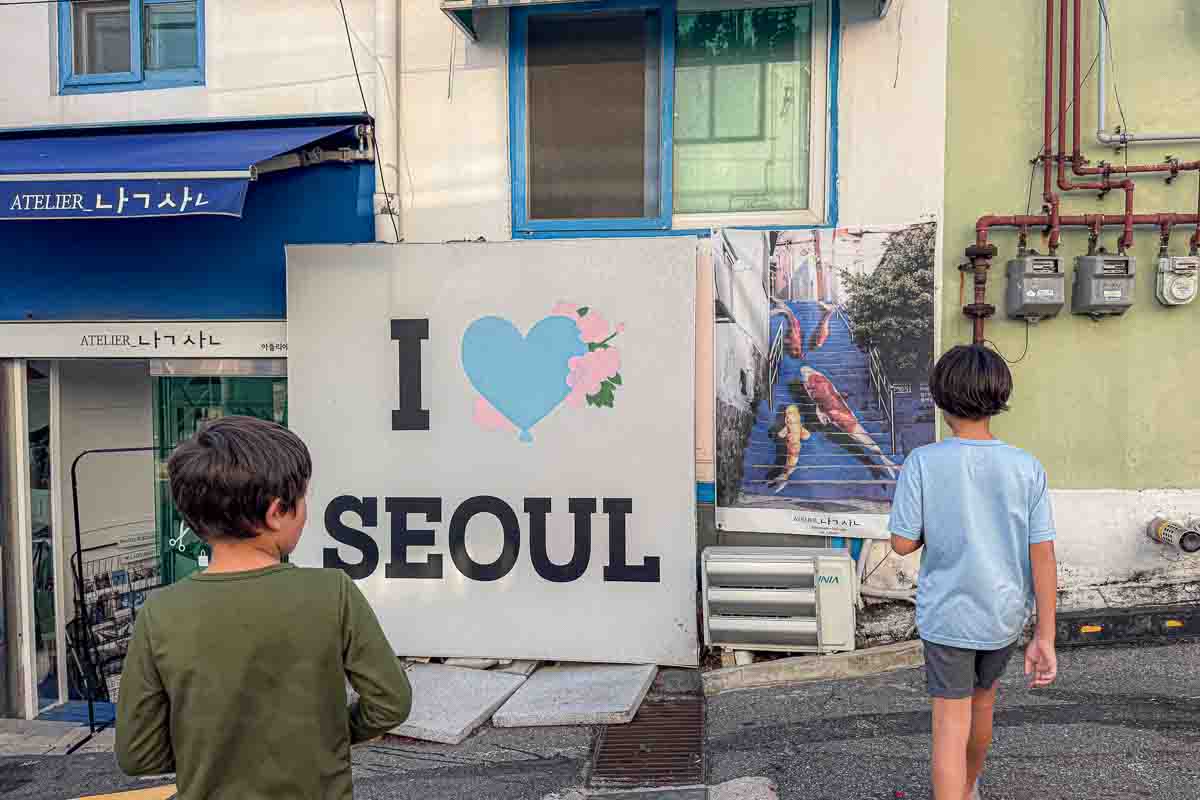
Seoul offers such a sweet balance of cultural experiences and kid-focused entertainment, historical landmarks and modern attractions.
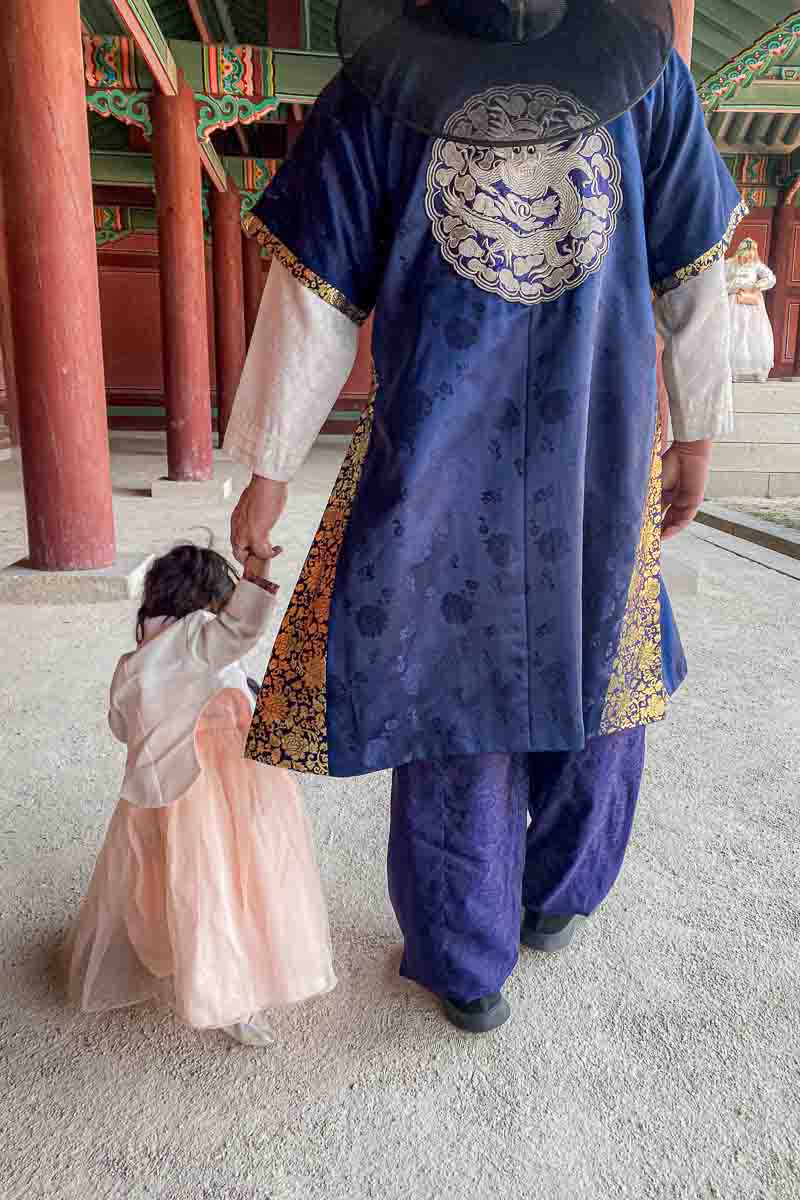
You can dress in hanbok and explore a palace, eat your way through a market, then visit a kids café, aquarium, mall or character attraction. Kids do not have to spend the entire trip quietly trailing their parents through adult sightseeing. Parents also do not have to give up the cultural experiences that brought them to South Korea.
Seoul offers a balance, and it works for the whole family.
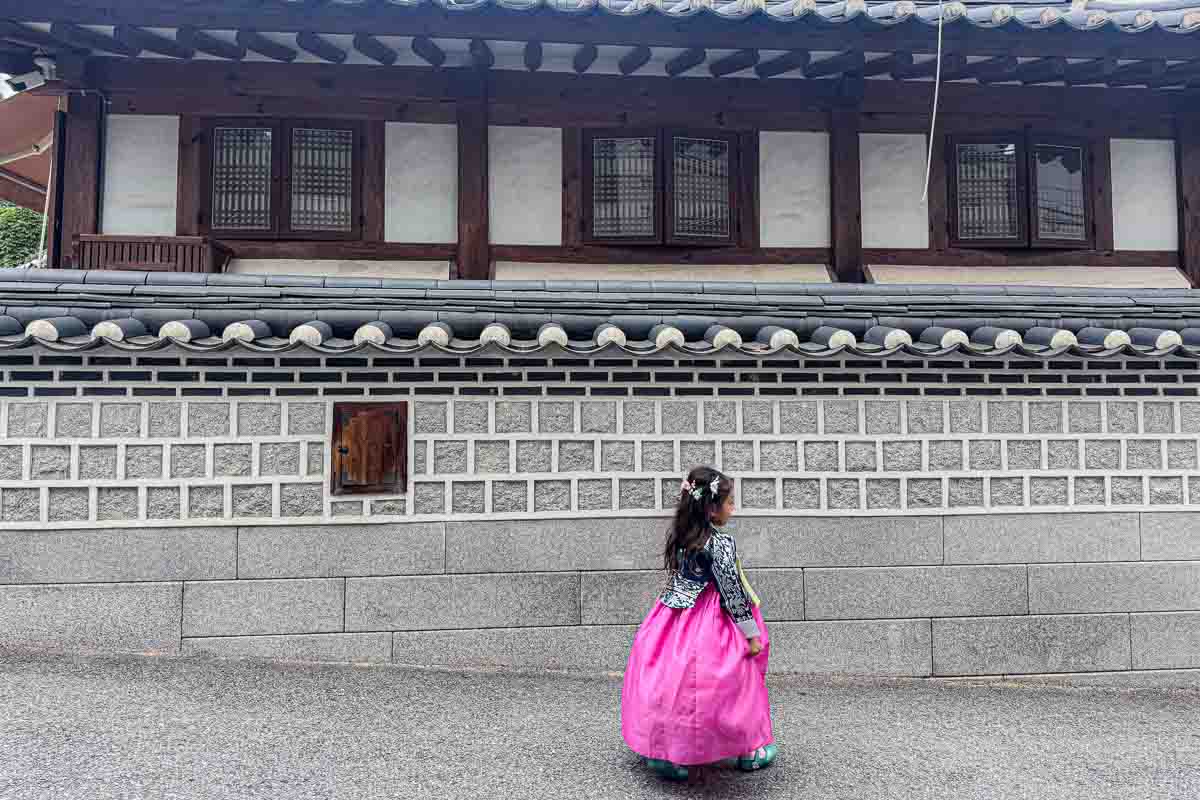
Across our visits, my kids loved hanbok dress-up, kids cafés, markets, fresh fruit drinks, hotteok, and staying in a traditional hanok house. The adults loved the palaces, Korean food, cafés, Insadong, markets, and spa experiences.
The logistics side of family travel is manageable in Seoul too. We found free public restrooms in subway stations, malls, department stores and major attractions. Nursing rooms and family facilities are also available in many places. Diapers, wipes, medicine, toddler food and snacks were easy to buy.
Seoul also has endless indoor options. Rain, summer humidity or winter cold does not have to derail the day. Families can pivot to museums, kids cafés, malls, aquariums, arcades and food halls.
What can be challenging about Seoul with kids?
Seoul’s size is the biggest challenge.
A destination may not look far away, but the full journey can include walking to the subway, navigating a large station, making a transfer, finding the correct exit, and walking again. You can lose quite a bit of time moving between neighborhoods.
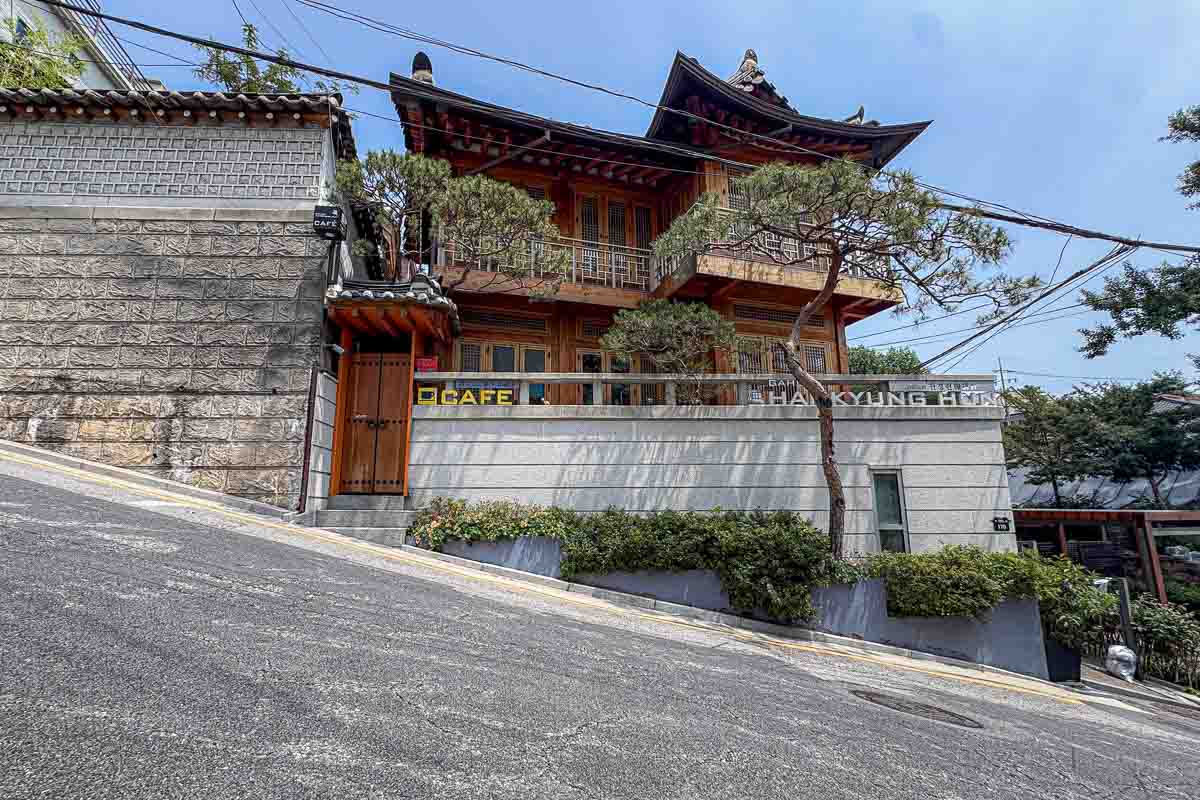
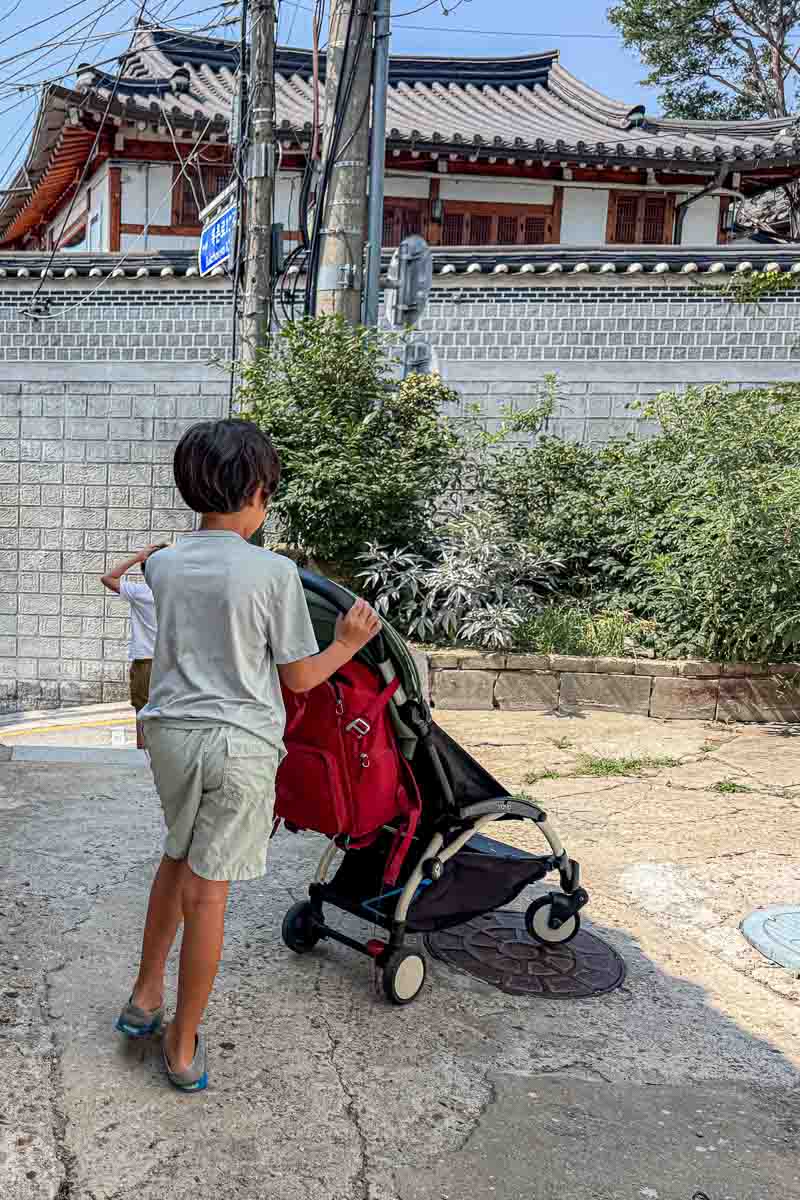
Stroller access is mixed. Much of Seoul has wide sidewalks and modern pedestrian areas, but Bukchon includes steep streets and palace grounds may have gravel, large stone slabs and wide gaps. Elevators are common in subway stations, although they are not always along the most convenient route.
Weather can also shape the trip. Summer humidity makes ordinary walks more tiring, while winter requires more preparation for outdoor sightseeing.
Family-sized accommodations take extra research as well. Seoul has excellent residences, apartment hotels and private homes, but many standard hotel rooms have strict occupancy limits.
What ages is Seoul best for?
Seoul can work well for babies through teenagers. Interests, sensory needs and family travel style matter more than any specific age.
Babies are relatively portable, and nursing rooms, changing facilities and indoor spaces make daily logistics easier. Toddlers benefit from a compact stroller, a slower schedule and careful supervision around hot grills and uneven historic sites.
Elementary-aged children may be in Seoul’s broadest sweet spot. They can walk more, engage with hanbok, palaces and markets, and still get excited about character attractions, arcades and kids cafés.
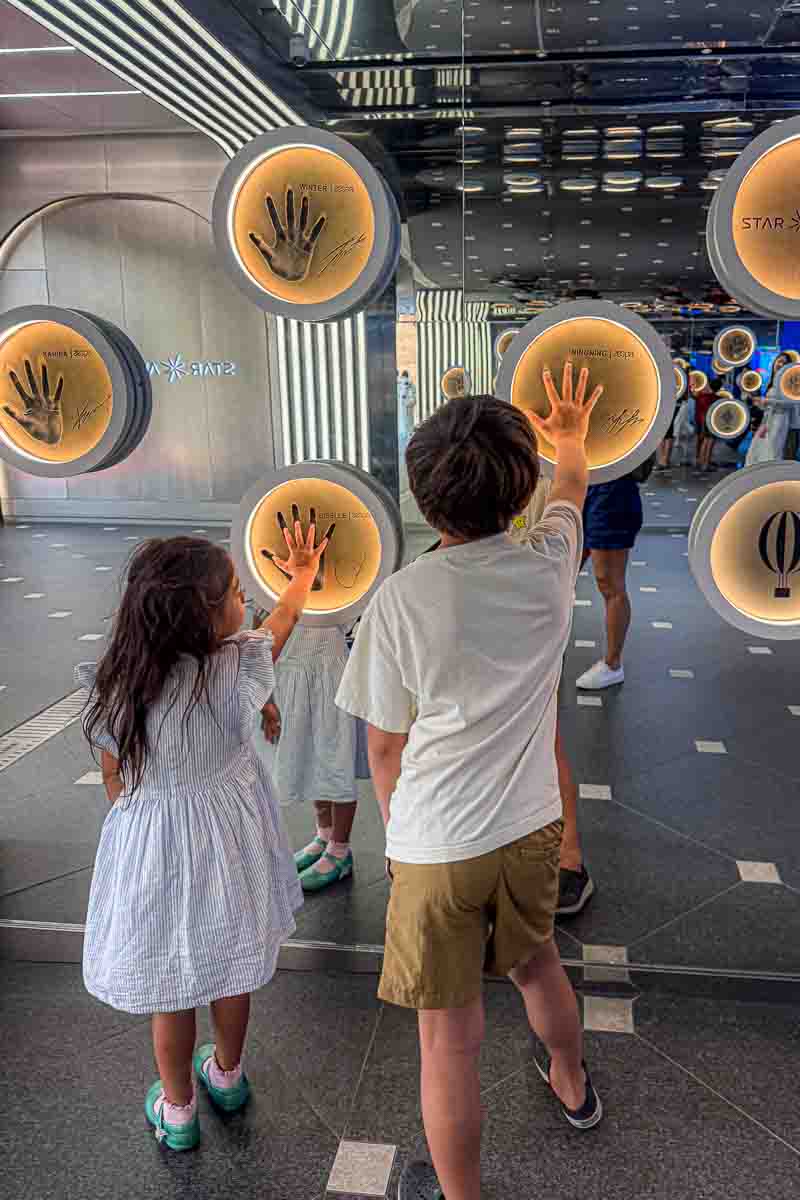
Tweens and teens have plenty to enjoy too, especially if they like K-pop, fashion, beauty, gaming, shopping, cafés or Korean media.
Seoul is an especially strong fit for families who enjoy big cities, public transportation, Asian culture, food, shopping and a mix of historic and modern experiences. Families focused mainly on beaches or outdoor adventure may prefer to spend less time in the capital and explore other parts of South Korea.
What To Know Before Planning a Seoul Family Trip
The biggest planning mistake is choosing all your favorite attractions first and trying to connect the dots afterward.
Seoul is too large for that approach to work well with kids. Where you stay, which areas you prioritize, and how much you expect your family to accomplish each day will shape the trip more than the length of your attraction list.
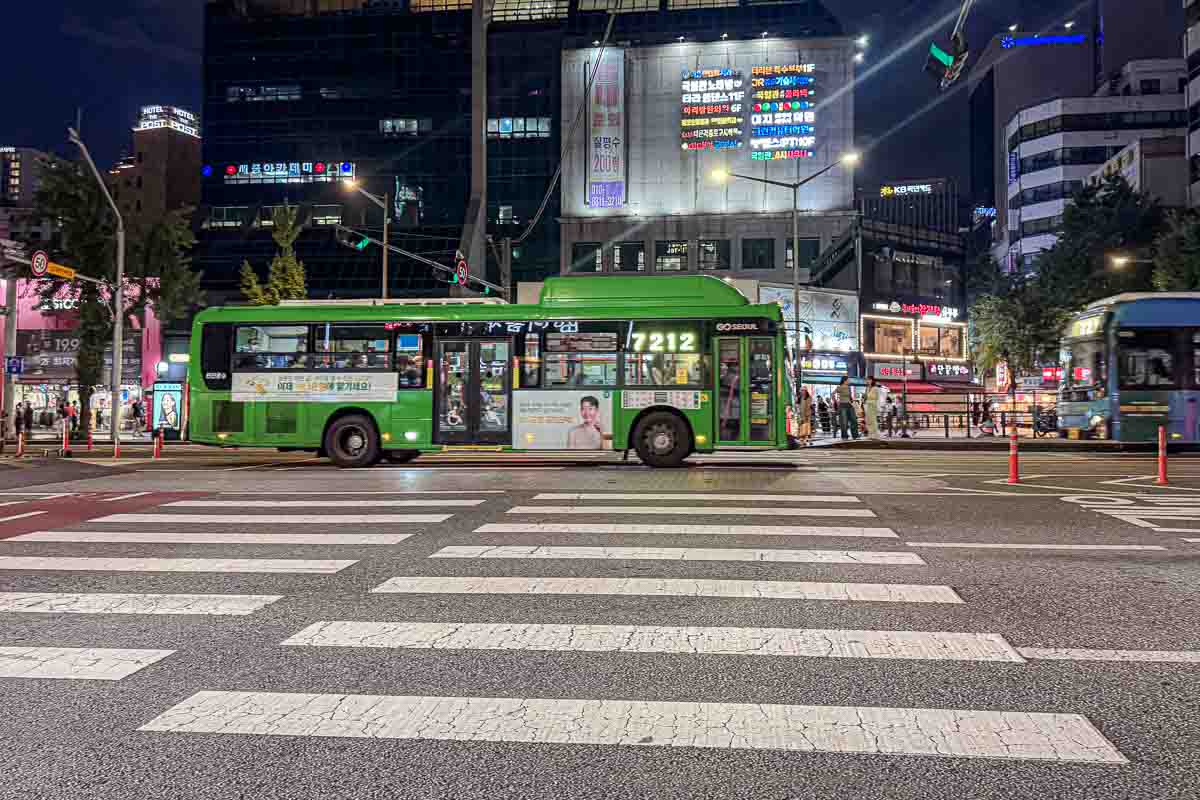
Seoul is bigger than it looks
The subway itself is fast. Getting from your hotel room to the entrance of your next attraction is what consumes time.
We did not fully understand Seoul’s scale before our first visit. We enjoyed our hotel residence in Dongdaemun and found plenty nearby, but it often felt like we had to travel a significant distance to reach the places on our itinerary.
Location matters in any city. In Seoul, it can affect almost every day of your trip.
Plan your days by area
Group activities geographically instead of choosing them only because they sound good together.
A palace, market, mall and riverside park may all appeal to your family, but that does not mean they belong on the same day. Build around one part of the city and keep nearby options available if everyone still has energy.
This gives your family more time to eat, wander, and enjoy the neighborhood instead of constantly rushing toward another train.
Protect your family’s energy
Every family needs some form of recovery time.
That might mean a slow morning, a midday accommodation break, an early evening, or a shorter day after a full one.
We often took our time in the mornings and completed half-days instead of rushing out early and staying busy until bedtime. That helped us conserve energy and enjoy what we did choose.
Download Korea-specific apps
Google Maps does not work fully with all features that many international travelers expect in South Korea.
I continued opening it out of habit, but Naver Map was much more reliable for subway routes, walking directions, station exits, and business information.
Download Naver Map for navigation, Papago or Google Translate for translation, and Uber or Kakao T for rides before the trip. You do not need to speak Korean to navigate Seoul, but using the right tools makes the city much easier to understand.
How Many Days Do You Need in Seoul with Kids?
Most families should plan to spend five to seven full days in Seoul on a first trip.
There is enough to fill a much longer stay, but Seoul’s size makes it difficult to rush. A little extra time allows your family to explore different neighborhoods, balance cultural and kid-focused activities, and recover between busier days.
Are three days in Seoul enough?
Three full days can work if Seoul is one stop on a larger South Korea itinerary, but you will need to prioritize carefully.
You might choose one palace and traditional Seoul day, one major kid-focused or modern Seoul day, and one market, food or neighborhood day.
Stay somewhere central, group your plans tightly, and skip attractions that do not genuinely interest your family.
Four to five days in Seoul
Four to five full days is enough for a strong introduction.
You can usually include historic Seoul, one large family attraction, a market or food experience, Myeongdong, and one modern neighborhood such as Gangnam or Jamsil.
You will not see everything, but you can experience several sides of the city without making every day feel like a race.
Six to seven days in Seoul
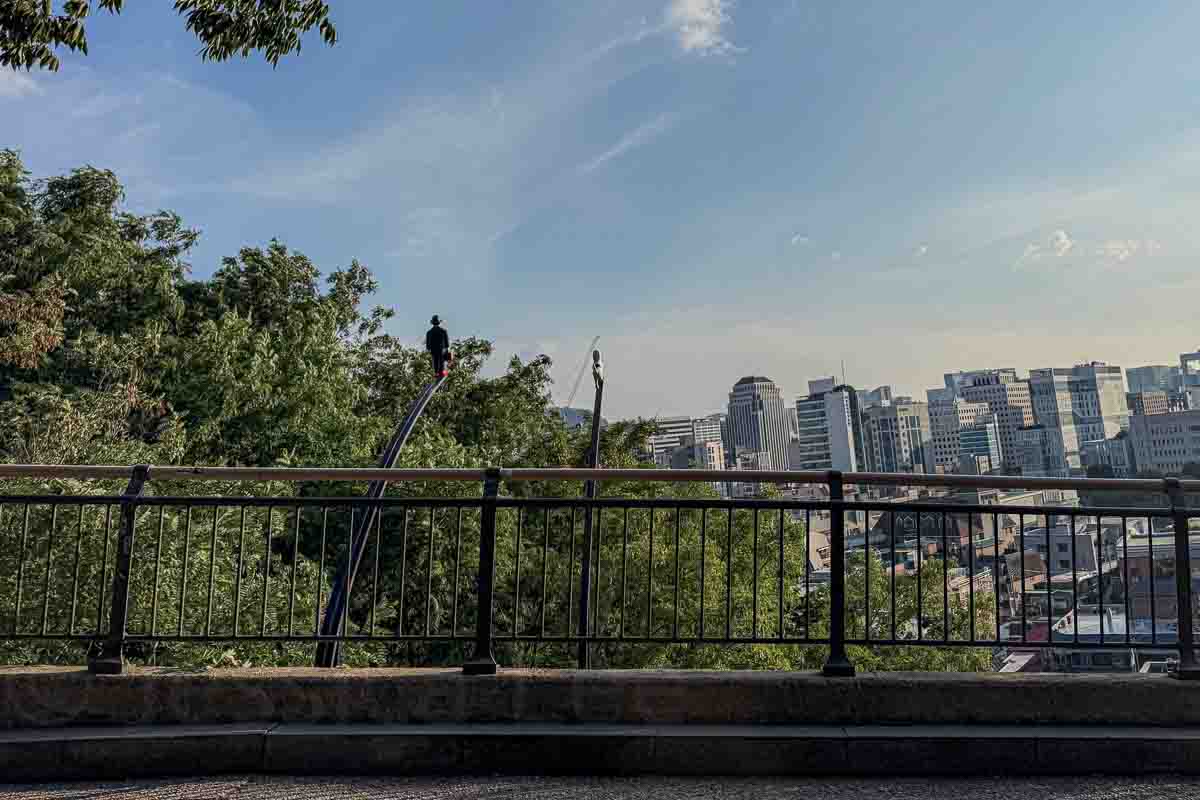
Six to seven full days is the sweet spot for many families.
A week gives you more flexibility to explore several neighborhoods, plan around weather, include slower mornings, and balance palaces and markets with kids’ cafés, museums, and family attractions.
One week is not too long. The extra time usually improves the trip because you can accomplish less each day and enjoy it more.
Eight days or longer in Seoul
Families can easily spend eight days or longer without running out of things to do.
A longer stay creates room for parks, Han River outings, multiple kids cafés, shopping, neighborhood exploration, a day trip, or significant downtime.
We spent eight nights in Seoul on our first family visit and still left with plenty we had not experienced.
Should you spend less time in Seoul and add Busan?
For a South Korea trip of approximately one week, staying in Seoul may be easier than changing accommodations and losing time to packing and transportation.
With 10 days or longer, adding Busan becomes more appealing. Seoul and Busan offer very different family experiences, and the KTX makes traveling between them relatively straightforward. My complete Busan with kids guide covers how long to stay, where to base your family, transportation, beaches, and the best things to do.
Do not add another destination simply because you feel like you are supposed to see more of the country. A slower Seoul trip is often more enjoyable than a rushed itinerary split across several cities. But if you have the time, Busan is a great family-friendly addition.
If you’re deciding how to divide a longer family trip between Seoul, Busan, Gyeongju, and other destinations, my South Korea with kids guide covers where to go, how long to stay, and suggested itineraries for different trip lengths.
When Is the Best Time To Visit Seoul with Kids?
For most families, spring and fall are the easiest times to visit. Temperatures are generally more comfortable for walking around and exploring.
That does not mean you should automatically avoid summer or winter. Seoul has four distinct seasons and a huge number of indoor attractions. The best time depends on your schedule, weather tolerance, and what you want to experience.
Visiting Seoul with kids in spring
Spring brings changing weather. March can still feel cold, while May is generally warmer and more comfortable for long days outside.
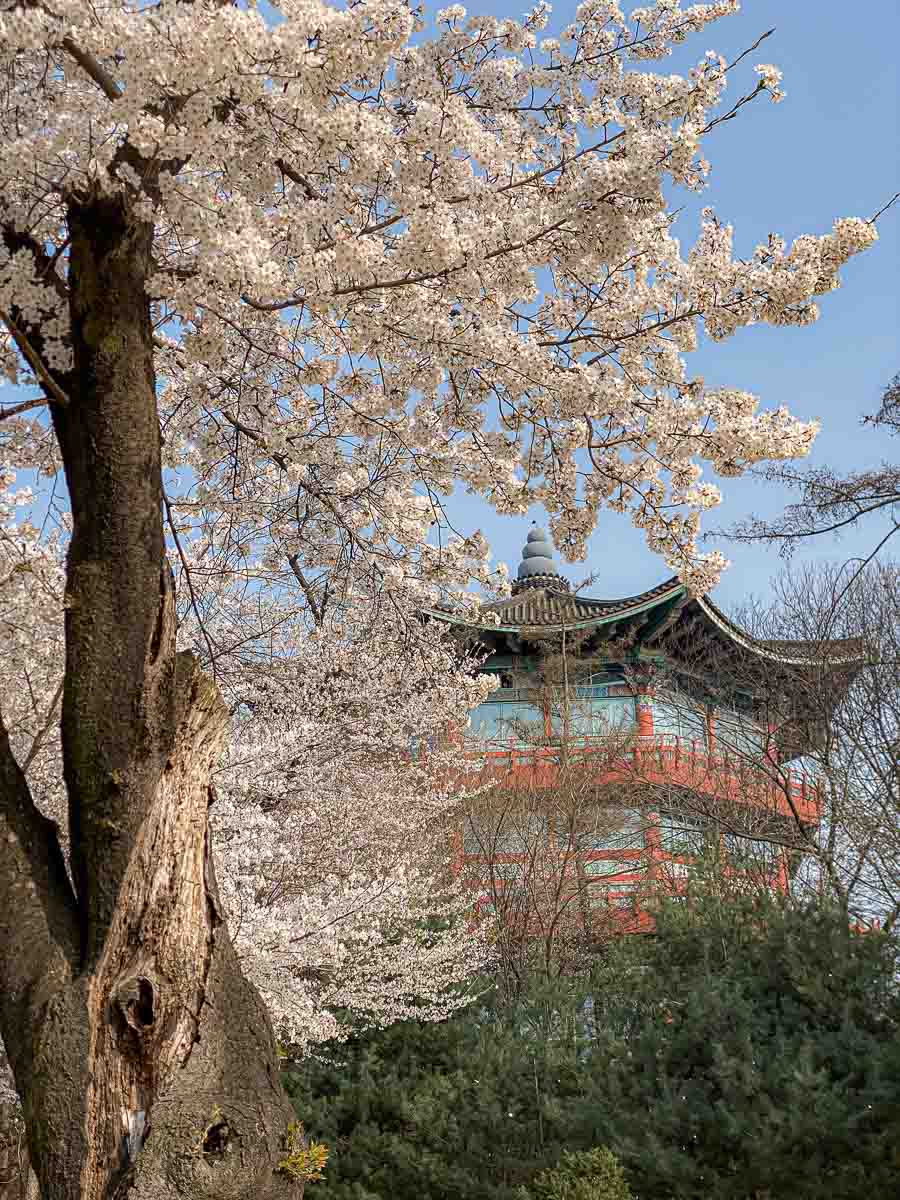
We visited from late March into early April during our first family trip. Some days required lightweight puffer jackets, while others felt warm and sunny. We also experienced rain and one surprisingly hot sunny afternoon while dressed in hanbok.
The highlight was seeing Seoul covered in cherry blossoms. Bloom timing changes every year, but late March and early April are common windows.
Pack layers and rain protection, and check both the weather and air-quality forecast.
Visiting Seoul with kids in summer
Summer is hot and humid, particularly from late June through August. Rain is also more common during the summer monsoon period.
Early June felt pleasant during our visit. By late June, walking, pushing a stroller, and navigating subway stations required noticeably more energy.
Summer still works because Seoul has endless air-conditioned options, including kids cafés, museums, aquariums, malls, arcades, and indoor amusement parks.
Plan outdoor sightseeing in the morning or evening. Use the hottest part of the day for lunch, shopping, indoor attractions or downtime. Carry water and leave more room for cooling breaks than you think you will need.
Visiting Seoul with kids in fall
Fall is one of the most appealing seasons for a family trip to Seoul.
September can remain warm, but temperatures generally cool through October and November. The season works well for visiting sights, hiking, and fall foliage.
I have not personally visited in fall, but October would be high on my list for a future trip because of the comfortable walking weather.
Check the annual dates for Chuseok before booking. The holiday follows a lunar calendar and can affect business hours, attractions and travel around South Korea.
Visiting Seoul with kids in winter
Winter is cold and dry, with freezing temperatures common during January and February.
Families need warm coats, footwear, hats and gloves for staying outside. Seoul’s indoor attractions make it possible to plan a fun trip in winter, despite the cold. Museums, malls, aquariums, kids cafés, food halls and spas can fill entire days.
Snow is possible, but do not assume the city will stay covered throughout your visit. Ice or slush can also make using a stroller more difficult.
Check the dates for Seollal, or Lunar New Year, because some attractions and businesses close or adjust their schedules.
What is the best month to visit Seoul with kids?
If weather and school schedules were not factors, I would look first at late April through May for mild spring weather, or October through early November for comfortable temperatures and fall color.
Choose late March or early April if cherry blossoms are a priority, but remain flexible as bloom dates vary every year.
No season guarantees perfect weather. Seoul’s advantage is that families can almost always switch between outdoor exploration and high-quality indoor activities.
Where To Stay in Seoul with Kids
Where you stay in Seoul matters because the city is enormous. Even with excellent public transportation, choosing a base near the places your family most wants to visit can save a surprising amount of time and energy.
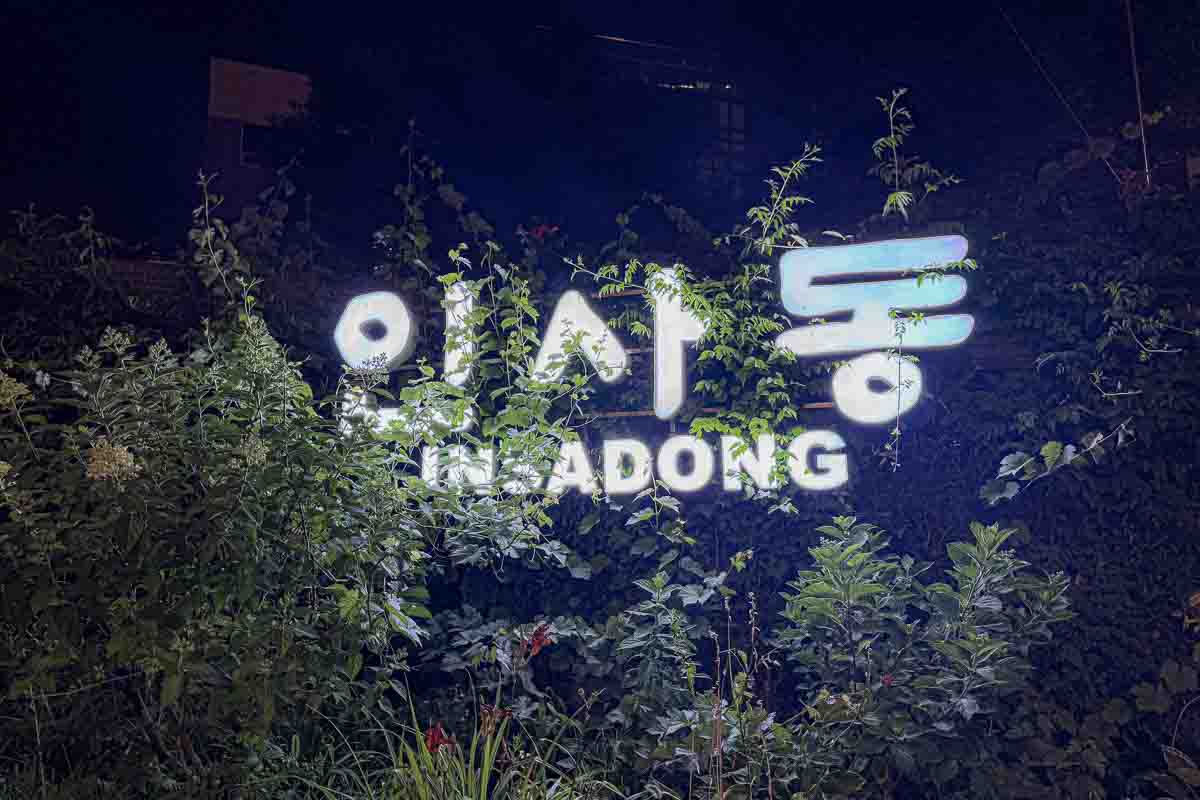
For most first-time families, Myeongdong is my top recommendation. It is central to many popular sights, well connected, and packed with restaurants, shopping, convenience stores, and easy evening activities. Insadong and Jongno are excellent alternatives if your family is especially interested in palaces, Bukchon, markets, and Seoul’s more traditional neighborhoods.
Other areas can make more sense for specific trips:
| Area | Consider It If… |
|---|---|
| Myeongdong | You want the easiest all-around base for a first visit |
| Insadong/Jongno | Historic and cultural Seoul is a priority |
| Jamsil | Lotte World and nearby kid attractions will take up a major part of your trip |
| Hongdae | You have older kids or teens who enjoy shopping, cafés, music, and a younger atmosphere |
| Gangnam | Your plans focus on COEX, luxury hotels, beauty treatments, or south Seoul |
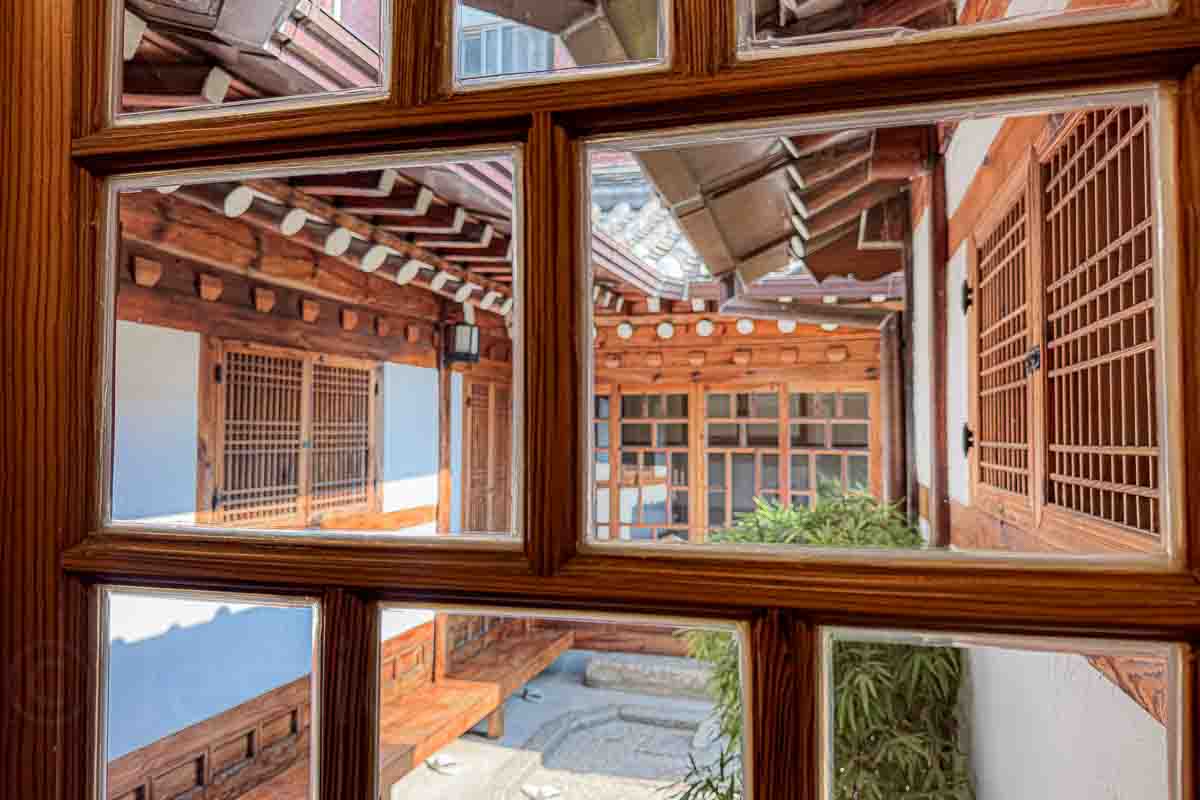
| Bukchon | A special traditional hanok stay is part of the experience |
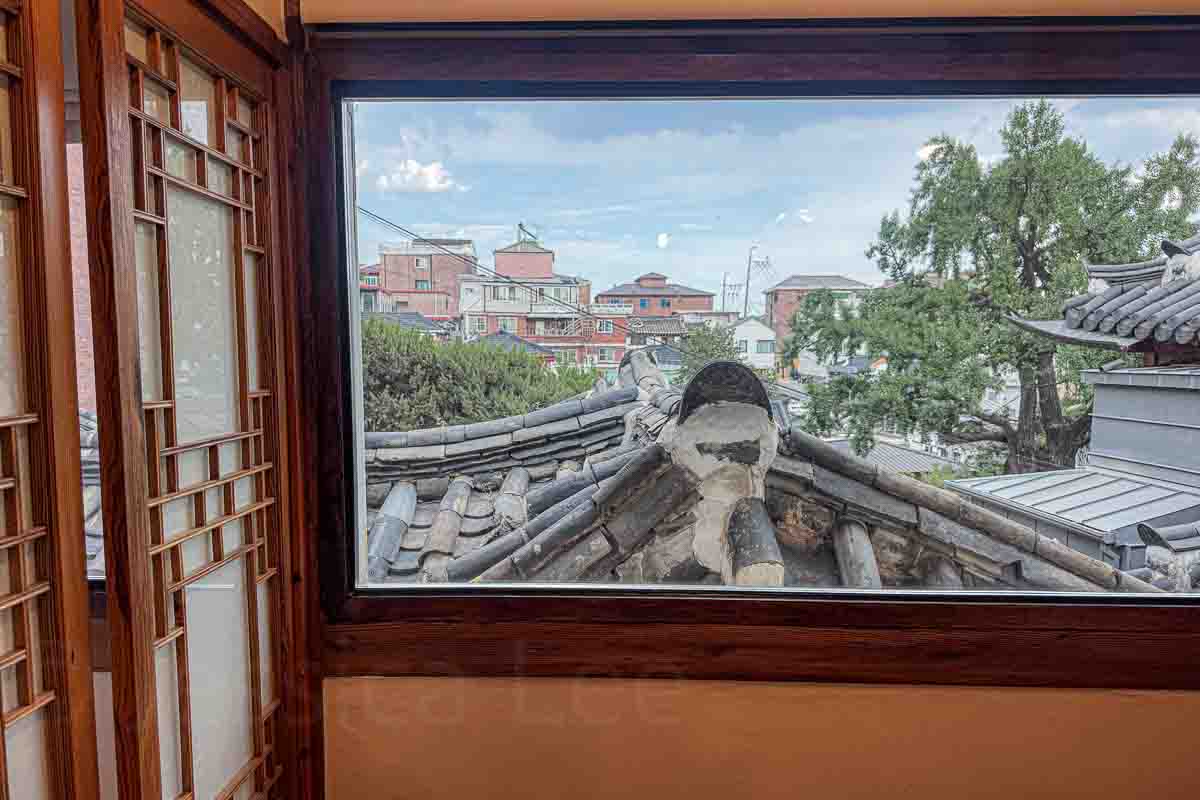
Across our three family trips, we’ve stayed in Dongdaemun, Myeongdong, and a private hanok in Bukchon. All three worked for different reasons, but after getting to know Seoul better, I would prioritize Myeongdong or Insadong/Jongno for most shorter first-time family trips.
Our accommodation needs have also changed as our kids have grown. We’ve used a residence-style hotel with a kitchenette, a 2-bedroom apartment hotel, and a private 3-bedroom hanok. Especially for a family of five, sometimes finding enough bedrooms, bathrooms, laundry, or kitchen space is just as important as choosing the perfect neighborhood.
For a detailed comparison of the best Seoul neighborhoods for families, including the pros and cons of each area, our three firsthand stays, family-friendly hotel recommendations, apartment and hanok options, and accommodations that can fit larger families, read my complete guide to where to stay in Seoul with kids.

How To Plan Your Seoul Itinerary with Kids
The best Seoul family itinerary is not the one that fits in the most attractions. It is the one that minimizes unnecessary travel and leaves enough energy for everyone to enjoy each stop.
Start with the experiences your family cares about most, group them by area, and build each day around one main priority.
Start with your family’s must-do experiences
Ask each family member what they would be most disappointed to miss.
Your list might include a palace and hanbok experience, Lotte World, a market, a kids café, K-pop shopping, a museum, Korean barbecue or time in Bukchon and Insadong.
Narrow the list to a few genuine priorities rather than treating every highly rated attraction as essential.
The trip does not need to revolve only around kid-specific entertainment. Seoul makes it easy to combine history, food, shopping and play.
Use these Seoul area groupings
Plot your priorities in Naver Map and look for natural clusters.
- Palaces, Bukchon and Insadong: Gyeongbokgung Palace, Changdeokgung Palace, hanbok rental, Bukchon, Insadong, Ssamziegil and Cafe Onion Anguk.
- Myeongdong, Namdaemun and Namsan: Myeongdong, Namdaemun Market, Namsangol Hanok Village, Namsan Park and N Seoul Tower.
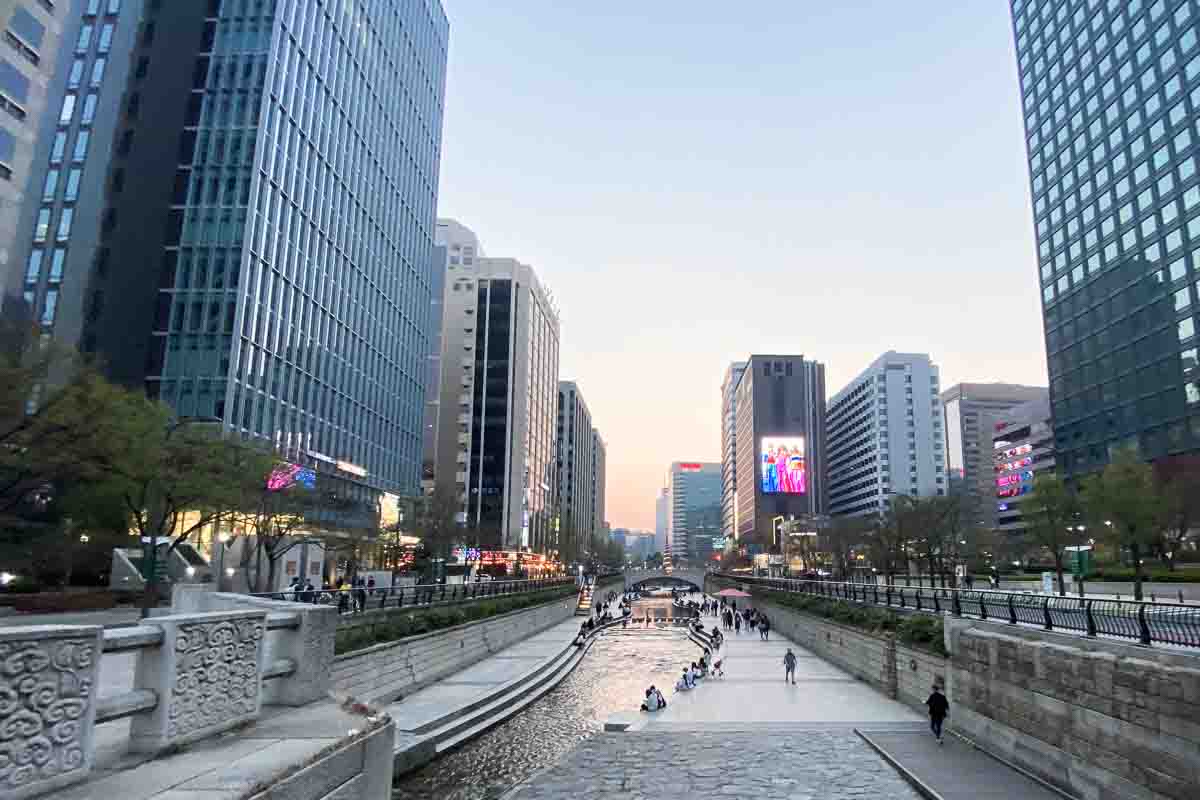
- Gwangjang and Dongdaemun: Gwangjang Market, Kalguksu Alley, Dongdaemun Design Plaza and Cheonggyecheon Stream.
- Gangnam and COEX: COEX Mall, Starfield Library, COEX Aquarium, Bongeunsa Temple, K-pop stops and kids cafés.
- Jamsil: Lotte World, KidZania, Lotte World Aquarium, Seoul Sky, Lotte World Mall and Seokchon Lake.
- Yongsan: National Museum of Korea, the Children’s Museum, I’Park Mall and indoor play or character shopping.
- Yeouido: Yeouido Hangang Park, seasonal flowers and The Hyundai Seoul.
You will not necessarily visit everything in a cluster. The goal is to keep nearby options available rather than crossing the city again and again.
Choose one anchor activity
Assign one main attraction or experience to each day, then add one nearby secondary stop and keep everything else flexible.
An anchor could be a palace and hanbok reservation, Lotte World, a large museum, a kids café, a market food experience, or COEX Aquarium.
Some days will naturally hold more. Beginning with one priority prevents the day from feeling unsuccessful when transportation, meals or child energy take longer than expected.
Mix cultural and kid-focused activities
Some of our best days combined something the adults wanted with something especially appealing to the children.
Try pairings such as a palace followed by a kids café, a market lunch followed by indoor play, or a museum followed by shopping or an arcade.
Children may enjoy cultural experiences more than parents expect. My kids loved wearing hanbok, exploring our traditional house, and wandering through lively markets.
Use kid-focused activities to balance the itinerary, not replace everything distinctive about Seoul.
Check opening days and backup options
Before assigning activities to specific days, verify weekly closures, reservations, palace schedules (many are closed on Mondays), market hours, holiday changes, and seasonal events.
Avoid making reservations in distant areas on the same day.
For every outdoor-heavy day, identify one indoor option nearby. This works better than saving one generic rainy day at the end of the trip.
Leave time unplanned
Seoul is filled with food stands, cafés, arcades, shops and character displays that may catch your family’s attention.
Your children may become more excited about a fruit juice, hotteok stand or unexpected character store than the next formal attraction. Leave enough room to stop without immediately falling behind schedule.
Learn from our overpacked day
On one trip, we attempted to combine Namsangol Hanok Village, I’Park Mall in Yongsan, Yeouido Hangang Park and Namdaemun Market Food Street.
None was unreasonable on its own. Together, they required too many transfers and too much time moving across different areas.
A better plan would pair Namsangol with Myeongdong or Namdaemun, save Yongsan for a museum and mall day, and combine Yeouido Hangang Park with The Hyundai Seoul.
The goal is not to complete Seoul. It is to experience the city without exhausting your family while rushing to the next side of it.
Best Things To Do in Seoul with Kids
Seoul offers far more family activities than you can fit into one trip.
The city combines palaces, markets and traditional neighborhoods with kids cafés, museums, amusement parks, shopping and character attractions.
For the complete list, read my guide to the 50+ best things to do in Seoul with kids. Below are the experiences I would prioritize on a first visit.
Experience traditional Seoul
A palace belongs on almost every first-time itinerary.
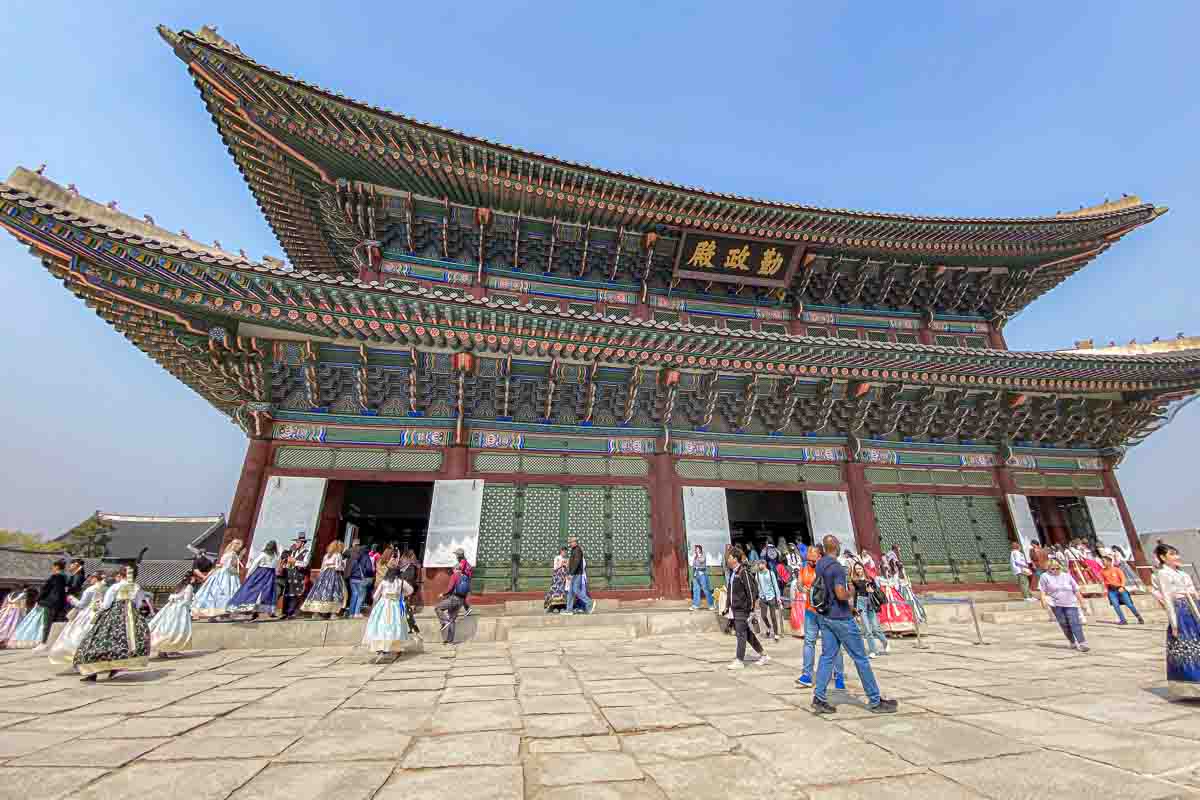
Gyeongbokgung Palace is the most famous choice, while Changdeokgung Palace is another beautiful option. Choose one rather than trying to thoroughly explore several in a day.
Pair the palace with hanbok rental to make the experience more interactive. Wearing hanbok was one of my kids’ favorite activities, plus it gets you into a palace for free.
Bukchon and Insadong can extend the day with hanok architecture, shops, crafts, snacks, and Ssamziegil. Visit hilly Bukchon before everyone becomes tired, then move toward flatter Insadong.
Visit a Korean kids café
Kids cafés are one of the most useful and distinctly Korean family experiences in Seoul.
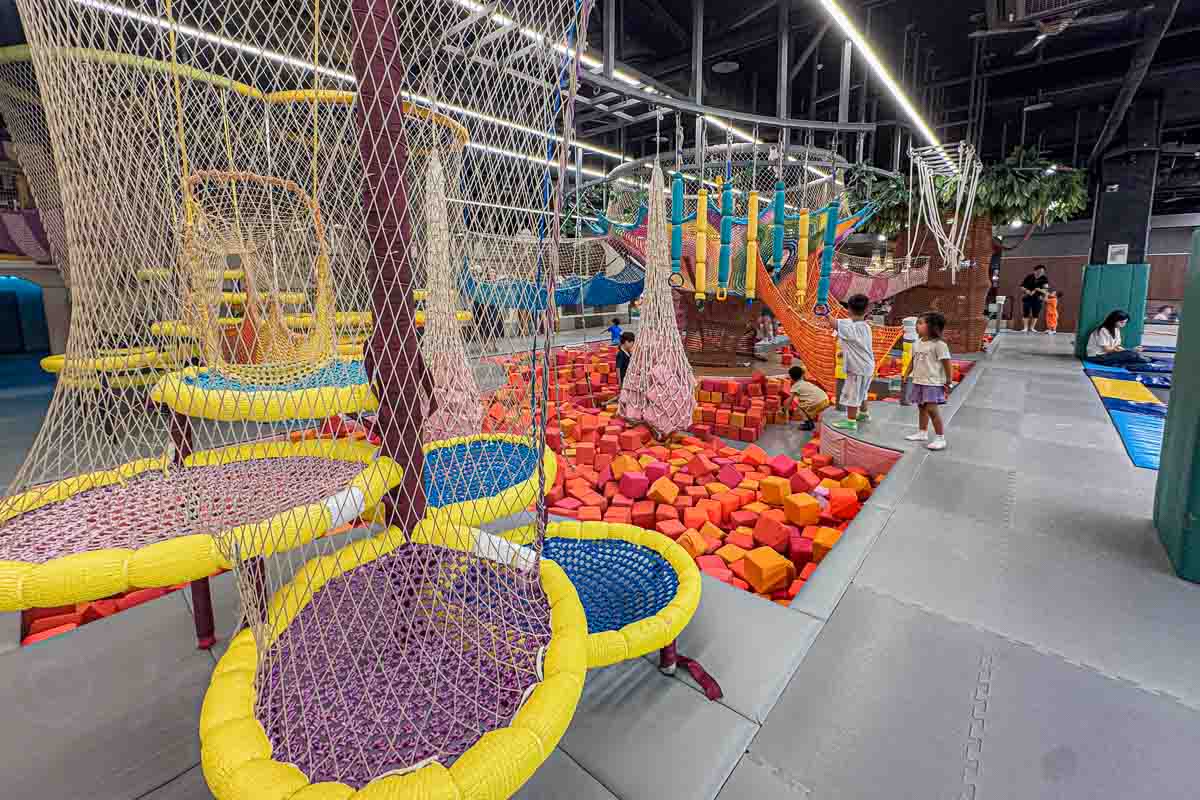
They range from neighborhood play spaces to elaborate themed venues with climbing equipment, pretend play, crafts and cafés for adults.
They give children room to move while parents take a break from sightseeing, and they work well during rain, heat or cold.
Check age recommendations, reservations and sock requirements before visiting.
Explore a market or food street
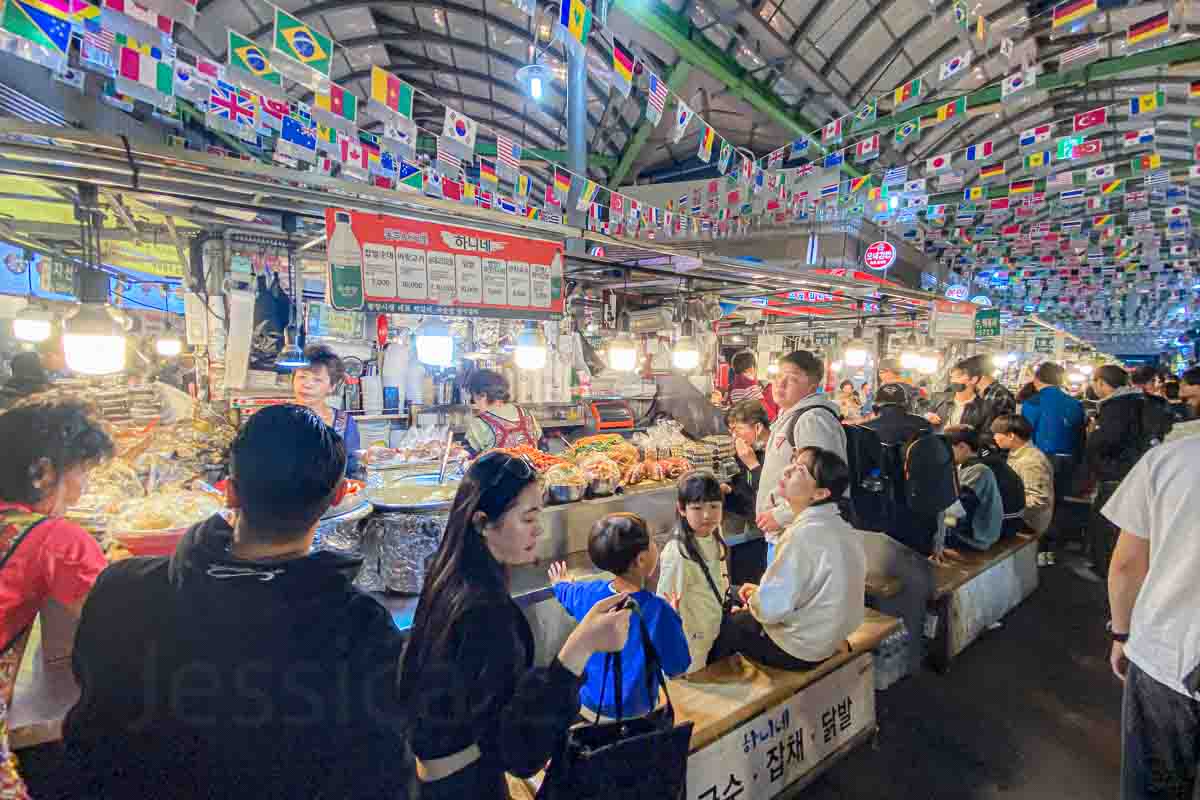
Markets allow families to experience Seoul through food, sounds and everyday local life.
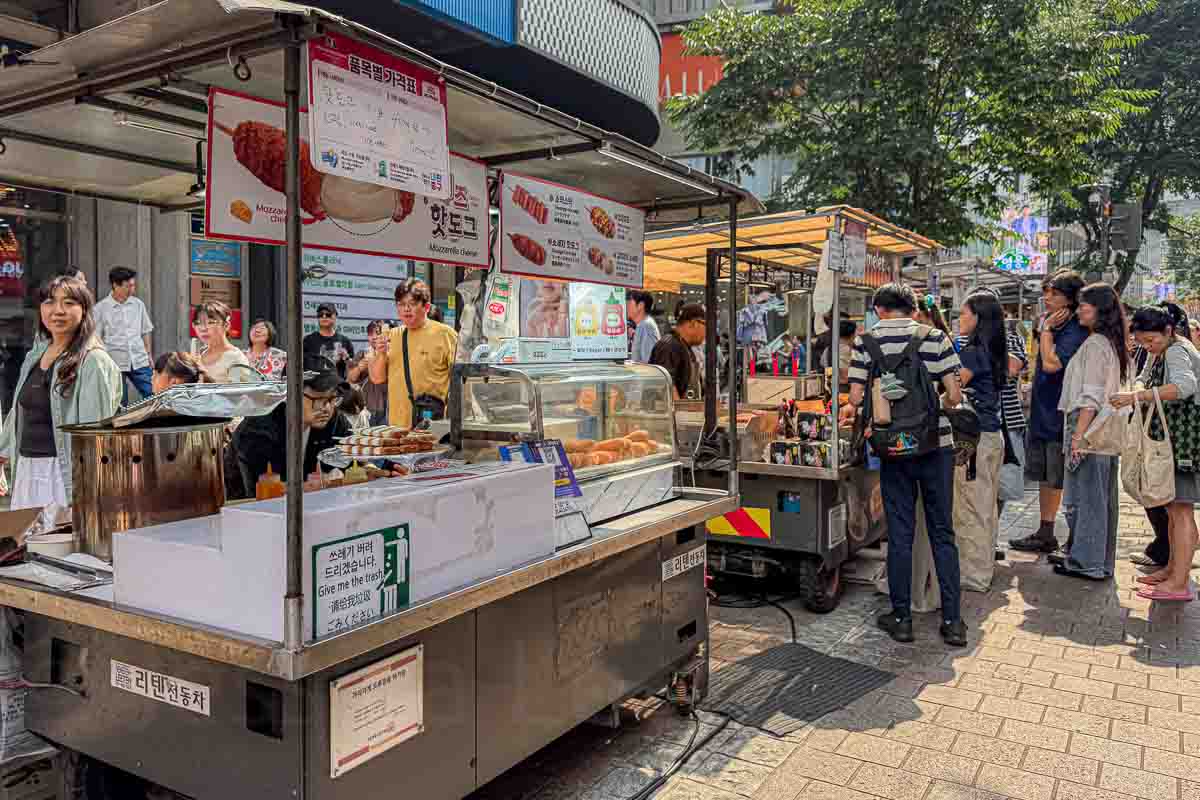
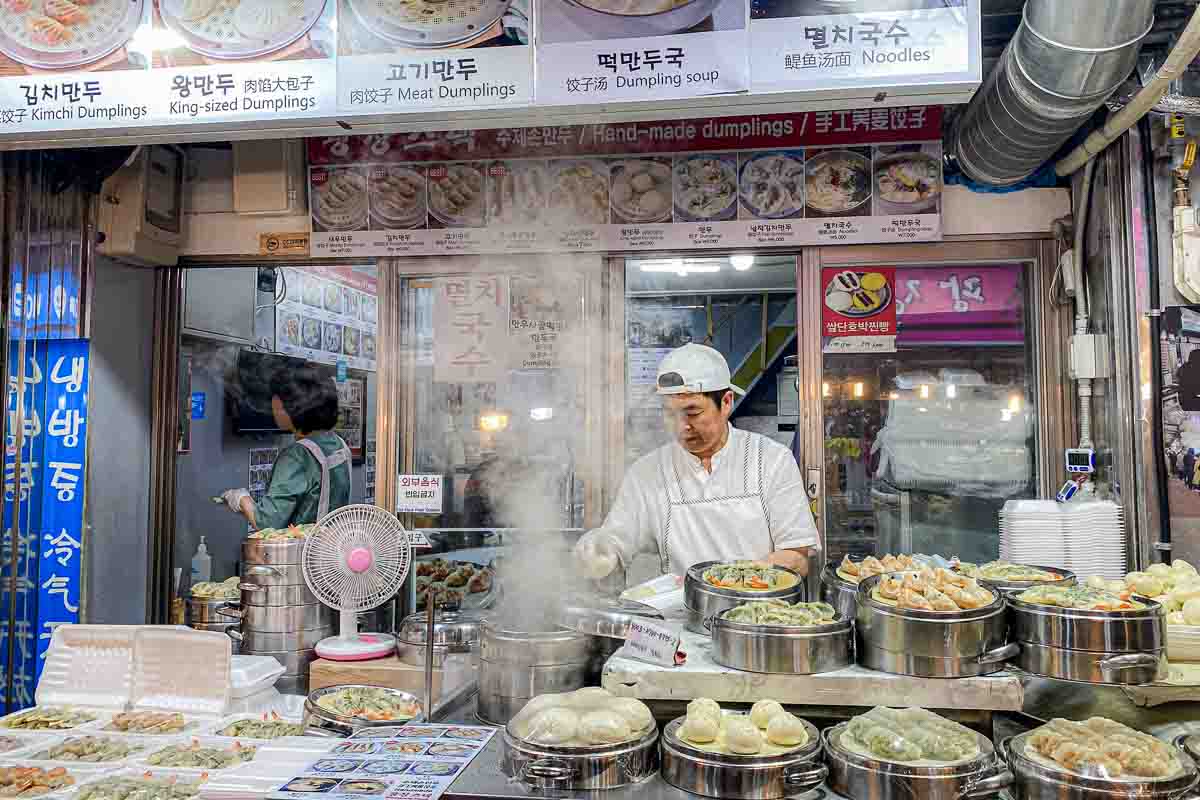
Popular choices include Gwangjang Market, Namdaemun Market and Myeongdong Night Market. Gwangjang’s Kalguksu Alley was a favorite for the adults, while the kids loved fruit, juices and hotteok.
Markets can become busy, and arriving earlier may help avoid the heaviest crowds.
Choose one major family attraction
Several attractions can take most or all of the day, including:
- Lotte World
- KidZania Seoul
- Seoul Children’s Museum
- Seoul Children’s Grand Park
- COEX Aquarium
- Lotte World Aquarium
- National children’s and science museums
Choose based on your children’s ages and interests rather than trying to visit every famous family attraction.

Discover modern Seoul
COEX and Jamsil offer a different side of the city.
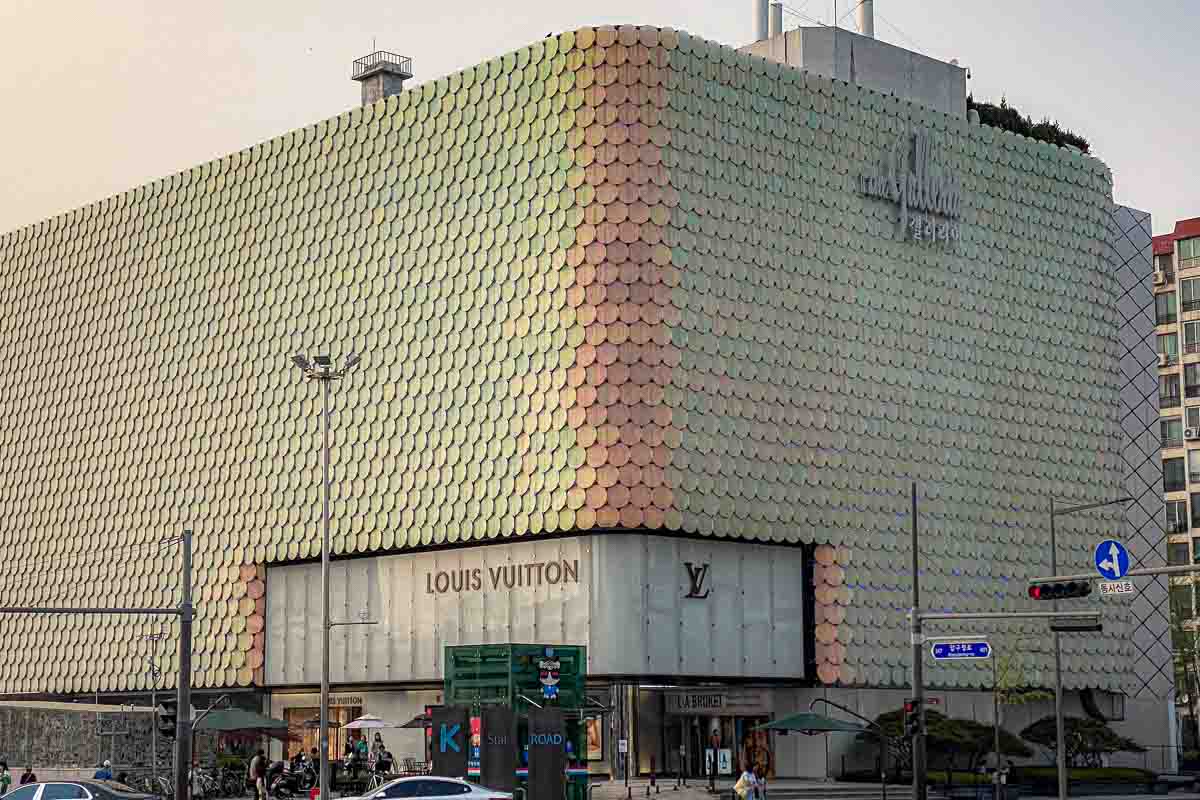
At COEX, families can see Starfield Library, visit the aquarium, shop, eat and cross the street to Bongeunsa Temple.
Jamsil includes Lotte World, KidZania, Seoul Sky, the aquarium, Lotte World Mall and Seokchon Lake. Choose one major ticketed attraction and treat everything else as optional.

Follow your children’s interests
Depending on their ages, children may be excited by Pororo, Tayo, Pinkfong, Baby Shark, K-pop, arcades, character stores, beauty, fashion or pop-up experiences.
Adding one or two experiences connected to their interests can help them feel invested in the trip.
Include something the adults want to do
A family trip should not become a continuous rotation of playgrounds and children’s entertainment.
For us, adult favorites included palaces, Cafe Onion, Gwangjang Market, Kalguksu Alley, Insadong, Ssamziegil, Korean spa experiences and Myeongdong Night Market.
The best things to do with children are not always attractions created specifically for them. Build a trip that introduces everyone to Korean history, food and culture while leaving room for play.
For many more ideas organized by activity type, continue to my guide to the 50+ best things to do in Seoul with kids.

Getting Around Seoul with Kids
Seoul’s public transportation is efficient, affordable, and easier to use than it may first appear.
Most families can explore using the subway, walking, and occasional taxis or rideshares. You do not need to rent a car for a typical city trip.
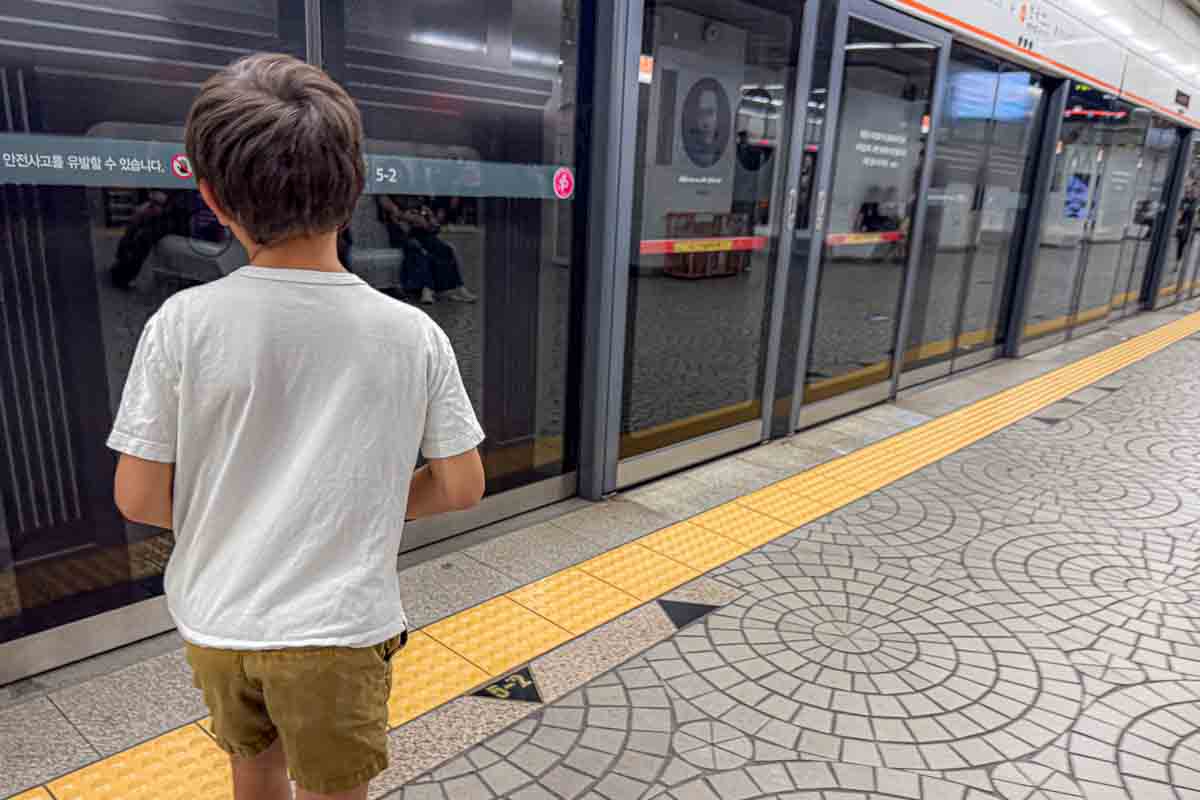
The subway was one of the things I found easier than expected. Stations have clear signage, trains are clean, and the network connects nearly every major area families want to visit.
The challenge is accounting for how much walking and transferring happens before and after the train ride.
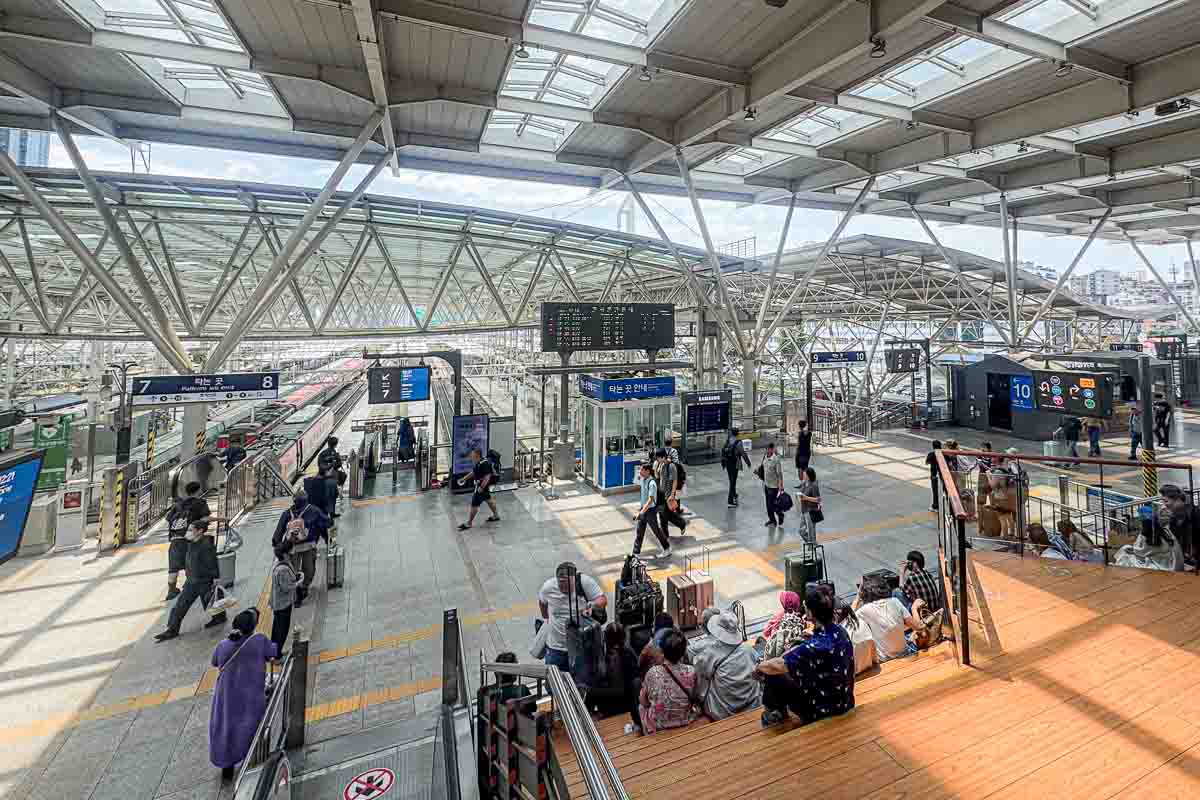
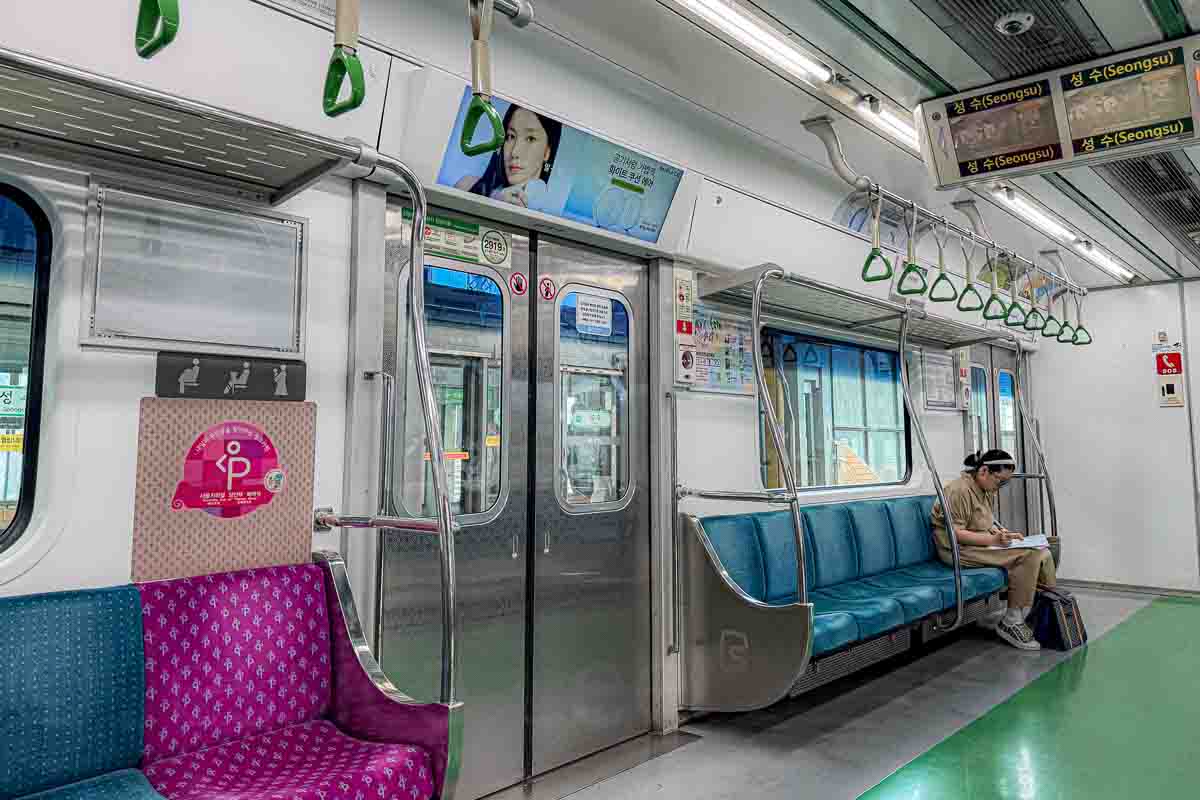
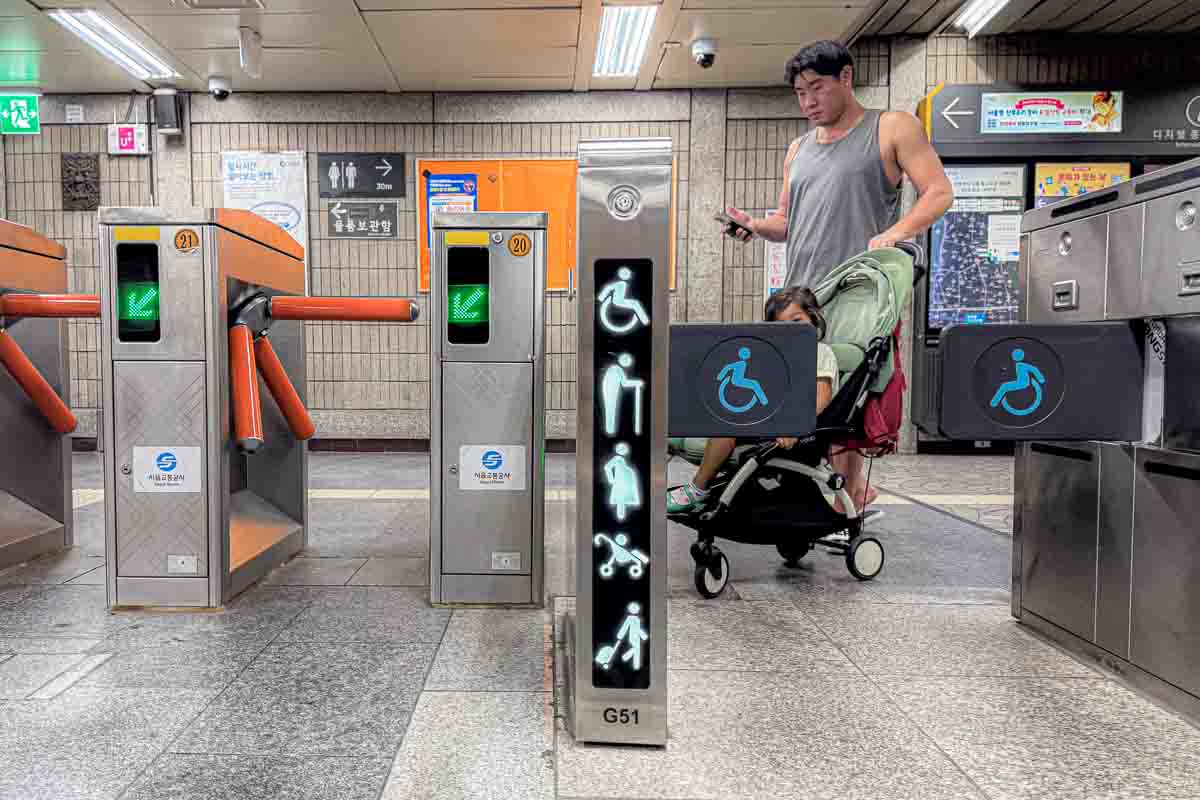
Using the Seoul subway with kids
Signs and announcements are available in English, and the system felt straightforward once we understood the lines and transfers.
Still, some stations are large. A journey may include walking to the entrance, traveling several levels underground, crossing a long corridor, waiting for an elevator, and finding the correct exit.
The train ride may be only 15 minutes while the full door-to-door trip takes much longer.
Avoid the busiest commuting periods when possible, especially with a stroller, several young children, or luggage.
T-Money cards for families
T-money is a reloadable transportation card used for the subway, buses, and other transportation.
Each paying traveler generally needs a card. During our most recent trip, our two oldest children used child T-money cards so they could receive the applicable fare.
Cards are commonly sold and reloaded at convenience stores and stations. We had to show our children’s passports so a convenience store employee could verify their age and register the child’s birthdate with their card.
Age thresholds and procedures can change, so confirm the current rules shortly before traveling.
Use Naver Map
Naver Map was much more reliable than Google Maps for subway routes, walking directions, exits, travel times and business locations.
You may occasionally need to search with the Korean name of a place. Copying it from an official website, booking confirmation, or Papago can help.
Check the recommended station exit. The correct exit can save a long walk, while the wrong one may put your family on the opposite side of a major road.
When to take a taxi or rideshare
A taxi can be worth the cost when it saves your family significant time or energy.
Consider one when several transfers are required, a child is exhausted, the weather is extreme, you have luggage, or you need to reach a timed reservation.
We used Uber several times. Regular vehicles sometimes worked for our family of five, while larger (e.g., Uber Premier Van) categories were more useful with luggage.
When we left our Bukchon hanok, we waited approximately 45 minutes for a larger Uber to take us to Seoul Station. We were standing on a steep hill in hot weather with three children and all our luggage.
Next time, I would reserve transportation ahead when traveling with luggage and a train or flight to catch.
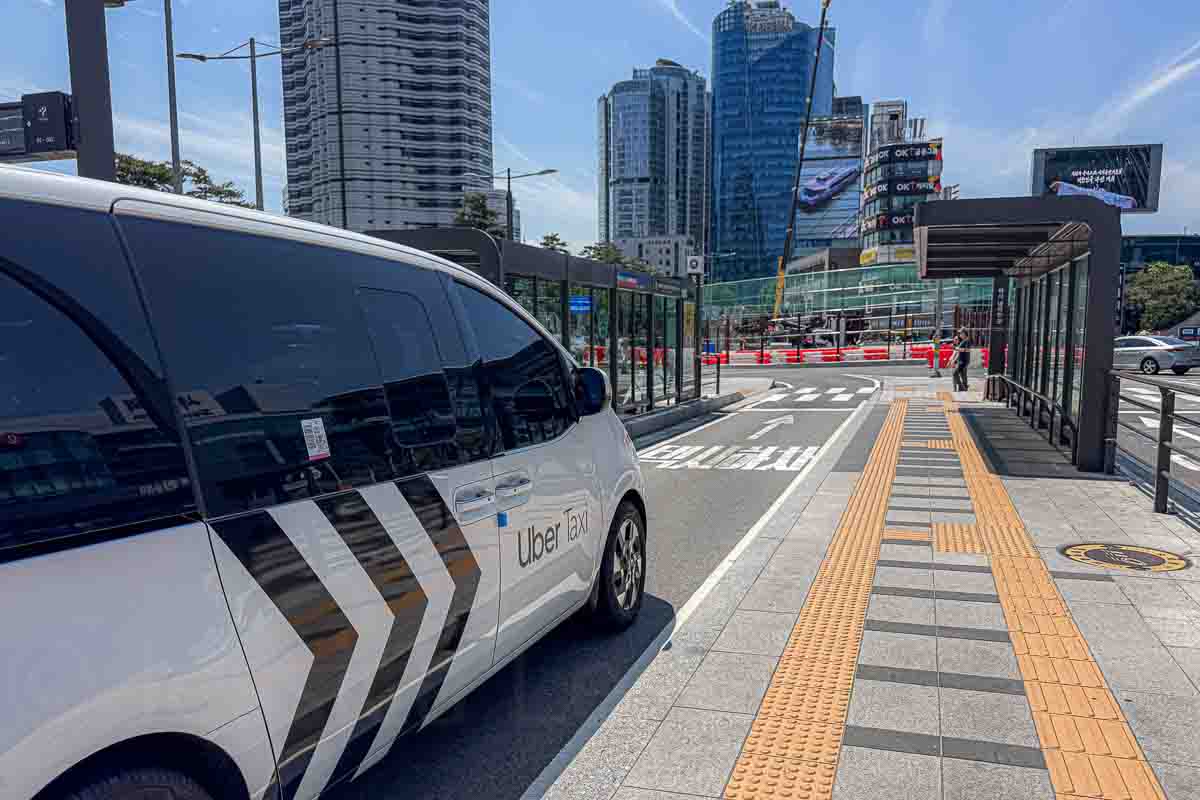
Can a family of five take taxis in Seoul?
Standard cars may not officially have enough passenger capacity for a family of five, especially with luggage.
Look for larger rideshare categories, van taxis, hotel-arranged vehicles, or private transfers. When timing matters, book in advance rather than hoping everyone can squeeze into a standard car.
Getting from Incheon Airport to Seoul
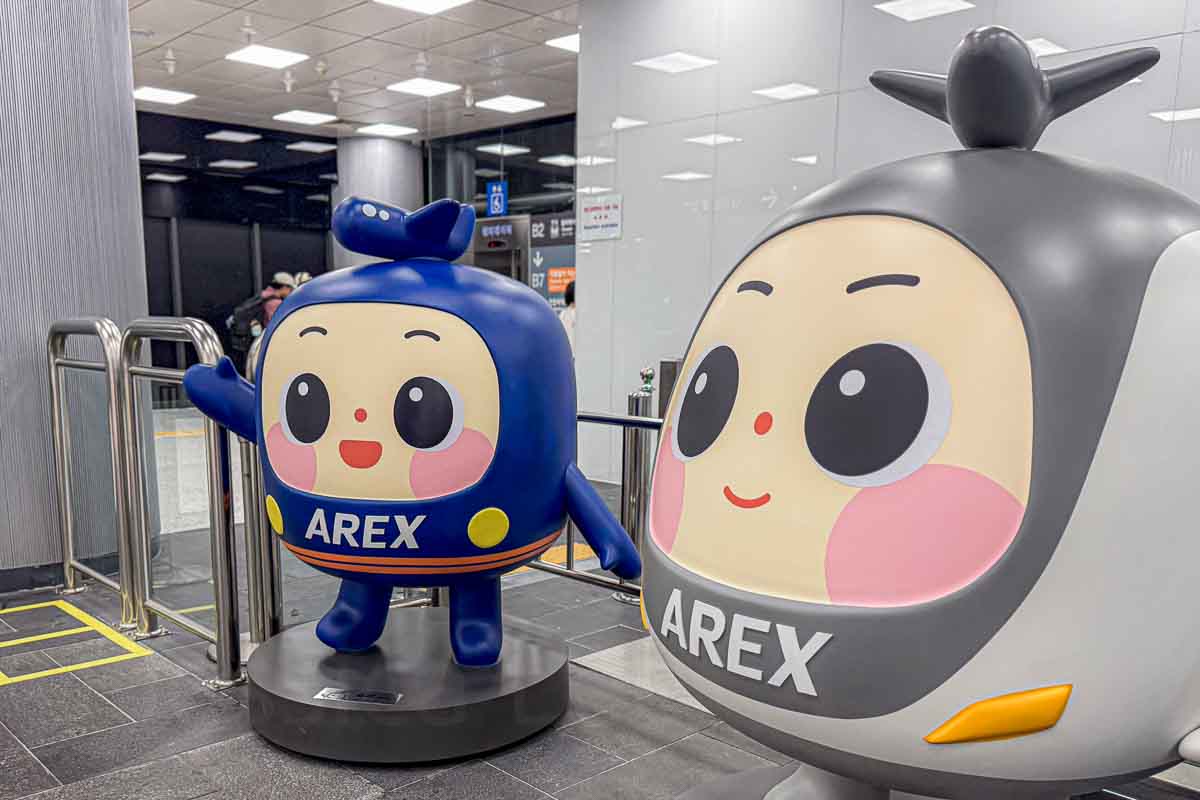
Families can choose among AREX, an airport limousine bus, a taxi, or a private transfer.
AREX can be efficient if your accommodations are near Seoul Station or an easy connection. On our first trip, we took AREX, transferred to the subway, and walked to our Dongdaemun hotel. It worked, but the full journey felt like a lot with three children, luggage, and a stroller.
On another trip, we took AREX to Seoul Station and used Uber for the final stretch. Reducing the number of transfers made arrival easier.
Airport buses may work better when one stops close to your accommodations. A taxi or private transfer is the simplest option for late arrivals, larger families, young children, or several suitcases.
Compare the full door-to-door journey, not only the ticket price.
Traveling to Seoul from other Korean cities
The KTX high-speed train makes it relatively easy to reach Seoul from elsewhere in South Korea.
During our most recent trip, we traveled from Busan to Seoul by KTX, then took an Uber from Seoul Station to Bukchon.
Book tickets early during busy periods and leave extra time at Seoul Station because it is large and pickup locations can be confusing.

Do you need a rental car?
Most families do not need a car in Seoul.
Driving adds traffic, parking, navigation, and car-seat logistics. The subway reaches most major attractions, and taxis can fill the gaps.
For a first Seoul family trip, a car will usually create more work than convenience.
Planning your own trip with kids?
I share one email a month with real-world family travel strategies, packing tips, and destination breakdowns that make planning easier.
Join below.
Is Seoul Stroller-Friendly?
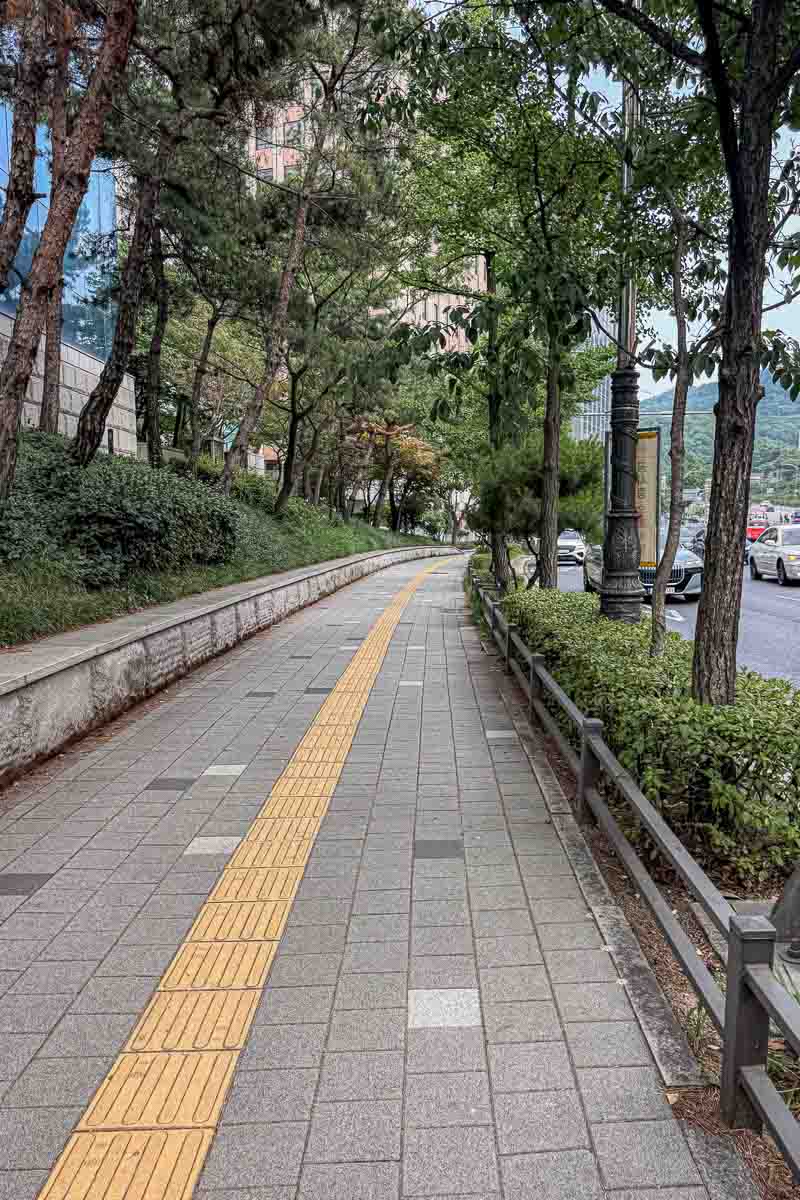
Seoul is stroller-friendly enough for most families, especially with a lightweight travel stroller.
A lot of the city has wide sidewalks, pedestrian-only areas, elevators, and family-friendly…stroller-friendly indoor spaces. We used our compact YOYO stroller on all three trips and were glad we brought it.
Still, Seoul is not perfectly smooth or without steps in some places. You’ll find it easier to manage if you’re able to carry your stroller occasionally when necessary.
Why a lightweight stroller works well
Families do a lot of walking in Seoul, even when using the subway.
A stroller helps with naps, tired legs, jet lag, hot weather, and carrying stuff like snacks or extra layers.
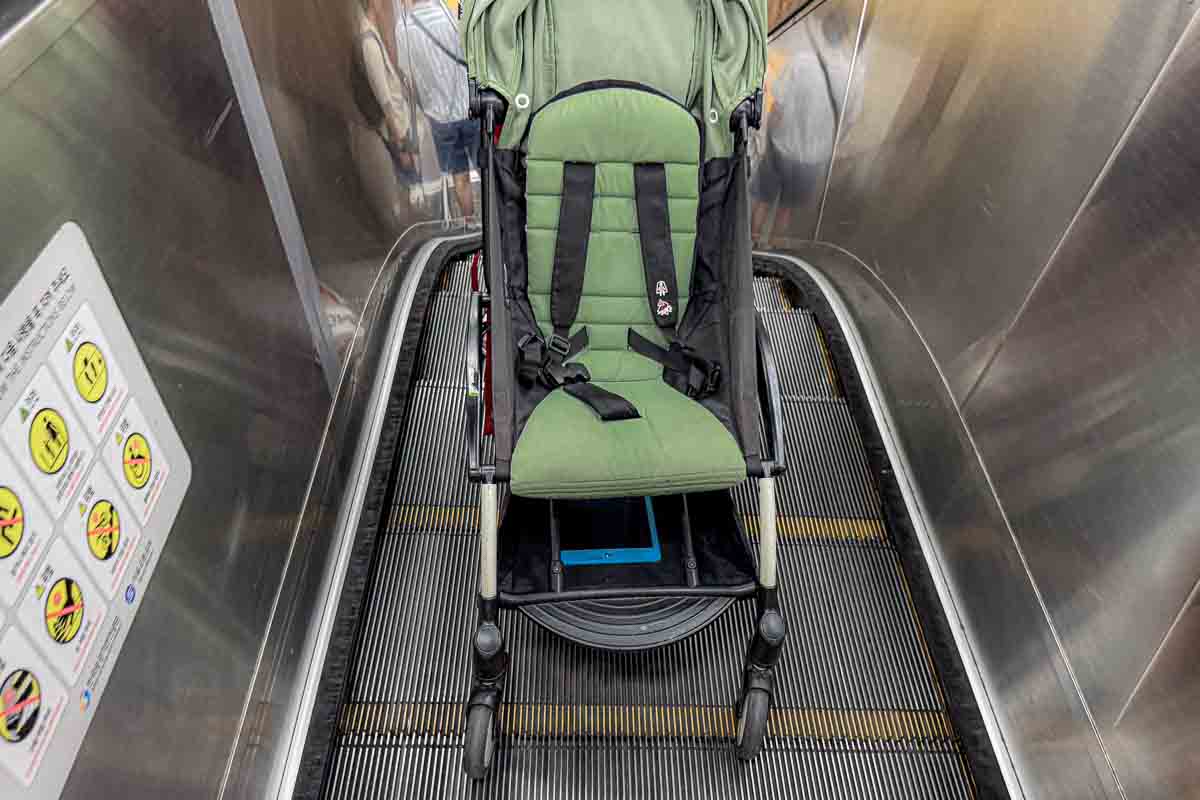
Our YOYO worked well because it was compact, easy to fold, and manageable on stairs. A large full-size stroller may become more frustrating in small elevators, markets, taxis, or stations with extra stairs.
Where strollers become difficult
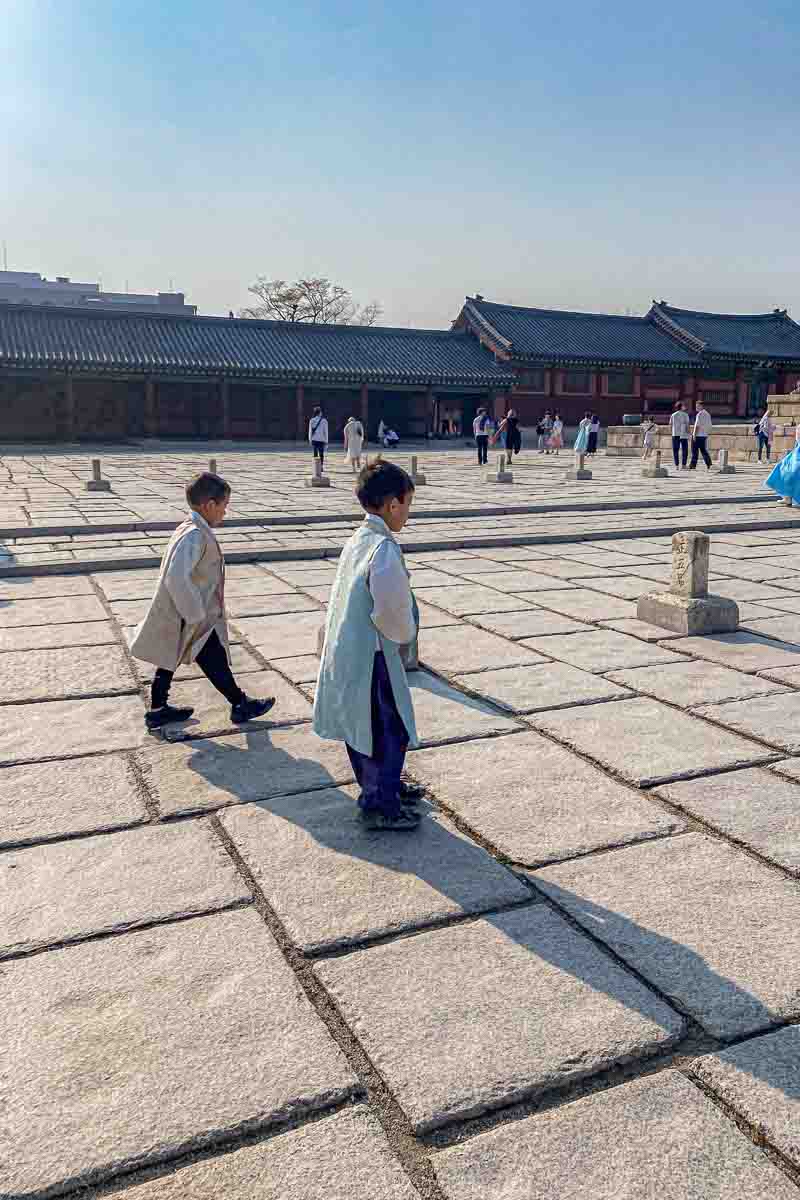
Expect more effort in Bukchon, palace grounds, gravel paths, steep neighborhood streets, deep subway stations, and crowded market areas.
Palace grounds were often the most awkward. We sometimes parked the stroller off to the side rather than forcing it over gravel or uneven stone.
Many subway stations have elevators, but they may not be near the most convenient entrance or exit. With a compact stroller, carrying it down a flight of stairs was sometimes easier than searching for the elevator.
Families using a heavier stroller or traveling with one adult may experience this differently.
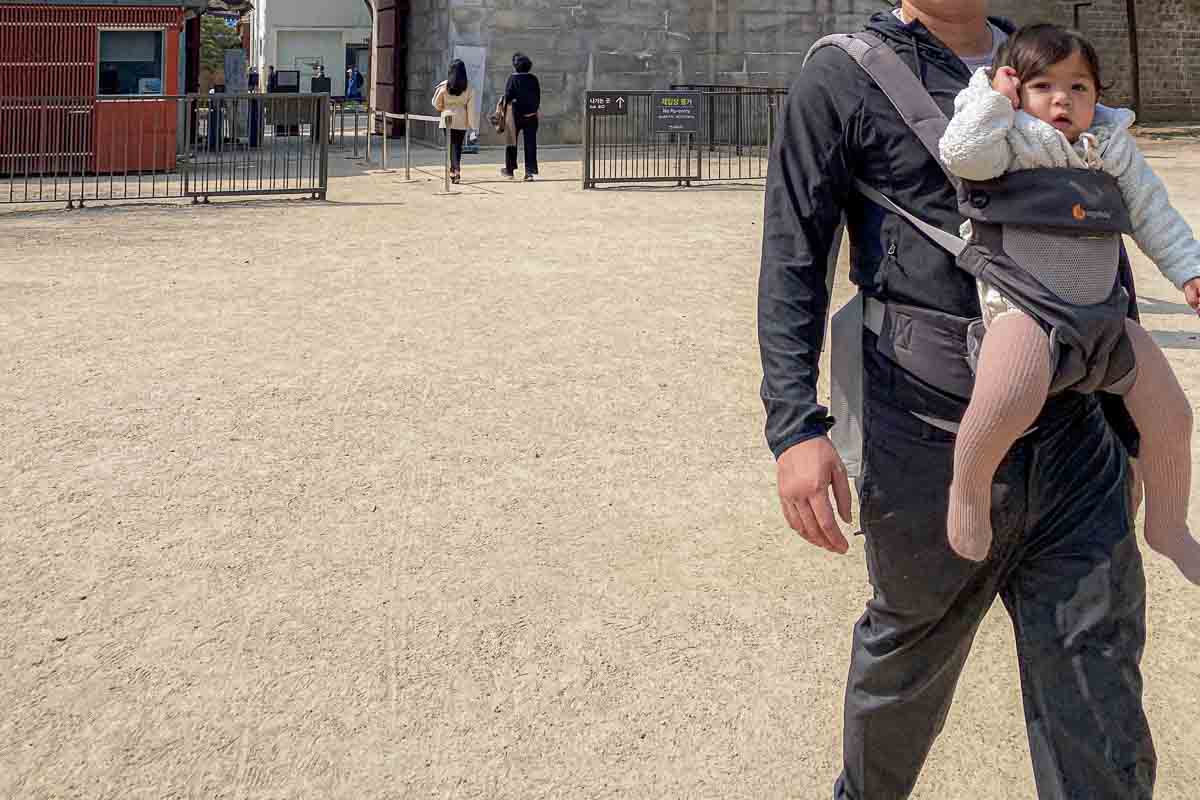
Should you bring a stroller or carrier?
For babies and younger toddlers, both can be useful.
Use the stroller for long walks, naps, malls, museums, and carrying supplies. Use the carrier for palace grounds, Bukchon hills, stairs, and places where wheels become awkward.
We brought an Ergobaby carrier on our first trip when our youngest was 15 months old. It gave us another option when the stroller was inconvenient.
Seoul is not perfectly stroller-friendly, but it is still doable for the most part and worth it. Bring a compact model you can lift without much trouble and expect occasional hills, stairs, and elevator detours.
Eating in Seoul with Kids
Eating in Seoul with kids is easier than many parents expect.
Korean cuisine includes many spicy dishes, but not everything is spicy. Families can also rely on noodle shops, soup restaurants, bakeries, markets, food halls and convenience stores when children need something simple or familiar. And even plenty of Western and International restaurants if you really must.
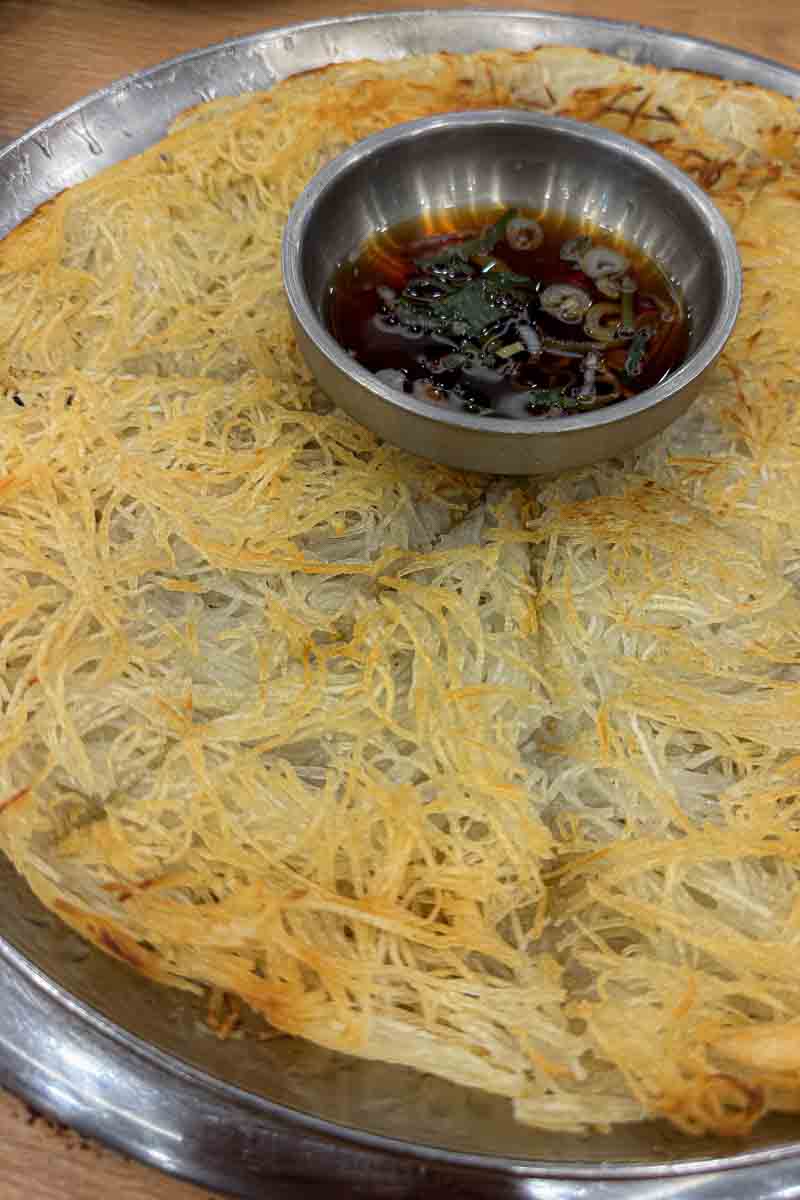
Across our trips, our children reliably ate Korean barbecue meats, rice, Korean fried chicken, kalguksu, galbi-tang, potato pancakes, bakery breads, fruit and hotteok.
Korean food is not all spicy
Some of our family members enjoy spicy food, and others avoid it. Everyone found plenty to eat.
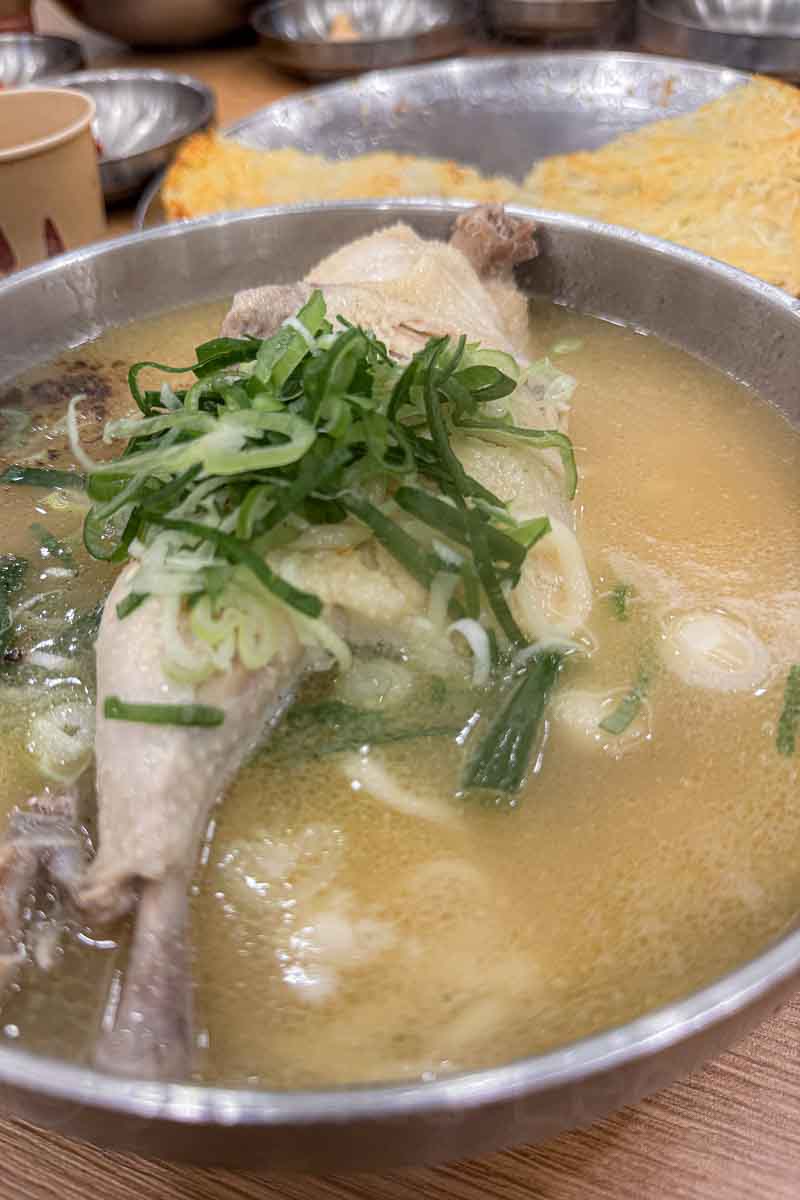
Mild options include Korean barbecue meats, seafood, rice, kalguksu (noodles), galbi-tang (beef short rib soup), mandu (dumplings), fried chicken, potato pancakes, eggs, bread, hotteok (street food dessert), and fruit.
Most restaurants offer spicy sauces, kimchi or other side dishes, but not all menu items themselves are spicy. Leave them untouched or use a translation app to ask whether a dish contains chili.
Is Korean barbecue good with kids?
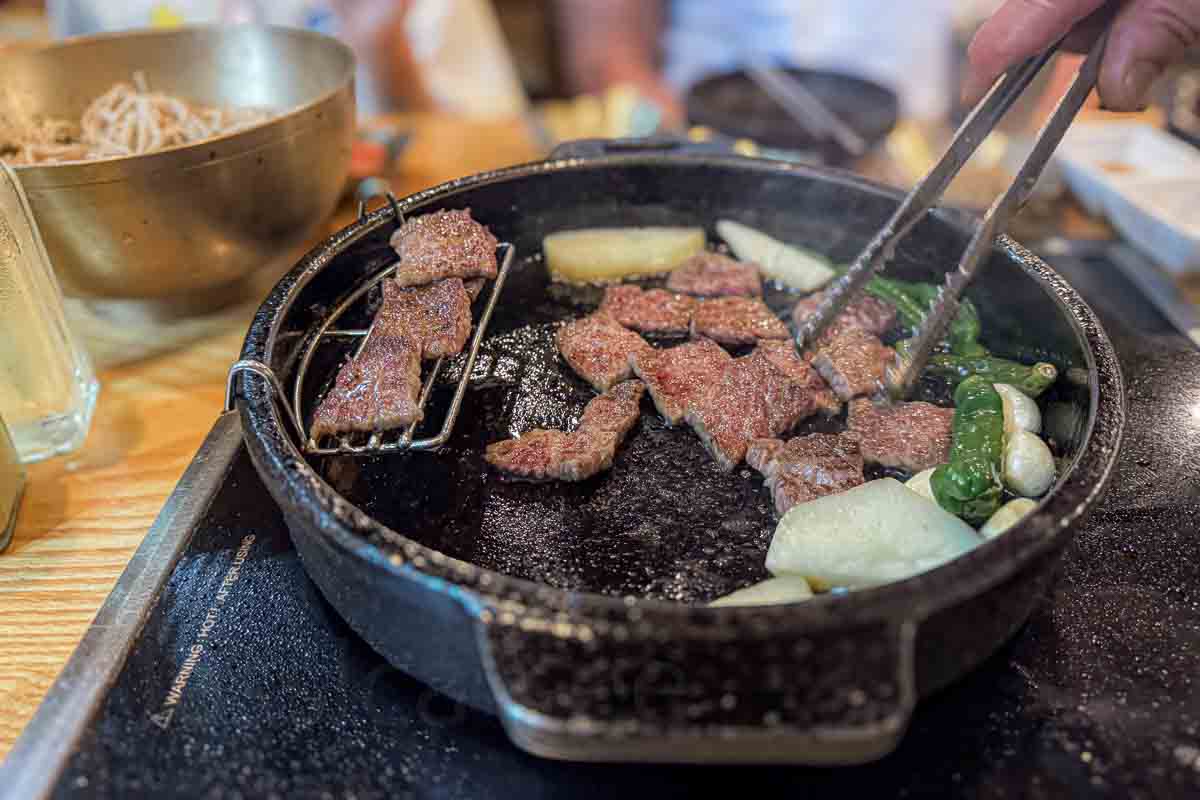
Korean barbecue can be a fun family meal. Children can eat grilled meat and rice while adults try different cuts, sauces, and side dishes.
We visited barbecue restaurants regularly and always felt comfortable bringing our children.
The main concern is the hot grill in the center of the table. It felt manageable with older children and more intimidating during the grabby baby and young-toddler stage.
With little ones, consider the highchair position, distance from the grill and whether an adult can sit between the child and the hot surface.
Some restaurants will grill the meats for you, and others leave it to you to lead.
Do Seoul restaurants have highchairs?
We saw highchairs regularly, particularly in larger restaurants, malls and family-oriented spaces. However, they are not guaranteed everywhere.
Small restaurants, market stalls and older establishments may have stools, benches, floor seating or limited room.
Check photos and recent reviews when a highchair is essential. Families with younger children may also prefer larger restaurants or carry a compact portable seat.

What can picky eaters eat?
Selective eaters can usually find rice, grilled meat, fried chicken, dumplings, noodles, soup, eggs, bread, pastries, fruit, fries, and familiar snacks.
Do not assume a child will reject every Korean meal. Many dishes use simple ingredients even when the completed meal looks unfamiliar.
Markets and food halls are especially helpful because everyone can choose different foods without committing to one menu.
Easy places to eat as a family
Noodle and soup restaurants were some of the easiest meals for us. Kalguksu is a mild hand-cut noodle soup, while galbi-tang is a beef short-rib soup commonly served with rice.
Markets are useful for sampling smaller portions. Department-store food halls and malls offer multiple cuisines, seating, restrooms and family facilities.
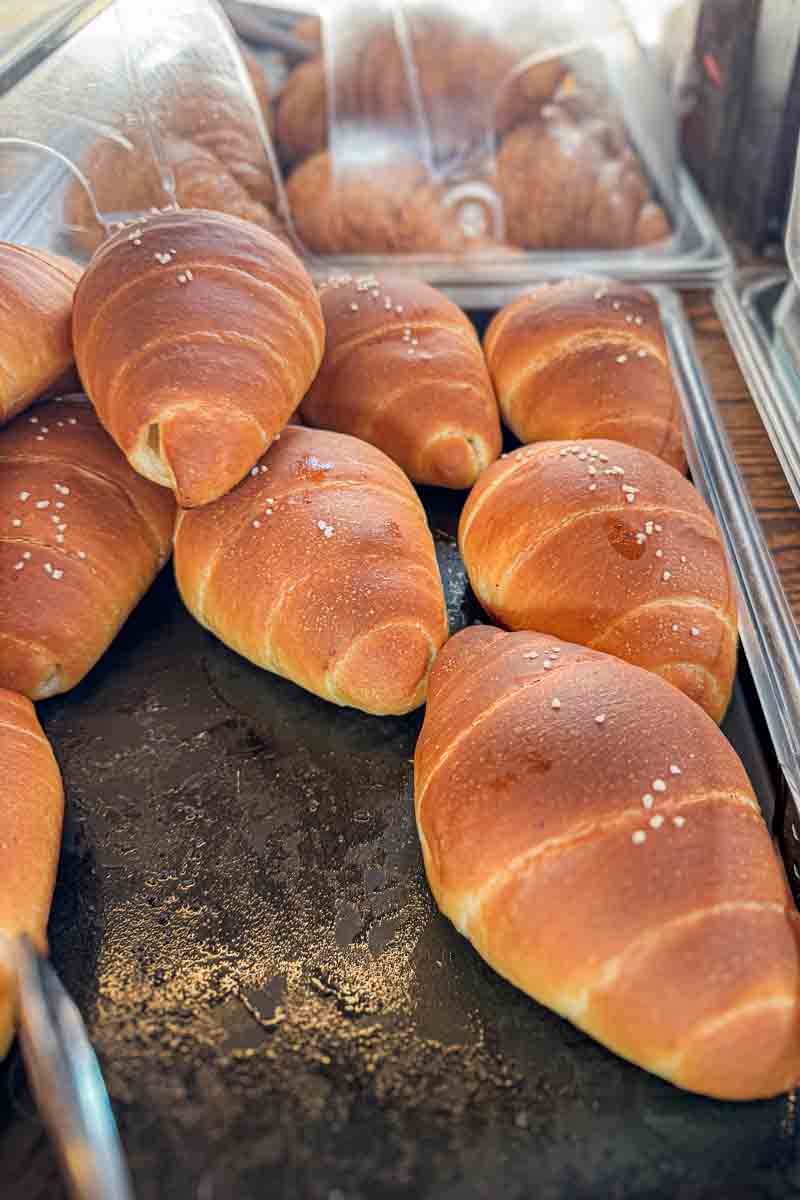
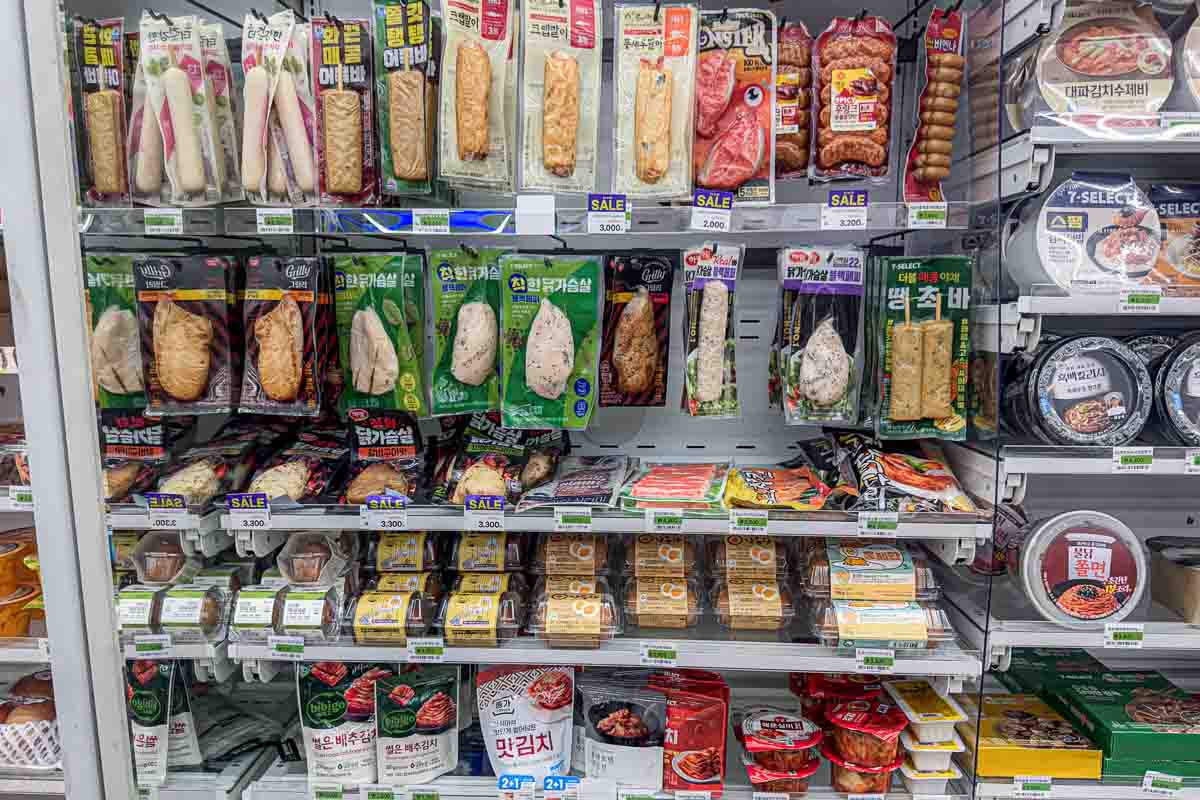
Seoul’s bakeries were excellent for breakfast, midday snacks and food to carry for later. Convenience stores were useful for drinks, rice balls, sandwiches, snacks and quick backup meals. The selection felt slightly less extensive than in Japan, but still plentiful.
Are there “no kids zones” in Seoul?
So-called “no kids zones” exist in South Korea, but we did not personally encounter one during our visits.
We ate at barbecue restaurants, noodle shops, soup restaurants, markets, mall eateries and cafés without an issue.
Small cafés or adult-oriented spaces may have restrictions, so check signs, reservation pages and recent reviews when visiting a specific establishment.
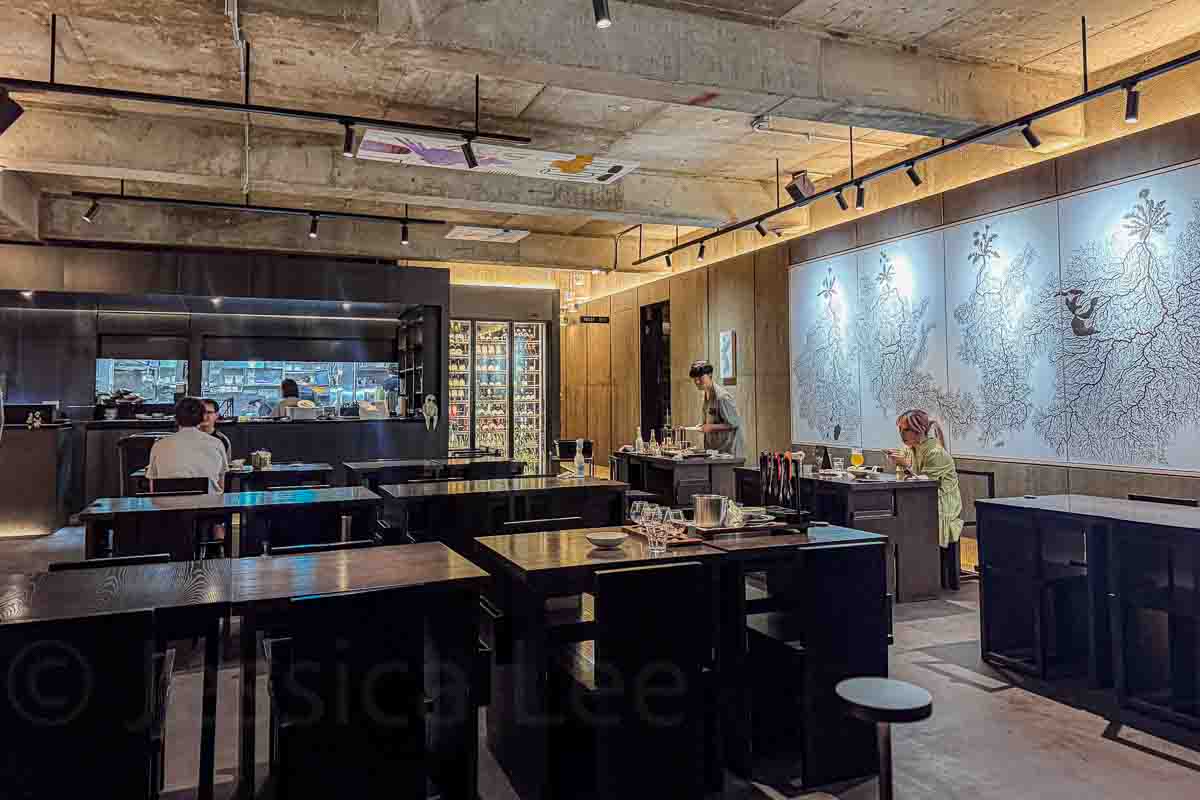
Plan meals around everyone’s energy
The most famous restaurant is not always the best choice after a long sightseeing day while traveling with kids.
Consider scheduling special meals at lunch, when children are less tired, and restaurants may be quieter. Keep flexible dinner choices near your accommodations for the evenings when everyone is done.
Mix markets, local restaurants and special food experiences with easy meals that keep everyone comfortable.
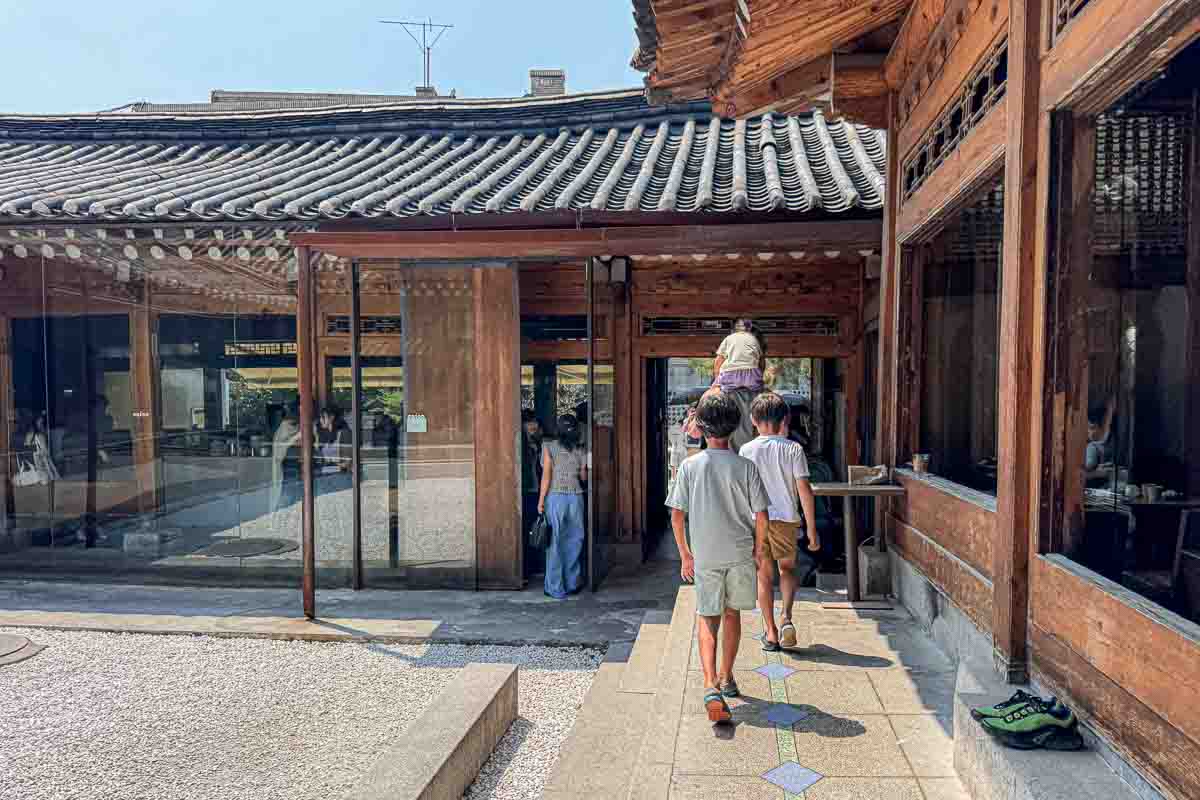
See More of Seoul by Doing Less
Seoul is big, exciting and packed with more family experiences than you could fit into one trip.
You do not need to visit every palace, explore every famous neighborhood or cross the city for every highly rated attraction. Choose a well-located place to stay, group your plans by area and leave enough space for meals, rest and the unexpected things your kids want to explore.
After three trips to Seoul with my three children, I can confidently say that it is an underrated and rewarding family destination.
Not every part will feel effortless. Hills, subway transfers, weather and Seoul’s sheer size can wear everyone down. But with realistic expectations and a thoughtful plan, your family can experience the history, food, culture and modern energy that make Seoul so special.
Keep planning your Seoul family trip
Ready to choose your activities? Browse my complete guide to the 50+ best things to do in Seoul with kids, including palaces, kids cafés, museums, markets, parks, character attractions and indoor activities.
Continuing your trip beyond Seoul? Read my complete Busan with kids travel guide for help planning accommodations, transportation, beaches, family attractions and a realistic stay in South Korea’s coastal city.
Preparing for the long journey is part of the trip too. These guides can help your family arrive feeling more ready:
- How To Survive a Long-Haul Flight with Kids
- How To Help Kids with Jet Lag
- Long-Haul Flight with a Toddler
- How To Master a Long-Haul Flight with a Baby
Save this Seoul family travel guide while you plan, and remember that you do not need to complete the city to have an incredible trip.