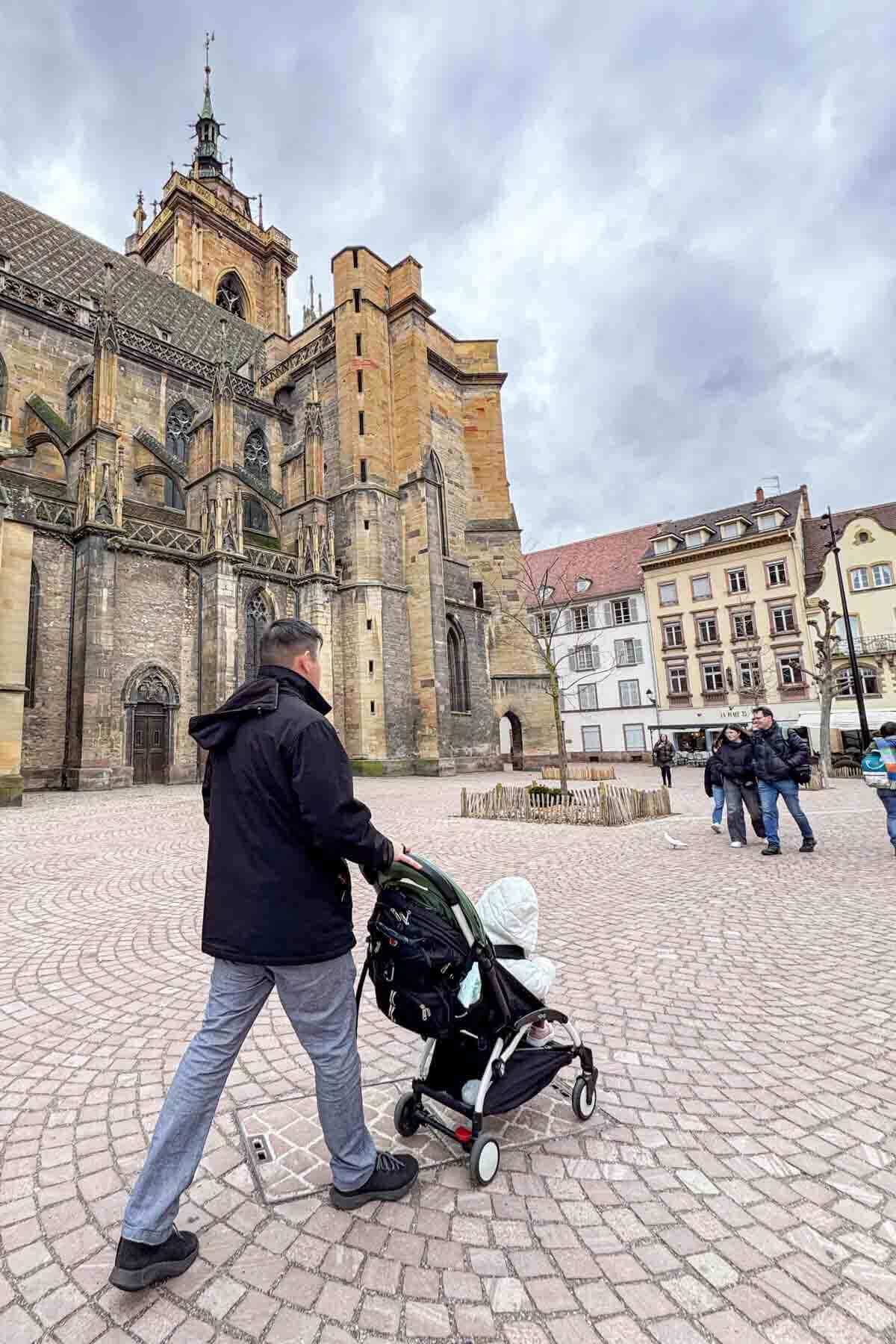
How to Pack Light with a Baby Without Bringing Your Whole House
Babies use a lot of stuff at home. That does not mean you need to pack all of it for vacation.
After traveling extensively with all three of my kids as babies, I have packed for everything from quick domestic trips to long-haul flights and multi-month international travel across Asia, Europe, Latin America, and beyond. Those trips taught me that packing light with a baby is less about bringing as little as possible and more about bringing the right things.
For this article, I am focusing specifically on the baby stage, roughly birth through 12 months old. Packing changes quickly once babies become toddlers, more mobile and more opinionated about what comes along.
You do not need to recreate your nursery, feeding setup, and entire daily routine somewhere else. Pack what will genuinely make your trip easier, buy or rent what makes sense at your destination, and be critical about everything you are bringing “just in case.”
My broader family travel packing guide explains how I pack for the whole family. Here, I want to focus specifically on the decisions that make packing for travel with a baby easier.
Affiliate Disclosure: Familee Travel contains affiliate links and is a member of the Amazon Associates Program, we may earn commissions from qualifying purchases at no additional cost to you.
Jump to: Don’t pack the whole setup, Right here right now, Deciding what’s worth it, Consumables, Carrying it all, Baby travel gear, Staying organized, Baby clothes and laundry, Travel day packing, Airline baggage rules, FAQs
In a rush? Pin this or email it to yourself to read later! (Psst! Use the buttons at the very top or bottom of this post for ease.)

You Don’t Need to Recreate Home When You Travel
One of the easiest ways to overpack for a baby is trying to recreate your entire setup from home.
Maybe your baby sleeps in a certain crib, uses the same white noise machine every night, eats in a particular high chair, and follows a carefully timed routine. Once you finally figure out a setup that works, it makes sense to wonder how you will survive without all of it.
But even if you could recreate everything one-for-one, the trip would still be different.
Your baby is sleeping in a new room, seeing new things, hearing different sounds, and moving through a completely different day. Their routine may shift even if you bring the exact same crib, sleep sack, and sound machine.
That does not mean familiar things are pointless. If one particular item makes an enormous difference for your baby or your own sanity, bring it. Rent it. Prioritize it.
If renting the exact type of crib your baby sleeps beautifully in is what helps everyone rest, great. The point is not to prove that your baby can go without it.
The point is to avoid assuming that you need to reproduce everything.
Decide which familiar pieces genuinely matter to your family and let the rest be different.
For more on what I prioritize specifically for sleep, I go deeper in my Baby Sleep While Traveling guide.
Pack for Your Baby, at This Stage, on This Trip
There is no single right way to pack for travel with a baby because babies and trips vary so much.
Start with the baby you have right now.
Are they 3 months old and exclusively breastfeeding? Bottle feeding? Sitting independently and starting solids? Crawling everywhere? Pulling up on furniture?
Then think through the actual trip.
Are you:
- flying or driving?
- staying in one place or changing hotels every few nights?
- cooking meals or eating mostly at restaurants?
- walking and using public transportation or renting a car?
- staying somewhere with laundry?
- visiting a major city or somewhere remote?
- staying in a hotel, resort, or vacation rental?
- heading somewhere where baby supplies will be easy to replace?
These details matter far more than a generic rule about whether you should bring a particular piece of baby gear.
Where you stay can change your baby packing strategy too. Once we started traveling with kids, I found myself looking much more carefully at things like extra space, separate sleeping areas, kitchens, and laundry. If those features would make your trip easier, I have a separate guide to finding hotels and accommodations with enough space for a family, including options beyond a standard 1-room hotel setup.
Take a high chair.
If you are staying in a rental house with a 10-month-old and cooking most meals there, having a high chair may make a huge difference. I did baby-led weaning with my kids, so at certain stages having a baby properly positioned at the table was genuinely useful.
Take that same baby on a city trip where you are eating nearly every meal in restaurants with high chairs available, and hauling your own suddenly makes much less sense.
Instead of asking, “Do I need a high chair when traveling with a baby?”
Ask, “How much will I actually use a high chair on this particular trip?”
Also think about how easy it will be to replace something once you arrive.
I actually find major international cities reassuring in this respect. Tokyo may be halfway around the world from California, but it is also a massive metropolitan city where I know I can find diapers, baby food, clothing, pharmacies, medical care, and just about anything I might want if necessary.
Packing for a remote destination is a different calculation.
Before bringing an extra supply “just in case,” consider whether you are heading somewhere with pharmacies and supermarkets everywhere or somewhere that will take significant effort to restock.
Distance from home does not always matter as much as access once you arrive.

Decide What Actually Deserves Space in Your Luggage
A generic packing list can tell you everything you might bring. The harder part is deciding which of those things actually deserve to come.
When I am debating an extra item, I ask myself a few questions:
- How much am I realistically going to use it?
- How difficult would it be to replace or go without?
- Will it make enough of a difference to justify carrying it?
I also think about whether the item should be packed, bought, borrowed, rented, or skipped.
| Option | When It Makes Sense |
|---|---|
| Pack | It is important to your baby, hard to replace or needed during the journey. |
| Buy | It is a bulky consumable that is easy to find at your destination. |
| Borrow | Your hotel, rental, family or friends already have something that works. |
| Rent | You want a larger piece of gear at your destination without transporting it yourself. |
| Skip | You could comfortably manage the trip without it. |
Hotels and vacation rentals may provide cribs, high chairs, or other baby items. Some particularly family-friendly resorts offer even more. Ask what is available before assuming you need to pack it.
Renting can also be a great middle ground. I have personally used BabyQuip and had a good experience renting baby gear instead of transporting everything myself.
Then there is the skip category.
Something can be useful every single day at home and still be completely unnecessary for one week away.
Before packing another nice-to-have, ask:
What actually happens if I don’t bring this?
If the answer is, “I can buy one if I really need it,” or, “I can do things slightly differently for a few days,” I am much more comfortable leaving it home.
Don’t Automatically Pack Every Baby Consumable for the Whole Trip
Diapers are one of the easiest examples.
They are light, but they take up a surprising amount of room. On many trips, I packed enough diapers for the travel day, extras for delays and the beginning of the trip, then bought more once I arrived.
I have bought diapers, baby food, pouches, and other basic baby supplies all over the world. I even found diapers near Machu Picchu.
Babies live everywhere.
Of course, that does not mean your exact preferred brand will be available everywhere. If your baby relies on a specific formula, medically necessary product, allergy-safe food, or something they will not accept a substitute for, I would be much more cautious.
I sometimes handled nighttime diapers differently too. During stages when I relied on a specific heavier-duty overnight diaper, it was easier to pack seven or eight from home than buy a large package of an unfamiliar version somewhere else.
Trip length matters too.
For a weekend away, buying a new package of diapers might create more hassle than it saves. On a multi-week trip, packing every diaper from home quickly becomes ridiculous.
There is also one benefit to packing consumables: they disappear as you use them, creating extra room in your suitcase for the trip home.
There is no universal answer. Think about how much space the item takes, how much you need, and how easily you can replace it.
For formula, bottles, solids, and other feeding logistics, see my Feeding Baby While Traveling guide.

Think About Who Will Carry Everything
This is one of the biggest differences between packing for a baby and packing for an older child.
Your baby cannot pull their suitcase.
They cannot carry their diaper bag, manage their stroller, or remember where you put their favorite blanket.
Every bag you assign to the baby is really another bag assigned to an adult.
For that reason, I generally did not give my babies their own suitcases. I preferred combining their belongings with larger family luggage and organizing the smaller things inside.
The same philosophy runs through my overall family packing strategy: fewer bags mean more hands.
And hands matter a lot when you have a baby.
A pretty normal airport setup for me might have been a baby in a carrier on my front, diaper backpack on my back, a suitcase in one hand, and a travel stroller in the other.
Add several extra loose bags, and that manageable setup gets complicated quickly.
I also strongly prefer backpack-style diaper bags for travel. My earliest diaper bags were shoulder bags, which were fine for everyday life. After carrying one around an airport for hours while also dealing with a baby and luggage, I quickly appreciated distributing the weight across both shoulders and keeping my hands free.
Do not only ask:
Can I bring all of this?
Ask:
How am I actually going to move all of this and the baby at the same time?

Make Baby Travel Gear Earn Its Place
If you travel frequently, travel-friendly versions of baby gear can make a significant difference.
There are lighter, smaller, folding and collapsible versions of many everyday baby products now. That does not mean you need to buy a second version of everything you own.
If you take one trip every few years, that probably makes little sense.
But if travel is a regular part of your family’s life, a compact stroller, portable sound machine, or another smaller piece of gear may get plenty of use beyond one vacation.
I generally look for gear that:
- folds smaller
- weighs less
- has fewer loose pieces
- is easy to carry
- can serve more than one purpose
I cover the actual products and baby gear I found useful in my Baby Travel Registry, so I will not turn this into another gear guide.
The important part here is remembering that travel-friendly does not automatically mean worth bringing.
Sometimes bringing two items still makes sense too.
I wore my babies a lot, even at home, and a carrier was incredibly useful while traveling. I still usually brought a stroller.
Why?
Because travel days are long. I walked much farther than usual. My body sometimes needed a break. The stroller gave the baby another place to nap or sit, helped contain a mobile baby when my hands were busy, and frequently ended up carrying some of my stuff when the baby was in the carrier. And sometimes it even became a changing station.
Technically, the carrier and stroller overlapped.
Practically, both often earned their place.
Packing strategically does not mean winning an award for bringing the fewest things.
Organize Tiny Baby Things So You Can Actually Find Them
Baby clothes may be tiny, but babies somehow come with a lot of tiny things that add up.
Packing cubes and smaller zippered bags helped me keep those little items from disappearing into shared luggage.
With my older kids, I often use a larger packing cube for each child. During the baby stage, I liked having some smaller categories because there were so many different little things to keep track of.
You might separate:
- clothes
- feeding supplies
- diapering
- sleep items
- medicine and toiletries
- dirty or wet items
You do not need to follow my exact categories.
The goal is being able to find the clean onesie or small bottle part you need without excavating an entire suitcase.
I go much deeper into how I organize shared family luggage in my Packing Cubes for Family Travel article.

Pack Baby Clothes for Messes and Laundry
Baby clothes do not take up much room, thankfully, because babies can go through an impressive number of them.
Spit-up, food, drool, pee, diaper blowouts, and other mystery messes happen at home. They do not stop because you went on vacation.
I want enough backups that one especially messy day does not create a clothing crisis, but the amount I bring depends heavily on laundry access.
If I am staying somewhere for a week with an easy washer, I can pack differently than I would for a fast-moving trip where laundry will be difficult.
I also keep travel clothes relatively simple.
I would rather bring easy, interchangeable outfits than lots of complicated pieces or clothes I would be devastated to see stained.
Wet bags are especially useful during this stage. A soiled outfit, damp swimsuit, or food-covered bib can go straight into a wet bag until I have somewhere to wash it.
If I know I will do laundry, I also bring a small amount of detergent that I already know works for my family. Laundry sheets have become one of my favorite options because they are thin, light, and take up almost no luggage space.
Think Twice About Irreplaceable Favorites
Familiar comfort items can absolutely earn a place in your luggage.
Irreplaceable ones make me nervous.
I have lost important favorite things while traveling before, and it is not fun. Hotels, airplanes, rental cars, and constant unpacking create a lot more opportunities for something small to disappear.
If possible, travel with a duplicate or less sentimental version.
If your baby truly cannot sleep without the real thing, bring it. I am not sacrificing an entire family’s sleep to protect a stuffed animal.
But give the item a system.
Keep it in the same bag. Put it back in the same place. Consider a tracker when appropriate.
And if an outfit, blanket, or toy is special mostly because you would be devastated to lose it, consider leaving that particular one safely at home.
Pack the Travel Day Separately from the Vacation
What your baby needs while getting to the destination is different from what they need once you arrive.
Keep travel-day necessities somewhere easy to reach. Depending on your baby, that may include:
- diapers and wipes
- feeding supplies
- extra clothing
- medications
- comfort items
- layers
- a few simple toys
Everything you will not need until the hotel can stay deeper in your luggage.
I especially like layers when flying with a baby. Airplane temperatures can range from stuffy to freezing, and adding or removing a layer is much easier than dealing with an uncomfortable baby.
I also keep airplane entertainment fairly simple. I packed far fewer toys for my babies than you might expect.
For more travel-day specifics, I have separate guides covering:
- Baby’s First Flight
- Best Airplane Toys for Babies
- Traveling with Baby Bottles and Airport Security
- How to Master a Long-Haul Flight with a Baby
Those articles go deeper into the actual airport and flight logistics, so this one can stay focused on packing strategy.

Check Your Airline’s Baby Baggage Rules Before You Pack
Baby equipment is often handled differently from ordinary luggage, but the exact rules vary by airline, route, and fare.
Before finalizing your packing, check:
- what baggage allowance your baby has
- whether a diaper bag is included
- which baby gear can be checked separately
- whether stroller or car seat policies differ
- the airline’s size and weight limits
Do not assume a lap infant receives the same baggage allowance as a ticketed passenger.
And remember, free to check does not mean free from hassle.
You may still have to carry that car seat through part of the airport, load it into a taxi, fit it onto a train, or keep track of another oversized item for the entire trip.
The airline may allow you to bring something for free. That does not automatically mean you should.
Flying Long-Haul With a Baby?
If your baby is under one and you’re preparing for an international flight, start here.
Download the Calm Long-Haul Baby Guide — a practical carry-on checklist and sleep strategy framework built for the 0–12 month stage.
Plus, I’ll send one calm, useful email per month with real-world travel guidance.
You don’t have to figure this out alone.
Baby Travel Packing FAQs
How do you pack light with a baby?
Start by packing for the specific baby and trip rather than trying to recreate everything you use at home.
Prioritize items that are difficult to replace or make a meaningful difference, buy easy-to-find consumables locally, borrow or rent bulky gear when it makes sense, and question items you are bringing only “just in case.”
Packing light with a baby is less about hitting a certain number of bags and more about reducing the things you have to carry and manage.
What should I pack versus buy when traveling with a baby?
Pack items that are hard to replace, particularly important to your baby or needed during the journey.
Diapers, wipes, baby food, and other bulky consumables may be easier to buy once you arrive, especially on longer trips and in destinations where baby supplies are readily available.
The more remote your destination, the more conservative I would be about relying on buying things later.
Should a baby have their own suitcase?
They certainly can, but mine generally did not.
A baby cannot manage their own suitcase, so a separate bag becomes another responsibility for an adult. I usually preferred putting baby clothing and supplies into shared family luggage and using packing cubes or smaller bags to keep everything organized.
Should I pack diapers for vacation or buy them there?
It depends on the trip.
For many trips, I bring enough for the journey, delays, and the beginning of the trip, then buy more locally. For a short trip, a remote destination or a baby who needs a particular type of diaper, packing everything may be easier.
Should I bring both a stroller and baby carrier?
You do not have to, but I frequently brought both.
A carrier is excellent for keeping your hands free, navigating stairs, and keeping a baby close. A stroller gives your body a break, provides another place for naps, and can be useful for longer sightseeing days.
Think about how you will actually move around at your destination rather than automatically choosing one or the other.
What should I keep with me instead of checking?
Anything truly important or difficult to replace should stay accessible during the journey.
That includes necessary medication, important feeding supplies, and enough diapering and clothing supplies to get through your travel day plus reasonable delays.
For a complete flight-specific setup, see my Baby’s First Flight guide.

Your Baby Packing Strategy Gets Better with Every Trip
You can read every packing list and baby travel tip available, but some of the best lessons come from actually traveling with your baby.
You may discover that something you use constantly at home barely gets touched on vacation. Something you almost left behind may make the trip dramatically easier. And a strategy that worked beautifully with one baby may be completely wrong for another.
That happened to me over years of traveling with three different babies.
For my family, excess luggage became a major travel-day annoyance. So with every trip, I became more comfortable consolidating, simplifying, and leaving things behind.
Not because packing less is automatically better.
Because carrying fewer unnecessary things made my trips easier.
Your system will evolve too. Start with the essentials, pack for the trip you are actually taking, and let experience teach you which baby things truly deserve to travel with you.