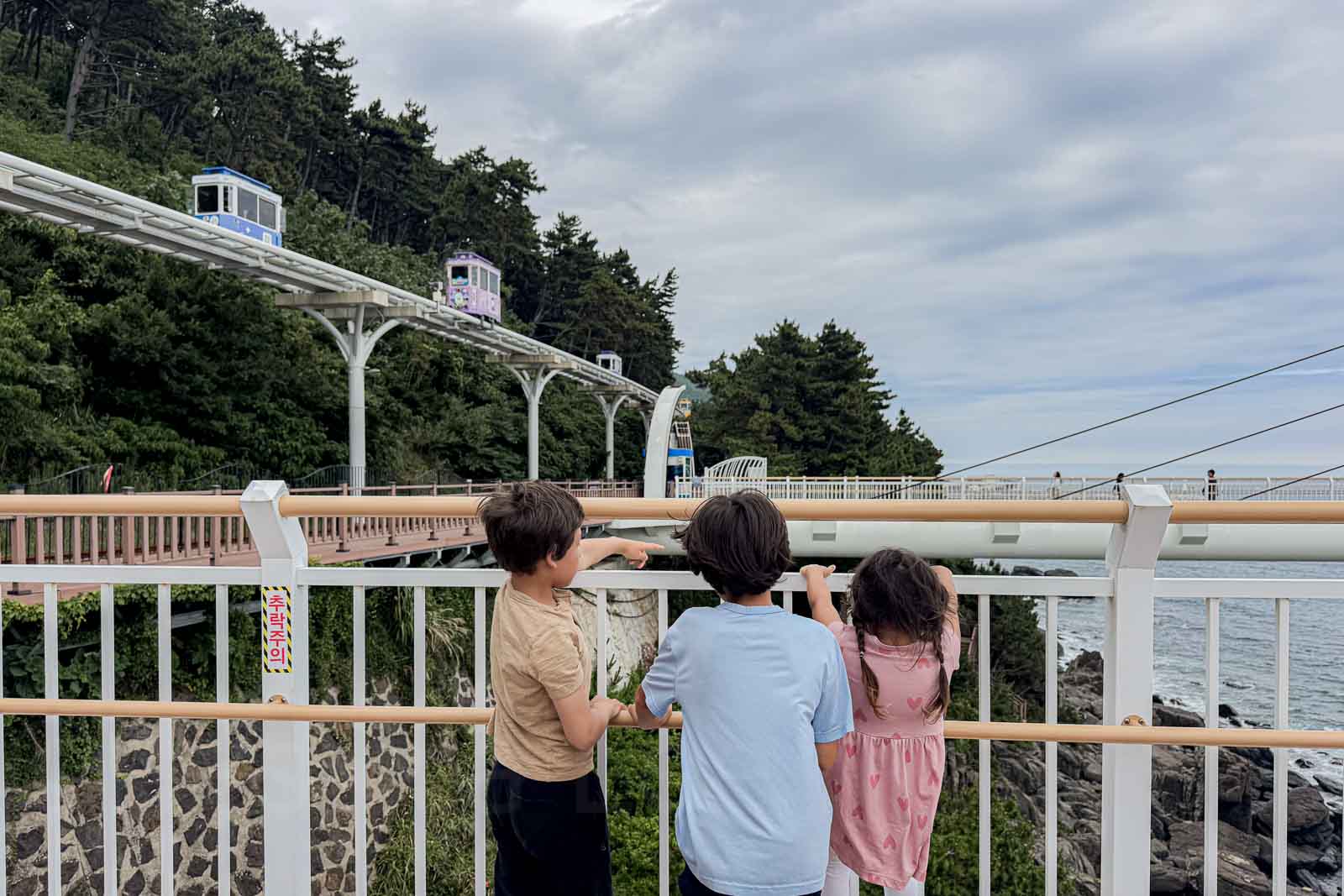
Family Travel Packing: How to Pack for a Family Vacation with Kids
Packing for a family vacation with kids gets a lot easier when you stop assuming everyone needs their own suitcase. After years of traveling with our three kids all over the world, from the baby and toddler years through elementary age, I have learned that the biggest packing win is not necessarily bringing less. It is having fewer things to manage.
For most of our longer trips, our family of five shares two large checked suitcases, uses packing cubes to keep everyone organized, and carries backpacks for the things we need during the travel day. We are not extreme minimalist packers, and I am definitely not trying to squeeze five people into carry-on luggage.
I have just learned that every extra bag adds to the physical and mental load, especially on travel days, which are often the hardest part of traveling with kids.
Here is how I decide how much to bring, how to organize it, and how to make our family luggage easier to manage.
Affiliate Disclosure: Familee Travel contains affiliate links and is a member of the Amazon Associates Program, we may earn commissions from qualifying purchases at no additional cost to you.
Jump to: Our strategy, Pack for your trip, Separate suitcases, Checking bags, Staying organized, Carry-ons, How much clothing, Avoiding overpacking, When to start packing, Packing by kids ages, Travel gear features that help, Packing tips, FAQs
In a rush? Pin this or email it to yourself to read later! (Psst! Use the buttons at the very top or bottom of this post for ease.)

Our Family Travel Packing Strategy at a Glance
For most trips, especially the two-week to month-long trips we tend to take, our family of five usually travels with:
- Two large shared checked suitcases
- Packing cubes to separate everyone’s clothes and belongings
- One backpack per person now that our kids are older
- Any additional stroller, car seat, or specialty gear we actually need for that trip
That is our default, but it is not a hard rule.
A short weekend trip might mean one shared suitcase and three or four backpacks. A holiday trip with gifts and bulky winter clothing, an itinerary spanning several climates, or another gear-heavy trip may push us to three suitcases.
And sometimes we leave for Asia with two suitcases and come home with three after all the shopping.
The goal is not to hit a perfect luggage number. I am thinking about how much we really need, how easy everything will be to move, and how many pieces our family can realistically manage.

Pack for the Trip You Are Actually Taking
Before I start filling suitcases, I think through the trip itself.
The same packing setup does not make sense for every family vacation, or even every trip our own family takes.
I consider:
- How long we will be gone
- How frequently we will change accommodations
- How easy laundry will be
- The weather and number of climates
- Casual, dressy, outdoor, beach, or specialty activities
- How easy it will be to shop at the destination
- What baby or kid gear we can borrow, rent, or find there
- How much luggage our kids can realistically help manage
Trip length alone does not determine how much I pack.
If we are staying somewhere for several weeks with a good washer and plenty of downtime, I may pack less than I would for a shorter trip where we are jumping between destinations and barely have time for laundry.
The destination matters too.
If we are going to Tokyo, Taipei, or Seoul, I worry much less about packing every possible backup item. Stores are everywhere, shopping tends to naturally become part of our trip, and replacing basic supplies is easy.
I approach a cruise, remote island, or particularly expensive destination differently. If replacing something will be difficult, time-consuming, or unnecessarily expensive, packing the extra may be worth it.

Does Everyone in a Family Need Their Own Suitcase?
No.
I know plenty of families prefer giving every person their own suitcase, and there are real benefits to that system. Everyone’s belongings stay separate, older kids can pack and unpack independently, and it can work especially well for carry-on-only travel.
My husband and I often pack this way when it is only the two of us.
With babies, toddlers, and multiple younger kids, though, I started questioning why everyone needed a separate suitcase.
When individual suitcases make sense
Individual luggage makes the most sense to me when the person using it can actually manage it.
That means they can reasonably:
- Carry or pull it through an airport or train station
- Keep track of it during transfers
- Help get it in and out of transportation
- Unpack and repack it
- Take responsibility for it throughout the trip
For older kids, that is a useful travel skill to build.
A baby may technically have their own suitcase, but the baby obviously is not carrying it. The same can be true for toddlers and younger children.
They may happily pull a cute little suitcase for a while, but if they get tired, distracted, or decide they are done, that suitcase becomes another adult responsibility.

Our rule: Fewer bags, more free hands
Travel days are often the hardest part of traveling with kids, which is why I want as many hands available as possible.
When our kids were younger, those hands were constantly needed to hold a child, push a stroller, handle a car seat, buckle someone in, grab a pacifier, find a snack, manage passports, or deal with whatever else was happening at that moment.
Every extra suitcase and bag competed for those same hands.
Even now that our kids can help more, I still think about luggage this way.
Instead of asking how many bags five people should have, I ask how many physical pieces our family can realistically manage while moving.
Fewer larger suitcases usually work better for us than a collection of smaller bags.

Why We Usually Check Our Family’s Suitcases
Carry-on-only travel has obvious benefits. You can avoid checked baggage fees, skip baggage claim, and eliminate the risk of an airline losing your suitcase.
For our family, though, checking our main suitcases usually makes the travel day easier.
Once we hand over our two large bags, we do not need to pull them through security, maneuver them around airport restaurants and bathrooms, keep them with us at the gate, or find overhead-bin space.
They are gone until we land.
When I am also managing kids, that trade-off is worth a lot.
What about lost luggage?
Lost luggage is a real possibility, but it has happened surprisingly rarely considering how often we fly and how many bags we have checked over the years.
We did have a suitcase go missing during one particularly complicated journey with multiple stopovers and airline changes. It was frustrating, but it has not happened frequently enough for me to redesign our entire packing strategy around it.
I also do not deliberately split every person’s clothes between our two suitcases. Packing cubes go wherever they fit.
Anything truly important stays with us, though. Medication, passports, valuables, electronics, and other things we really need stay in our backpacks.

Plan for baggage fees and weight limits
Checked baggage rules vary considerably, especially when flying internationally or using budget airlines.
I check the allowance before I finish packing and purchase baggage ahead of time when that is cheaper.
I also weigh our suitcases at home.
I would much rather find out that a bag is overweight in my bedroom than at the check-in counter while everyone is waiting and I am digging through luggage trying to redistribute shoes.
Sometimes we edit the bag down. Sometimes paying an extra fee is still preferable to adding another suitcase.
For me, the cheapest luggage setup is not automatically the easiest one.

How We Keep Five People’s Belongings Organized in Shared Suitcases
Sharing luggage would be much harder if everyone’s clothes were mixed into one giant pile.
Packing cubes are what make our shared suitcase system work.
Most of the time, each person has designated packing cubes and colors, so I can immediately tell whose things are whose. Once we arrive, everyone can pull out their cube and manage their belongings from there.
Sometimes I organize a few things by category instead, particularly specialty items that everyone will use around the same time.
I have a separate guide to how we use packing cubes for family travel, including our color system, cube sizes, how the kids use them, and what features I look for. I keep the details there because packing cubes are really their own organization system within this broader family packing strategy.

How Carry-Ons Fit Into Our Family Packing System
Our checked suitcases hold the bulk of our belongings. The backpacks are for what we need while we are actually traveling.
Anything that would create a real problem if our luggage were delayed also stays with us, including medication, passports, valuables, and electronics.
Now that our kids are older, everyone has their own backpack.
Our bigger kids are responsible for things like their iPads, headphones, activities, blanket, pajamas or a change of clothes, snacks, and other personal travel-day items.
Our 4-year-old has a smaller backpack that holds some of her things. I carry the rest of hers along with my own belongings and some general family items.

My husband generally carries his work gear and whatever personal items he wants onboard.
When the kids were babies and toddlers, the adults naturally carried much more. Diapers, wipes, bottles, snacks, toys, comfort items, and extra clothing all ended up in our bags.
That is another reason simplifying the main luggage mattered so much during those years.
I also strongly prefer backpacks over shoulder bags for family travel. Keeping the weight on my back leaves both hands available to push a stroller, pull luggage, hold a child’s hand, or help someone.
For the deeper airplane strategy, including how our carry-on setup changed from one child to multiple kids, see my long-haul flight with multiple kids guide.

How Much Clothing Should You Pack for Kids?
For most longer trips, I usually aim for about a week’s worth of clothing per person, then adjust based on the itinerary.
A three-week trip does not necessarily mean three weeks of clothes.
If we have convenient laundry every few days or once a week, I pack around that instead.
On longer trips where we settle into one place and temporarily live there, I may bring even less. If we are constantly moving and laundry will be harder to squeeze in, I give myself a little more breathing room.
The type of laundry matters too. A full-size washer in an apartment is very different from a tiny washer-dryer combination that takes hours to complete one load. Or some places that only have washers and no dryers.
Pack clothes that work together
I do not have a capsule wardrobe at home (not even close), but I pack a little more like I do when we travel.
I prioritize:
- Basics
- Solid colors
- Repeatable bottoms
- Layers
- Pieces that work in several combinations
- Clothing that can reasonably be reworn
Younger kids may need more backup clothing for spills, accidents, and general messiness, so I adjust for age too.
The goal is not an exact formula. I want enough clothing that a messy day or delayed laundry does not create a problem, without half the suitcase coming home untouched.
Why I do not pack one outfit for every day
I have seen the clever packing hack where parents put one complete child’s outfit into each pocket of a hanging shoe organizer, roll it up, and put the whole thing into the suitcase.
I completely understand the appeal.
Everything is matched and ready to grab.
For the way we travel, though, it is more bulk and structure than I want. We tend to take longer trips, do laundry, repeat clothes, mix and match pieces, and adjust according to weather and our plans.
For a short trip or a younger child, preparing complete outfits may work beautifully. I prefer more flexibility.

How We Avoid Overpacking with Kids
I am not trying to pack as little as humanly possible.
I am trying to avoid bringing things that create more work than value.
I definitely packed too much when we first started traveling with a baby. Over time, I learned that I was much more likely to return home thinking, “We never used that,” than seriously regretting something I left behind.
Essential, nice to have, or just in case?
When I am debating an extra item, I try to put it into one of three categories:
- Essential
- Nice to have
- Just in case
Then I consider the destination.
How difficult would this be to replace? How much would it cost? Will we have time to shop? Do I care whether I have this particular version, or would a local alternative work perfectly well?
That last question matters more than you might expect.
In a major city with easy shopping, I am comfortable leaving more behind. And it can even become a fun cultural experience checking out local brands and options.
On a cruise or somewhere remote, I am more likely to pack backups.
For winter trips, I usually bring extra familiar medications because the likelihood of someone catching a cold is higher, and I prefer having our usual options available.
Sometimes packing the extra is absolutely worthwhile. The point is to make it an intentional decision.

Buy, borrow, or rent when it makes sense
Especially during the baby years, I did not want to transport every consumable we would need for an entire trip.
For example:
- Diapers: I brought enough for the flight and first day or so, then bought more locally.
- Wipes: I carried what we needed for the travel day and bought another pack when necessary.
- Baby food pouches: I packed a few for the plane, and otherwise bought more at our destination.
- Beach toys: We usually bought inexpensive ones locally rather than flying with them.
- Cribs: We have used hotel or rental cribs, shared a bed, and sometimes brought our travel crib.
- Car seats: We have brought our own, rented from car rental companies, rented through BabyQuip, bought inexpensive seats to leave with family, and planned trips around public transportation.
- Stroller: This is one piece we generally preferred to bring ourselves.
There is no universal answer. What makes sense depends on the destination, your child, and how you plan to get around.

Shoes deserve a critical edit
Shoes are one of the easiest ways to make luggage unexpectedly heavy and bulky.
Our kids generally bring two practical pairs unless weather, a special event, or another specific need calls for something else.
I try to distinguish between shoes we will actually wear and shoes I merely wish we might wear.
When possible, we wear the bulkiest pair while traveling, although I keep the return journey in mind too.
I have even intentionally packed shoes that were on their last leg, worn them through the trip, and tossed them before coming home. That gives us a little more room for the return.
Notice what comes home unused
One of the best ways I have refined our packing is simply paying attention after each trip.
What did we actually use?
What did we bring home untouched?
Those patterns have helped me become much more comfortable leaving unnecessary extras behind.

Packing Changes as Kids Get Older
There is no single family packing system that works equally well from infancy through the teenage years.
Packing with a baby
Babies bring an extra layer of supplies. Diapers, feeding items, sleep gear, extra clothes, stroller, car seat, and possibly a travel crib can add up quickly.
Parents are also responsible for essentially all of it.
That is when simplifying the rest of our luggage mattered most.
If you’re specifically trying to cut down all that extra baby gear, I go step by step through how to pack light with a baby without leaving the things you actually need behind.
If you are still figuring out which baby travel products are actually useful, my baby travel registry goes much deeper into the gear we used across three babies and many different types of trips.
Packing with a toddler
Toddlers generally need less true baby gear but still require extra clothes, snacks, entertainment, comfort items, and often a stroller.
They may also want more independence before they can reliably manage their own belongings.
I would not base the family’s luggage setup around a toddler consistently carrying their own bag.
Packing with bigger kids
As our kids became more independent, we started transferring responsibility.
They now manage their backpacks, keep track of headphones and activities, manage their packing cubes once we arrive, and help move the larger suitcases.
Eventually, separate suitcases may make more sense for everyone.
I expect our system to keep changing as they grow.

Packing for Stopovers, Mixed Climates, and Specialty Trips
Some itineraries naturally require a little more strategy.
If we have an overnight layover or airport hotel stay, I make sure the things we need for that night are easy to access. Pajamas, next-day clothes, and basic toiletries stay together so I do not need to unload both suitcases for a few hours.
Trips with multiple climates or specialty activities are harder.
Bulky winter layers, ski clothing, formal outfits, gifts, and specialized gear can quickly take over a suitcase.
Sometimes the correct answer really is bringing an extra bag.
I do not consider that a packing failure.
If the trip genuinely requires more, it requires more. I simply become more critical about the regular clothing and extras so necessary gear does not become an excuse to bring everything else too.

When Should You Start Packing for a Family Vacation?
I am not always as early as I would like to be, but packing ahead consistently feels better when I manage to do it.
Family packing involves dozens of small decisions. Getting most of them finished early reduces the amount I am mentally tracking.
It also gives me time to notice something missing.
Take travel clothes out of rotation
If there are specific clothes I know we need for the trip, I like to pack them and remove them from normal household use.
Otherwise someone inevitably wears the exact shirt or pants I planned to bring, and suddenly they are sitting in the laundry basket right before we leave.
Once they are packed, they are done.
Planning your own trip with kids?
I share one email a month with real-world family travel strategies, packing tips, and destination breakdowns that make planning easier.
Join below.
Keep one final list
There will always be things you cannot pack early because you are still using them.
Instead of leaving half the packing unfinished, I pack everything else and maintain one short final list.
That may include:
- Toothbrushes
- Chargers
- Medication
- Current comfort items
- Other daily essentials
I would much rather have a handful of things left to remember than an entire family’s packing still floating around in my head.

Family Packing Gear Features That Make Travel Easier
You do not need special gear to travel as a family, but after enough trips I have learned that a few design features can noticeably reduce friction.
- Smooth four-wheel suitcases: A suitcase that glides easily is much easier to move while also helping a child or carrying a backpack.
- Durable wheels, handles, and zippers: We have had luggage break while traveling. It is worth checking its condition before leaving.
- Backpacks: Keeping smaller bags on our backs leaves our hands available.
- Luggage pass-through sleeves: A backpack or smaller bag that slides securely over a suitcase handle turns two loose pieces into one manageable unit.
- Hanging toiletry bags: I can hang the whole organizer when we arrive, see everything, then close it back up when we leave.
- Refillable toiletry containers: I prefer bringing many of my own products, especially hair and facial products, so smaller refillable bottles save substantial space over full-size versions.
- Travel-only duplicates: Not necessary, but helpful if you travel frequently and have the budget and storage space. Our kids have travel-only backpacks, and I keep duplicates of some toiletries and personal-care items ready for trips.
Small Family Packing Tips That Make a Difference
A lot of family travel packing comes down to small habits.
- Roll clothes when it works. I started doing this years ago because I had heard it saved space. I am not convinced it always does, but it is quick, works well inside packing cubes, and avoids some hard fold creases.
- Keep dirty shoes separate. I usually use leftover shopping bags or another simple shoe bag.
- Protect leak-prone liquids. Flip-top bottles, sprays, and anything I do not completely trust go into sealable bags.
- Bring a few extra sealable bags or reusable wet bags. They inevitably become useful for wet swimsuits, snacks, dirty clothing, or miscellaneous items.
- Check your luggage before the trip. Make sure wheels, handles, and zippers are working.
- Weigh checked bags at home. Fixing an overweight bag at home is much easier than doing it at the airport counter.
- Leave some return-trip flexibility. We shop while traveling and sometimes come home with considerably more than we left with.
- Use clothes to cushion fragile purchases. I wrap breakable items and nestle them among soft clothing.
- Ship awkward purchases when necessary. Something large or especially fragile does not always need to fly home inside your suitcase.

Quick Family Packing Check Before You Leave
Before we head out, I like to make sure the overall system makes sense.
Bags
- How many pieces are we taking?
- Who is responsible for each one?
- Can that person realistically manage it?
- Are checked bags within the airline’s limits?
Organization
- Does everyone have a designated place for their things?
- Is anything needed immediately packed somewhere easy to reach?
- Where will dirty or wet clothing go?
Clothing
- Do pieces mix and match?
- When can we realistically do laundry?
- Have we accounted for the actual weather and activities?
- Are we bringing anything we probably will not wear?
Carry-ons
- Does every onboard bag have a purpose?
- Are medication, valuables, documents, and other critical items staying with us?
- Do we have what we need to comfortably get through the travel day?
Destination
- What can we easily buy there?
- Is anything easier to borrow or rent?
- Are replacements inexpensive or unusually costly?
- Are the extra items in our bags actually worth transporting?
Last minute
- What are we still actively using?
- Is all of it written on one final list?
Once those questions are answered, I stop trying to prepare for every possible scenario and close the suitcases.
More Family Packing Guides
This article covers the overall system I use to pack and manage luggage for our family. These guides go deeper into related parts of that system:
- Why I Love Using Packing Cubes for Family Travel for organizing several people’s belongings inside shared luggage
- Baby Travel Registry: What’s Actually Worth Adding If You Plan to Travel for baby travel gear
- Long Haul Flight with Multiple Kids: What Changes After One Child for how our onboard packing and family systems changed once we had several kids
- Long Haul Flight with Kids: Real Tips From a Parent Who’s Done It for preparing for the travel day itself

FAQs About Family Travel Packing
How many suitcases does a family of five need?
There is no set number. Our family of five usually shares two large checked suitcases for trips lasting two weeks or longer, plus personal backpacks. A shorter trip may only require one suitcase, while winter gear, holiday trips, multiple climates, or specialty activities sometimes push us to three.
Focus less on matching one suitcase to each person and more on how many pieces your family can comfortably manage.
Does every child need their own suitcase?
No. Individual luggage makes the most sense once a child can reasonably carry, track, unpack, and repack it.
With babies, toddlers, and younger children, their suitcase often becomes another adult responsibility. Shared luggage can be much easier during those stages.
Is it better to check luggage or use carry-ons with kids?
Neither is universally better.
Carry-on-only travel avoids baggage claim and lost checked luggage. Checking larger suitcases means fewer things to manage through security, airports, meals, bathrooms, and boarding.
We usually check our main luggage because simplifying the travel day matters more to us than avoiding baggage claim.
How much clothing should you pack for kids?
For most longer trips, I aim for roughly a week’s worth of clothes and adjust according to age, itinerary, and laundry access.
I pack less when laundry will be easy and a little more when we will move frequently or have little downtime.
How do you avoid overpacking for a family vacation?
Focus on the trip you are actually taking.
Pack clothes that work together, plan around laundry, limit bulky shoes, buy easy-to-replace consumables locally, and question items that are only coming “just in case.”
I also pay attention to what returns home unused. That has been one of the best ways to improve how I pack from one trip to the next.

Packing for Family Travel Gets Easier with Practice
Packing became easier once I stopped thinking only about what could fit inside our suitcases and started thinking about everything we would have to physically move and mentally keep track of once the trip began.
Our family packing strategy has changed as our kids have grown, and I expect it will continue to change.
The goal is not to bring the least.
It is to bring what we need in a setup that makes traveling together easier.